
Naming
AMG, AMG Line, AMG package: what do these three letters mean?
AMG comes from three proper nouns, not a technical term. What the badge marks at Mercedes, why “AMG Line” is not an AMG, and what the 35, 43, 53 and 63 tiers actually mean.
Updated in 2026
Direct answer
What does AMG mean on a Mercedes?
AMG is Mercedes-Benz's performance division, and the badge comes from three proper nouns: Aufrecht and Melcher, the two founders, and Großaspach, the birthplace of the first. Mind the trap: “AMG Line”, also called the “AMG package” in some markets, is not an AMG. It is a styling trim laid over ordinary mechanicals.
- Look at where the badge sits: on a true AMG it comes before the model — Mercedes-AMG C 63, Mercedes-AMG GT.
- Be wary of what follows: “AMG Line” or “AMG package” marks a trim, not a version.
- Read the number: 35, 43 and 53 are genuine mid-tier AMGs, 63 is the top of the range.
- Do not read displacement into the number: 63 has not meant 6.3 litres for a long time.
A badge that cannot be decoded
Unlike TDI or GTI, AMG describes no technology at all. These are three initials, and behind each one sits a proper noun.
That is why the badge cannot be decoded: it has to be told.
Three letters, three proper nouns
A for Aufrecht and M for Melcher: Hans Werner Aufrecht and Erhard Melcher, two engineers who left Mercedes-Benz to start their own workshop in 1967. G for Großaspach, Aufrecht's home village.
AMG therefore spent a long time as an independent tuner, outside Mercedes. The manufacturer took a majority stake in 1999, then full ownership in 2005. The company is now Mercedes-AMG GmbH, based in Affalterbach.
One habit survives from those workshop years: on hand-assembled engines, a plaque carries the name of the technician who built it alone, from start to finish. That is the “one man, one engine” principle.
The trap: AMG Line is not an AMG
This is the most asked question about these three letters, and the answer fits in one sentence: no, an AMG Line is not an AMG. It is an appearance package borrowing the performance division's vocabulary without borrowing its hardware.
In practice, a C-Class in AMG Line gets its own bumpers, wheels, upholstery and sometimes suspension settings — but it keeps the engine of the version it is based on. A Mercedes-AMG C 63 is a different car, with a different powertrain, a different chassis and a different price.
The simplest cue is where the badge sits. On a true AMG it is part of the name and comes before the model: Mercedes-AMG C 63. On a trim it comes after, followed by a word: AMG Line.
The trap is exactly the one set by “M Sport” at BMW and “GT Line” at Peugeot. All three brands had the same idea at the same time, for the same reason.
The tiers of the range
| Badge | What it marks |
|---|---|
| AMG Line / pack AMG | A trim level. Bumpers, wheels, upholstery, sometimes firmer suspension — over the standard mechanicals. |
| AMG 35 | The entry-level true AMG, on the compact range. Four cylinders. |
| AMG 43 | A mid-tier AMG, developed by AMG without reaching 63 level. |
| AMG 45 | The top of the compact range, with a hand-assembled four-cylinder. |
| AMG 53 | The tier above 43, often paired with mild hybrid assistance. |
| AMG 63 | The top of the range. This is the number most people associate with the badge. |
Examples in photos
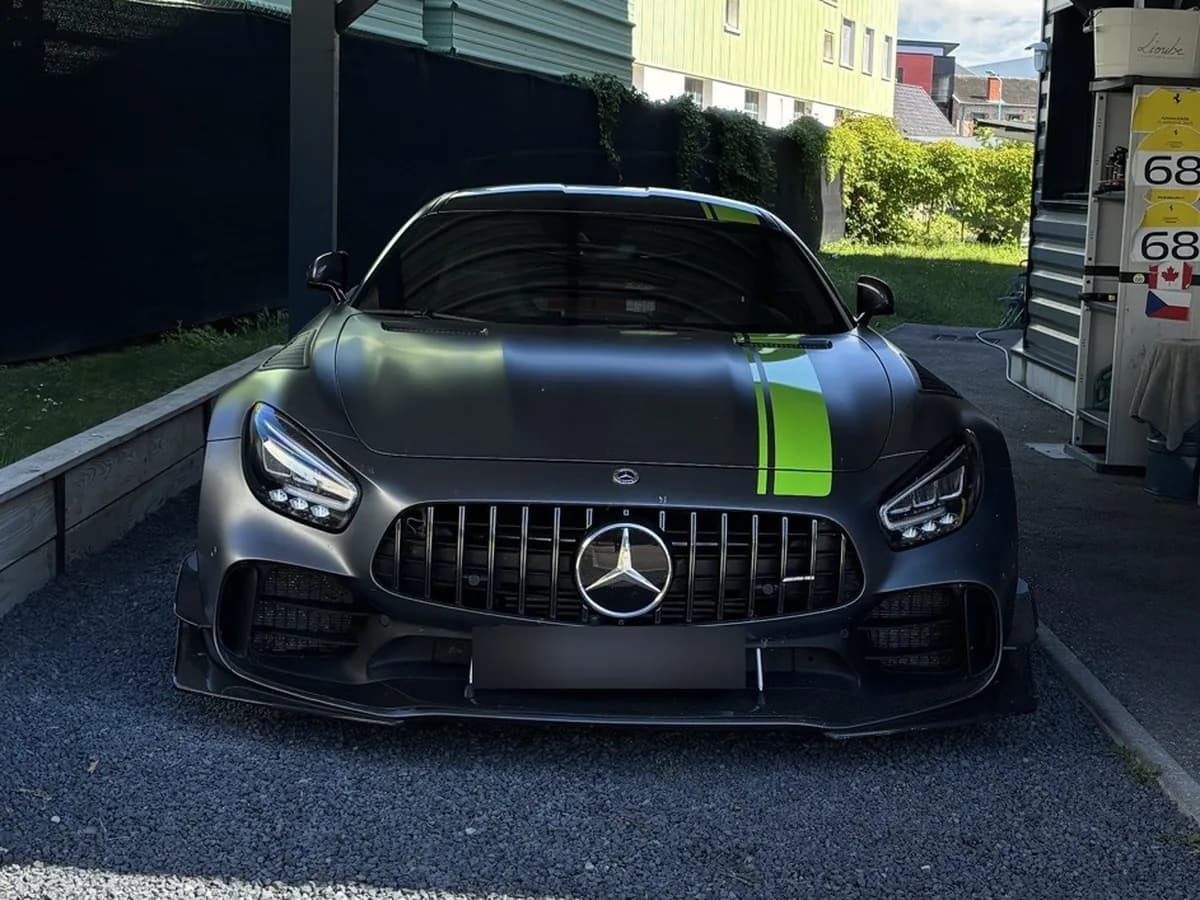
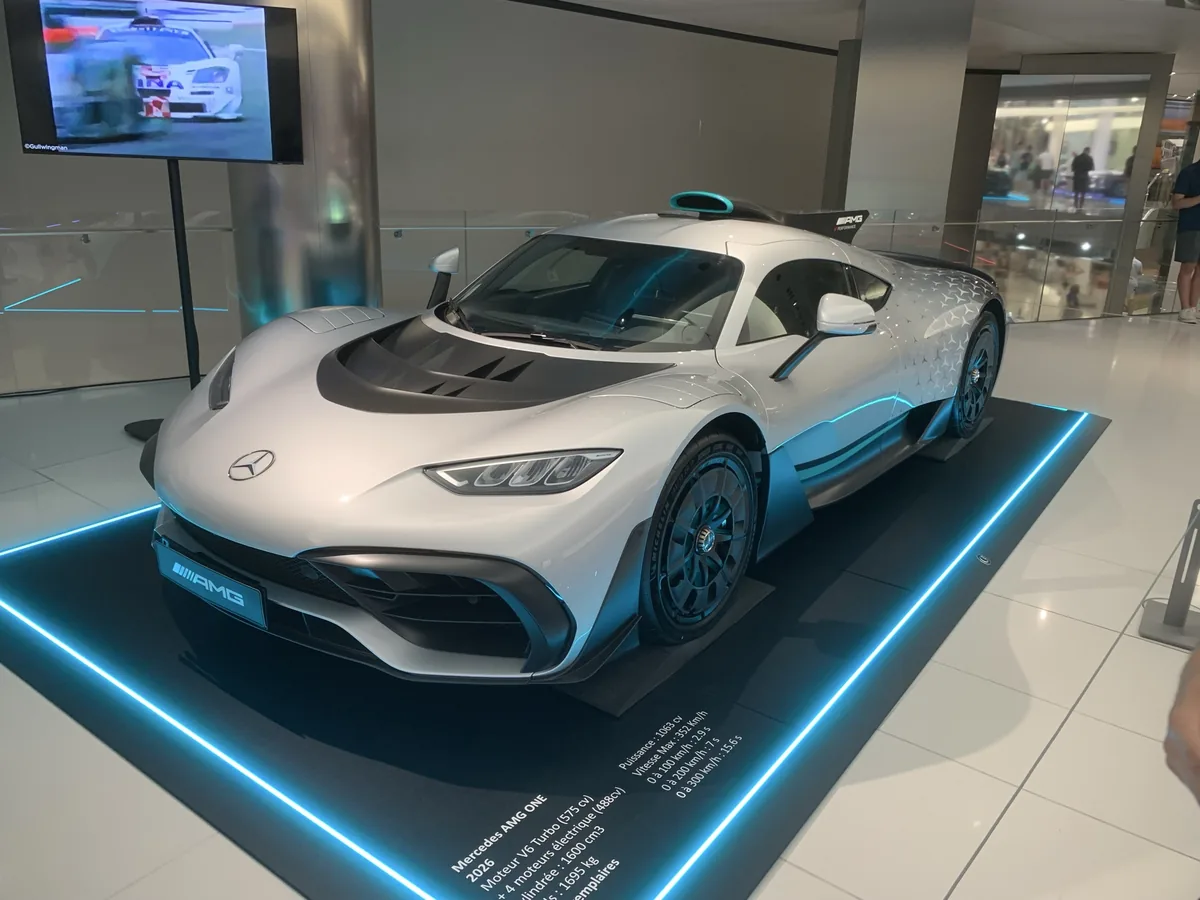
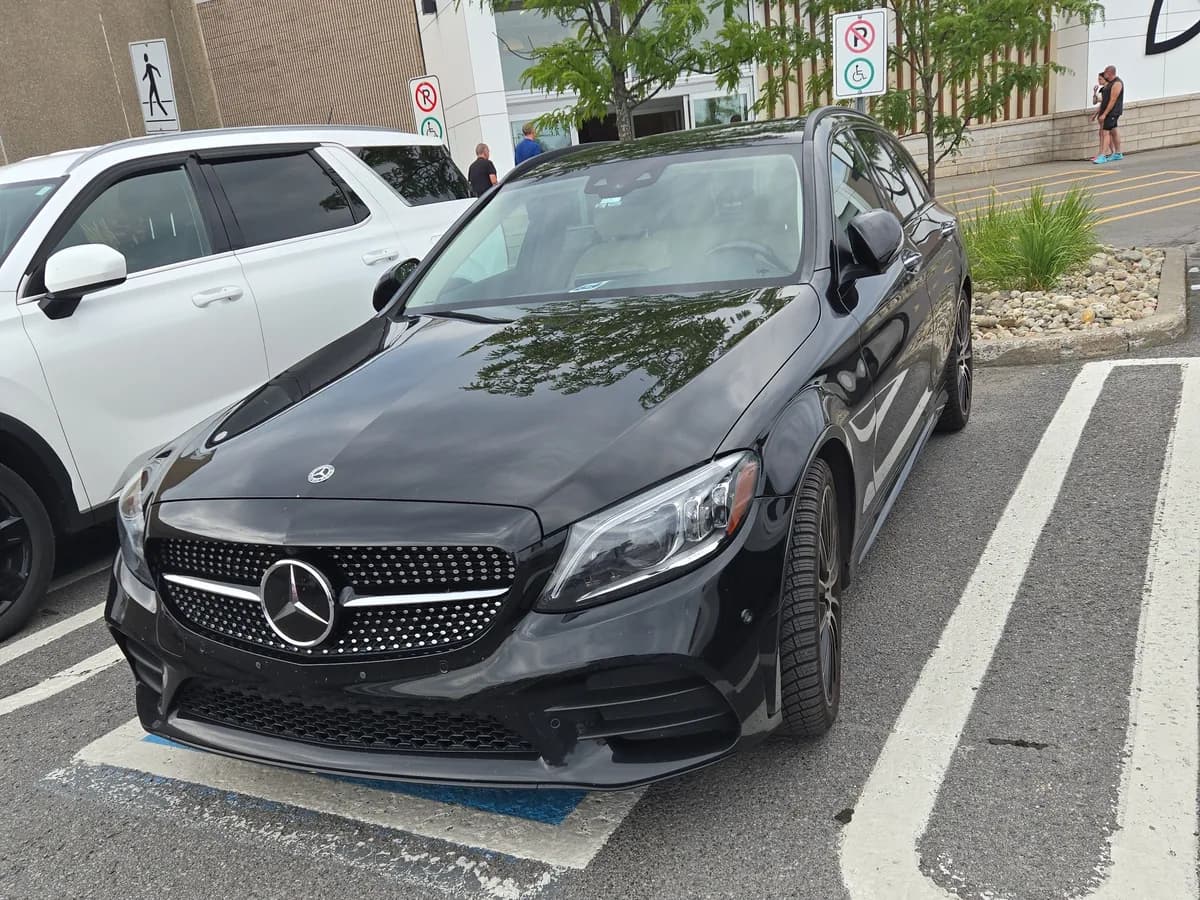
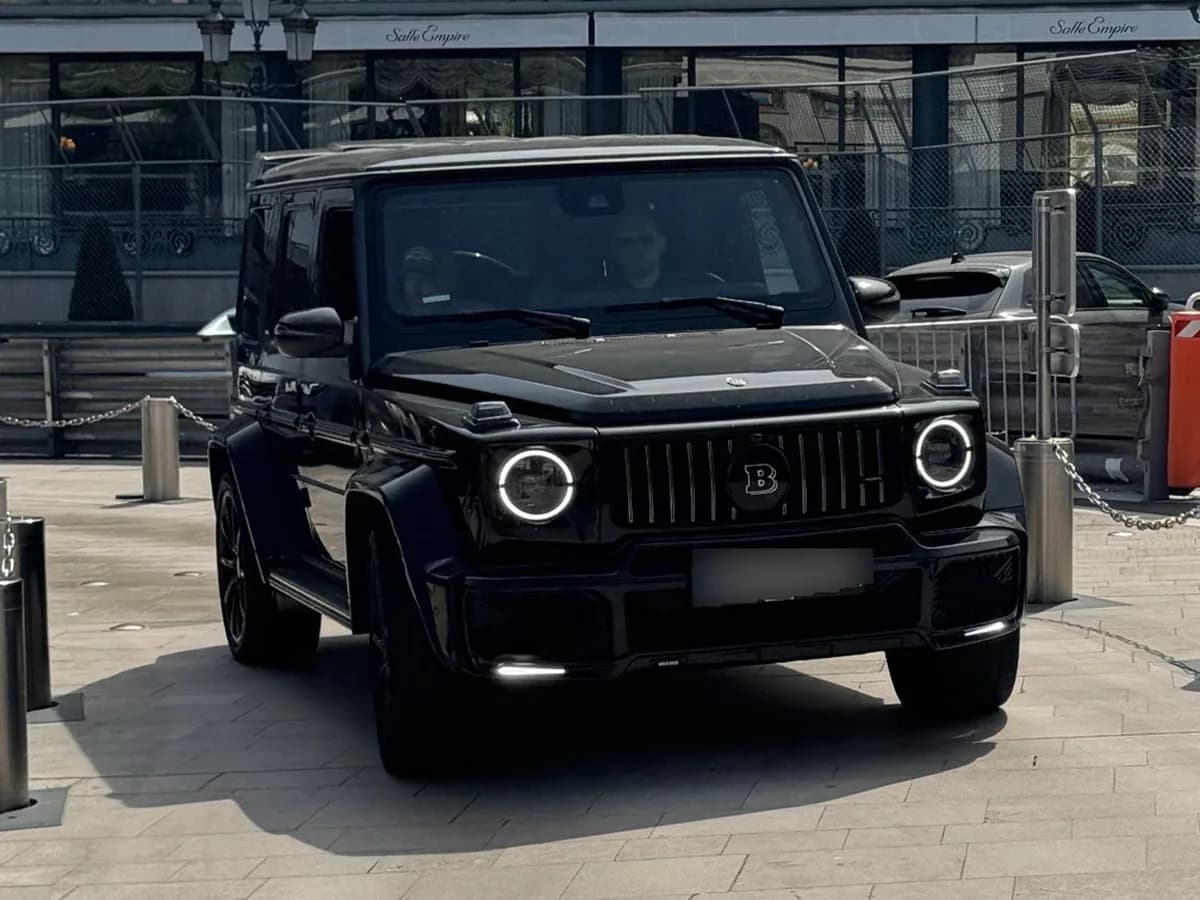
Genuine AMGs, and the class where confusion with the trim is most common.
Where the badge misleads
The 63 became a name, not a measurement. It paid tribute to the 6.3-litre engine of the late-sixties 300 SEL 6.3. Yet the C 63 first got a 6.2-litre V8, then a 4.0-litre twin-turbo V8, and its current generation is built around a 2.0-litre four-cylinder paired with an electric motor.
In other words, one badge has covered 6.2, 4.0 and 2.0 litres in about fifteen years. The number outlived the displacement it named, just as the “i” in GTI outlived fuel injection and the “SI” in TSI outlived stratified combustion.
A second shift: AMG long meant “independent tuner”. That has not been true since 2005. The badge now marks an in-house division, which changes what you are buying even though the letters have not moved.
AMG outside cars
Three letters this short inevitably serve elsewhere. AMG is also a tool and garden brand sold in supermarkets, with no connection to cars whatsoever: a frequent source of confusion in searches.
At Mercedes, though, the badge means only one thing, and the only real ambiguity remains the one between the performance division and the trim that borrows its name.
And if the badge is gone?
AMG is one of the most commonly added badges on cars that never wore it, precisely because it is worth money. When the bootlid looks doubtful, the car itself remains: track width, brake calipers, twin or quad exhaust outlets, and the grille, which differs clearly between an AMG Line and an AMG.
Frequently asked questions
What does AMG stand for?
Nothing translatable: they are three initials. A for Aufrecht and M for Melcher, the two founders, G for Großaspach, Aufrecht's home village.
Is an AMG Line an AMG?
No. AMG Line, also called the AMG package, is a styling trim: bumpers, wheels, upholstery. The mechanicals stay those of the base version. A true AMG is a distinct version, with its own engine.
How do you spot a true AMG?
By where the badge sits in the name. A true AMG reads Mercedes-AMG followed by the model and a number, such as Mercedes-AMG C 63. A trim instead reads model first, then “AMG Line”.
What does the 63 on an AMG mean?
It is a name, no longer a displacement. It nods to the 6.3 litres of the 300 SEL 6.3, but today's C 63 is built around a hybridised 2.0-litre four-cylinder.
What separates AMG 43, 53 and 63?
They are tiers within the genuine AMG range. The 43 is the mid entry point, the 53 sits above it, often with mild hybrid assistance, and the 63 remains the top. All three are true AMGs, unlike AMG Line.
Does Mercedes own AMG?
Yes, since 2005. AMG was founded in 1967 as an independent tuner; Mercedes took a majority stake in 1999, then full ownership six years later.