
Naming
TDI, TSI, TFSI: what is the difference and which one to choose?
TDI means diesel, while TSI and TFSI are the same petrol engine under two badges. Decoding the Volkswagen group's engine letters, what the name hides, and how to choose between diesel and petrol.
Updated in 2026
Direct answer
TDI, TSI or TFSI: what is the difference?
TDI means a turbocharged direct-injection diesel engine. TSI and TFSI both mean a turbocharged direct-injection petrol engine: the same technology, badged TSI on Volkswagen, Seat, Skoda and Cupra, and TFSI on Audi. So the real question is never “TSI or TFSI”, but “TDI or TSI” — that is, diesel or petrol.
- Look for the D: if it is there, the engine is a diesel. TDI. Without it, it is a petrol.
- Check the badge on the grille: the same petrol engine is TSI on Volkswagen, Seat, Skoda and Cupra, TFSI on Audi.
- Read the number just before the letters: within this group, 1.5 or 2.0 is the actual displacement in litres.
- On Audi only, note the second number (35, 40, 45): that one is a power index, not a displacement.
Three badges, two fuels
Three sets of letters, two fuels, one industrial group. Volkswagen, Audi, Seat, Skoda and Cupra share their engines but not their badges, and that is where the confusion comes from.
The decoding comes down to a single letter. The rest of the badge does not separate the engines from each other: it separates the brands that sell them.
The badges at a glance
| Badge | What it means |
|---|---|
| TDI | Turbocharged Direct Injection. A turbocharged direct-injection diesel. This badge is shared across every brand in the group. |
| TSI | A turbocharged direct-injection petrol engine. Badged on Volkswagen, Seat, Skoda and Cupra. |
| TFSI | The same turbocharged direct-injection petrol engine, wearing the Audi badge. |
| FSI | Direct-injection petrol without a turbo. An older badge, gone from current ranges. |
| e-TSI | A TSI paired with 48-volt mild hybrid assistance. The engine itself is still a conventional petrol. |
| TFSI e | Plug-in hybrid at Audi. The “e” stands apart from the badge, and it is the part that carries the meaning. |
| TGI | Compressed natural gas engine, derived from a petrol block. Since withdrawn from the range. |
Why one engine carries two names
The 2.0 TSI in a Golf GTI and the 2.0 TFSI in an Audi S3 belong to the same engine family. These are not two competing technologies to arbitrate between: it is one shared block, fitted to two cars, sold under two marques.
Comparing TSI with TFSI therefore means comparing two logos. The question makes sense between a Golf and an A3, because the cars differ — not between the badges.
Examples in photos
Four cars from the same group, four different badges over closely related mechanicals.

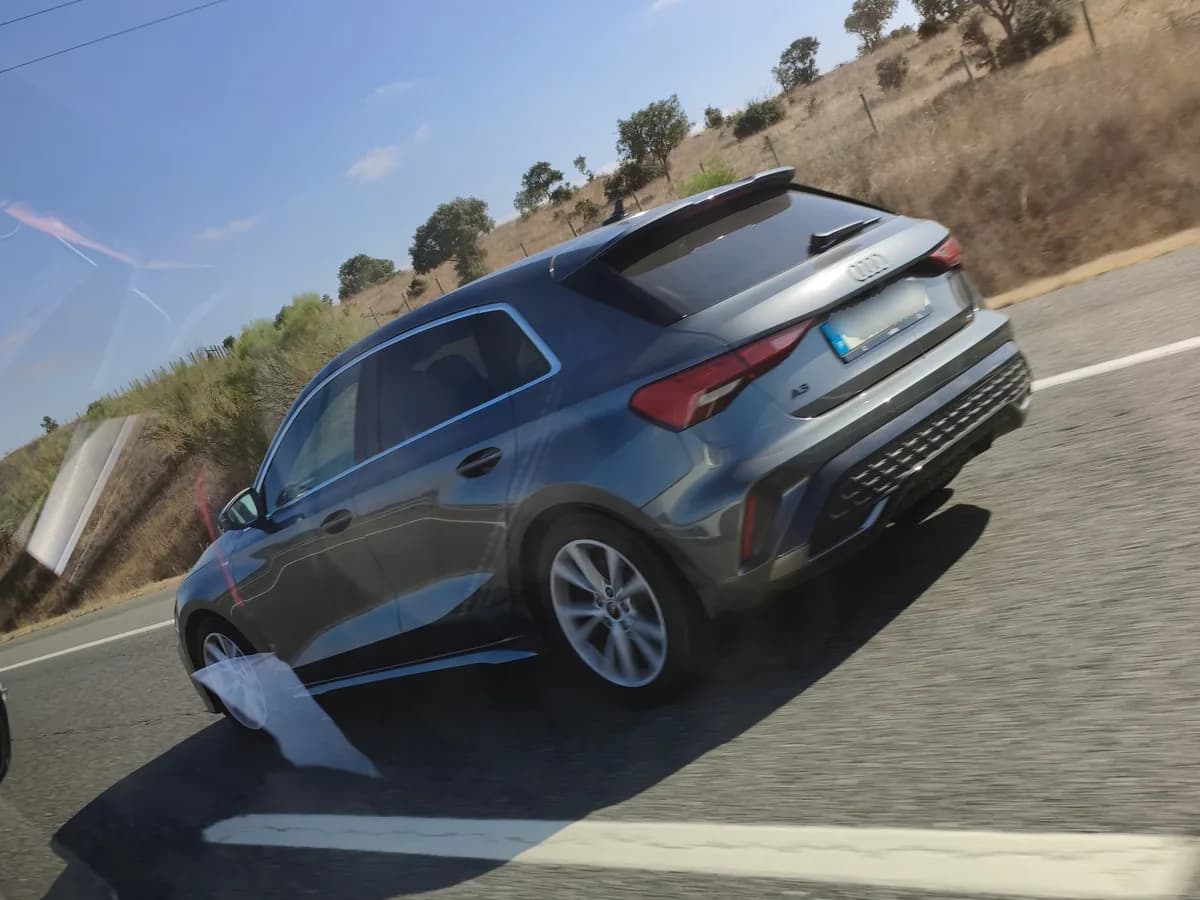


Where the badge misleads
The “SI” stands for Stratified Injection, a stratified-charge combustion mode. Most of these engines stopped working that way long ago: the name outlived the technology it described.
The first 1.4 TSI was not simply a turbo. In its more powerful forms it combined a supercharger with a turbocharger. Two cars badged “1.4 TSI” can therefore hide two different architectures depending on year and output.
Volkswagen itself wore the TFSI badge before switching to TSI. The Mk5 Golf GTI is a 2.0 TFSI, the Mk6 Golf GTI a 2.0 TSI. The badge changed along the way without the engine's role changing.
TDI or TSI: which one to choose?
| Criterion | TDI (diesel) | TSI / TFSI (petrol) |
|---|---|---|
| Where it is comfortable | Regular long journeys, motorway use, high annual mileage | Short trips, urban use, moderate mileage |
| Fuel consumption | Lower at steady speeds | Higher on the motorway |
| What to watch | The particulate filter and EGR valve clog when the engine never reaches temperature | Consumption climbs quickly as soon as the car is worked hard |
| Purchase price | Higher for comparable power | Lower |
| Driving restrictions | More exposed depending on emissions sticker and city | Less exposed |
The 20,000 km per year threshold comes up often, but the type of journey matters more than the total. Ten two-kilometre trips tire a particulate filter more than one eight-hundred-kilometre round trip.
A diesel needs to reach operating temperature to burn off the soot collected in its filter. A car that only ever does short trips never gives it the chance: that is the scenario where a TDI becomes expensive.
What the number means
At Volkswagen, Seat and Skoda, the number in front of the badge is the actual displacement: a 1.5 TSI really is a litre and a half, a 2.0 TDI two litres. That is worth pointing out, because most German manufacturers abandoned this logic.
Audi layers a second number on top: 30, 35, 40, 45 TFSI. That one is not a displacement but a power index, similar in principle to the 320 on a BMW. The same A3 can therefore read “35 TFSI” on the tailgate and carry a 1.5-litre engine under the bonnet.
And if the badge is gone?
An engine badge is a stick-on part: it can be removed, swapped, or added to a car that never wore it. When the tailgate says nothing, or says something false, the car itself remains.
How to recognize a car: the complete guide
GTI, GTD, GTE: the group's other badge, and its GT Line trap
Frequently asked questions
What is the difference between TDI and TSI?
The fuel. TDI is a diesel, TSI a petrol. Both are turbocharged with direct injection: the D is what separates them, and nothing else in the badge does.
Are TSI and TFSI the same thing?
Technically yes. It is the same turbocharged direct-injection petrol engine, badged TSI at Volkswagen, Seat, Skoda and Cupra, and TFSI at Audi. The difference is commercial, not mechanical.
Golf TSI or TDI: which should you choose?
It depends on your journeys far more than on the model. The TDI is at its best over regular long distances; the TSI suits urban use and short trips better, where a diesel particulate filter never reaches its regeneration temperature.
What does the number before TSI mean?
At Volkswagen, Seat and Skoda it is the displacement in litres: 1.5 TSI means a 1.5-litre engine. At Audi a second number is added (35, 40, 45 TFSI) which indicates a power level, not a displacement.
What does the “SI” in TSI stand for?
Stratified Injection, a stratified-charge combustion mode. Most engines wearing the badge no longer run that way: the name outlived the technology.
Does TDI still exist?
Yes. The badge is still offered on several models in the group, despite the broader decline of diesel in the European passenger-car market.