
Naming
quattro, xDrive, 4MATIC: what do these drivetrain badges mean?
Three badges for one promise: all four wheels driven. quattro at Audi, xDrive at BMW, 4MATIC at Mercedes. What they actually cover, and what they do not change on the road.
Updated in 2026
Direct answer
What does quattro mean on a car?
All three badges name the same thing: all-wheel drive, meaning four driven wheels instead of two. The name follows the brand — quattro at Audi, xDrive at BMW, 4MATIC at Mercedes, 4Motion at Volkswagen, Q4 at Alfa Romeo. What changes between makers, and even between models, is the hardware behind the word, not the promise.
- Find the badge on the tailgate, next to the model name: it marks a version, not a styling pack.
- Translate it by brand: quattro (Audi), xDrive (BMW), 4MATIC (Mercedes), 4Motion (Volkswagen), Q4 (Alfa Romeo).
- At BMW, tell the x from the s: xDrive means four driven wheels, sDrive only two.
- Do not infer handling from it: all-wheel drive changes traction, not cornering grip or braking.
Three badges, one promise
An Italian word, an English letter and a number: three ways of saying that all four wheels receive torque. The German makers each trademarked their own, and that is the only reason there are so many.
That is where the confusion starts: you think you are comparing technologies when you are comparing brands.
The badge by brand
| Badge | Who wears it |
|---|---|
| quattro | Audi. The oldest of these badges, introduced in 1980. |
| xDrive | BMW. Not to be confused with sDrive, which marks two driven wheels instead. |
| 4MATIC | Mercedes-Benz, across nearly the whole range, from saloons to the G-Class. |
| 4Motion | Volkswagen. Same function, another marque from the same group as Audi. |
| Q4 | Alfa Romeo, and Maserati. The Q points back to quattro — Italian again. |
| AWD | All-Wheel Drive. The generic English term, used when a brand has no name of its own. |
Does it improve handling?
This is the most asked question about these badges, and the answer is more nuanced than the marketing suggests. All-wheel drive improves traction: the ability to put power down without spinning, when pulling away and accelerating, especially on slippery surfaces. There the gain is real and immediately felt.
It does not brake better, though. All four wheels already brake on every car, driven or not: stopping distance on snow does not depend on how many wheels are driven.
Nor does it raise cornering grip, which is set by the tyres and the load, not by the drivetrain. An all-wheel-drive car on summer tyres will stop worse on snow than a two-wheel-drive car on winter tyres. That is why tyres matter more than the badge.
Examples in photos
Four cars, four different badges for the same mechanical promise.
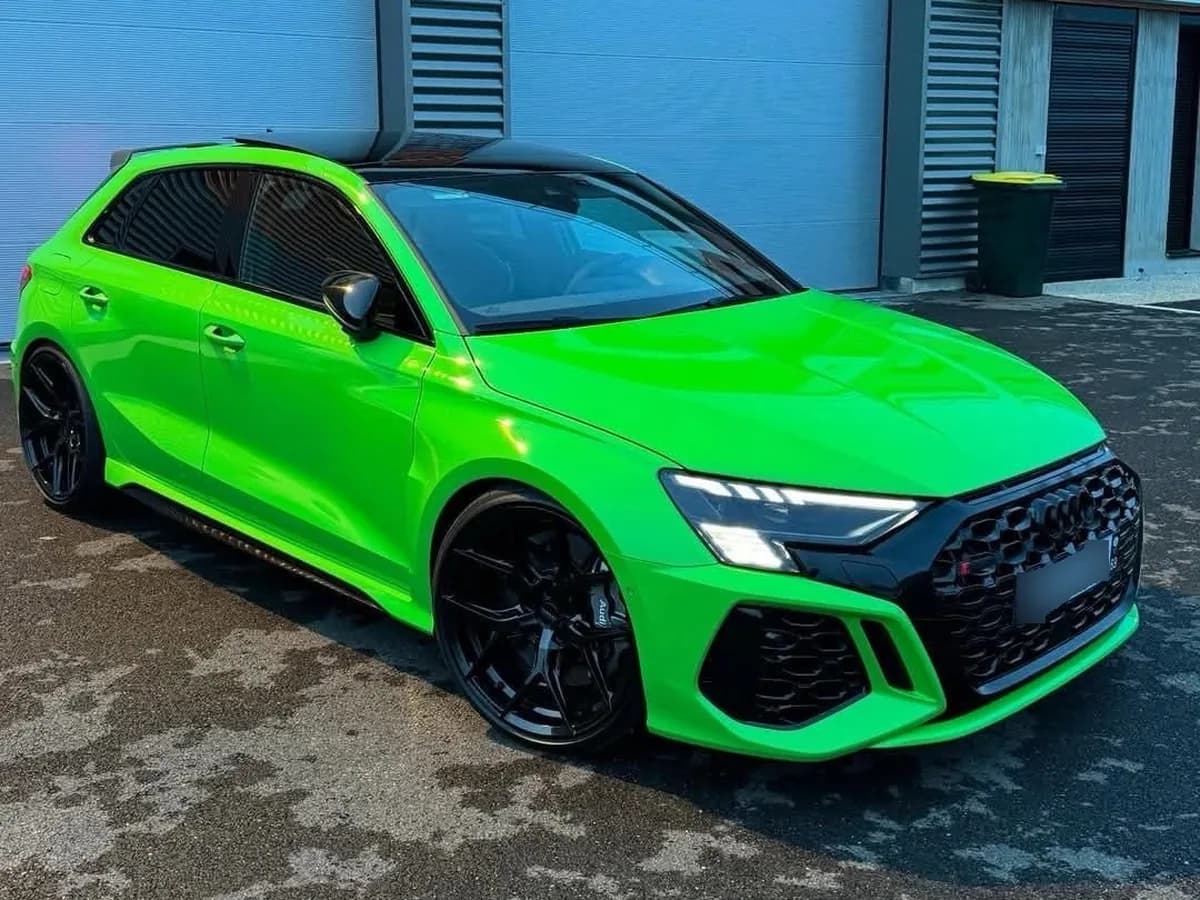
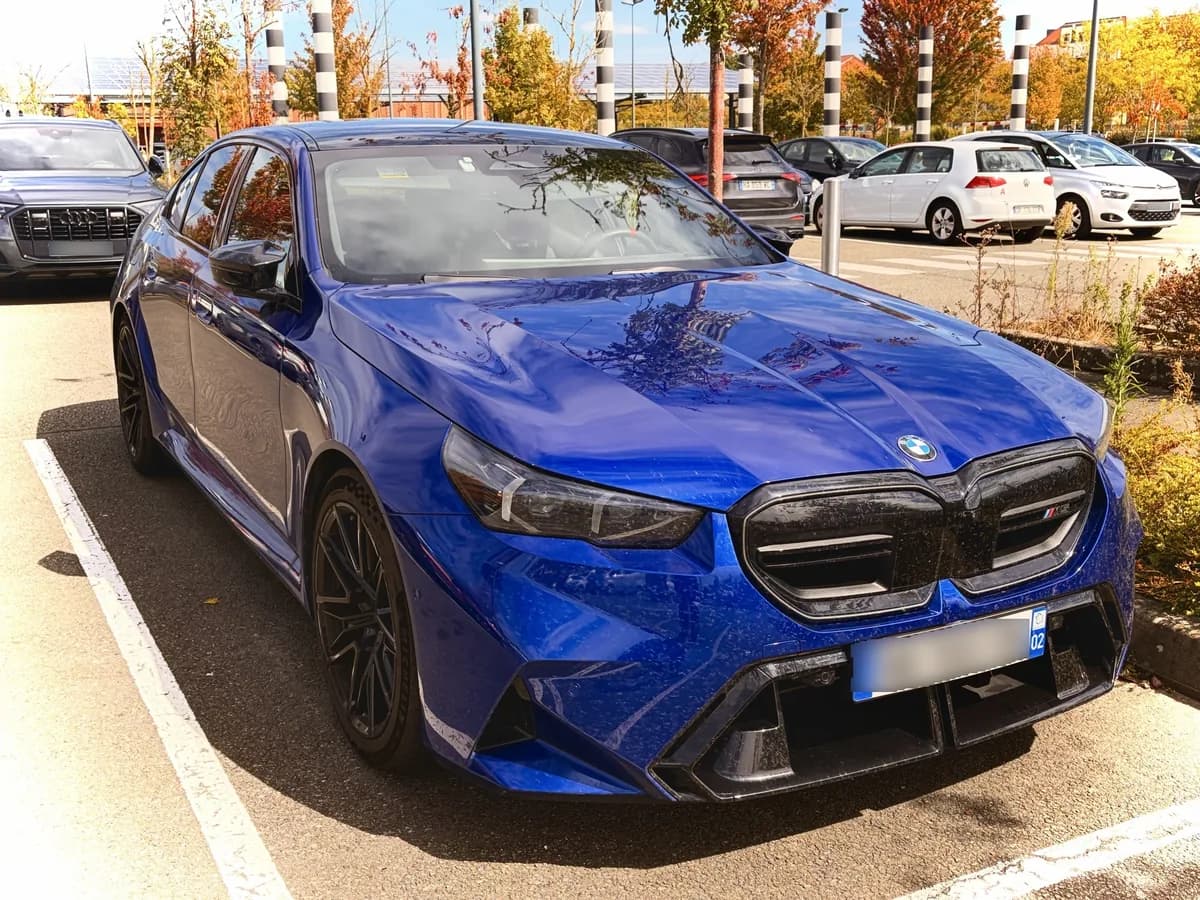
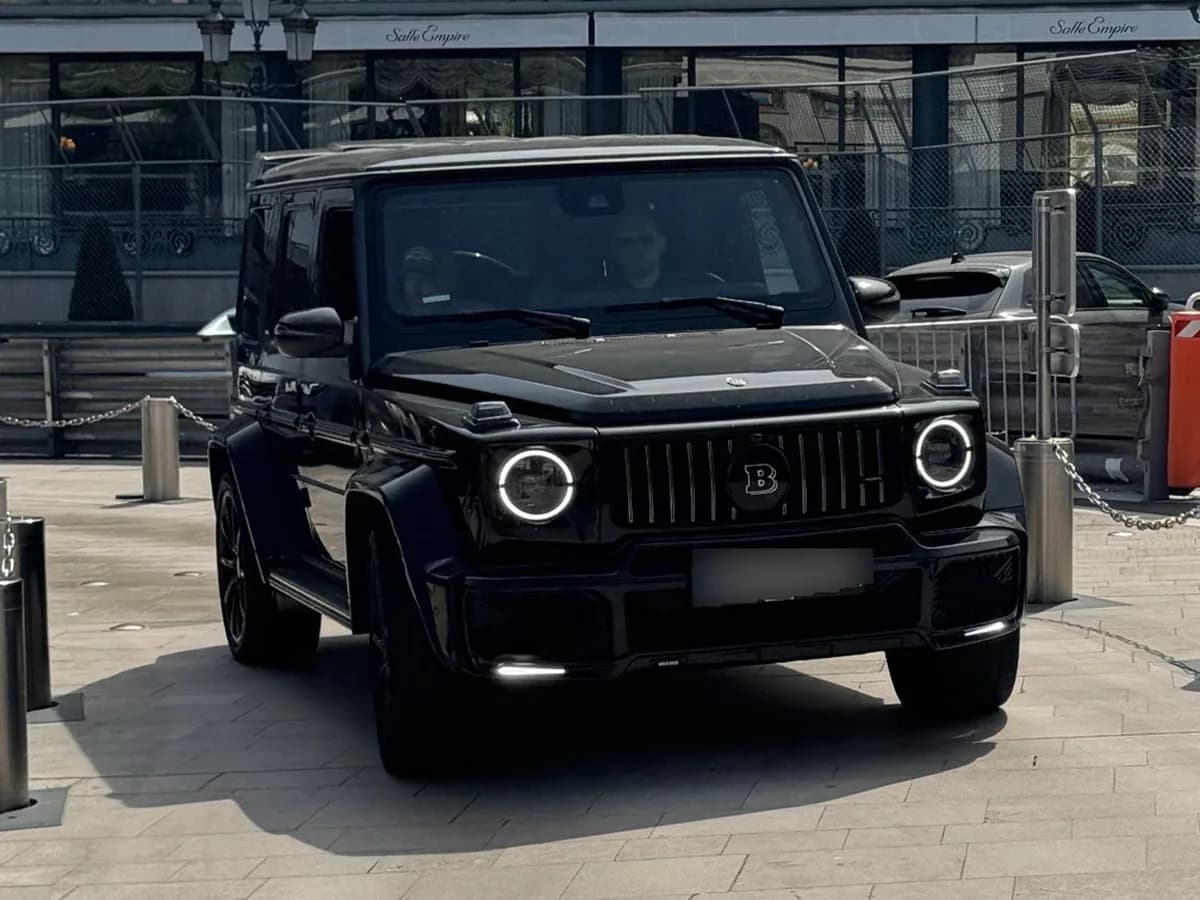
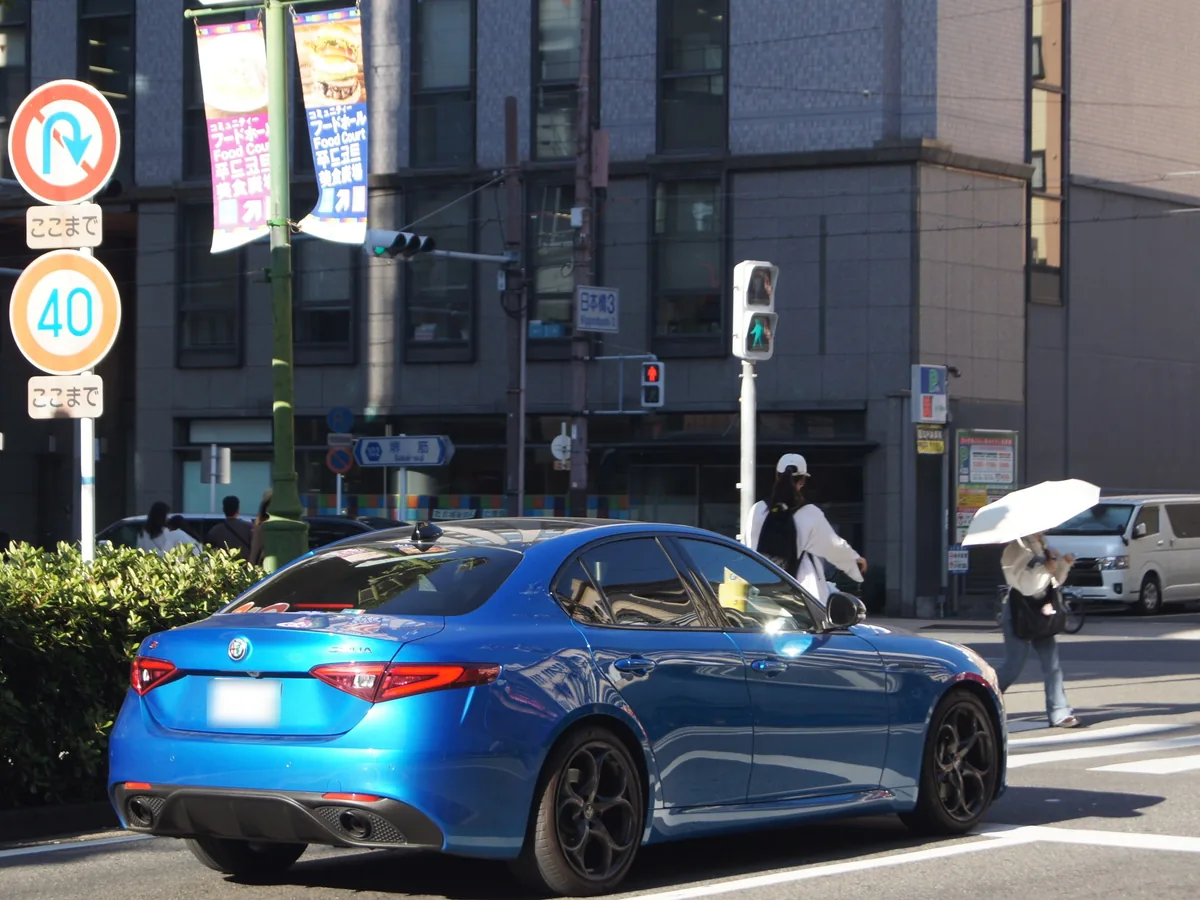
An Italian word meaning four
quattro means “four” in Italian. Not in Spanish, where it is cuatro — a common mix-up, helped by how close the two languages look.
Audi picked Italian in 1980 for the Audi Quattro, the coupé that made all-wheel drive a rally standard. The brand has since written “Quattro” with a capital for that founding model, and “quattro” in lower case for the system fitted across the range.
Where the badge misleads
Two Audis badged quattro can hide opposite hardware. On longitudinal-engine models the system historically used a self-locking centre differential — mechanical and permanent. On transverse-engine models — A3, S3, TT, Q3 — it is an electronically controlled multi-plate clutch, leaving the car front-driven until a wheel slips. Same badge, different behaviour.
At BMW the first letter carries all the meaning and nobody looks at it. xDrive is four driven wheels; sDrive is two. On a tailgate, the two badges look alike at a glance.
On electric models the badge has outlived the hardware it named. An Audi e-tron quattro or a BMW iX xDrive has no propshaft and no centre differential: it simply has one motor per axle. The word still describes the result, no longer the means — exactly as the “i” in GTI outlived the spread of fuel injection.
quattro, Quattroporte, quattrocento
The Italian word lives elsewhere too, which muddies searches. A Maserati Quattroporte has nothing to do with drivetrains: its name means “four doors”. The quattrocento is the Italian fifteenth century in art history, not a car.
At Audi the capital Q in Q3, Q5 or Q8 does come from the same root, but it marks the SUV family: a Q alone does not guarantee four driven wheels, since several of those models exist in two-wheel drive.
And if the badge is gone?
A drivetrain badge comes off as easily as it goes on, and it is readily added to a car that never wore it. When the tailgate says nothing, the car itself remains — and for these versions, the rear track, the exhaust outlets and sometimes the ride height.
Frequently asked questions
What does quattro mean on a car?
It is Audi's name for its all-wheel-drive system: all four wheels receive torque instead of two. The word means “four” in Italian.
Is quattro Italian or Spanish?
Italian. In Spanish, four is cuatro. The mix-up is common because the two languages look alike, but Audi did choose Italian.
What does xDrive mean at BMW?
BMW's all-wheel drive. The thing to remember is the letter: xDrive means four driven wheels, sDrive only two. The two badges look very similar on a tailgate.
What does Q4 mean at Alfa Romeo?
It is Alfa Romeo's all-wheel-drive badge, also used by Maserati. The Q points back to quattro, the same Italian root as at Audi.
Does quattro improve handling?
It improves traction, the ability to put power down without spinning. It improves neither braking nor cornering grip, which depend on the tyres. On snow, winter tyres matter more than the badge.
Are quattro and Quattroporte related?
Only through the language. Quattroporte is a Maserati model whose name means “four doors”: it says nothing about the drivetrain.