Renault 8 1962
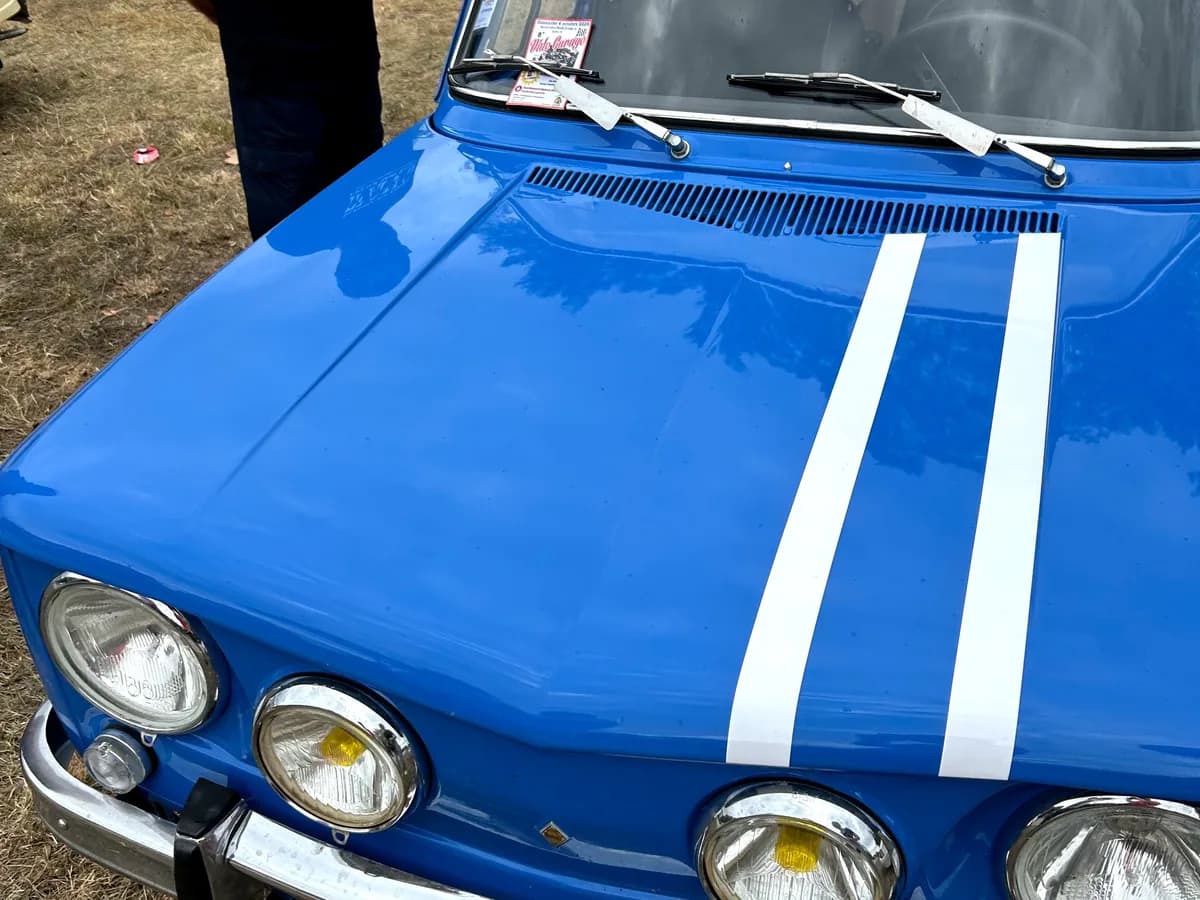
Introduced in June 1962, the Renault 8 was a compact family saloon with a rear-mounted engine, developed from the Renault Dauphine. It retained the earlier car’s 2.27-metre wheelbase while adopting a more angular body and a more contemporary interior. The base model used Renault’s new 956 cc four-cylinder engine, paired with a manual transmission and four-wheel disc brakes, an unusual specification for a small family car at the time. Renault also emphasized comfort, including wider front seats, and fitted a sealed cooling system intended to reduce routine maintenance. Beneath its restrained styling, the Renault 8 combined a familiar rear-engine layout with several carefully engineered features that helped distinguish it in the early 1960s market. (presse.renault.de)
History
The Renault 8 arrived as Renault was renewing its small-car range. It was intended to succeed the Dauphine gradually, while retaining the rear-engine, rear-wheel-drive layout that had defined several Renault models of the period. The two cars were nevertheless sold alongside one another until 1968, allowing Renault to cover different price points and customer needs. The new model introduced the 956 cc Sierra four-cylinder, with an overhead camshaft and a five-bearing crankshaft. Contemporary technical coverage also noted its light-alloy cylinder head, sealed cooling system and disc brakes on all four wheels. Launched in June 1962 as the R8, it used a four-door saloon body with an upright, geometric appearance associated with Philippe Charbonneaux’s design work. The Renault 8 later became the foundation for a wider family that included the Major, Gordini and R8 S, while the Renault 10 arrived in 1965 as a larger development. (presse.renault.de)
Latest scans
Photos added by the community for this page.
Anecdotes
The Renault 8 was among the first compact French saloons to use four-wheel disc brakes as standard equipment. This was an unusual feature for a family car of its size in 1962 and became one of the model’s most frequently noted technical distinctions. Its sealed cooling system, developed along similar lines to the system used by the Renault 4, was also intended to reduce routine maintenance associated with checking coolant levels. (presse.renault.de)
Production
Renault produced the Renault 8 from 1962 into the early 1970s. A historical Renault Deutschland press release gives a total of 1,329,372 cars built between mid-1962 and mid-1972. That figure applies to the Renault 8 family as a whole and does not isolate the Base version produced during the 1962 model year. Production and assembly also differed between markets, with locally adapted or licensed versions made in several countries. The sources consulted do not provide a sufficiently reliable breakdown by trim level and model year to assign a precise production figure to the 1962 Base specification. The overall total nevertheless illustrates the model’s broad commercial reach during its long production period. (presse.renault.de)
Press reception
Early coverage of the Renault 8 focused on its role as a roomier and more capable alternative to the Dauphine, while remaining compact enough for the small-car market. Technical journalists highlighted the smooth 956 cc four-cylinder, its five-bearing crankshaft and the unusual use of disc brakes on all four wheels. A 1962 Motor Sport report also described performance that allowed a comparatively high cruising speed for the class. Contemporary comments therefore concentrated on the car’s engineering and equipment, although its angular styling was less universally familiar than the rounded appearance of the Dauphine. Later assessments have continued to emphasize the Renault 8’s comfortable rear-engine layout and lively character, while noting the handling demands of that configuration. (motorsportmagazine.com)
Evolution
Variants
References
- Renault 8: Familienlimousine mit sportlichen TalentenRenault Deutschland Presse-Service
Supports launch period, relationship with the Dauphine, 956 cc engine, 40 PS output, rear-engine layout, sealed cooling system, braking equipment, later variants and total production.
- Small-car topics: July 1962Motor Sport Magazine
Supports contemporary technical observations on the 956 cc engine, four-wheel disc brakes, sealed cooling system and period performance.
- Small-car topics: February 1963Motor Sport Magazine
Supports contemporary road-test commentary and period observations about the Renault R8’s transmission and performance.
- 1962 Renault 8KFZ-Tech
Supports the rear-engine, rear-wheel-drive configuration, early transmission evolution and general chassis layout.
- Renault 8Honest John Classics
Supports broad model chronology, relationship with the Dauphine, four-wheel independent suspension and later historical assessment.
- https://en.wikipedia.org/wiki/Renault_8en.wikipedia.org
Source found by OpenAI web search for this vehicle page.
- https://www.automobile-catalog.com/make/renault/8/8/1962.htmlautomobile-catalog.com
Source found by OpenAI web search for this vehicle page.
- https://fr.wikipedia.org/wiki/Renault_8fr.wikipedia.org
Source found by OpenAI web search for this vehicle page.