
Naming
Renault naming explained: R.S. Line, TCe, dCi, and E-Tech
Decode a Renault name: the numbers dropped in 1990 and revived for electric cars, phase 1 and 2, the TCe, dCi, and E-Tech engines, and the R.S. Line versus R.S. difference.
Updated in 2026
Direct answer
How do you read a Renault name?
In “Clio V R.S. Line TCe 140”, Clio is the model name, V its fifth generation, R.S. Line a styling trim — not a performance version — and TCe 140 a 140 hp turbo petrol engine.
- Read the name: since 1990 Renault names its models instead of numbering them.
- Find the generation: a Roman numeral, or a phase mention for a facelift.
- Decode the engine: TCe for petrol, dCi for diesel, E-Tech for hybrid or electric.
- Beware the trims: R.S. Line and Esprit Alpine are not performance versions.
Why these names look unreadable
Renault is the brand that changed system midstream, and has just doubled back. For forty years its cars carried a number: R4, R5, R8, R19. Since 1990 they carry names. Since 2024, some have taken their old number back.
The result: the same badge can name two cars half a century apart. This is the brand where you look at the car before reading the name.
“Clio V R.S. Line TCe 140 EDC” piece by piece
| Piece | What it means |
|---|---|
| Clio | The model name. In 1990 the Clio began the switch from numbers to names, replacing the R5. |
| V | The generation, in Roman numerals. Renault officially says Clio I to Clio V, but nothing is written on the car. |
| R.S. Line | A trim: bumpers, wheels, and upholstery inspired by the performance versions, on any engine. Not to be confused with plain R.S., see below. |
| TCe 140 | The energy then the power. TCe for turbo petrol, dCi and Blue dCi for diesel, SCe for naturally aspirated petrol, E-Tech for hybrid and electric. |
| EDC | The dual-clutch automatic gearbox — Efficient Dual Clutch. |
The families: names, and a few numbers that came back
| Letter or number | Family |
|---|---|
| Twingo, Clio, Captur | City cars and small SUVs, from smallest to highest riding. |
| Mégane, Austral, Espace | Compacts and family cars, the historic core of the range. |
| 4, 5, 8, 12, 19, 21 | The old numbered series, dropped in 1990. |
| E-Tech | Hybrid and electric, as a suffix: Clio E-Tech, R5 E-Tech. |
| Alpine | A separate brand since 2021, no longer a Renault trim. |
Examples in photos
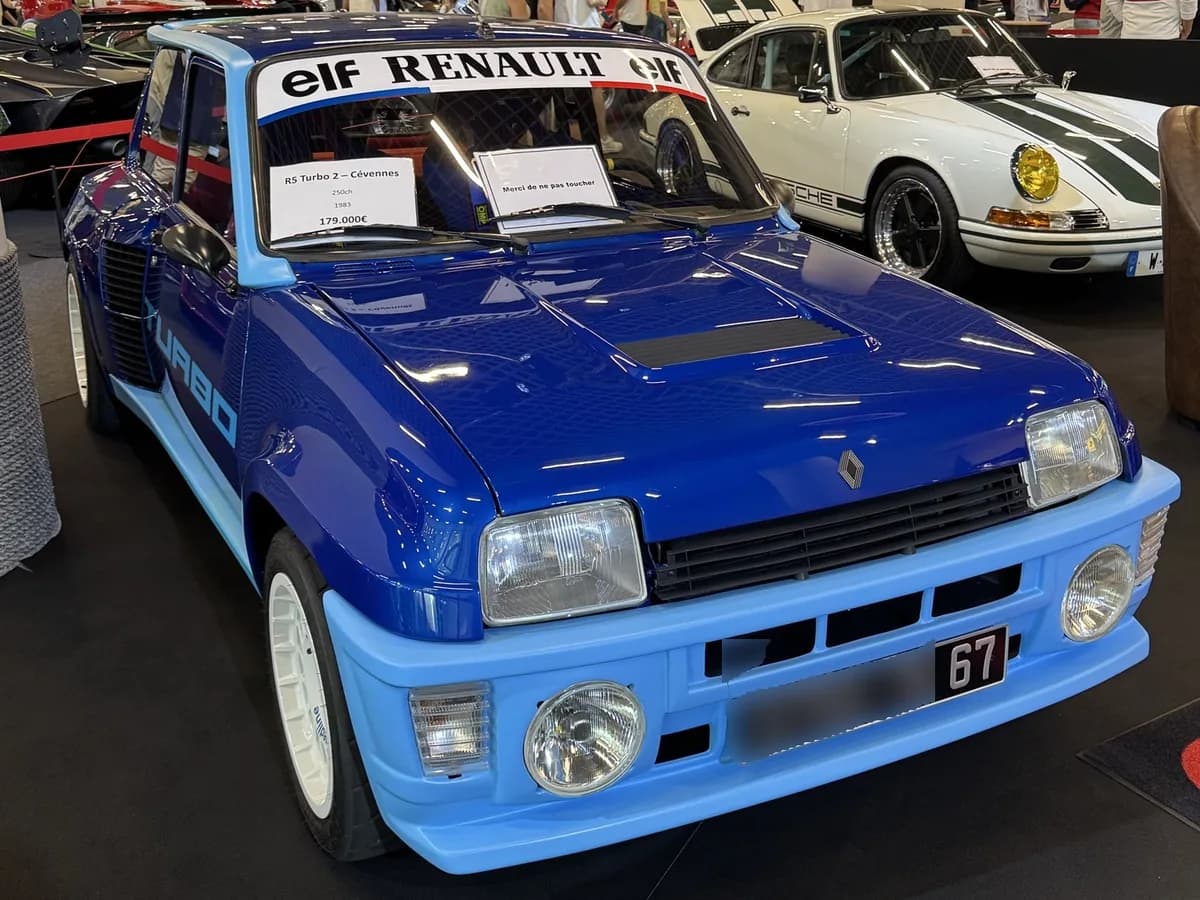
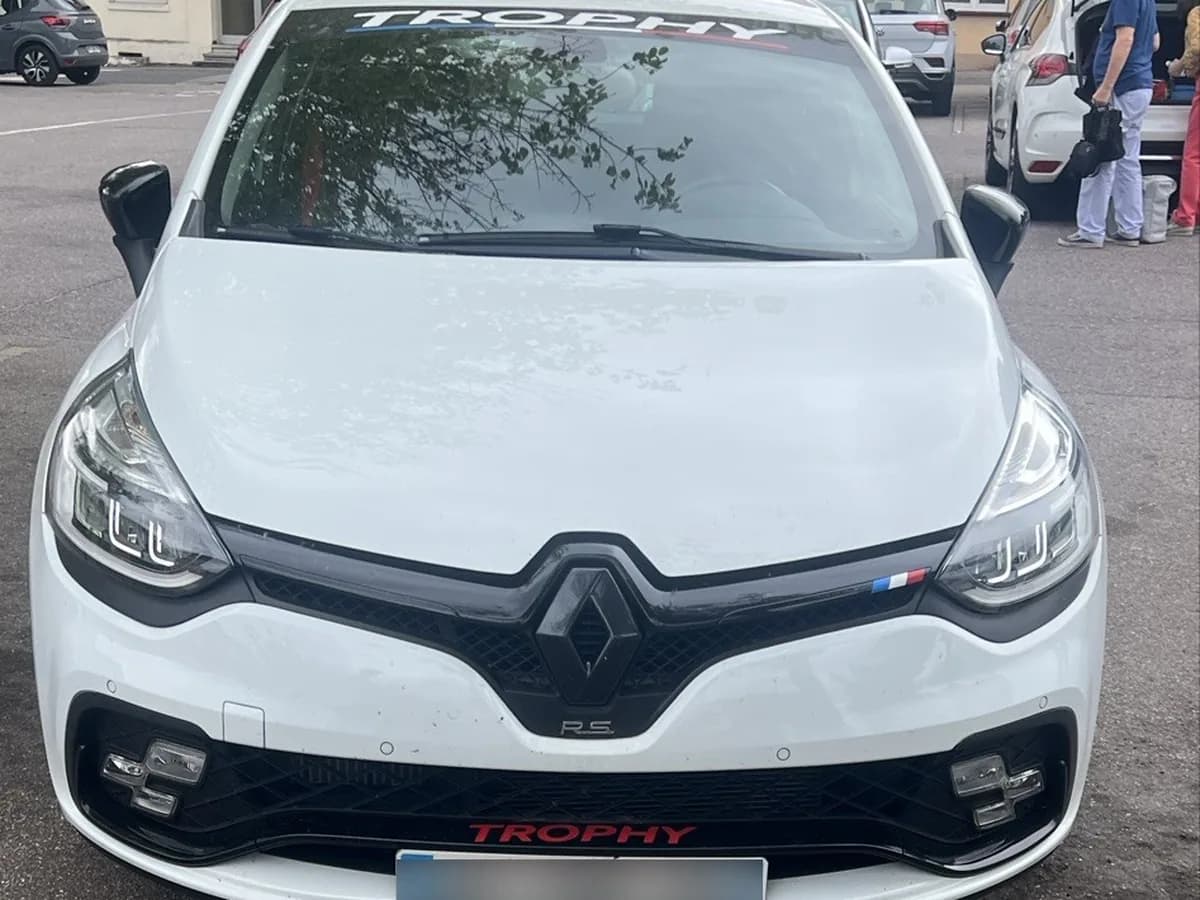
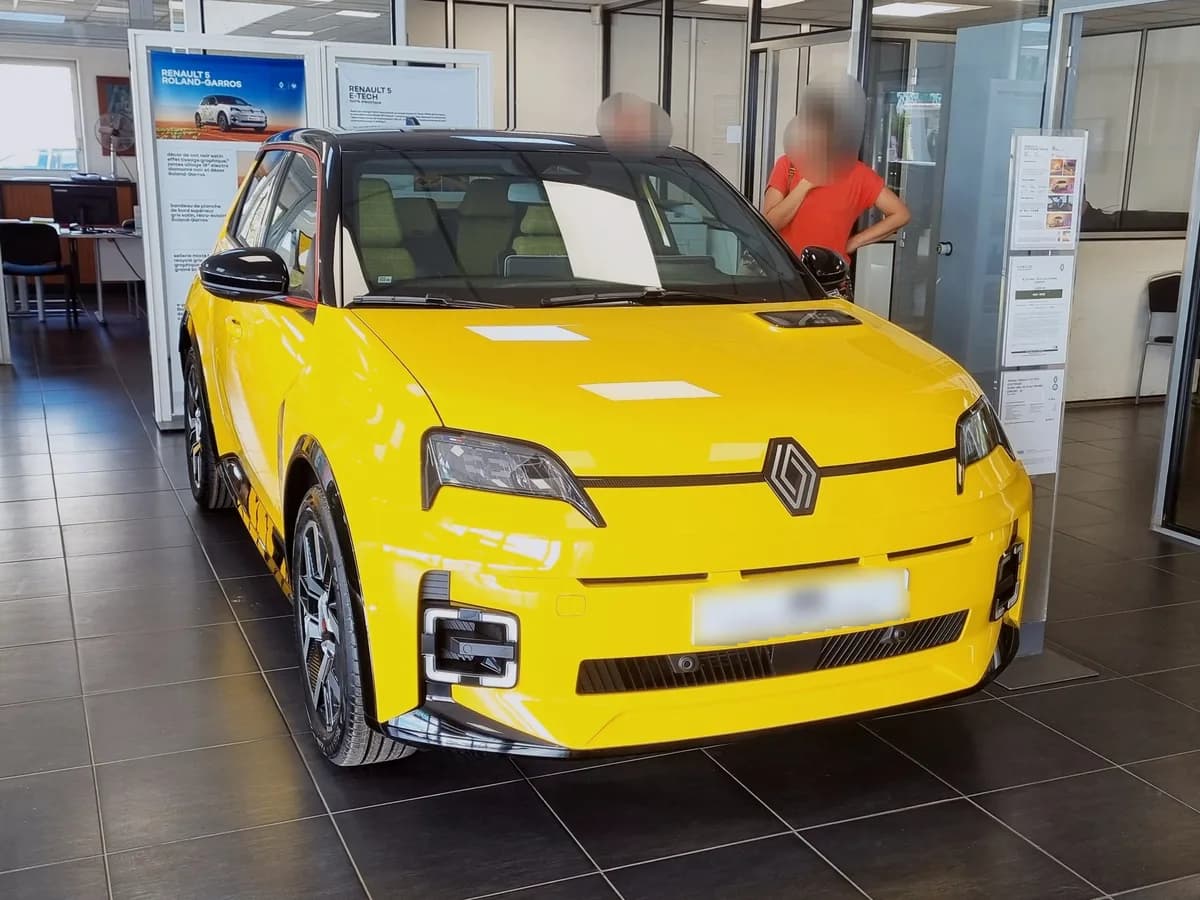
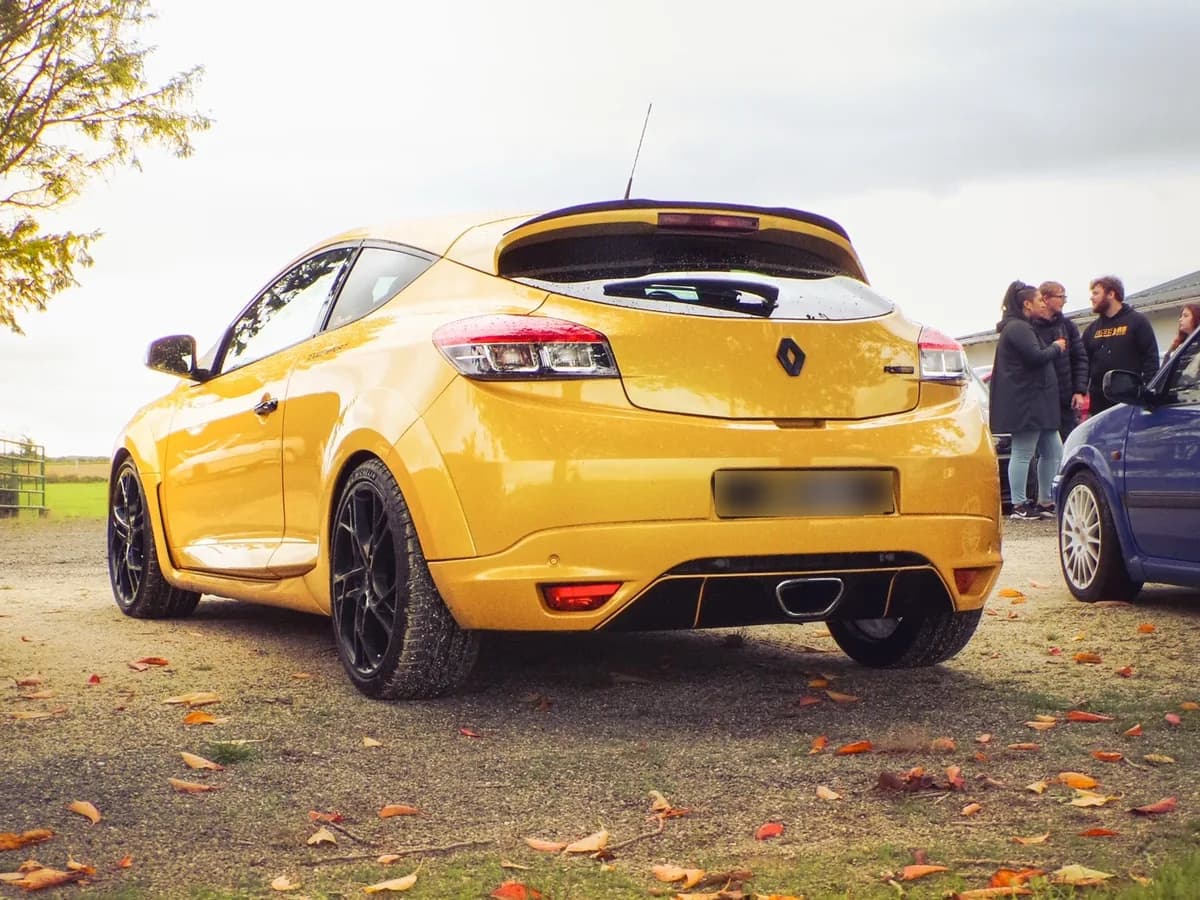
Four Renaults from the library, telling the back and forth between numbers and names:
Where the rule no longer holds
Renault dropped numbers, then took them back. Until 1990 every model carried one. The Clio opened the era of names by replacing the R5. Then in 2024 the R5 returned — as an electric car. A “5” badge can therefore name a 1972 city car or a current EV, and both share the road.
“R.S.” disappeared without the badge ceasing to be visible. Renault Sport signed the real performance cars, from the Clio R.S. to the Mégane R.S. In 2021 the division was absorbed into Alpine and the badge stopped appearing on new cars. But “R.S. Line”, the trim, outlived it — a performance badge on cars that are not — before being replaced by “Esprit Alpine”, which is also a trim.
“Turbo” named a whole car, not an engine. The 1980 R5 Turbo was not an R5 fitted with a turbo: it was a mid-engined, wide-arched rally car that shared almost nothing with the production R5. The name misleads completely about what it is.
Generations are counted in Roman numerals, but also in phases. A “phase 2” marks a mid-life facelift with no generation change. It is everyday vocabulary in French classifieds and invisible on the car.
The suffixes worth knowing
| Mention | Meaning |
|---|---|
| TCe | Turbocharged petrol. |
| dCi / Blue dCi | Diesel, the second being the more recent name. |
| SCe | Naturally aspirated petrol. |
| E-Tech | Hybrid or electric depending on the model. |
| EDC | Dual-clutch automatic gearbox. |
| R.S. Line | Sporty-looking trim, with no specific mechanicals. |
| Esprit Alpine | The trim that replaced R.S. Line. It is not an Alpine. |
| Phase 1 / Phase 2 | Before and after a facelift, within the same generation. |
The trap: R.S. Line is not an R.S.
Two words separate a trim from a performance car, and the extra word is the reassuring one.
“R.S. Line” is a trim: reshaped bumpers, wheels, contrast-stitched upholstery, sometimes a spoiler. It can be ordered on a 90 hp TCe. Plain “R.S.” marked cars prepared by Renault Sport — Clio R.S., Mégane R.S. — with specific chassis, track width, and engine. Since 2021 Renault Sport has been absorbed into Alpine and the badge no longer appears on new models.
In front of the car, track width is the most reliable cue: a Mégane R.S. has visibly widened arches, which no trim reproduces. Exhaust outlets, often central on R.S. models, and painted brake calipers complete the reading. The badge alone is never enough.
Phase 1, phase 2: the classifieds vocabulary
Where the Germans use factory codes, French car culture speaks of phases. A phase 2 is a mid-life facelift: lights, bumpers, and sometimes the dashboard change, but the generation stays the same.
The vocabulary was born in used-car classifieds and stayed there. It matters, because the price gap between a phase 1 and a phase 2 can be significant on sought-after models.
| Code | Generation |
|---|---|
| Clio I à V | The five generations since 1990, counted in Roman numerals. |
| Phase 1 / Phase 2 | Before and after the facelift, within one generation. |
| R5 (1972) / R5 E-Tech (2024) | The same name fifty-two years apart, on two unrelated cars. |
| Supercinq | The nickname of the second R5, from 1984, absorbed into everyday speech. |
To go further on dating a model, the dedicated guide covers the cues that separate two close generations.
Frequently asked questions
What does R.S. Line mean at Renault?
It is a sporty-looking trim, available on any engine. It has nothing in common with an R.S., which was a car prepared by Renault Sport. Since 2021, R.S. Line has been replaced by the Esprit Alpine trim.
What do TCe and dCi mean?
TCe marks a turbocharged petrol engine, dCi a diesel. The number that follows gives the power in horsepower: a TCe 140 makes 140 hp.
Why is there a 2024 Renault 5 and a 1972 one?
Because Renault dropped numbers in 1990 in favour of names, then revived the R5 name in 2024 for an electric city car. The two cars share no engineering, only the name.
What does phase 2 mean on a Renault?
A phase 2 is a mid-life facelift: reshaped lights and bumpers, with no generation change. The term comes from used-car classifieds and appears nowhere on the car.
Is E-Tech hybrid or electric?
Both, depending on the model. E-Tech covers all of Renault’s electrification: a Clio E-Tech is a hybrid, an R5 E-Tech is fully electric.
And if all you have is the car in front of you?
A badge can be removed, swapped, or added: it is one of the most common modifications. When the name is missing or looks wrong, the car itself remains — its silhouette, lights, and grille. That is where photo recognition takes over from decoding.