Power
118 KW @ 6000 RPM 160 HP @ 6000 RPM 158 BHP @ 6000 RPM
The Renault 5 Turbo was launched in 1980 with an architecture radically different from that of the ordinary Renault 5: its turbocharged four-cylinder engine sat in a rear-mid position and drove the rear wheels. Developed as a road car intended to support competition homologation, it featured a widened body, side air intakes and a two-seat cabin. The production version used a 1,397 cc engine rated at 160 hp, connected to a five-speed manual gearbox. Built in Dieppe through a multi-site assembly process, it stood out immediately for its dramatic styling and its close connection to rally engineering. (cdn.group.renault.com)
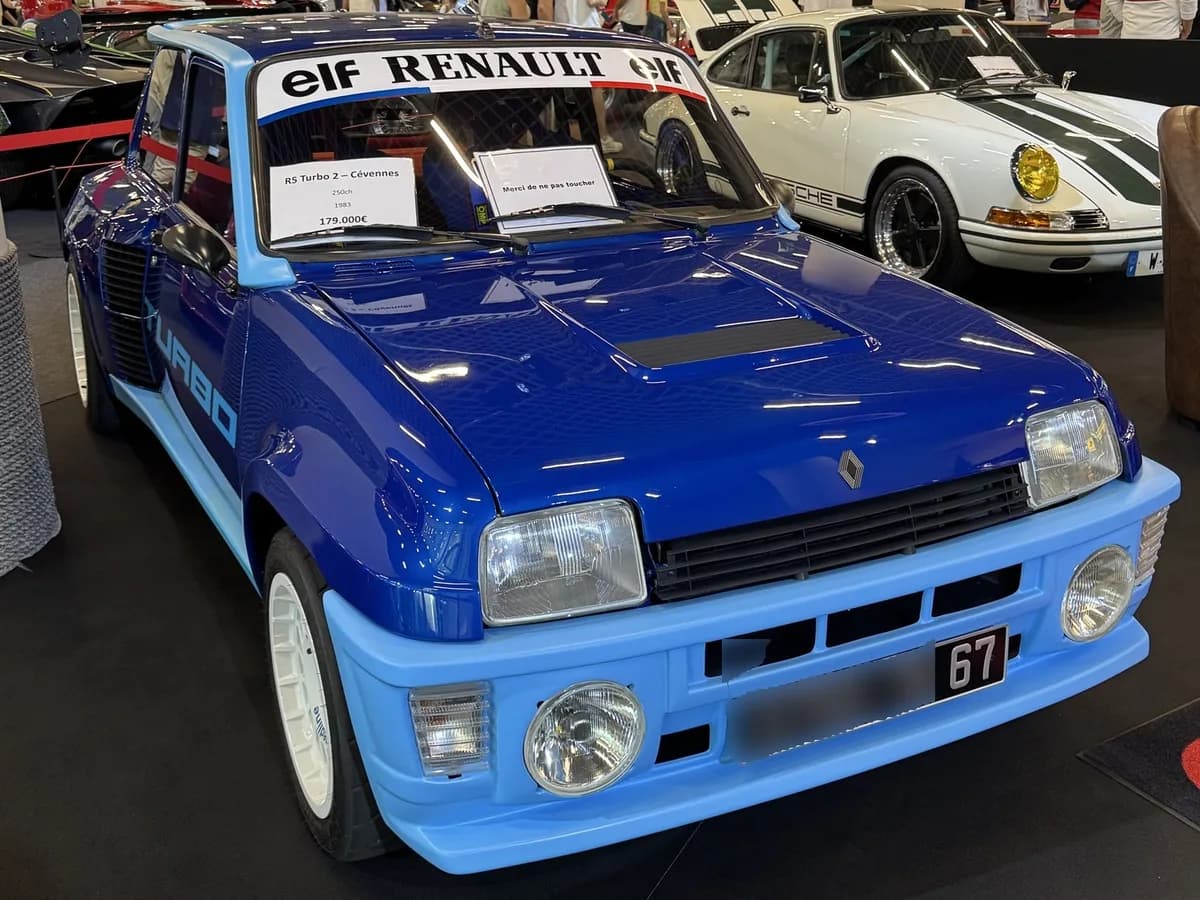
The Renault 5 Turbo project began in early 1976 around Jean Terramorsi, who proposed a showcase version of the small Renault that could also compete successfully. Engineers at Berex in Dieppe developed the mechanical package and chassis, while Bertone, Renault’s styling centre and Heuliez contributed to the design and industrialisation work. A prototype was shown publicly at the 1978 Paris Motor Show, and an experimental car entered in the 1979 Tour of Italy provided the first serious competition experience. Series production officially began on 20 May 1980. To secure Group 4 homologation, Renault had to sell a road-legal car in sufficient numbers. Bodies were produced at Flins, modified by Heuliez in Cerizay, and then painted and assembled by Alpine in Dieppe. This multi-stage process contributed to the car’s unusual and highly specialised character. (cdn.group.renault.com)
Photos added by the community for this page.
Source: autoevolution
The Renault 5 Turbo appeared on screen in a car chase in Never Say Never Again, released in 1983 and starring Sean Connery. An earlier milestone came during the 1979 Tour of Italy, where the prototype impressed observers despite retiring with an engine problem. The car later inspired a one-make European Cup launched in 1981, with races held as support events for Formula 1 Grands Prix and the 24 Hours of Le Mans. (theoriginals.renault.com)
Production of the Renault 5 Turbo officially began on 20 May 1980. Renault records 802 cars built during 1980, although they carried the 1981 model year. Manufacturing was divided between Flins, Heuliez in Cerizay and Alpine in Dieppe: the body was produced, modified and then completed with its rear-mid-mounted engine, special body panels and distinctive interior. The complete Renault 5 Turbo programme, including Turbo 1 and Turbo 2, reached 4,857 units according to The Originals Renault Museum. For the first generation, Renault’s historical document lists 536 cars built in 1981 and 352 in 1982; these figures refer to production years and do not necessarily match the model year shown in sales documentation. (cdn.group.renault.com)
Early road tests emphasised how unusual the Renault 5 Turbo was for such a compact car. Motor Sport described it as an extraordinary automobile and praised its stability at high speed, while also criticising the dashboard’s limited legibility. The magazine observed that the engine felt relatively calm at low revs before becoming much more forceful as the turbocharger came fully into play. Contemporary coverage therefore focused as much on the car’s unusual engineering as on its performance: a rear-mid-mounted engine, rear-wheel drive, widened bodywork and production linked to competition homologation. This combination quickly established the Renault 5 Turbo as an unconventional French performance car, even though some ergonomic details drew criticism from the beginning. (motorsportmagazine.com)
Supports the project origins, 20 May 1980 production start, 1980 production count, technical specifications, manufacturing process, Turbo 2 evolution and competition derivatives.
Supports the official launch date, rear-mid-engine and rear-wheel-drive layout, multi-site production, total programme production and film anecdote.
Supports contemporary observations about the car’s stability, instrumentation and early homologation plans.
Provides independent context on the car’s mid-engine, rear-wheel-drive transformation and rally significance.
Source found by OpenAI web search for this vehicle page.
Source found by OpenAI web search for this vehicle page.
Source found by OpenAI web search for this vehicle page.