Renault 5 Supercinq Hatch 1984
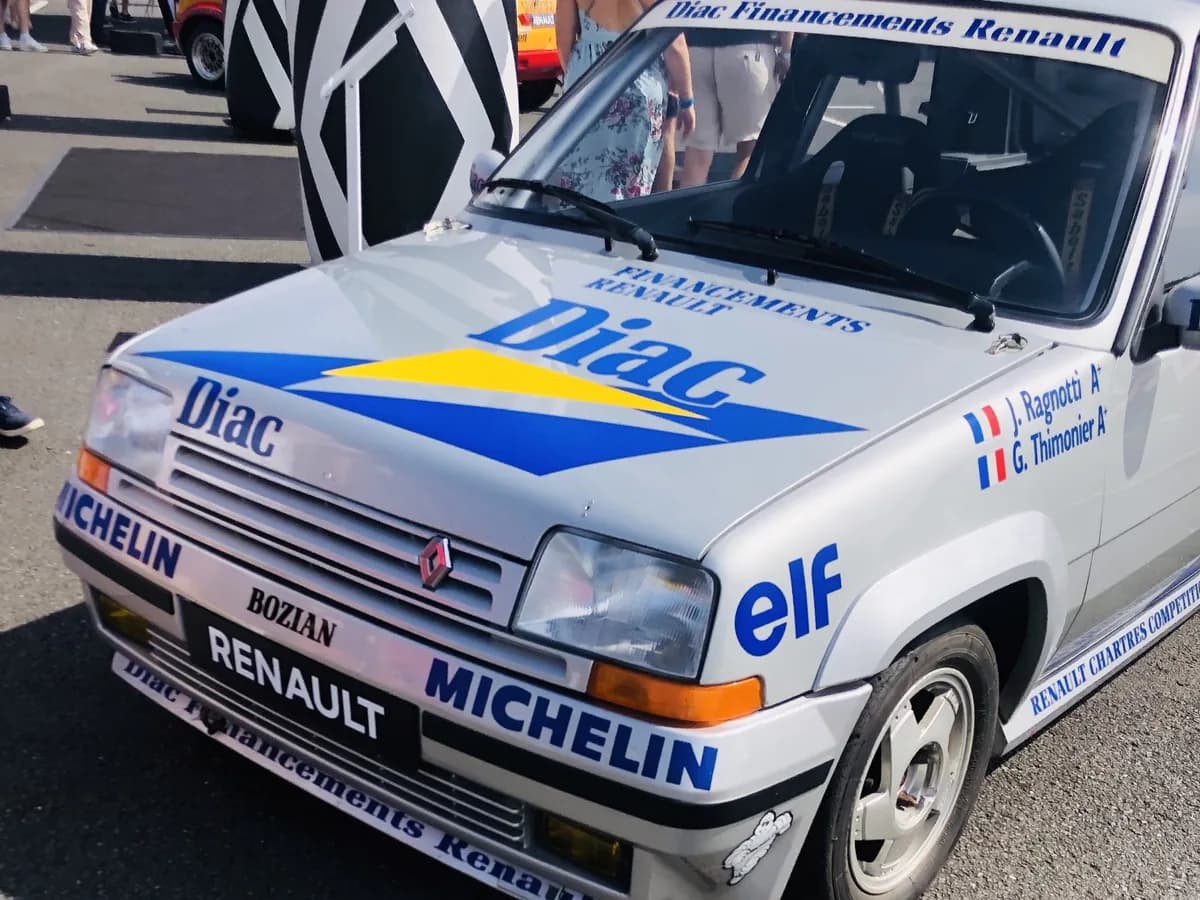
Launched in 1984, the Renault 5 Supercinq replaced one of Europe’s best-known small cars while keeping a familiar visual identity. Designed by Marcello Gandini, it was nevertheless an entirely new car underneath, using a platform derived from the Renault 9 and 11. The new model was wider and roomier than the original Renault 5, with a transverse front-mounted engine, extensively revised suspension and a practical hatchback body. “Supercinq” became the commonly used name for this second generation, although Renault generally continued to market the car as the Renault 5. Its 1984 arrival placed it in direct competition with the Peugeot 205, Fiat Uno, Opel Corsa and Volkswagen Polo. The range combined simple petrol engines with more highly equipped versions, aiming to preserve the everyday usability and broad appeal that had made the original Renault 5 successful.
History
The second-generation Renault 5 arrived as the small-car market became significantly more competitive. The Peugeot 205, Fiat Uno, second-generation Volkswagen Polo and Opel Corsa had all raised expectations by the early 1980s. Renault therefore replaced the original car’s structure and mechanical layout without abandoning its recognizable character. The new model was shown at the 1984 Paris Motor Show after an official French presentation earlier that year. Marcello Gandini’s design retained the proportions and visual themes associated with the earlier Renault 5, but the body panels were new. The Supercinq was wider, longer and more spacious inside. Its Renault 9 and 11-derived platform allowed the engine and gearbox to be mounted transversely, improving packaging. At the front, MacPherson struts replaced the earlier arrangement; at the rear, trailing arms and torsion bars were used. Sales began with three-door hatchbacks, with the range later expanding to include five-door models and additional equipment levels.
Latest scans
Photos added by the community for this page.
Anecdotes
The British launch of the new Renault 5 was backed by an ambitious industrial plan. Renault stated that annual production capacity was targeted at 670,000 cars, with assembly spread across several plants. The press material also highlighted the servicing advantages of the transverse powertrain mounted on a subframe. That emphasis on accessibility reflects the Supercinq’s broader mission: to modernize a popular small car substantially without making everyday ownership unnecessarily complicated.
Production
The Renault 5 Supercinq was produced from 1984 to 1996. Renault states that the two Renault 5 generations together exceeded nine million vehicles, while established automotive coverage places Supercinq production at approximately 3.4 million units. Those figures cover the model’s full career and do not represent the number of 1984 “Supercinq Hatch” cars alone. No reliable total limited specifically to that generic description has been used, because it covers several engines, body styles, trims and national markets. Production continued after the Renault Clio was launched, and the final Supercinq cars were built in Slovenia in 1996. Its long production run helped make the second-generation Renault 5 one of the most widely distributed European superminis of its era.
Press reception
Early press reaction was mixed but broadly positive. In an auto motor und sport road test conducted soon after the launch, the Renault 5 GTL was credited with a strong engine, a comfortable chassis, good handling and useful visibility. The magazine also criticized the perceived quality, the recessed door handles on the three-door model and some safety details considered outdated. That assessment captures the Supercinq’s position at launch: a substantially more modern, roomier and technically improved small car whose deliberately familiar styling could make the change seem less dramatic than it really was. Beneath the recognizable shape, the platform, suspension and engine installation represented a major redesign.
Evolution
Variants
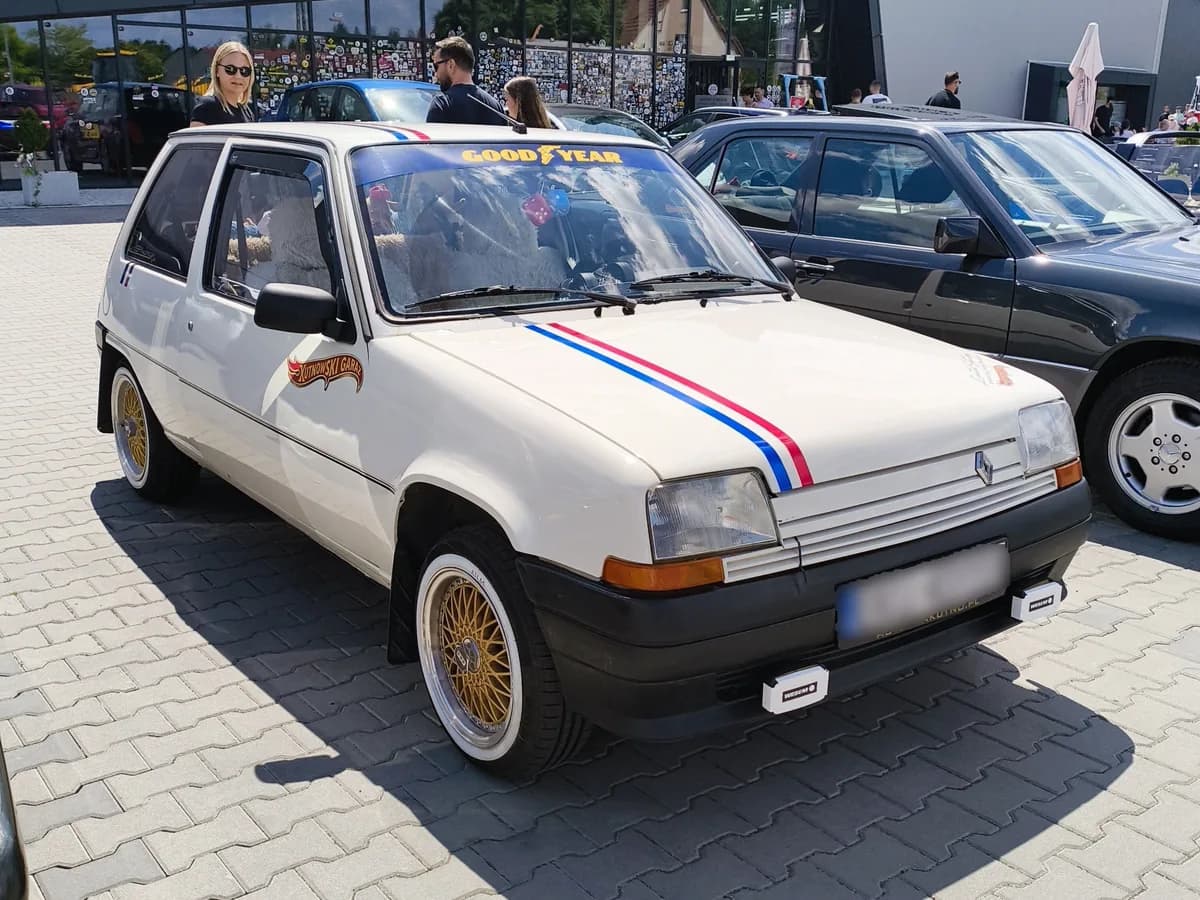
The word “Hatch” identifies the body configuration rather than a single trim level. In the early Supercinq range, Renault offered several equipment grades and engine combinations. The 1985 British launch material lists the 5 TC, 5 TL, 5 GTL, 5 Automatic, 5 TS and 5 TSE, with different outputs and transmissions. These names should not automatically be applied to every European-market car, since specifications, equipment and availability varied between countries. Three-door hatchbacks formed the core of the initial introduction, while a longer five-door version soon broadened the range. The GT Turbo belongs to the Supercinq family, but it should be treated as a later performance derivative rather than as the standard definition of a 1984 Renault 5. For a generic 1984 hatchback, the market and trim level must therefore be identified before assigning a precise engine or gearbox.
References
- Renault 5, Supercar of the seventies and eightiesRenault Group
Supports the transition from the first Renault 5 to the Super 5 in 1984, the success of the original model and its public reception.
- All-New Renault 5 Range Begins Sales Drive in U.K.Renault UK press release, archived by Renault Owners Club
Supports launch objectives, initial UK variants, engine capacities, power outputs, transmissions, transverse layout, suspension and production targets.
- Renault 5: Revolutionär mit Witz und CharmeRenault Deutschland Presse-Service
Supports the 1984 replacement of the first-generation Renault 5, the Supercinq name, the new design and the front-wheel-drive configuration.
- Renault 5 (1984-1996): Classic of the future?Motor1.com
Supports the Gandini design, Renault 9/11-derived platform, technical evolution, contemporary press evaluation and the approximate Supercinq production total.
- Salon Epoqu’Auto 2022 – dernière étape du tour Renault 5Renault Global Media
Supports Renault’s combined production figure of more than nine million Renault 5 and Supercinq vehicles.
- https://en.wikipedia.org/wiki/Renault_Super_5en.wikipedia.org
Source found by OpenAI web search for this vehicle page.
- https://en.wikipedia.org/wiki/Renault_5en.wikipedia.org
Source found by OpenAI web search for this vehicle page.
- https://www.renault5supercar.pt/R5%20-%20A%20historia/Adeus/Adeus_UK.htmlrenault5supercar.pt
Source found by OpenAI web search for this vehicle page.