Power
90 hp
The Renault 17 Coupé appeared in 1971 as the sportier member of Renault’s new 15 and 17 pairing. Revealed at the Paris Motor Show in October 1971, it used the Renault 12 platform and combined a four-seat coupé body with front-wheel drive. Its styling was defined by four round headlamps, frameless side windows and louvred rear-quarter panels that partly concealed the rear side glass. In 1972, the range included the R17 TL, powered by a 1,565 cc four-cylinder petrol engine producing 90 hp. More distinctive than the Renault 15, the Renault 17 brought together unusual design details, a useful hatchback layout and a mechanical specification aimed at drivers seeking a more expressive Renault without abandoning everyday usability.
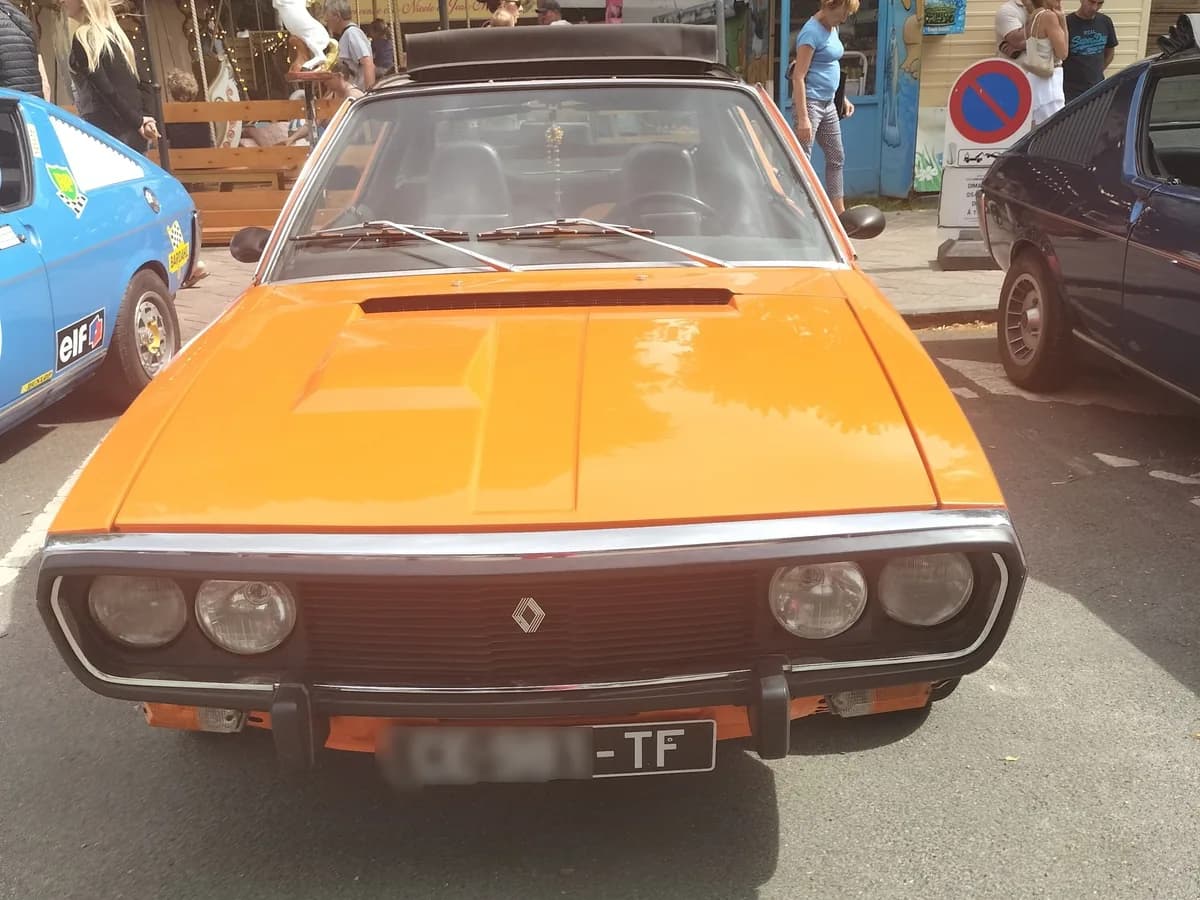
Renault developed the 15 and 17 to add two coupés derived from the Renault 12 to its model range. Both cars shared their basic engineering, but the R17 received a more overtly sporting appearance, with four round headlamps, a sharply defined rear-quarter treatment and distinctive side glazing. The body retained four seats and a hatchback, giving the car a degree of practicality that was unusual among contemporary coupés. Renault’s archives also identify the R17 as the company’s first front-wheel-drive coupé. In 1972, the R17 TL was one of the main versions, using a 1,565 cc engine with an advertised output of 90 hp. A more powerful TS was also offered, while a convertible-style version was added to the wider range. Production continued until 1979, following a significant styling and equipment update for 1976. The Renault 17 was eventually replaced in Renault’s coupé line-up by the Fuego, introduced in 1980.
Photos added by the community for this page.
Source: Renault
The number 17 created a marketing issue in Italy, where it is traditionally considered unlucky, so the car was sold there as the Renault 117. In the United States it also received a market-specific name, Sports Coupé. The R17 later became important in Renault’s competition history by winning the 1974 Press on Regardless Rally, a result recognized by Renault as the marque’s first victory in a round of the World Rally Championship.
The Renault 17 was produced from 1971 to 1979 alongside the Renault 15. Renault’s own historical archive gives an overall figure of approximately 95,000 R17s built during the model’s complete production period. That total applies to the model line as a whole and does not establish how many cars were made in 1972 or how production was divided between TL, TS, convertible-style and other versions. Manufacturing was associated with the French plants at Sandouville and Maubeuge during the car’s career. The R17 is now less frequently encountered than many mass-market coupés from the same era, partly because corrosion and long-term use removed a substantial number of cars from circulation.
Classic-car sources generally describe the Renault 17 as an agreeable, comfortable coupé with a strong visual identity. Frequently noted strengths include its front-wheel-drive layout, balanced road manners derived from the Renault 12 platform and unusual body design. Retrospective assessments also point to familiar problems for a car now more than fifty years old: corrosion can be serious, while the model’s rarity makes parts and sound original examples harder to locate. The 90 hp TL is less overtly sporting than the TS and Gordini, but it remains appealing for its relatively straightforward mechanical specification and its close connection with the original character of the Renault 17 introduced in the early 1970s.
Supports the 1971 introduction, Renault 12 platform, front-wheel-drive coupé layout, design details, variant range, rally history and approximate production.
Supports the Paris presentation, body concept, dimensions, production period, engine range, Italian name and production figures.
Supports the 1972 R17 TL engine displacement, 90 hp output, four-speed manual gearbox and front transmission.
Supports period context, comparison between the R15 and R17, engine range and cautious retrospective assessment.
Supports the R17 rally programme, 1974 Press on Regardless result, official competition cars and the model’s motorsport significance.
Source found by OpenAI web search for this vehicle page.
Source found by OpenAI web search for this vehicle page.
Source found by OpenAI web search for this vehicle page.