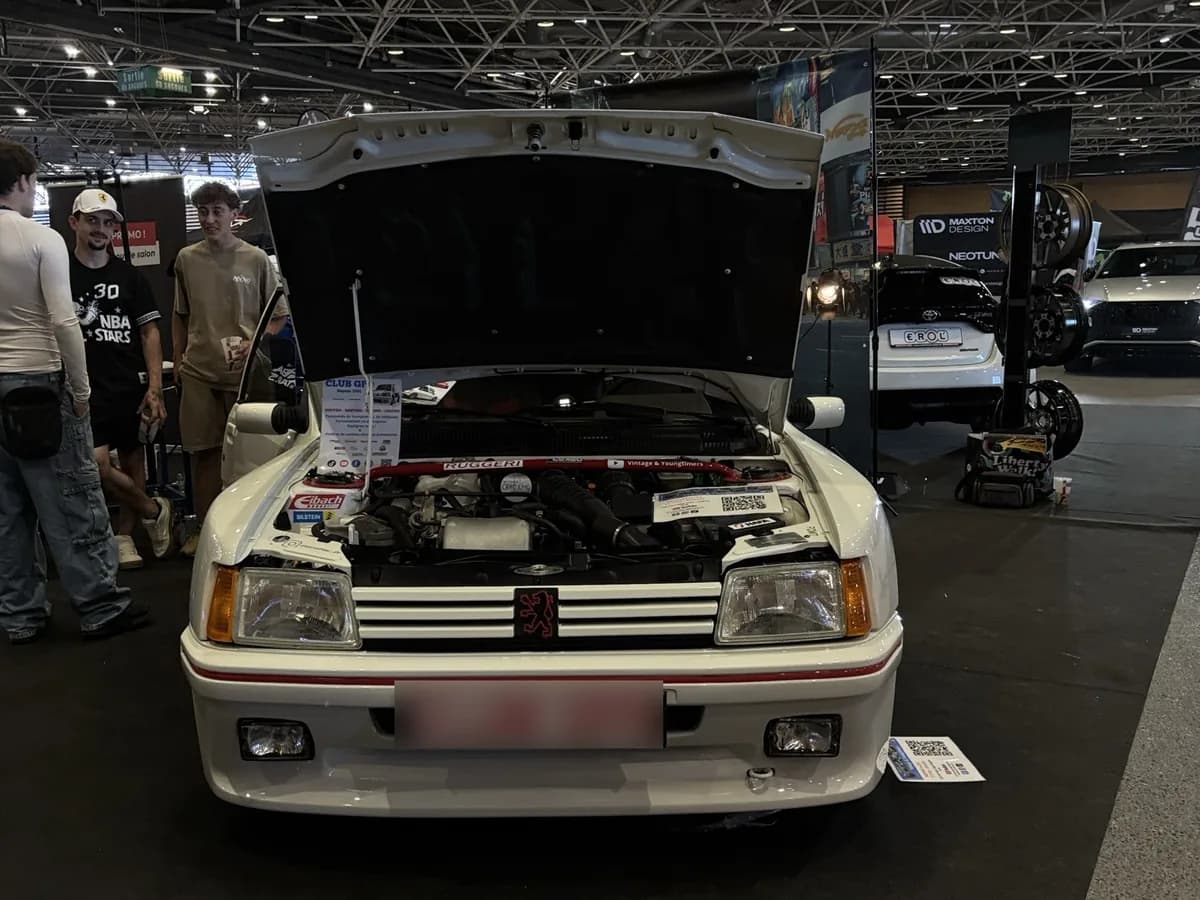
Peugeot 205 Hatch 1983
La Peugeot 205 was launched on February 24, 1983, introducing a new generation of Peugeot supermini. The 1983 model year represents the beginning of its commercial career, initially with a five-door hatchback body. Its compact proportions and practical two-box layout were intended to suit urban driving while providing useful interior space for a small car. From the outset, Peugeot combined the 205 with a broad mechanical range, helping the model appeal to different types of buyers. The 1983 Hatch is therefore the starting point for one of Peugeot’s most important model families, which later expanded to include three-door, diesel, performance, convertible and commercial versions.
Curious about this car?
Explore 205, then try your own photo.
No account needed for the result · Publish only if you choose
History
The Peugeot 205 was developed under the M24 project code while Peugeot was looking to renew its small-car range. After several years of development, the model was shown to dealers and the press in early 1983 before its commercial launch on February 24. The first production body style was a five-door hatchback, a practical configuration aimed at buyers seeking everyday versatility. Peugeot also gave the car a strong identity through the “Sacré Numéro” advertising theme, which became closely associated with the model. According to Peugeot’s retrospective account, the launch range included four petrol engines and one diesel engine. The line-up expanded in 1984 with the three-door body, the 205 GTI and the Turbo 16. What began as a practical supermini consequently developed into a broad model family covering ordinary transport, sporting use and competition.
Latest scans
Photos added by the community for this page.
Anecdotes
The road-going 205 and the Turbo 16 were unveiled only one day apart: the production model was launched on February 24, 1983, while the competition car had been shown the previous day. This timing reflected Peugeot’s decision to connect the new supermini with motorsport from the beginning. The 205 also became associated with a memorable television commercial featuring a dramatic chase across a frozen lake involving a military aircraft.
Production
The Peugeot 205 enjoyed an unusually long production career for a supermini introduced in the early 1980s. Production ran from 1983 to 1998 depending on the market, and Peugeot gives a total of 5,278,050 units built. This figure covers the entire 205 family rather than only the 1983 five-door Hatch. The range was manufactured at several plants and offered in numerous forms, including three-door and five-door hatchbacks, a convertible and a commercial vehicle. The overall figure demonstrates the model’s industrial success, but it does not provide a detailed breakdown by year, body style or trim level.
Press reception
The 205 quickly attracted strong public and specialist-press attention. It finished second in the 1984 European Car of the Year election, narrowly behind the Fiat Uno, confirming that it was regarded as a major new entrant in its class. Its appeal was not based solely on the sporting versions that followed. The practical five-door body and the range’s breadth helped establish the 205 as an everyday all-rounder. Its long production life and substantial sales later reinforced that early response, turning the model into one of Peugeot’s defining commercial successes.
Evolution
Variants
References
- The Peugeot 205 is turning 40: An alluring & sacred numberPEUGEOT / Stellantis Media
Supports the February 24, 1983 launch, the initial five-door body, the 1984 three-door and GTI introductions, the launch engine-range overview, the 1987 dashboard update and the total production figure.
- Peugeot 205 compie 40 anniPEUGEOT / Stellantis Media
Supports the 1983 five-door launch date, the 15-year career and the reported total of 5,278,300 units in the Italian-language retrospective.
- Peugeot 205 (1983–1994) ReviewHonest John Classics
Supports the statement that the 205 finished second in the 1984 European Car of the Year award behind the Fiat Uno.
- 40 years of PEUGEOT 205Automobile Museums
Supports the early-1983 presentation context, the five-door and three-door body availability, and the relationship between the road car and the Turbo 16 unveiling.
- https://www.encycarpedia.com/peugeot/83-205encycarpedia.com
Source found by OpenAI web search for this vehicle page.
- https://www.ixocollections.com/en/magazine/the-peugeot-205-worldixocollections.com
Source found by OpenAI web search for this vehicle page.
- https://www.topgear.com/car-news/top-gear-advice/peugeot-205-buying-guide-1983-1998topgear.com
Source found by OpenAI web search for this vehicle page.