
599
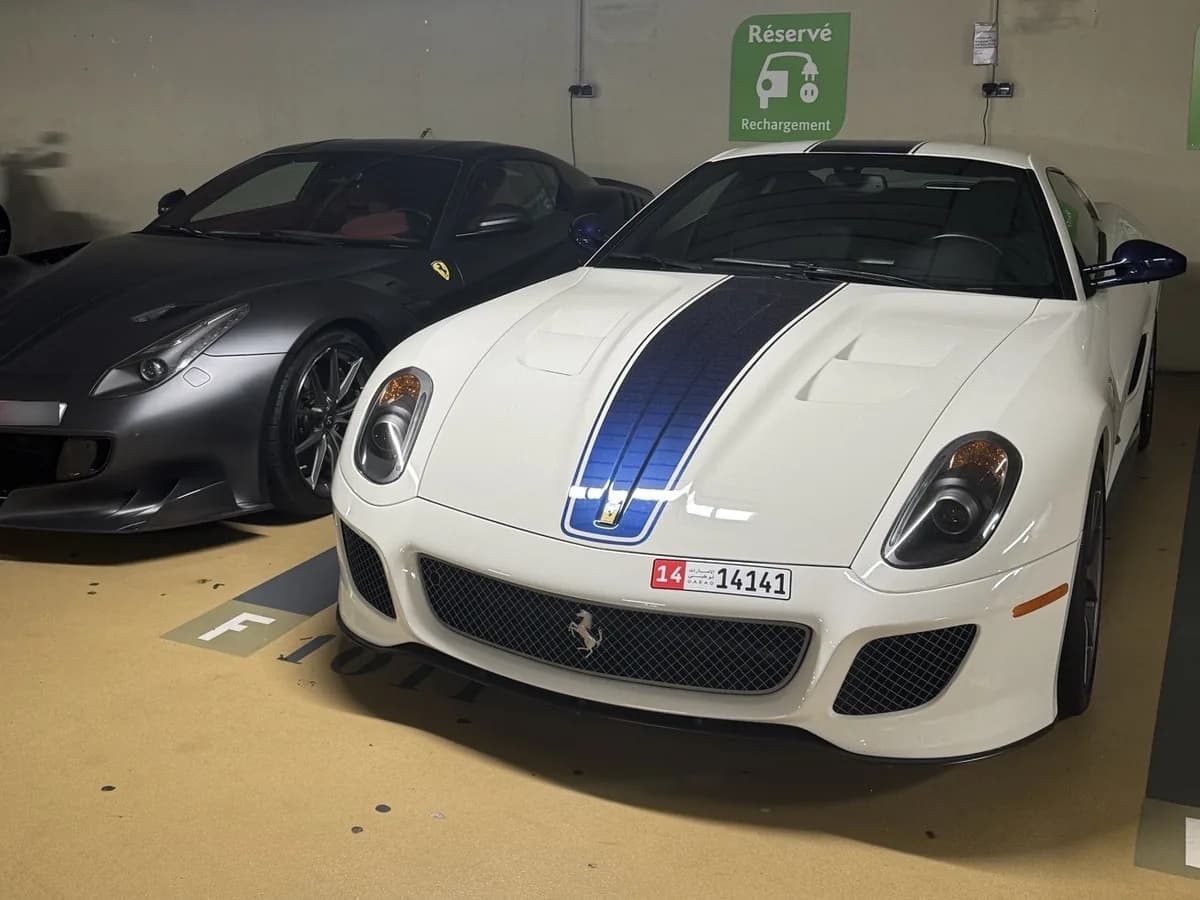
Introduced in 2006, the Ferrari 599 GTB Fiorano is a front-engined, longitudinal-V12 grand touring berlinetta. Its name combines the engine’s approximately 6.0-liter displacement, the GTB abbreviation for Gran Turismo Berlinetta, and Ferrari’s Fiorano test circuit. Ferrari rated the 5,999 cc V12 at 620 hp at 7,600 rpm, with a claimed top speed above 205 mph and 0–62 mph in 3.7 seconds. The 599 was designed to combine long-distance usability with technology derived from Ferrari’s competition and Formula 1 programs. The versions represented here are the standard GTB Fiorano, the 2009 GTB Fiorano HGTE, and the 2010 599 GTO. The latter is the most overtly performance-focused member of the family, drawing heavily on Ferrari’s 599XX development work while remaining a road car.
What about the car you photographed?
Upload a photo to get a suggested make, model and likely year.
No account needed for the result · Publish only if you choose
Variants by year
Make: Ferrari · Model: 599
3 / 3 versions shown
2010
2009

2006

Ferrari 599 photos
Model summary
Data from the ScanRacer library, organized to compare versions quickly.
Model introduction
Introduced in 2006, the Ferrari 599 GTB Fiorano is a front-engined, longitudinal-V12 grand touring berlinetta. Its name combines the engine’s approximately 6.0-liter displacement, the GTB abbreviation for Gran Turismo Berlinetta, and Ferrari’s Fiorano test circuit. Ferrari rated the 5,999 cc V12 at 620 hp at 7,600 rpm, with a claimed top speed above 205 mph and 0–62 mph in 3.7 seconds. The 599 was designed to combine long-distance usability with technology derived from Ferrari’s competition and Formula 1 programs. The versions represented here are the standard GTB Fiorano, the 2009 GTB Fiorano HGTE, and the 2010 599 GTO. The latter is the most overtly performance-focused member of the family, drawing heavily on Ferrari’s 599XX development work while remaining a road car.
History
The 599 GTB Fiorano replaced the 575M Maranello in Ferrari’s front-engined V12 range. Ferrari introduced it in 2006 as a car intended to combine the refinement of a long-distance grand tourer with the performance of the company’s most specialized sports cars. Its two-seat berlinetta body was designed by Pininfarina and features sculpted rear buttresses that help manage airflow around the tail. An aluminum structure, magnetorheological dampers and F1-Trac traction control reflected Ferrari’s effort to blend comfort with high-speed control. The naturally aspirated 5,999 cc V12 sits longitudinally ahead of the cabin and drives the rear wheels. A six-speed manual gearbox was available, while Ferrari’s F1 automated manual transmission provided the more technically advanced alternative. In 2009, Ferrari introduced the HGTE package, concentrating on sharper responses and greater body control without increasing the standard engine’s output. The 599 GTO followed in 2010 as a limited special series of 599 cars, according to Ferrari. It transferred extensive know-how from the 599XX experimental track car to a road-legal berlinetta, including a 670 hp engine, revised aerodynamics, stronger braking hardware and lower weight. The result was a clear progression from high-speed GT to track-influenced special series.
Generations
The Ferrari 599 is not best understood as a model with several conventional generations. It is a single V12 berlinetta family that evolved through different levels of chassis development and performance focus. The GTB Fiorano, introduced in 2006, is the core version. Its long hood, rear-set cabin, sculpted rear buttresses and front-engined proportions define the model visually. The 620 hp V12 gives it supercar pace, yet the car remains conceived as a usable grand tourer rather than a stripped-out track special. The GTB Fiorano HGTE, introduced in 2009, is a handling and equipment development rather than a completely new generation. The Handling Gran Turismo Evoluzione package brought stiffer springs, a stronger rear anti-roll bar, a lower ride height, revised magnetorheological damper calibration and higher-grip tires. The standard V12’s power output remained unchanged, so the main distinction lies in response, body control and driver involvement. The 2010 599 GTO is the family’s most radical step. Ferrari linked it closely to the 599XX experimental track car and gave it a 670 hp engine, lower weight, larger brakes, wider tires and more extensive aerodynamic work. Its GTO designation therefore signals more than a cosmetic trim level: it identifies a limited special series with substantially different performance priorities and a much stronger track influence.
Key differences
The GTB Fiorano focuses on the balance between speed, comfort and everyday usability. It uses the 620 hp V12, magnetorheological suspension and, depending on specification, either a six-speed manual or F1 automated manual gearbox. The HGTE retains the same engine output but applies a firmer dynamic setup: lower ride height, stiffer springs, a stronger rear anti-roll bar, revised damper calibration and stickier tires. Its main advantage is sharper body control and response, not a major increase in straight-line power. The 599 GTO moves further toward track performance. Its V12 produces 670 hp, while weight reduction, larger wheels and brakes, revised aerodynamics and more aggressive electronic calibration all support faster driving. Ferrari lists a top speed above 208 mph. It is therefore misleading to describe HGTE as simply a less powerful GTO: HGTE is a handling package applied to the GTB, whereas the GTO is a limited special series with broader mechanical and aerodynamic changes. Exact equipment can vary by market, production date and original options, so visual identification alone is not always conclusive.
Photo recognition
The GTB Fiorano is first identified by its front-engined V12 proportions: a long hood, rear-set cabin, short rear overhang and sculpted buttresses framing the rear glass. Large wheels and air outlets behind the front wheels are also typical, although factory options can change the visual presentation. A 599 GTB Fiorano badge on the body or door sills may help, but it is not conclusive on a modified car. HGTE cars may show dedicated wheels, sportier exterior details, a lower ride height and additional carbon-fiber trim inside. Identification is not always straightforward because the package could be combined with different specifications, and some parts may have been replaced or retrofitted. The 599 GTO is more readily distinguished by its redesigned bumpers, more prominent aerodynamic details, wider wheels and tires, model-specific trim and GTO badging. Even so, appearance alone should not settle the question. The most reliable confirmation comes from Ferrari build documentation, the vehicle identification number, original invoices and documented equipment. Market-specific specifications can also affect wheels, lighting, trim and other visible details.
Important versions
The 2006 GTB Fiorano is the foundational and most representative version of the family: a 5,999 cc naturally aspirated V12, 620 hp and a Ferrari-claimed top speed above 205 mph. The 2009 GTB Fiorano HGTE is important for its sharper chassis specification rather than for an increase in engine power. The 2010 599 GTO is the rarest and most extreme version within the referenced range. Ferrari states that production was limited to 599 examples; its V12 produces 670 hp and incorporates extensive development input from the 599XX program. A 599 GTO should not be treated as an ordinary GTB with similar cosmetic parts. Original Ferrari build records, identification details and documented equipment are the strongest ways to verify the specification.
References
- 599 GTB Fiorano (2006)Ferrari
- 599 GTB Fiorano: Ferrari HistoryFerrari
- 599 GTO (2010)Ferrari
- 2010 Ferrari 599GTB Fiorano HGTECar and Driver
- First Drive: Ferrari 599 GTB Fiorano HGTEMotorTrend
- https://auto.howstuffworks.com/ferrari-599-gtb-fiorano.htmauto.howstuffworks.com
- https://www.motorsportmagazine.com/archive/article/july-2006/32/ferrari-599-gtb/motorsportmagazine.com
Technical specifications
Structured data available for versions linked to this model.
| Version | Power | Torque | Top speed | Drivetrain | Fuel |
|---|---|---|---|---|---|
| — | 620 ch | — | — | propulsion / boîte manuelle à six rapports ou transmission F1 automatisée | — |
Frequently asked questions
- What years was the Ferrari 599 produced?
- ScanRacer's referenced versions cover 2006 - 2010.
- How many Ferrari 599 examples are documented on ScanRacer?
- 24 published scans from 17 members, with the latest photo added in October 2026.
- What is the power output of the Ferrari 599?
- The sourced technical data lists 620 ch.
What about the car you photographed?
Upload a photo to get a suggested make, model and likely year.
No account needed for the result · Publish only if you choose