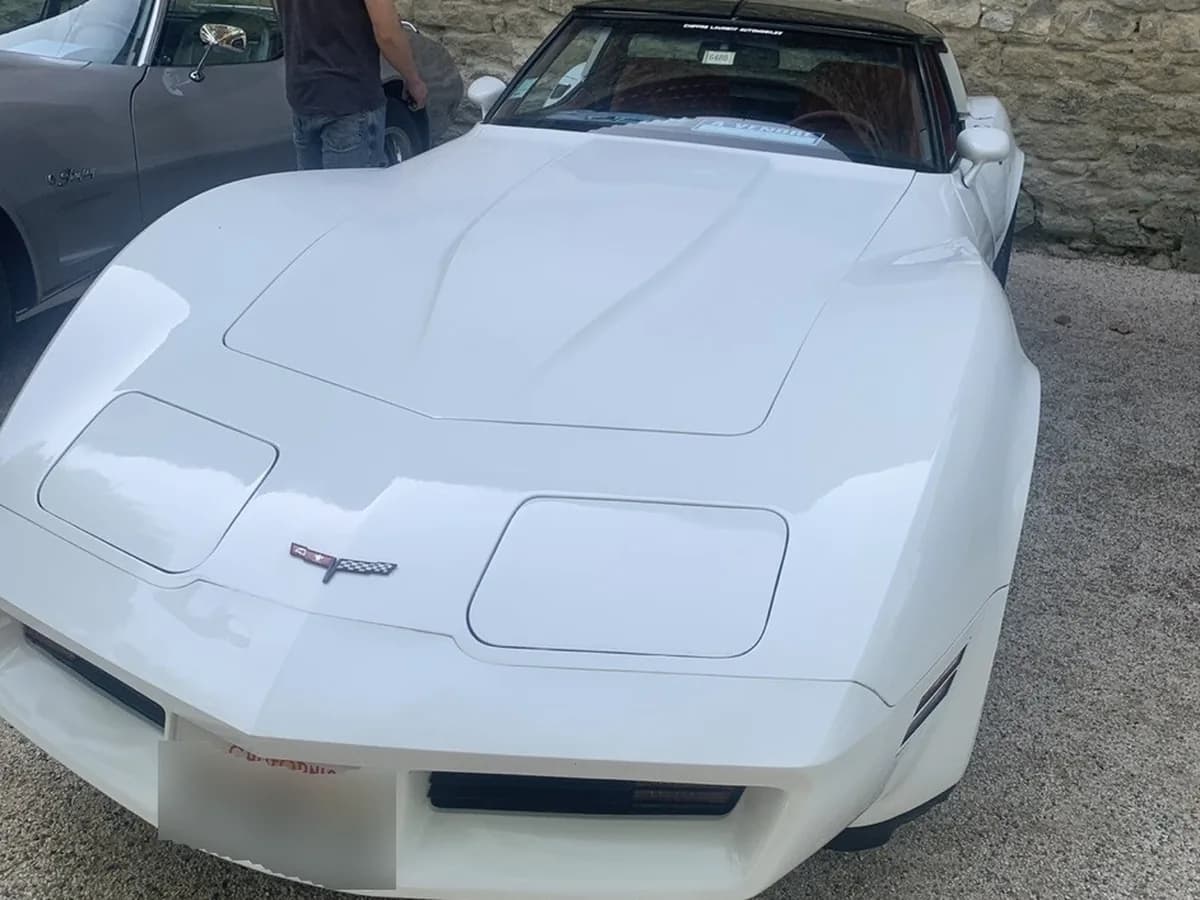
Chevrolet Corvette Coupé 1979
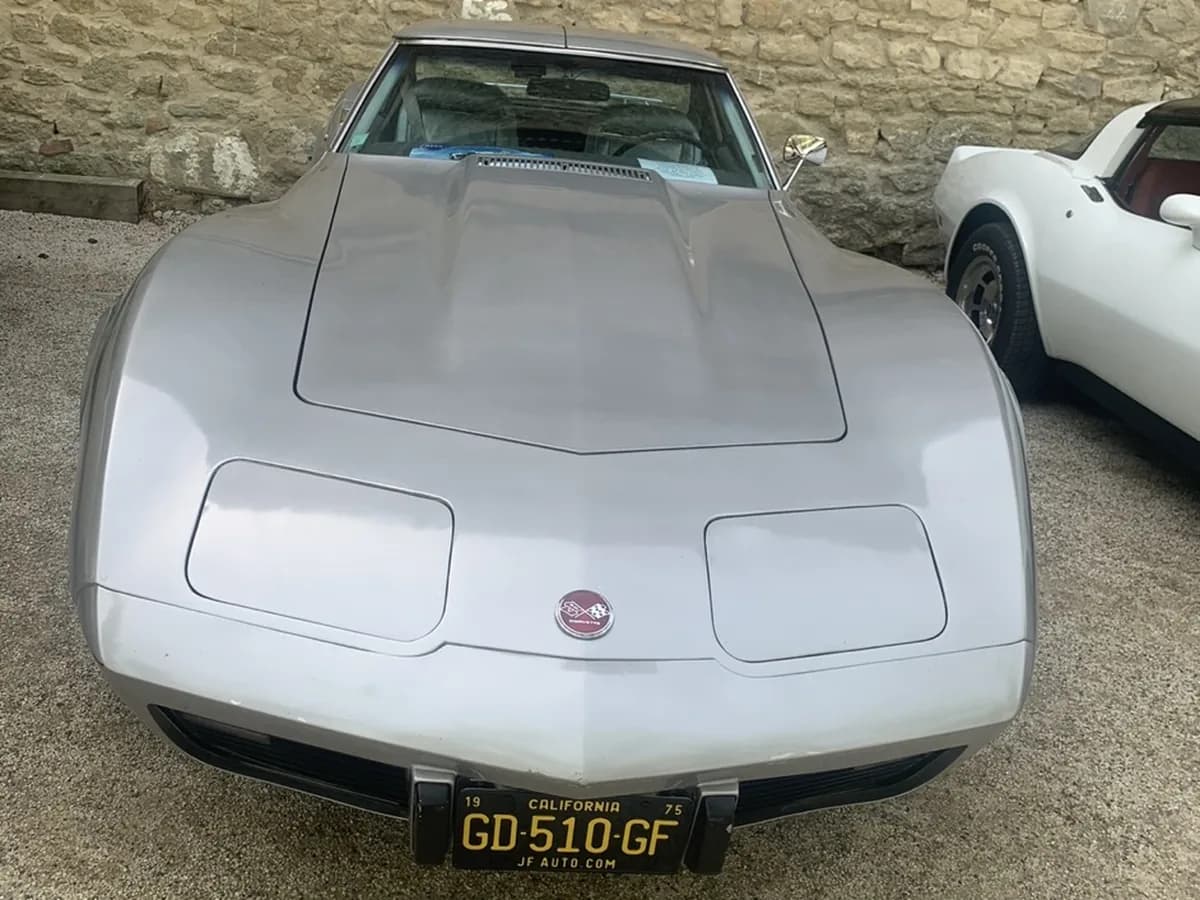
The 1979 Chevrolet Corvette Coupé belongs to the third-generation Corvette, commonly identified as the C3, and represents one of the model’s strongest sales years. Built with a fiberglass body and Chevrolet’s 350-cubic-inch V8, it retained the fastback profile introduced for 1978. Chevrolet offered two power levels for the model year: the 195-horsepower L48 and the optional 225-horsepower L82. The 1979 Corvette also gained useful equipment, including high-back sport seats, a standard AM/FM radio, power-assisted disc brakes, and a limited-slip differential. Its long hood, removable roof panels, and sharply tapered tail remained unmistakable late-1970s Corvette features, while its output reflected the growing influence of emissions regulations and fuel-economy pressures on American performance cars.
History
In 1979, the Corvette entered its 26th year of production while continuing the C3 formula introduced in 1968. The previous model year had brought a major visual and practical change: a fixed-glass fastback rear window, a revised dashboard, and improved luggage access. Chevrolet carried that design into 1979 rather than introducing a full redesign. The body remained separate from the steel frame and was formed from fiberglass panels, a construction method long associated with the Corvette. Two carbureted 5.7-liter V8 engines were available: the standard L48 and the more performance-oriented L82. The L48 was rated at 195 horsepower, while the L82 produced 225 horsepower. Chevrolet concentrated on equipment and refinement for the new model, adding high-back seats derived from the 1978 Pace Car, a standard AM/FM radio, radial tires, power-assisted disc brakes, and a Positraction limited-slip differential. With 53,807 cars built, 1979 became the Corvette’s highest-production model year at the time.
Latest scans
Photos added by the community for this page.
Anecdotes
The 1979 model year holds a special place in Corvette production history. Chevrolet built 53,807 examples, establishing the model’s production record at the time. The National Corvette Museum identifies the year as a high point in Corvette popularity. That result came during a difficult period for American performance cars, when stricter emissions rules and growing concern about fuel economy were limiting the output of large-displacement engines.
Production
Total production for the 1979 Chevrolet Corvette reached 53,807 cars. Model-year breakdowns list 39,291 examples with the standard L48 engine and 14,516 equipped with the optional L82. The L48 therefore accounted for most production, while the L82 represented the higher-output choice for buyers seeking a more sporting specification. These figures describe the complete 1979 model-year total rather than a separate count for every color, transmission, or option combination. The body remained the C3 coupé with removable roof panels, and Chevrolet did not offer a regular-production convertible for this model year. The result was a relatively high-volume Corvette that combined a dramatic fiberglass body with two clearly differentiated V8 power levels.
Press reception
Period testing presented the 1979 Corvette as a capable sports car, although it was no longer as uncompromising as earlier American muscle cars. Road & Track recorded 6.6 seconds to 60 mph in an L82 with a four-speed manual and a 15.3-second quarter-mile at 95 mph. Motor Trend obtained a different result from a similarly equipped car, reporting 15.74 seconds at 89.4 mph. The variation illustrates how gearing, test conditions, and individual vehicle setup could affect contemporary performance figures. Magazine coverage also reflected the broader engineering climate: Chevrolet was trying to retain Corvette performance while meeting increasingly demanding emissions requirements. Within the range, the L82 was generally the more appealing specification for drivers who placed greater emphasis on acceleration.
Evolution
The 1979 Corvette evolved through functional and mechanical refinements rather than a major styling change. Its fastback body was carried over from 1978, but the front and rear spoilers previously associated with the Pace Car became available as options. The standard L48 V8 gained a dual-snorkel intake and a less restrictive exhaust system, raising its rated output to 195 horsepower. The optional L82 also increased to 225 horsepower. High-back sport seats became standard across the range, and the inclusion of an AM/FM radio improved everyday usability. Buyers could choose a three-speed automatic transmission or one of the available four-speed manual gearboxes, although equipment availability varied by engine, emissions specification, and destination market. These changes made the 1979 model more complete without fundamentally altering the C3’s character.




Variants
References
- 1978-1979 CorvetteHemmings
Supports the 1979 model changes, engine outputs, transmissions, equipment, body construction, and general technical context.
- 1979 Chevy CorvetteMotorTrend
Supports the L48 and L82 specifications, production breakdown, standard equipment, and period performance context.
- 1970s C3 Corvettes on DisplayNational Corvette Museum
Supports the 53,807-unit production record and the historical importance of the 1979 model year.
- 1979 Corvette Production and Performance NumbersCorvette Action Center
Supports detailed engine-option production totals and period test figures from Road & Track.
- 1979 Chevrolet Corvette BrochureChevrolet brochure archive
Supports the period model description, available engines, transmissions, tires, and equipment options.
- https://en.wikipedia.org/wiki/Chevrolet_Corvetteen.wikipedia.org
Source found by OpenAI web search for this vehicle page.
- https://www.hemmings.com/category-search/classics/1979/chevrolet/corvettehemmings.com
Source found by OpenAI web search for this vehicle page.
- https://en.wikipedia.org/wiki/1979_Chevrolet_Corvetteen.wikipedia.org
Source found by OpenAI web search for this vehicle page.