BMW 3 Series Baur Cabriolet 1983
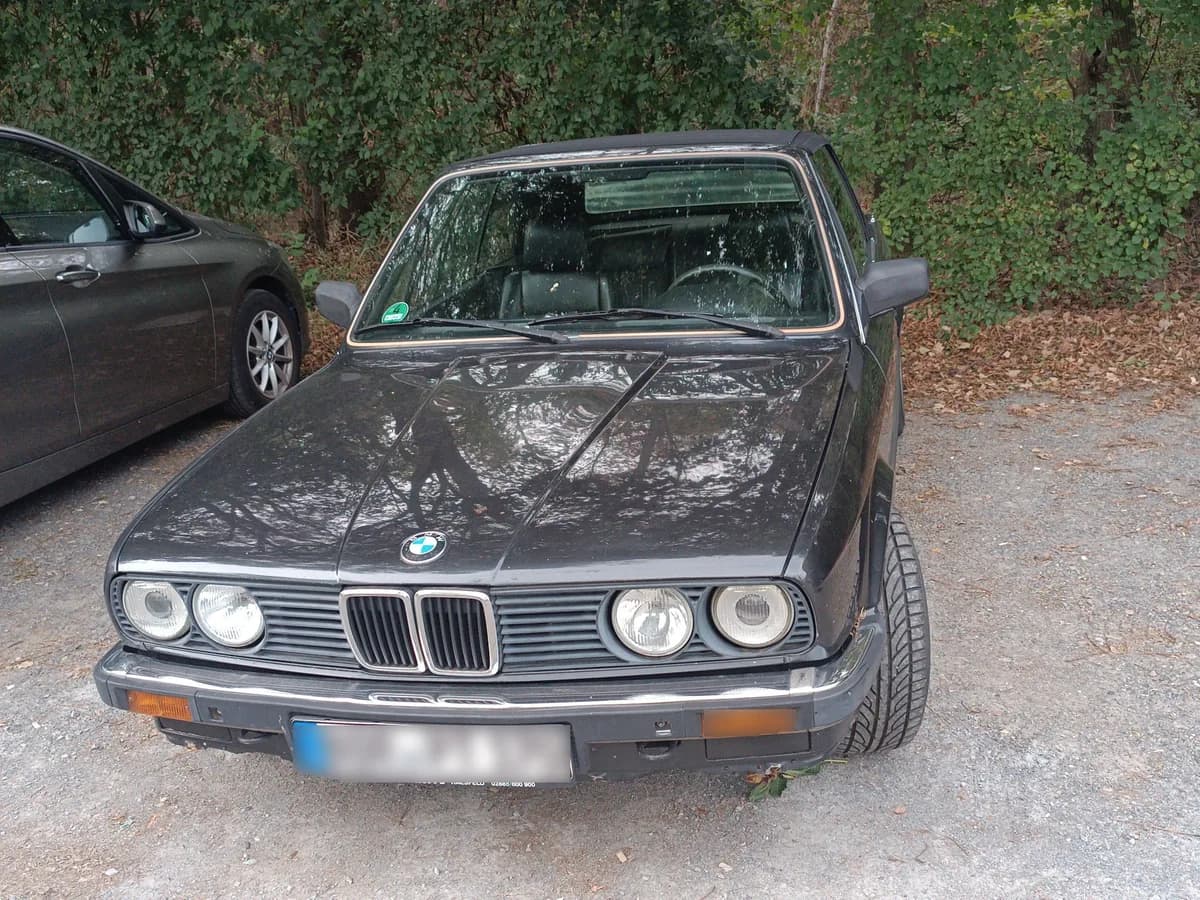
The 1983 BMW 3 Series Baur Cabriolet belongs to the first-generation E21 range, produced from 1975 to 1983. Unlike a fully open convertible, this version retained a fixed roof frame and a central rollover bar, combining a removable roof panel with a folding rear soft top. The conversion was carried out by Stuttgart coachbuilder Baur using a standard BMW 3 Series body. Its unusual structure offered several driving configurations: fully closed, roof panel removed in a targa-style layout, rear section opened, or completely uncovered. BMW made the conversion available through its dealer network and supported it with official factory warranty coverage. The “1983” designation should be treated carefully, however, because production of the E21-based Baur is generally dated from 1977-1978 to 1982.
Curious about this car?
Explore 3 Series, then try your own photo.
No account needed for the result · Publish only if you choose
History
The first BMW 3 Series was introduced in 1975 as the successor to the 02 range. Known internally as the E21, it was launched as a two-door, front-engine, rear-wheel-drive model designed around compact dimensions, balanced handling and a sporting character. BMW did not develop a full factory convertible for this generation. Instead, it worked with Stuttgart-based coachbuilder Karosserie Baur, which already had experience converting BMW models.
Introduced in the late 1970s as the TopCabriolet, the Baur TC1 started with a complete E21 body before being modified. The conversion retained the window frames and added a fixed rollover structure, while the roof used two removable or folding sections: a rigid panel above the front seats and a soft rear hood. This arrangement allowed open-air driving without turning the car into a completely pillarless convertible. Customers could order the car through BMW dealers, and BMW warranty support applied to the conversion. The Baur E21 was therefore more than an informal aftermarket adaptation: it was an officially supported, coachbuilt derivative of the first-generation 3 Series.
Latest scans
Photos added by the community for this page.
Anecdotes
The TC1 roof could be arranged in several different ways, giving the car its distinctive character. The rigid front panel could be removed and stored in the luggage compartment, while the rear soft top folded beneath a protective cover. The car could remain visually close to a coupé, open only above the front occupants, or provide a much more extensive opening. This multi-configuration roof is one of the defining features of Baur conversions.
Production
BMW Group states that 1,364,039 examples of the first-generation BMW 3 Series were produced through 1983, including 4,595 cars in Baur “TopCabriolet” form. That figure covers all E21 Baur conversions and does not identify a particular engine, market or model year. Specialist references generally place TC1 production between 1977-1978 and 1982, before the E30-based TC2 replaced it. The available evidence therefore does not establish how many Baur E21 cars were built specifically in 1983, or whether a vehicle carrying a 1983 designation was manufactured during that calendar year. Chassis records, production documentation and original registration papers are required to date an individual car accurately.
Press reception
The available sources document the Baur’s place within the BMW range more clearly than they measure period press reaction to each individual version. In its retrospective material, BMW describes the first 3 Series as a major commercial success and notes that customers could order the TopCabriolet with the range’s different engine variants. BMW also records that 3 Series sales passed the one-million mark in 1981. Those figures apply to the E21 family as a whole, not specifically to the Baur conversion. It is therefore safer to describe the TC1 as an unusual, officially distributed alternative to a conventional coupé, rather than assign it a specific critical reputation without identified contemporary road tests or reviews.
Evolution
Variants
The Baur TC1 was not restricted to a single BMW E21 engine specification. Historical references indicate that the available E21 powertrains could be ordered with the conversion, covering both four-cylinder and six-cylinder versions. The underlying car retained the main identity of the 3 Series: a driver-focused dashboard, rear-wheel drive and a two-door coupé body adapted for open-air use.
The key difference between individual cars is therefore the BMW model used as the basis, rather than a separate Baur engine range. Designations such as 315, 316, 318, 320, 320/6 and 323i should not be assigned to a specific vehicle without checking its identification number, build plate or original paperwork. “Baur Cabriolet” primarily identifies the coachbuilt body conversion; the mechanical specification remains dependent on the original E21 supplied for conversion.
References
- BMW 3 Series: a Journey through the GenerationsBMW
Supports the E21 production period, the Baur TopCabriolet’s place in the first-generation range, the 1977-1982 dating and the 4,595-unit total.
- BMW Group Classic: 40 years of the BMW 3 SeriesBMW Group PressClub
Supports the E21 history, rear-wheel-drive layout, 1,364,039 total first-generation production, 4,595 TopCabriolets and BMW’s broader sales context.
- Die Baur TC1 und TC2BMW 3er-Club E21 und E30 e.V.
Supports Baur’s Stuttgart coachbuilding role, the TC1/TC2 transition, dealer ordering and the four roof configurations.
- Convertible versions & pickupBMWE21.net
Provides specialist background on the Baur TC1 structure, BMW dealer distribution, factory warranty and compatibility with E21 engine versions.
- https://en.wikipedia.org/wiki/BMW_3_Series_%28E21%29en.wikipedia.org
Source found by OpenAI web search for this vehicle page.
- https://en.wikipedia.org/wiki/BMW_3_Seriesen.wikipedia.org
Source found by OpenAI web search for this vehicle page.
- https://petrolicious.com/blogs/articles/bmw-baur-e21-the-original-3-series-cabrioletpetrolicious.com
Source found by OpenAI web search for this vehicle page.