Power
294.2 KW @ 5600-7000 RPM 400 HP @ 5600-7000 RPM 395 BHP @ 5600-7000 RPM
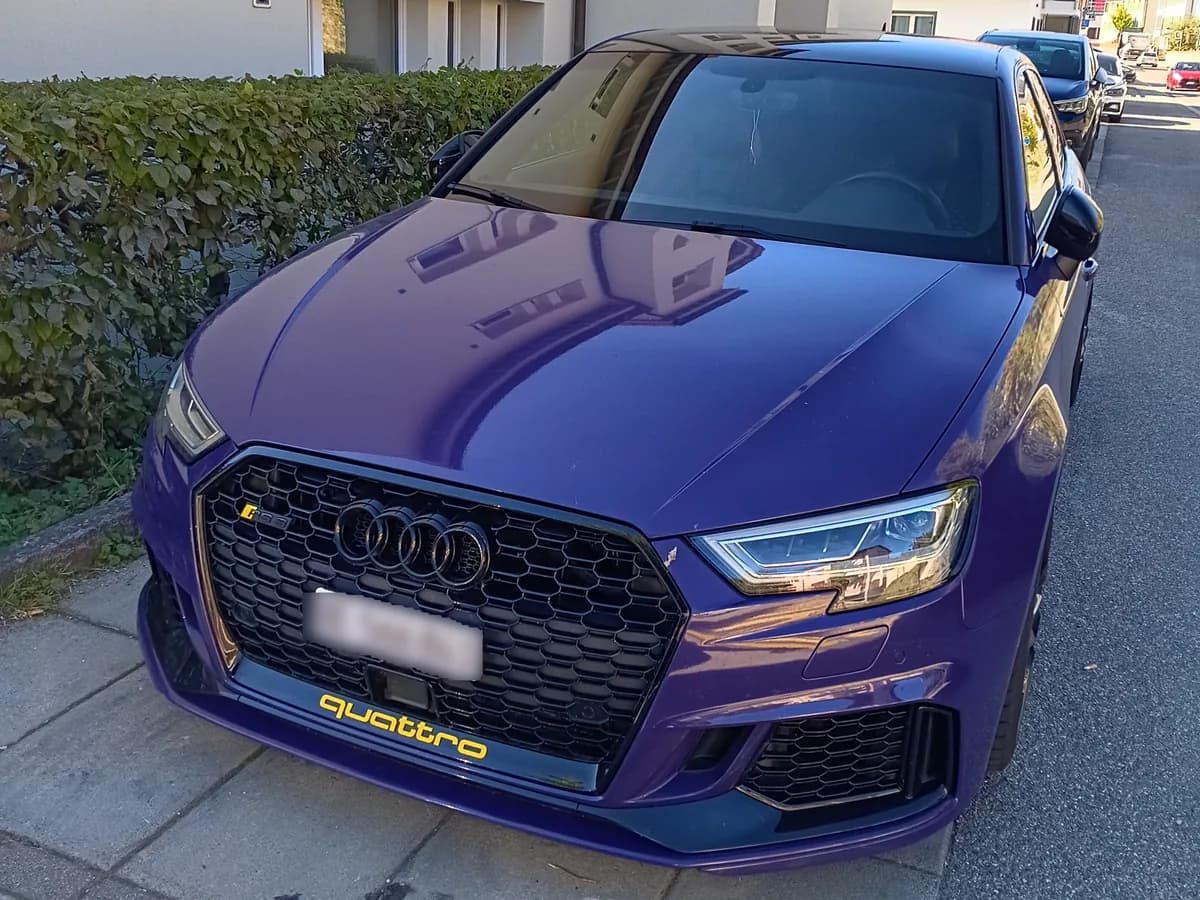
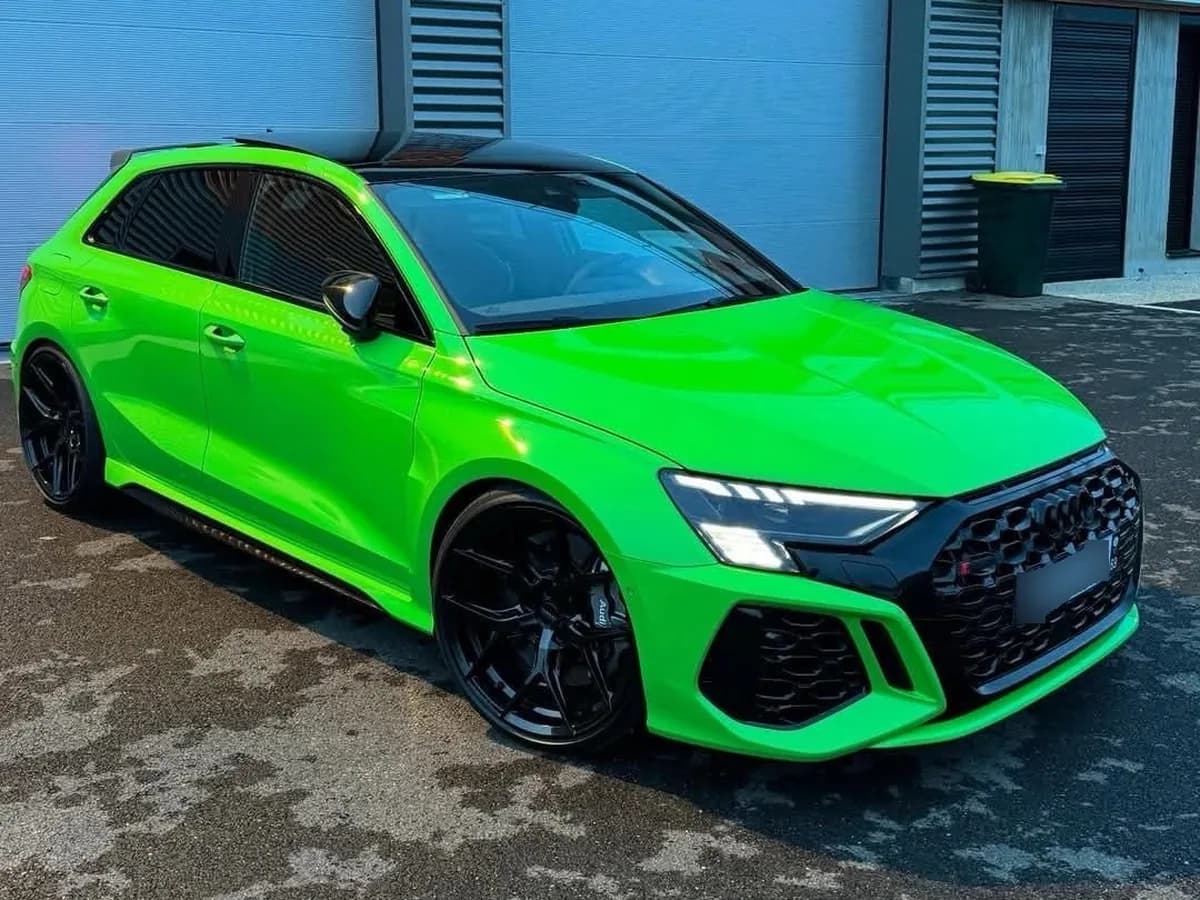
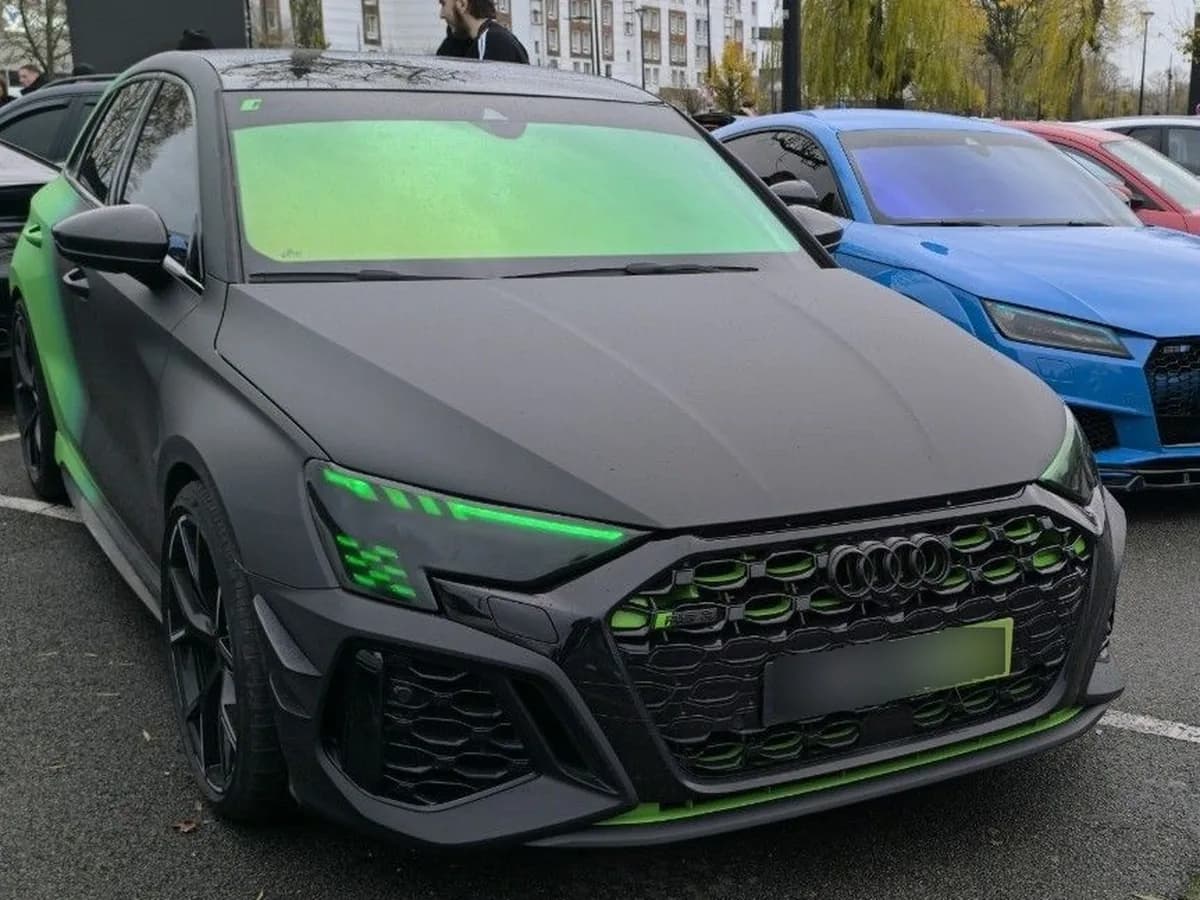
Introduced in 2021, the Audi RS 3 Sedan belongs to the second RS 3 generation offered with a four-door body. It retains Audi Sport’s 2.5-liter TFSI five-cylinder engine, rated at 400 hp and 500 Nm of maximum torque in European specifications. A seven-speed S tronic dual-clutch transmission and quattro all-wheel drive complete the powertrain. This generation also introduced Audi’s RS torque splitter, which actively manages torque distribution between the rear wheels. With its compact dimensions, separate trunk, and interior architecture related to the fourth-generation A3, the RS 3 Sedan occupies a distinctive position among small performance sedans. It combines everyday usability with a powertrain and chassis technology more commonly associated with larger, more specialized sports cars.
Curious about this car?
Explore RS3, then try your own photo.
No account needed for the result · Publish only if you choose
The RS 3 story began in spring 2011, when the first generation reached dealers with a 340-hp five-cylinder engine. At that stage, the model was offered only as a five-door Sportback. The second generation arrived from 2015 and retained the distinctive engine layout while gradually improving its performance. Audi added a Sedan body style to the range in 2017, giving the RS 3 a more conventional three-box profile and making it better suited to markets where compact sedans are especially popular.
The model introduced in 2021 represented the third RS 3 Sportback generation but the second RS 3 Sedan generation. Its 2.5 TFSI engine produced 400 hp and 500 Nm, while the new RS torque splitter replaced the previous generation’s rear-axle differential arrangement. Audi built the new RS 3 Sportback and Sedan at its Ingolstadt plant. The manufacturer positioned them as everyday performance cars, combining practical dimensions with RS-specific suspension tuning, stronger brakes, dedicated driving modes, and more advanced torque management.
Photos added by the community for this page.
Source: autoevolution
The RS 3’s five-cylinder engine uses a 1-2-4-5-3 firing order, a detail that contributes to its distinctive sound. In June 2021, Audi Sport test and development driver Frank Stippler recorded a 7:40.748 lap in an RS 3 Sedan around the Nürburgring Nordschleife. Audi described the result as a compact-segment record at the time. The 2021 model was also the first Audi vehicle to use the RS torque splitter, which replaced the previous rear-axle differential arrangement.
Audi states that almost 80,000 compact RS 3 cars had been built since the model’s launch in 2011. That figure covers the RS 3 family as a whole, not the 2021 model year or the Sedan body style alone. The second-generation RS 3 Sedan introduced in 2021 was manufactured at Audi’s Ingolstadt plant in Germany, alongside the RS 3 Sportback. No precise public production total for 2021 RS 3 Sedans was identified in the consulted sources. Availability, equipment, and production volumes also differed between markets. The RS 3 performance edition, announced in 2022 and limited to 300 vehicles, was a later special series and should not be included in the standard 2021 production total.
Specialist media generally focused on the five-cylinder engine’s character and the improvements made to the chassis. Car and Driver described the RS 3 as an exceptionally quick compact sedan that could combine road-going composure with strong track ability, while noting that the quattro system could feel highly controlled and almost clinical. The publication also observed that the car retained a natural tendency toward understeer when driven at the limit. Audi later reported that the RS 3 received several international awards, including Motor1’s 2022 Best Performance Car title in the United States. Those awards relate to the generation launched in 2021, although individual equipment, testing conditions, and market specifications can differ.
Compared with the previous RS 3 Sedan, the 2021 model’s main progress concerns chassis behavior and torque management. The RS torque splitter can vary torque distribution between the two rear wheels, helping the car turn more readily and reducing understeer during hard cornering. Audi added two dedicated drive profiles, RS Performance and RS Torque Rear, with the latter intended for controlled dynamic driving on closed roads. The body sits 25 mm lower than an A3 and 10 mm lower than an S3. The brakes, tires, steering, and suspension were also specifically developed for the RS 3. As a result, the 2021 car represents a broader technical evolution rather than merely an increase in engine output.
In 2021, the RS 3 range was centered on two body styles: the five-door Sportback and the four-door Sedan. The RS 3 Sedan used the same core powertrain as the Sportback, including the 2.5-liter five-cylinder TFSI engine, seven-speed S tronic transmission, quattro all-wheel drive, and RS torque splitter. The main differences were the body shape, rear luggage arrangement, and market-specific positioning.
Equipment and trim availability varied by country. Audi offered features such as adaptive dampers, ceramic brakes, bucket seats, Pirelli P Zero Trofeo R semi-slick tires, and several styling packages, with some items available only as options. The 2021 range should not be confused with the RS 3 performance edition announced in 2022. That later model was a separate special series limited to 300 vehicles and was not the regular 2021 Sedan variant.
Supports the 2021 launch, engine output, torque, body styles, and general positioning.
Supports the RS torque splitter, chassis development, drive modes, Nürburgring lap, and Ingolstadt production context.
Supports the RS 3 generational timeline, the 2017 Sedan introduction, production history, and reported awards.
Supports independent press observations on handling, drivetrain behavior, interior, performance character, and criticisms.
Supports the distinction between the regular 2021 range and the later 300-unit performance edition.
Source found by OpenAI web search for this vehicle page.
Source found by OpenAI web search for this vehicle page.
Source found by OpenAI web search for this vehicle page.