Porsche Boxster Spyder 2015
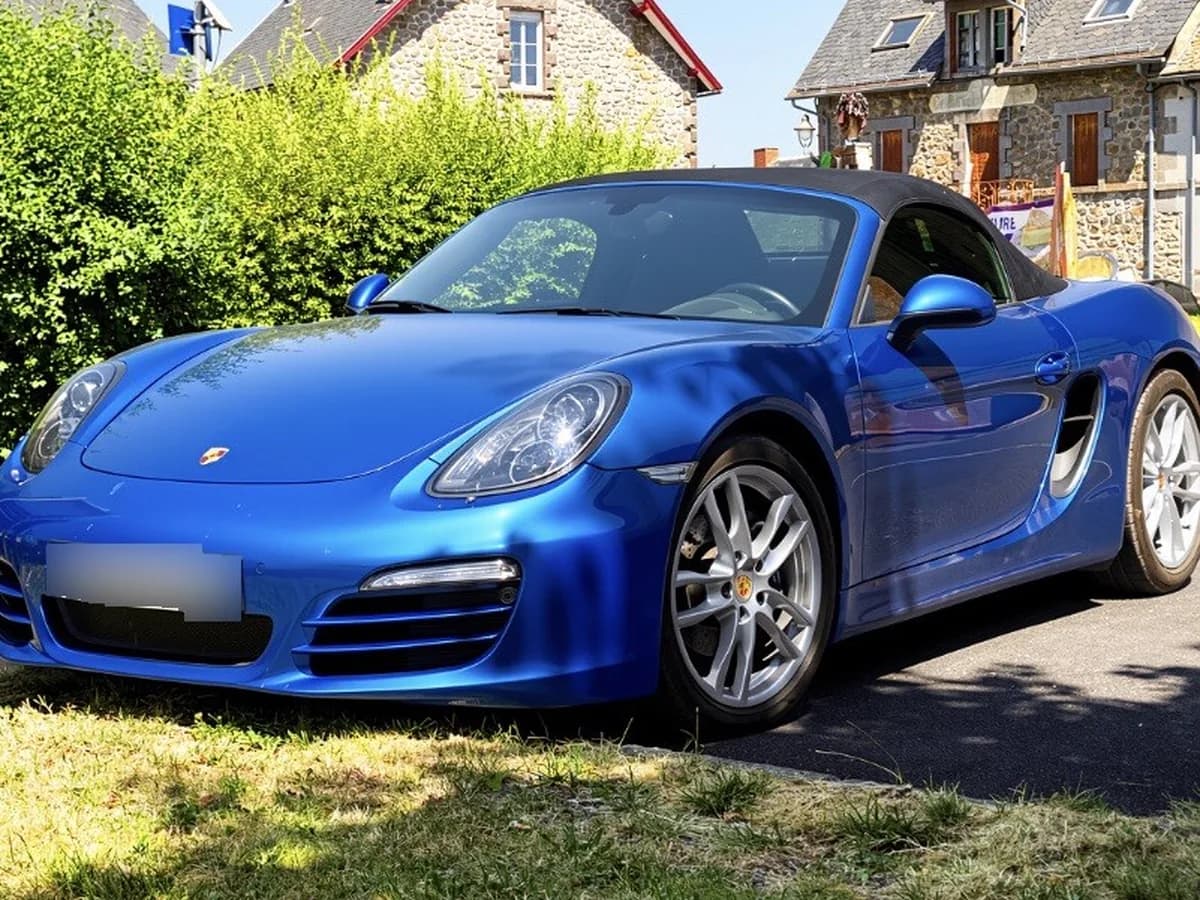
The 2015 Porsche Boxster Spyder belongs to the 981 generation and stands among the more extreme interpretations of the German roadster. It is characterized by a lighter, more sporting approach, with a manual soft top and a reduced equipment level compared with more conventional Boxster versions. In the model timeline, it comes after the launch of the 981 range in 2012 and just before the 718 name appears in 2016. The 2015 Spyder therefore holds a special position as a more exclusive, more purist take on the Boxster, while retaining the mid-engine layout that has defined the model from the start.
History
The Boxster began as a concept shown in Detroit in January 1993. Its positive reception convinced Porsche to keep a silhouette close to the study, inspired by the brand’s historic racing roadsters. Series production started in the summer of 1996 for the 1997 model year, under the 986 code, with a 2.5-liter flat-six producing 204 hp according to Porsche’s historical data. Over time, the range expanded, gained more powerful engines, and changed generations, while retaining its identity through a mid-engine layout and liquid cooling.
The 981 generation, launched in 2012, brought a deeper redesign of both body and chassis. Within that framework came the 2015 Boxster Spyder, described in the dossier as using a naturally aspirated 3.8-liter six-cylinder, a manual gearbox, and a lowered chassis. By definition, it continues the Spyder idea as a more stripped-back and more focused Boxster. It arrives just before the 718 name is introduced in 2016, when the regular range moves to turbocharged four-cylinder engines.
Latest scans
Photos added by the community for this page.
Evolution
In terms of evolution, the 2015 Boxster Spyder sits at the end of the 981 philosophy before the mechanical shift of 2016. Its technical base is a generation already substantially redesigned in 2012, with tighter bodywork and a revised chassis. The Spyder adds a stronger emphasis on lightness and driving involvement, which the dossier describes through a manual roof, reduced equipment, and a lowered chassis.
Within the Boxster family, the Spyder name does not simply indicate trim; it points to a more sporting interpretation of the car. In 2015, that gives it a distinct identity within the 981 range, separate from the more conventional versions. It also foreshadows the arrival of the 718 Boxster, which later changes the family’s engine strategy. The 2015 Spyder therefore acts as a synthesis of the traditional naturally aspirated Boxster formula and a more radical specification.

Variants
References
- Porsche Boxster (type 986)Porsche Classic
Supports the 986 identification, mid-engine layout, water-cooled flat-six, shared front-end components and early equipment details.
- Boxster 25 Years: history of the model linePorsche Newsroom
Supports the 1993 concept, 1996 production launch, 986, 987 and 981 history, engine developments, GTS and 981 Spyder milestones.
- Porsche Boxster (type 987)Porsche Classic
Supports 987 visual changes, wheel sizes, roof operation and the 987 Spyder’s lightweight equipment.
- Boxster 25 Years cataloguePorsche
Supports the generation sequence 986, 987, 981 and 982 and the principal power outputs and model milestones.
- World premiere for the new Boxster SpyderPorsche Newsroom
Supports the 2015 981 Boxster Spyder’s manual roof, manual transmission, 3.8-liter engine and lowered sports chassis.
- https://newsroom.porsche.com/en_AU/2021/products/porsche-boxster-25-years-premiere-23387.htmlnewsroom.porsche.com
Source found by OpenAI web search for this model page.
- https://newsroom.porsche.com/it/ppdb/2016/01/la-nuova-roadster-con-motore-centrale-a-quattro-cilindri-porsche-718-boxster.htmlnewsroom.porsche.com
Source found by OpenAI web search for this model page.
- https://newsroom.porsche.com/dam/jcr%3A4ff9d202-b4b3-4b36-ac7b-a17bd555f92a/2016_Porsche_Boxster_Spyder_Technical_Specifications.pdfnewsroom.porsche.com
Source found by OpenAI web search for this model page.