
Naming
Porsche naming explained: 992, Carrera 4S, GT3, and Turbo
Decode a Porsche name: the Carrera, S, GTS, Turbo, and GT3 ladder, the 964, 993, 996, and 992 generation codes, and why a Taycan Turbo has no turbo at all.
Updated in 2026
Direct answer
How do you read a Porsche name?
In “911 Carrera 4S”, the 911 is an internal type number that became a name, Carrera marks the entry level, the 4 means all-wheel drive, and the S one step more power. The word “Turbo” no longer describes a technology but a rank.
- Read the name or number: 911 and 718 for the sports cars, a proper name for the rest.
- Find the version on the ladder: Carrera, S, GTS, Turbo, Turbo S.
- Read the 4 if present: it means all-wheel drive.
- Separate road from track: GT3 and GT2 RS are not faster Turbos, they are a different branch.
Why these names look unreadable
Porsche is the brand whose names say the least and imply the most. A 911 has been called 911 since 1963 without the name ever changing, yet an enthusiast dates a car at a glance. Everything happens outside the commercial name.
It is also the brand where one everyday word was emptied of meaning: “Turbo”. Understanding a Porsche mostly means knowing that the most explicit badge of the lot no longer describes anything.
“911 Carrera 4S Cabriolet” piece by piece
| Piece | What it means |
|---|---|
| 911 | The model. Originally just an internal type number, kept as the commercial name for over sixty years. It should have been called 901: see below. |
| Carrera | The entry level of the 911 range, inherited from the Carrera Panamericana race. Not an option but the first rung of the ladder. |
| 4 | All-wheel drive. Its absence means rear-wheel drive. |
| S | Sport: one step of power above the base version, with the matching chassis equipment. |
| Cabriolet | The body. Targa is the removable roof with fixed hoop and wide rear screen, a Porsche signature. |
The version ladder, from mildest to most extreme
| Letter or number | Family |
|---|---|
| Carrera | The entry level. Followed by S then GTS for two further steps. |
| Turbo / Turbo S | The top of the road branch. A rank, not a technical description. |
| GT3 / GT3 RS | The track branch, naturally aspirated and lightened. A different philosophy, not a step above Turbo. |
| GT2 RS | The summit: Turbo power in a lightened rear-drive car. |
| 718 | The mid-engine Boxster and Cayman, under a name taken from racing. |
Examples in photos
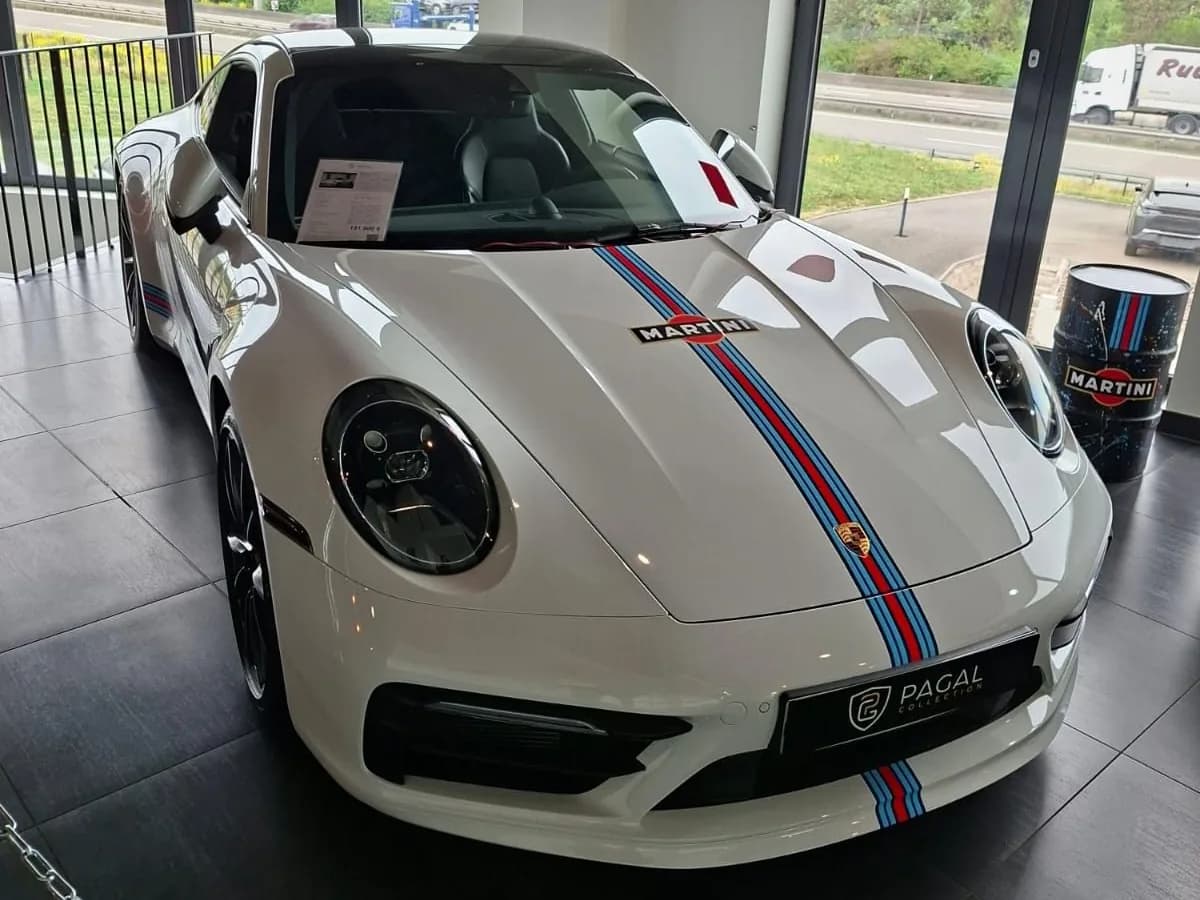
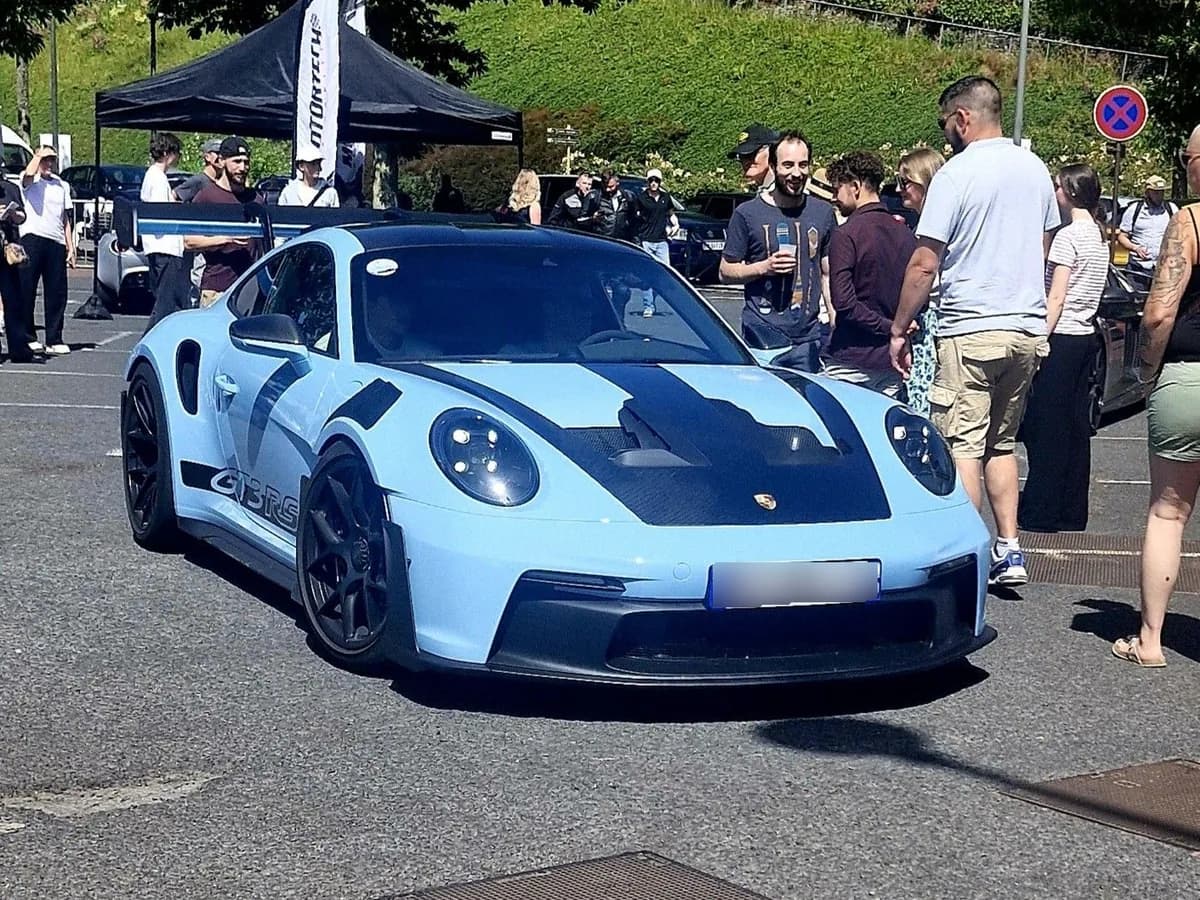
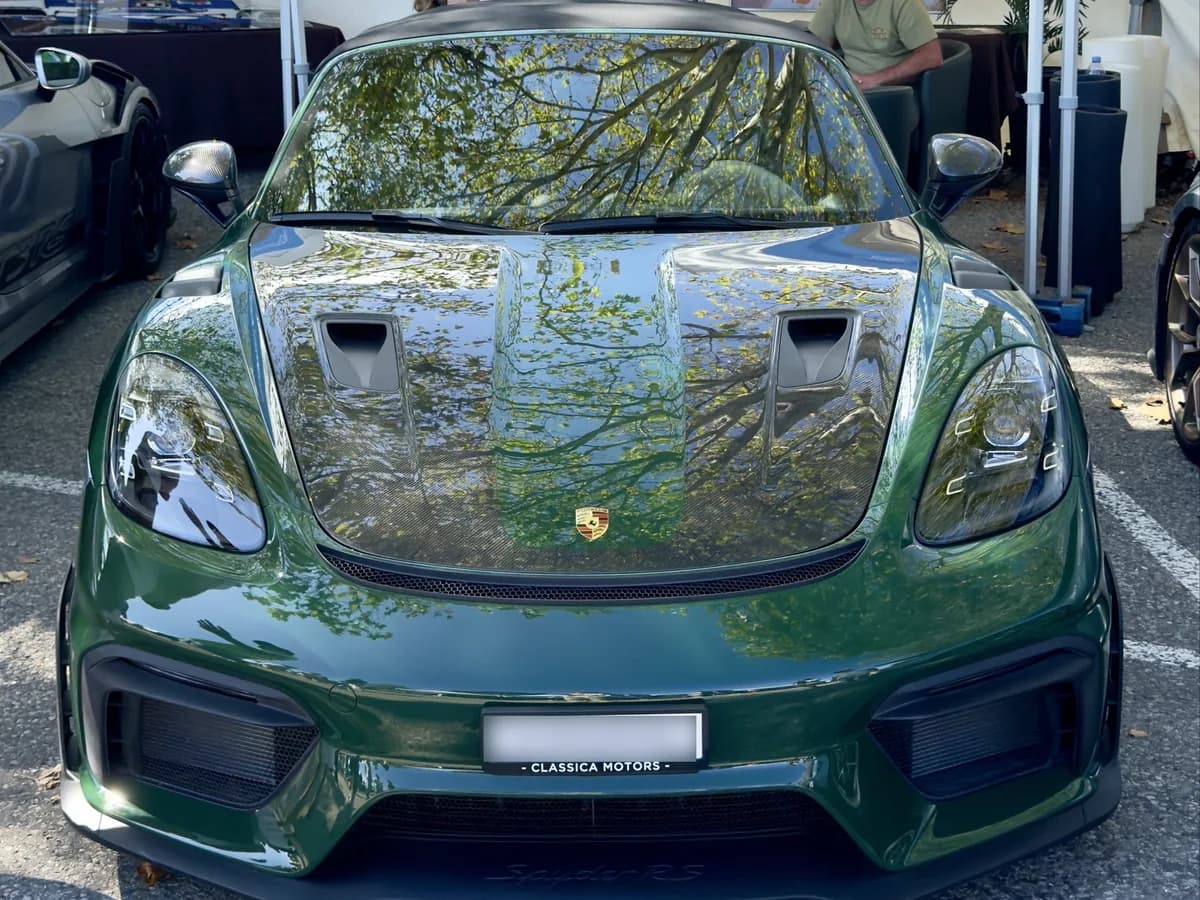
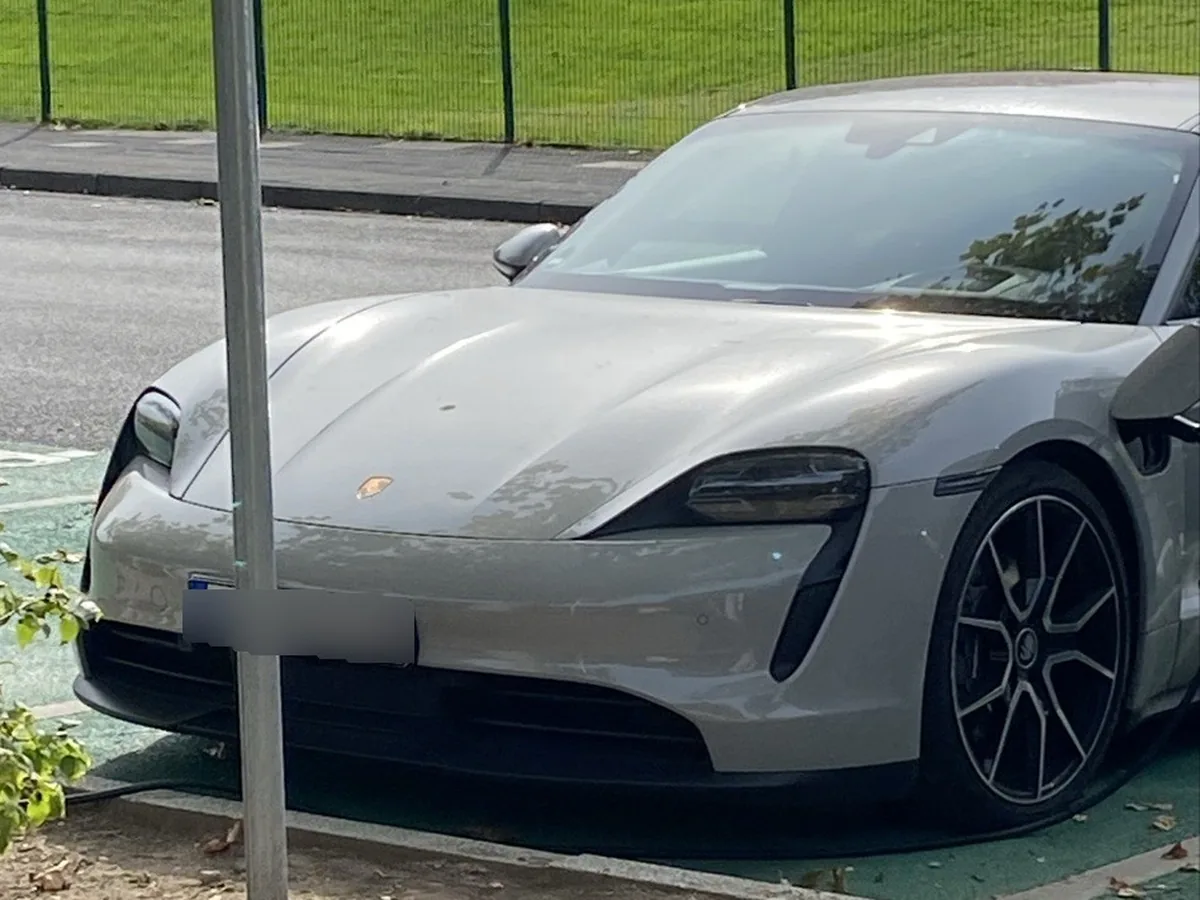
A few Porsches from the ScanRacer library, each illustrating one piece of the name:
Where the rule no longer holds
“Turbo” no longer describes a technology. Since 2016 every 911 Carrera has been turbocharged — yet only the top version is called Turbo. The word became a rank in the hierarchy. The proof by absurdity arrived with the Taycan Turbo: it is electric, it has no turbo at all, and it wears the badge anyway.
The 911 should have been a 901. Porsche unveiled it under that name at the 1963 Frankfurt show, before Peugeot asserted its rights over three-digit numbers with a central zero. The most famous name in motoring was born from a trademark dispute.
The 718 is not a 911 generation. It is the name of a 1950s racing car, revived in 2016 for the Boxster and Cayman as they moved from six to four cylinders. The number places nothing in the range: it refers to a history, not a rank.
The GT3 is not “above” the Turbo. The two belong to different branches: the Turbo favours road performance and all-wheel drive, the GT3 lightness, a naturally aspirated engine, and track ability. Comparing them on a single scale makes no sense, even if the second is often the more sought after.
The suffixes worth knowing
| Mention | Meaning |
|---|---|
| 4 | All-wheel drive. |
| S | Sport: one step of power. |
| GTS | Between S and Turbo, with more serious chassis equipment. |
| Targa | Removable roof with a fixed hoop, unique to the 911. |
| RS | RennSport: lightened and track-focused. |
| Touring | A GT3 without the fixed wing, more discreet. |
| Sport Turismo | The Panamera’s estate body; Cross Turismo on the Taycan. |
| e-hybrid | Plug-in hybrid. |
The trap: the “Turbo” badge proves nothing any more
This is the most common misreading of a recent Porsche, and it is logical: the word has a precise mechanical meaning that Porsche no longer honours.
A base 911 Carrera has been turbocharged since 2016. A 911 Turbo is too, but with two larger turbos, all-wheel drive, and roughly two hundred more horsepower. And a Taycan Turbo has no turbo whatsoever, being electric — there the badge marks only a range level.
In front of the car, two cues beat the badge: the air intakes cut into the rear fenders, present on Turbos and absent from Carreras, and the noticeably wider rear track. On GT3s the fixed wing is unmistakable — except on a GT3 Touring, which drops it precisely to stay discreet.
Codes 964, 993, 996, 992: where it all happens
Since the commercial name never changes, the internal code is what dates a 911. No other brand has pushed its factory codes so deeply into everyday speech: an enthusiast says “a 993”, never “a 1996 911”.
These codes carve out eras the name hides entirely — the move from air to water cooling, for instance, separates two worlds without the badge shifting a millimetre.
| Code | Generation |
|---|---|
| 930 | The 1975 911, and the first to wear the Turbo badge. |
| 964 / 993 | The 1990s 911s. The 993 is the last air-cooled one, which explains its standing. |
| 996 | The 1997 break: first water cooling and the so-called “fried egg” headlights. |
| 997 / 991 / 992 | The following generations, up to the current one. |
To go further on dating a model, the dedicated guide covers the cues that separate two close generations.
Frequently asked questions
What does 992 mean on a Porsche?
It is the internal code of the current 911 generation. Since the commercial name never changes, these codes — 964, 993, 996, 997, 991, 992 — are how enthusiasts date the car.
Is a Porsche Carrera turbocharged?
Yes, since 2016 every 911 Carrera has been turbocharged. The “Turbo” badge no longer marks the technology but the top of the range — to the point that an electric Taycan Turbo has no turbo at all.
What is the difference between a 911 GT3 and a 911 Turbo?
They are two distinct branches, not two rungs of one ladder. The Turbo relies on road performance, forced induction, and all-wheel drive. The GT3 relies on lightness, a high-revving naturally aspirated engine, and track ability.
What does the 4 mean in Carrera 4S?
The 4 marks all-wheel drive. A Carrera S is rear-wheel drive, a Carrera 4S the same car with all four wheels driven.
Why isn’t the Porsche 911 called 901?
Because Peugeot had registered three-digit numbers with a central zero in France. Unveiled as the 901 in 1963, the car was renamed 911.
And if all you have is the car in front of you?
A badge can be removed, swapped, or added: it is one of the most common modifications. When the name is missing or looks wrong, the car itself remains — its silhouette, lights, and grille. That is where photo recognition takes over from decoding.