
V-Klasse
Presented at the Geneva Motor Show in March 1996, the Mercedes-Benz V-Class was developed as a large passenger vehicle related to the brand’s light-commercial van range. The first series, internally identified as W 638, combined a tall body, flexible passenger accommodation and a more passenger-focused character than the Vito panel van. (mercedes-benz-publicarchive.com) After the 638 series, Mercedes-Benz used the Viano name for the 639 generation introduced in 2003, then returned to the V-Class name with the 447 series from 2014. (mercedes-benz-publicarchive.com) The model’s history therefore spans several roles: family people carrier, executive shuttle, business transport and the basis for the Marco Polo camper. Equipment, body lengths, engines and market names varied considerably by production period and country.
What about the car you photographed?
Upload a photo to get a suggested make, model and likely year.
No account needed for the result · Publish only if you choose
Variants by year
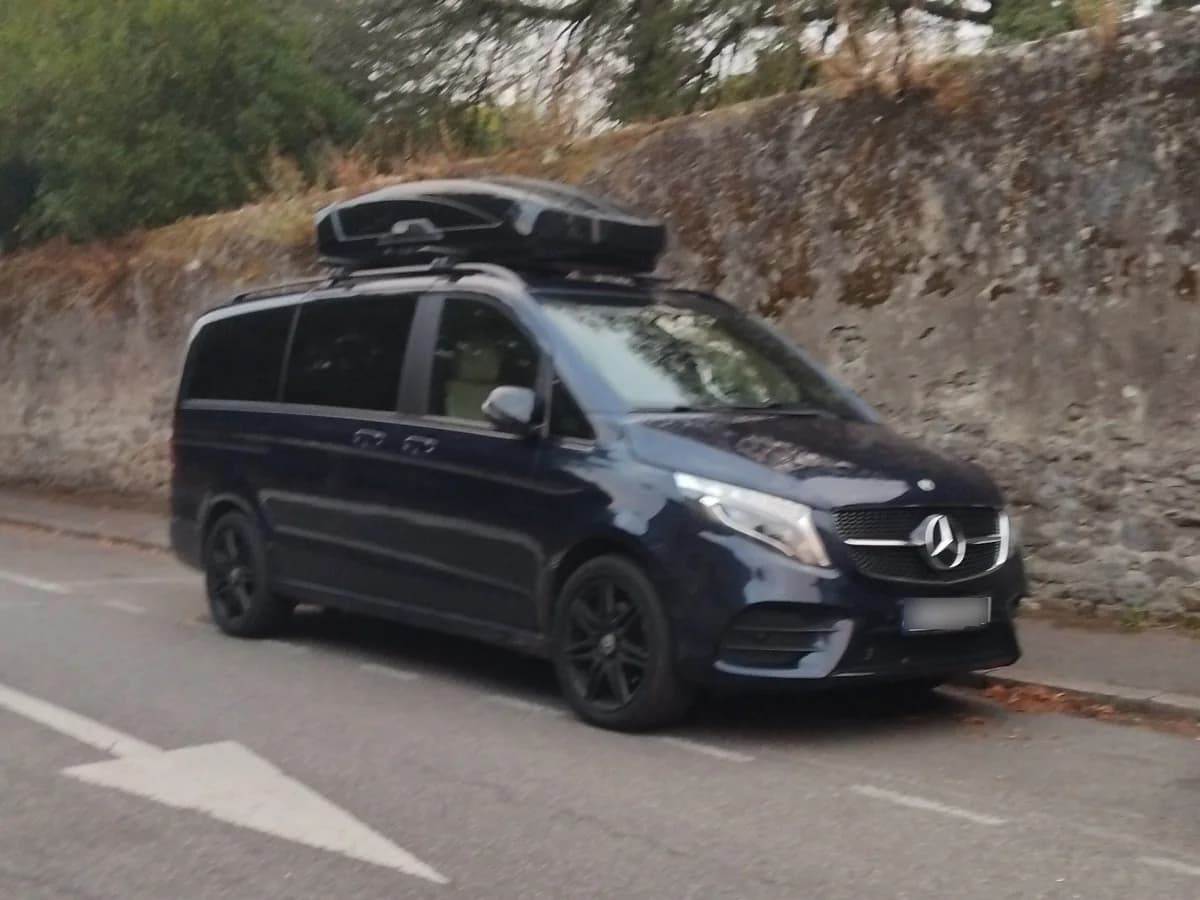
Make: Mercedes-Benz · Model: V-Klasse
4 / 4 versions shown
2023

2014
2003
1996

Mercedes-Benz V-Klasse photos
Model summary
Data from the ScanRacer library, organized to compare versions quickly.
Model introduction
Presented at the Geneva Motor Show in March 1996, the Mercedes-Benz V-Class was developed as a large passenger vehicle related to the brand’s light-commercial van range. The first series, internally identified as W 638, combined a tall body, flexible passenger accommodation and a more passenger-focused character than the Vito panel van. (mercedes-benz-publicarchive.com) After the 638 series, Mercedes-Benz used the Viano name for the 639 generation introduced in 2003, then returned to the V-Class name with the 447 series from 2014. (mercedes-benz-publicarchive.com) The model’s history therefore spans several roles: family people carrier, executive shuttle, business transport and the basis for the Marco Polo camper. Equipment, body lengths, engines and market names varied considerably by production period and country.
History
The V-Class appeared in 1996 with the 638 series, which Mercedes-Benz presented as a multi-seat passenger vehicle. Its relationship with the Vito is central to the model’s background: both vehicles shared an industrial foundation, but the V-Class was specified and finished more clearly for passenger transport. Mercedes-Benz also highlighted the engineering work devoted to achieving a level of safety comparable with that expected from a passenger car. (mercedes-benz-publicarchive.com) In March 1999, the 638 series received a substantial update affecting the drivetrain, exterior appearance, interior design and equipment. The V 220 CDI became one of the most representative versions of the range, while petrol models accounted for a smaller share of production. (mercedes-benz-publicarchive.com) The next generation arrived in 2003 under the 639 series designation. Its passenger version was marketed as the Viano, while the Vito continued as the related commercial vehicle. Viano production ended in August 2014. (mercedes-benz-publicarchive.com) The 447 series, introduced from 2014, brought back the V-Class name and moved the model further toward premium passenger transport, with more comfort features, driver-assistance technology and configuration choices. A 2019 update added the OM 654 diesel engine to selected versions, introduced the 9G-TRONIC automatic transmission and expanded the available assistance systems. (media.mercedes-benz.it)
Generations
The first generation is the 638 series, produced from 1996 to 2003. Its tall silhouette, spacious cabin and passenger-oriented interior layout clearly reflected its van-based origins. The 1999 facelift was a significant development, bringing exterior and interior revisions together with important updates to engines and transmission technology. (mercedes-benz-publicarchive.com) The second generation is the 639 series, sold from 2003 to 2014 as the Viano in passenger-car form. It introduced a substantially revised design and a more structured range of body lengths and wheelbases. Safety and driver-assistance equipment also developed throughout its production run. Later examples could be fitted with features including Crosswind Assist, distance monitoring and Blind Spot Assist, although availability depended on market and specification. (mercedes-benz-publicarchive.com) The third generation is the 447 series, launched in 2014 under the restored V-Class name. It retained the large people-carrier and shuttle format but adopted a more car-like Mercedes-Benz design language and a more upscale cabin environment. The 2019 update brought revised front-end styling, the 9G-TRONIC automatic transmission on selected models and additional assistance technology. (media.mercedes-benz.it) Exact equipment still varies according to market, body length, trim level, drivetrain and model year, so visual identification should be combined with the vehicle’s build data.
Key differences
The clearest differences between generations concern both the model name and its positioning. The 638 series is the only early generation sold directly as the V-Class before the name change in 2003. Passenger versions of the 639 series were generally marketed as the Viano, while the 447 series restored the V-Class name. (mercedes-benz-publicarchive.com) The 638 has a more distinctly 1990s van-derived appearance, with simpler exterior detailing and a more utilitarian dashboard design. The 639 introduced a more contemporary body and a clearer range of lengths, while safety and assistance equipment expanded during its production period. The 447 is easier to distinguish through its more pronounced Mercedes-Benz passenger-car styling, more upscale cabin presentation and newer electronic systems. The 2019 update revised the grille and bumper and brought the OM 654 diesel engine and 9G-TRONIC transmission to selected versions. (media.mercedes-benz.it) Specification differences between countries and trim levels can be substantial, so year alone is not always enough to identify a vehicle accurately.
Photo recognition
A 638-series V-Class can usually be identified by its tall, compact body, short bonnet and front-end design closely related to Mercedes-Benz vans of the late 1990s. Facelifted examples from 1999 have revised exterior and interior details, so the grille alone should not be treated as conclusive evidence. (mercedes-benz-publicarchive.com) A 639-series vehicle may carry the Viano name rather than V-Class. It generally appears more modern and visually developed than the 638, with a redesigned front end and more clearly differentiated body lengths. Wheelbase, overall length and engine designation can help confirm the identification. (mercedes-benz-publicarchive.com) The 447 series has a more horizontal design and a stronger visual connection with Mercedes-Benz passenger cars. Models updated for 2019 can be recognised by their revised grille and bumper, although the exact appearance depends on the AVANTGARDE, EXCLUSIVE or AMG Line specification. (media.mercedes-benz.it) For dependable identification, check the series code, VIN data, production date and original badges. Shuttle conversions and Marco Polo camper equipment may significantly change the vehicle’s visible details.
Important versions
Among the documented 638-series models, the V 220 CDI is an important reference because of its production volume and common-rail diesel engine. The V 280 represents a more upmarket and comparatively rare specification, while the V 230 illustrates the petrol range offered during that period. (mercedes-benz-publicarchive.com) For the 639 series, Viano CDI 2.2 and CDI 3.0 models are useful historical reference points, with Mercedes-Benz’s archive identifying the 2.2-litre diesel as the dominant production variant. (mercedes-benz-publicarchive.com) Within the 447 series, the V 300 d, selected 4MATIC versions and Marco Polo conversions are especially recognisable configurations. Names, outputs, transmissions and equipment can change by market and model year, so these should be treated as reference versions rather than universal specifications.
The name “V-Klasse” follows Mercedes-Benz naming, with its rules and its exceptions. Decode a Mercedes-Benz name
References
- https://mercedes-benz-publicarchive.com/marsClassic/de/instance/ko/V-Klasse-Grossraumlimousinen-der-Baureihe-638-1996---1999.xhtml?oid=5630mercedes-benz-publicarchive.com
- https://media.mercedes-benz.at/news-mbux-jetzt-auch-fuer-die-mercedes-benz-v-klasse?id=97098&l=deutsch&menueid=10013media.mercedes-benz.at
Frequently asked questions
- What years was the Mercedes-Benz V-Klasse produced?
- ScanRacer's referenced versions cover 1996 - 2023.
- How many Mercedes-Benz V-Klasse examples are documented on ScanRacer?
- 7 published scans from 6 members, with the latest photo added in August 2026.
What about the car you photographed?
Upload a photo to get a suggested make, model and likely year.
No account needed for the result · Publish only if you choose