Mercedes-Benz E-Klasse Coupé 2017
Introduced in 2017, the Mercedes-Benz E-Class Coupe belongs to the generation identified internally as the C238. This four-seat luxury coupe shares its technical foundations and much of its technology with the E-Class sedan, but presents them in a lower, longer and more distinctive body. Its four frameless side windows create an uninterrupted side profile when lowered, a long-standing Mercedes-Benz coupe hallmark. The car is designed primarily as a grand tourer, combining a carefully finished cabin with advanced driver-assistance and multimedia systems. Depending on the market, the range included petrol and diesel engines such as the E 220 d, E 350 d, E 200, E 300 and E 400. Automatic transmissions were standard across the launch range, while rear-wheel drive and 4MATIC all-wheel drive were available according to engine and market.
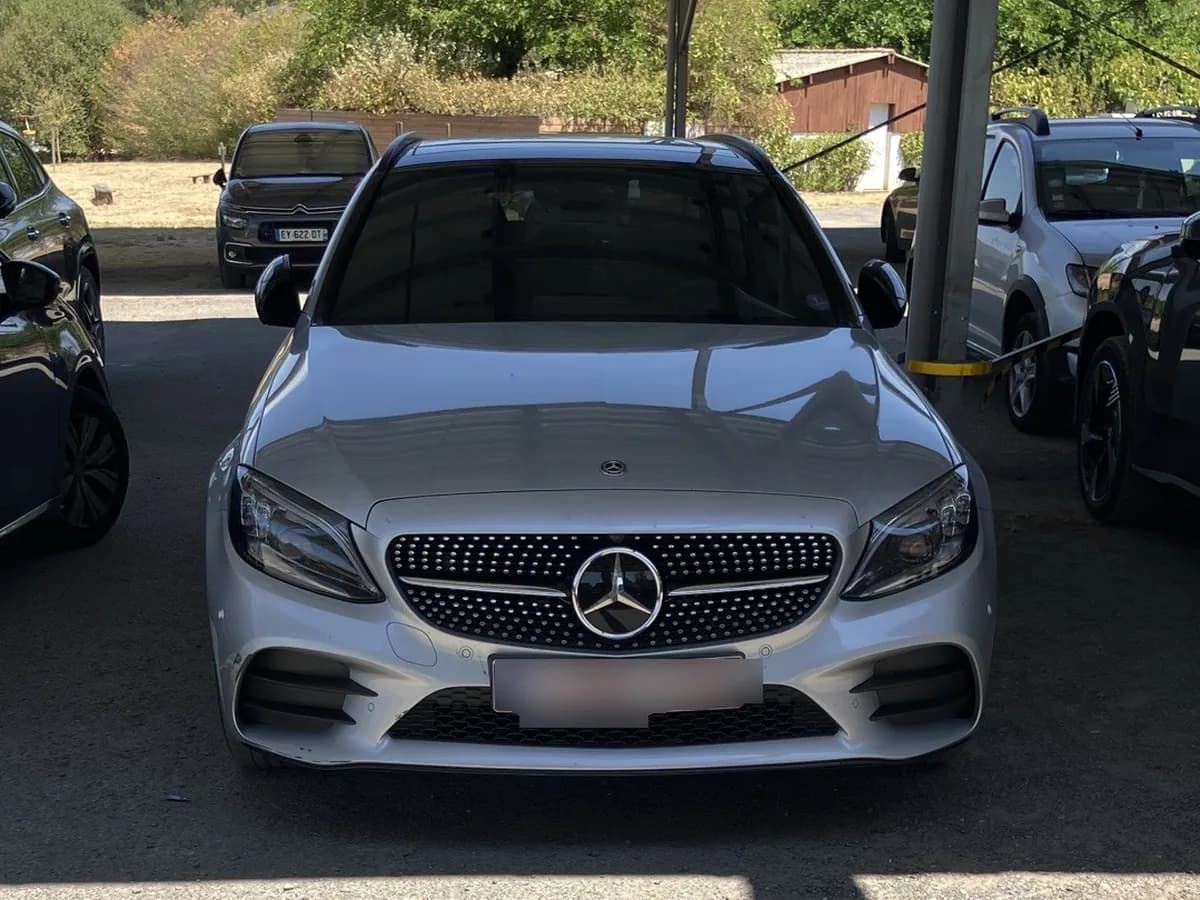
Curious about this car?
Explore E-Klasse, then try your own photo.
No account needed for the result · Publish only if you choose
History
The C238 E-Class Coupe was revealed at the beginning of 2017 as part of the wider renewal of the E-Class family. Mercedes-Benz positioned it as a four-seat grand tourer rather than a focused sports car. Its design follows the sedan’s visual language, with a prominent grille, a long bonnet, clean surfacing and a rear-set passenger compartment. The coupe remains clearly individual through its two-door body, frameless windows and the absence of a visible B-pillar when the glass is lowered.
The model also adopted many of the technical advances introduced with the W213 generation. Depending on specification, equipment included a widescreen cockpit, smartphone integration, driver-assistance systems and suspension with selective damping. A longer wheelbase than the previous coupe improved rear-seat accommodation, an important change for a four-seat luxury car. In Europe, the early range combined four- and six-cylinder diesel engines with several petrol units, while North America received versions such as the E 400 with a twin-turbocharged V6. This generation remained in production into the early 2020s.
Latest scans
Photos added by the community for this page.
Anecdotes
The C238 Coupe is notable for its four frameless side windows and the lack of a visible B-pillar when the glass is lowered. Mercedes-Benz also gave the car a distinctive welcome sequence in which the rear LED lamps illuminate progressively when the vehicle is unlocked, then reverse the pattern when it is locked. Together with its grand-touring proportions, the detail reinforces the model’s emphasis on elegance and comfort rather than outright sports-car aggression.
Production
No reliable global production figure was identified for the 2017 E-Class Coupe alone. Available sources identify the car as the C238 generation, introduced from 2017 and produced for several years alongside the related Type 238 convertible and the broader E-Class family. Production totals can differ depending on whether statistics combine the coupe and convertible, several model years or the complete E-Class range. A precise unit count should therefore not be assigned to the 2017 model without a clearly segmented manufacturer source.
Press reception
Automotive reviewers generally responded well to the E-Class Coupe’s elegant styling, carefully finished cabin and long-distance comfort. Auto Express praised its sense of quality, the airy cabin created by the frameless side glass and its ability to cover ground quietly. Autocar highlighted the smoothness of the six-cylinder engines, the useful interior space and the car’s positioning against larger luxury coupes. The main criticism concerned its dynamic character: despite the sporty appearance, the coupe prioritizes composure and ride comfort over sharp cornering responses. Reviewers therefore regarded it as a polished and capable grand tourer, but not as a direct substitute for a dedicated sports car.
Evolution
Compared with the previous C207 E-Class Coupe, the C238 adopts more ambitious proportions. It is longer and wider, while the increased wheelbase brings meaningful gains in rear-seat access and space. The styling is smoother and more deliberate, with an extended roofline, a short rear deck and slim horizontal taillamps. Mercedes-Benz also introduced a welcome-light sequence for the rear lamps, presented at launch as a world first.
The equipment evolved as well. Smartphone integration, a widescreen cockpit and more advanced driver-assistance systems brought the coupe closer to the sedan’s technological standard. Engine availability and trim details were adjusted over time and varied between countries, but the central character remained unchanged: a refined, comfortable grand tourer with a more expressive two-door body.

Variants
References
- La nouvelle Classe E Coupé, élégante et sportiveMercedes-Benz Media France
Supports the 2017 launch, four-seat grand-tourer positioning, design details, frameless windows, rear-light welcome sequence and technology.
- 2017 Mercedes-Benz E-Class Coupe and Cabriolet brochureMercedes-Benz USA
Supports U.S.-market E 400 engine, power, transmission, drivetrain and dimensions.
- New Mercedes E-Class Coupe 2017 reviewAuto Express
Supports the European launch review, design changes, longer wheelbase, comfort-focused driving character and press assessment.
- Mercedes E 350 d Coupe 2017 reviewAuto Express
Supports the European E 220 d and E 350 d comparison, diesel range positioning and comfort-oriented evaluation.
- Used Mercedes-Benz E-Class Coupé 2017-2023 reviewAutocar
Supports the initial European derivative lineup, engine outputs, nine-speed automatic transmission and editorial reception.
- The E-Class CoupéMercedes-Benz
Manufacturer product brochure supporting C238 equipment and selected European technical information.
- https://www.edmunds.com/mercedes-benz/e-class/2017/coupe/features-specs/edmunds.com
Source found by OpenAI web search for this vehicle page.
- https://static.oneweb.mercedes-benz.com/css-oom-assets/en-lk/pdf/mercedes-e-class-coupe-2017-may-c238-comand-owners-manual-1.pdfstatic.oneweb.mercedes-benz.com
Source found by OpenAI web search for this vehicle page.