Mazda RX-7 1992
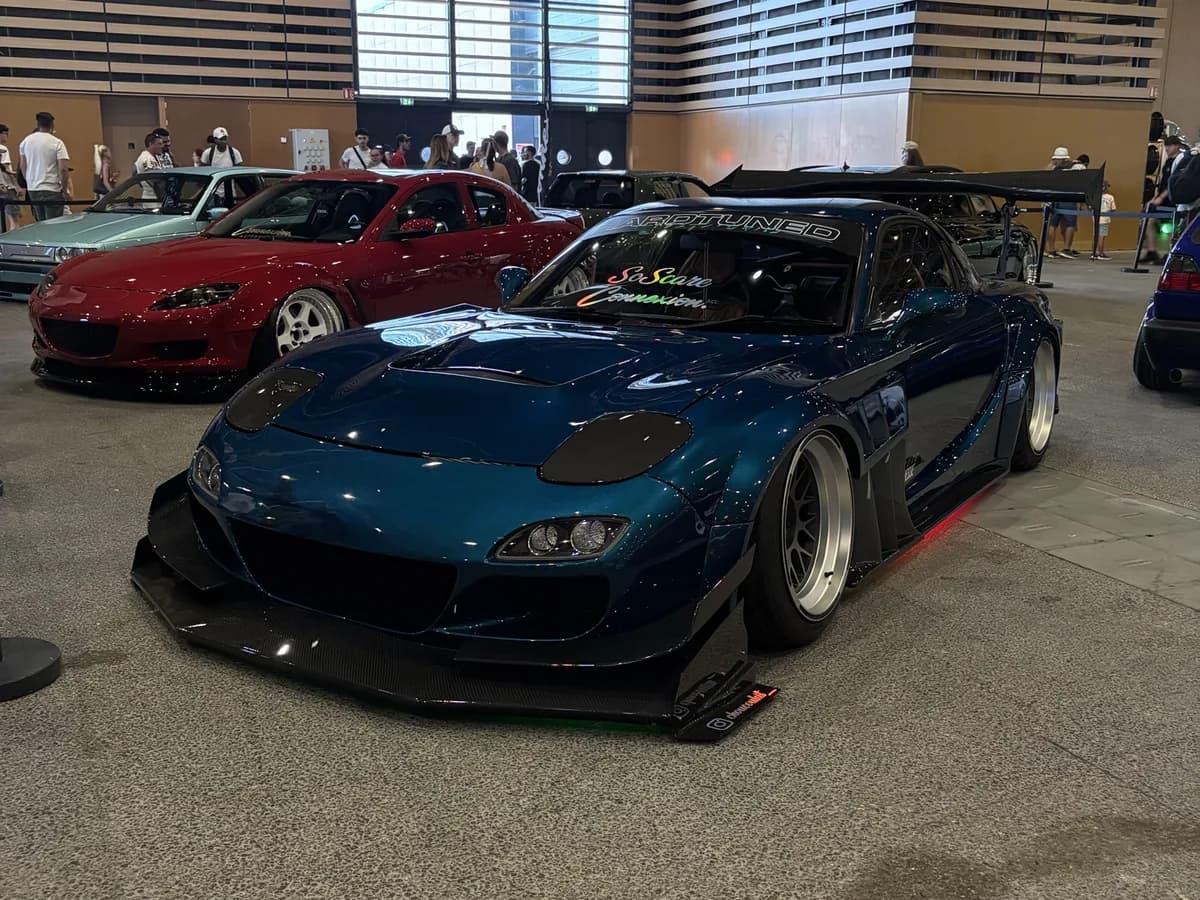
The 1992 Mazda RX-7 Base belongs to the second-generation FC, the final development of the coupe sold in North America before the FD arrived for the 1993 model year. It retains Mazda’s familiar formula: a compact rotary engine mounted at the front, rear-wheel drive, and a practical hatchback coupe body. In the United States, the Base was the entry trim below the GXL and turbocharged versions. It offered a simpler equipment level without abandoning the independent suspension and focused sports-car layout that defined the FC. The model year is important because naming differed between markets: a 1992 RX-7 may also refer to an FD introduced in Japan and Europe, while the North American Base designation points to the final FC specification.
History
The FC RX-7 appeared for the 1986 model year as the replacement for the original generation. Mazda kept the rotary engine but substantially upgraded the chassis with independent suspension at all four corners, four-wheel disc brakes, and a more sophisticated structure. The range included naturally aspirated and turbocharged models, along with different equipment levels and, depending on the market, both coupe and convertible bodies. During its life, engine management and output were revised, while Mazda continued to position the RX-7 as a compact, driver-focused sports car.
For 1992, the Base was the final FC specification sold in North America. It arrived at a time when newer Japanese sports coupes and the increasingly popular MX-5 roadster were reshaping Mazda’s performance-car lineup. The RX-7 remained distinctive because of its rotary engine and balanced mechanical layout. Mazda announced the FD replacement in late 1991, with sales beginning in selected markets during 1992 and in the United States as a 1993 model.
Latest scans
Photos added by the community for this page.
Anecdotes
In 1992, Mazda won the overall result at Australia’s Bathurst 12 Hour with a racing RX-7. The achievement illustrates that the RX-7 name extended beyond the road-going coupe and had a significant competition presence. The result involved a racing car, however, and should not be treated as evidence of the exact equipment or engine specification of the Base road model.
Production
The FC RX-7 remained in production into the early 1990s, but the available sources do not provide a reliable production total for the 1992 Base trim alone. Commonly quoted totals combine multiple years, body styles, engines, and markets, while the transition from FC to FD makes comparisons more difficult. A precise Base-model production figure should therefore not be assigned without a manufacturer record or a trim-level production breakdown. RX-7 production continued in Japan with the FD generation until 2002, while U.S. sales ended after the 1995 model year. These broader figures describe the model line, not the specific 1992 Base version.
Press reception
Reception of the RX-7 varied by generation and trim. Coverage of the FC generally emphasized its compact sports-car proportions, rear-wheel-drive layout, and unusual rotary engine. Turbocharged models attracted more attention in performance testing, but the Base retained the fundamental chassis and mechanical character of the range. Historical coverage also notes that FC sales weakened late in its life, in part as Mazda’s MX-5 offered a more accessible sports-car alternative. The 1992 RX-7 Base is therefore best understood as a transitional model: less focused on headline performance than the turbo versions, but still defined by the distinctive rotary-powered, rear-drive formula that separated the RX-7 from conventional piston-engine coupes.
Evolution
Variants
References
- History of Mazda: 1990–1999Mazda Motor Corporation
Supports the 1991 introduction of the third-generation RX-7, its 13B sequential twin-turbo concept, front-midship layout, 50:50 weight distribution, and 1992 Bathurst result.
- 1992 Mazda RX-7 BaseHagerty
Supports the FC generation history, Base and GXL trims, naturally aspirated and turbocharged engines, 160-hp late FC output, transmission choices, and the market transition toward the FD.
- 3rd-Gen. Mazda RX-7 Market WatchMotorTrend
Supports the distinction between the 1992 FD introduction for the 1993 model year in the United States and the FD’s main performance hardware.
- 1993 Mazda RX-7: Lean, Low, Fast, FunLos Angeles Times
Provides contemporary context for the FD launch and distinguishes the base model from more aggressive packages.
- Mazda RX-7 FD: 1992–2002evo
Supports the broader FD timeline, its twin-rotor rotary engine, sequential turbochargers, lightweight chassis, and period positioning.
- https://en.wikipedia.org/wiki/Mazda_RX-7en.wikipedia.org
Source found by OpenAI web search for this vehicle page.
- https://www.evo.co.uk/mazda/rx-7%20evo.co.uk
Source found by OpenAI web search for this vehicle page.
- https://www.classic.com/m/mazda/rx-7/3rd-gen/classic.com
Source found by OpenAI web search for this vehicle page.