
Exige
Unveiled at Brands Hatch in 2000, the Lotus Exige began as a road-legal interpretation of the Lotus Sport Elise competition car. Its core formula remained consistent: a mid-engined layout, lightweight construction, a fixed roof and chassis tuning focused on precision rather than comfort. The Series 1 used a 1.8-litre Rover four-cylinder producing 177 bhp, while the Series 2, shown at Geneva in 2004, adopted a more modern Toyota four-cylinder engine. The third series represented a major change in scale, combining a supercharged 3.5-litre V6 with a longer and wider body. The reference points used here are Series 1, Series 2 and Series 3, with representative model years of 2000, 2004 and 2012. (cloud.updates.lotuscars.com)
What about the car you photographed?
Upload a photo to get a suggested make, model and likely year.
No account needed for the result · Publish only if you choose
Variants by year
Make: Lotus · Model: Exige
3 / 3 versions shown
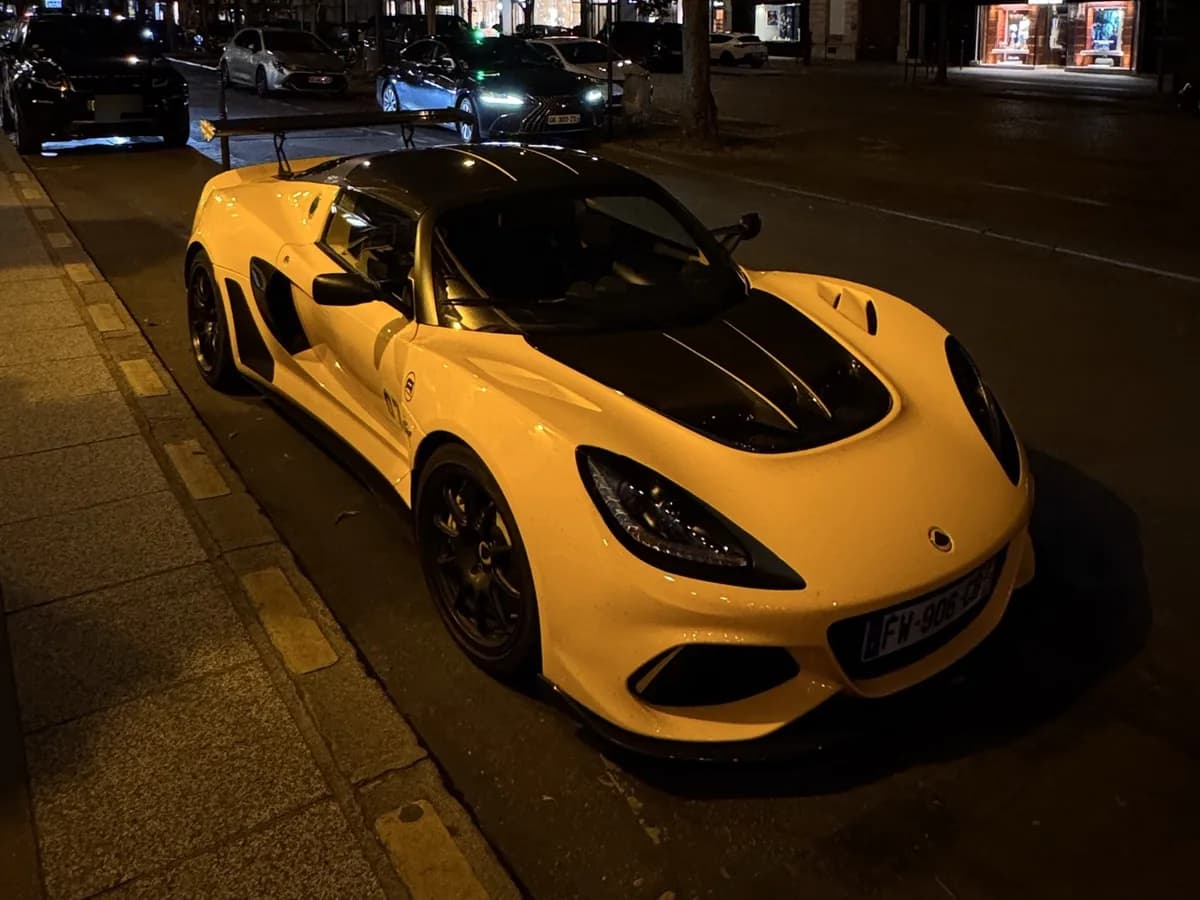
2012
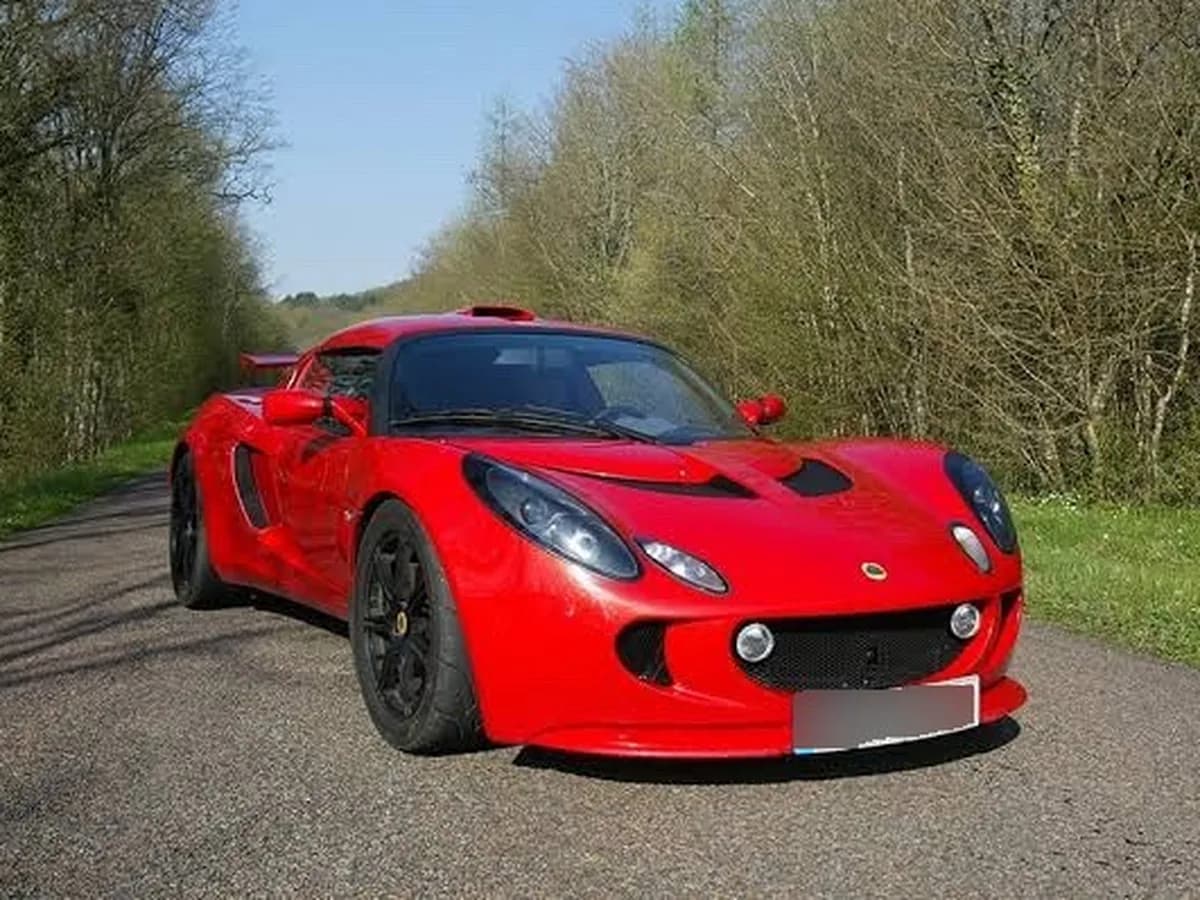
2004
2000
Lotus Exige photos
Model summary
Data from the ScanRacer library, organized to compare versions quickly.
Model introduction
Unveiled at Brands Hatch in 2000, the Lotus Exige began as a road-legal interpretation of the Lotus Sport Elise competition car. Its core formula remained consistent: a mid-engined layout, lightweight construction, a fixed roof and chassis tuning focused on precision rather than comfort. The Series 1 used a 1.8-litre Rover four-cylinder producing 177 bhp, while the Series 2, shown at Geneva in 2004, adopted a more modern Toyota four-cylinder engine. The third series represented a major change in scale, combining a supercharged 3.5-litre V6 with a longer and wider body. The reference points used here are Series 1, Series 2 and Series 3, with representative model years of 2000, 2004 and 2012. (cloud.updates.lotuscars.com)
History
The Lotus Exige grew from the philosophy of the Sport Elise, a competition car developed for a one-make series supporting the British Touring Car Championship. Lotus presented the road-going Exige before the opening round of the 2000 season, retaining the idea of a race car that could be driven on the road. The Series 1 was differentiated from the Elise by its fixed roof, wider wheel arches, roof air intake, rear wing and dedicated aerodynamic components. It used a 1,796cc Rover K-Series VHPD engine rated at 177 bhp in road specification, with an optional track-oriented tune producing 190 bhp. Lotus lists production of 601 cars between 2000 and 2002, helping explain the rarity of the first series. After a two-year gap, the Exige returned in 2004 in a substantially revised form. The Series 2 retained the lightweight structure and mid-engined layout associated with the Elise family, but introduced a Toyota 1.8-litre engine with variable valve timing, a six-speed manual gearbox and bodywork adapted to newer requirements. Supercharged versions later broadened the range, including the Exige S and several track-focused derivatives. In 2011, Lotus unveiled a larger Exige S powered by a supercharged 3.5-litre V6. This change is generally regarded as the Series 3 and turned the Exige into a much more powerful sports car while preserving its lightweight, driver-focused character. (cloud.updates.lotuscars.com)
Generations
The Series 1, produced at the beginning of the 2000s, is the closest to the Exige’s competition-car origins. It uses the bonded aluminium chassis associated with the Elise, but adds more aggressive fixed-roof bodywork and prominent aerodynamic elements. Its naturally aspirated Rover four-cylinder, low weight and unassisted steering make it an especially stripped-back version. Lotus presents it as a track-focused car adapted for road use rather than a conventional grand tourer. The Series 2, introduced in 2004, applied the same concept to a newer Elise-based platform. Its main mechanical identifiers are the Toyota 1.8-litre engine and six-speed manual gearbox. It was offered in naturally aspirated and supercharged forms, with the range including the Exige S and several circuit-oriented editions. The fixed roof and aerodynamic appendages remained, although body details and equipment changed across the production run. The Series 3, appearing around 2011-2012, brought the clearest transformation. Its body became longer and wider, while the supercharged 3.5-litre V6 delivered a substantial increase in performance. Sport and Cup versions generally added more ambitious suspension settings, braking hardware and aerodynamic packages. Market, model year and trim should still be checked before assigning a particular engine or equipment specification to an individual car. (lotuscars.com)
Key differences
The simplest distinction concerns the powertrain. A Series 1 normally has the 1.8-litre Rover four-cylinder and a five-speed manual gearbox. The Series 2 moved to a Toyota 1.8-litre four-cylinder, generally paired with a six-speed manual transmission; Exige S versions added supercharging. The Series 3 adopted Toyota’s supercharged 3.5-litre V6. Overall proportions are also useful. The Series 1 looks extremely compact and low, with bodywork closely related to the original Elise. The Series 2 retains the same broad shape but uses more modern surface treatment and lighting. The Series 3 is visibly larger, with longer flanks, more pronounced side air intakes and a bulkier rear section. Aerodynamic equipment can vary considerably by trim, especially between standard, Sport and Cup versions. Engine or equipment details should therefore not be identified from appearance alone. A chassis number, engine information and market-specific documentation remain the safer way to confirm an individual car’s specification. (lotuscars.com)
Photo recognition
A Series 1 can be recognised by its very compact coupe proportions, heavily flared arches, roof-mounted air intake, prominent rear wing and separate aerodynamic elements. The front lamps and basic body architecture are related to the first-generation Elise, but the Exige has a more enclosed and overtly purposeful profile. Its cabin is notably stripped back. The Series 2 retains the fixed roof, rear wing and compact stance, but its surfaces are smoother and more contemporary. Rear lamp design, wheels and air intakes changed across the production run and between trims. An Exige S may have additional details associated with its supercharged powertrain. The Series 3 is most easily identified by its wider stance, large side air intakes and more substantial rear bodywork. V6 S, Sport and Cup models may feature more developed splitters, diffusers and rear wings. These clues can guide an initial identification, but conversions, replacement panels and aftermarket parts may make visual assessment unreliable. Chassis, engine and market documentation should be used to confirm the exact specification. (lotuscars.com)
Important versions
The 2000 Series 1 is the founding and rarest version of the family, combining a naturally aspirated Rover engine with a particularly direct competition influence. Within the Series 2 range, the supercharged Toyota-powered Exige S represented a major step forward. The limited-production 240R was one of the most focused derivatives of this period. Cup 260 and other track-oriented versions further strengthened the model’s motorsport identity. With the Series 3, the Exige S V6 and later Sport and Cup models paired Lotus’s lightweight chassis with a supercharged 3.5-litre V6. Power figures and equipment varied by market and model year, so a commercial badge alone does not always establish the exact specification of an individual car. (lotuscars.com)
References
- Lotus Exige – Raises the barLotus Cars
- Lotus Exige S2 (2004–2012) used car reviewRAC Drive
- Lotus Exige MarketCLASSIC.COM
- https://www.autoevolution.com/lotus/exige/autoevolution.com
- https://www.jdpower.com/cars/history/lotus/exigejdpower.com
- https://www.simonandschuster.com/books/Lotus-Elise-and-Exige-1995-2020/John-Tipler/9781785008429simonandschuster.com
Technical specifications
Structured data available for versions linked to this model.
| Version | Power | Torque | Top speed | Drivetrain | Fuel |
|---|---|---|---|---|---|
| — | 345 bhp (350 PS) | — | — | Rear-wheel drive / Six-speed manual transaxle | — |
Frequently asked questions
- What years was the Lotus Exige produced?
- ScanRacer's referenced versions cover 2000 - 2012.
- How many Lotus Exige examples are documented on ScanRacer?
- 14 published scans from 10 members, with the latest photo added in September 2026.
- What is the power output of the Lotus Exige?
- The sourced technical data lists 345 bhp (350 PS).
What about the car you photographed?
Upload a photo to get a suggested make, model and likely year.
No account needed for the result · Publish only if you choose