Lotus Exige Series 3 2012
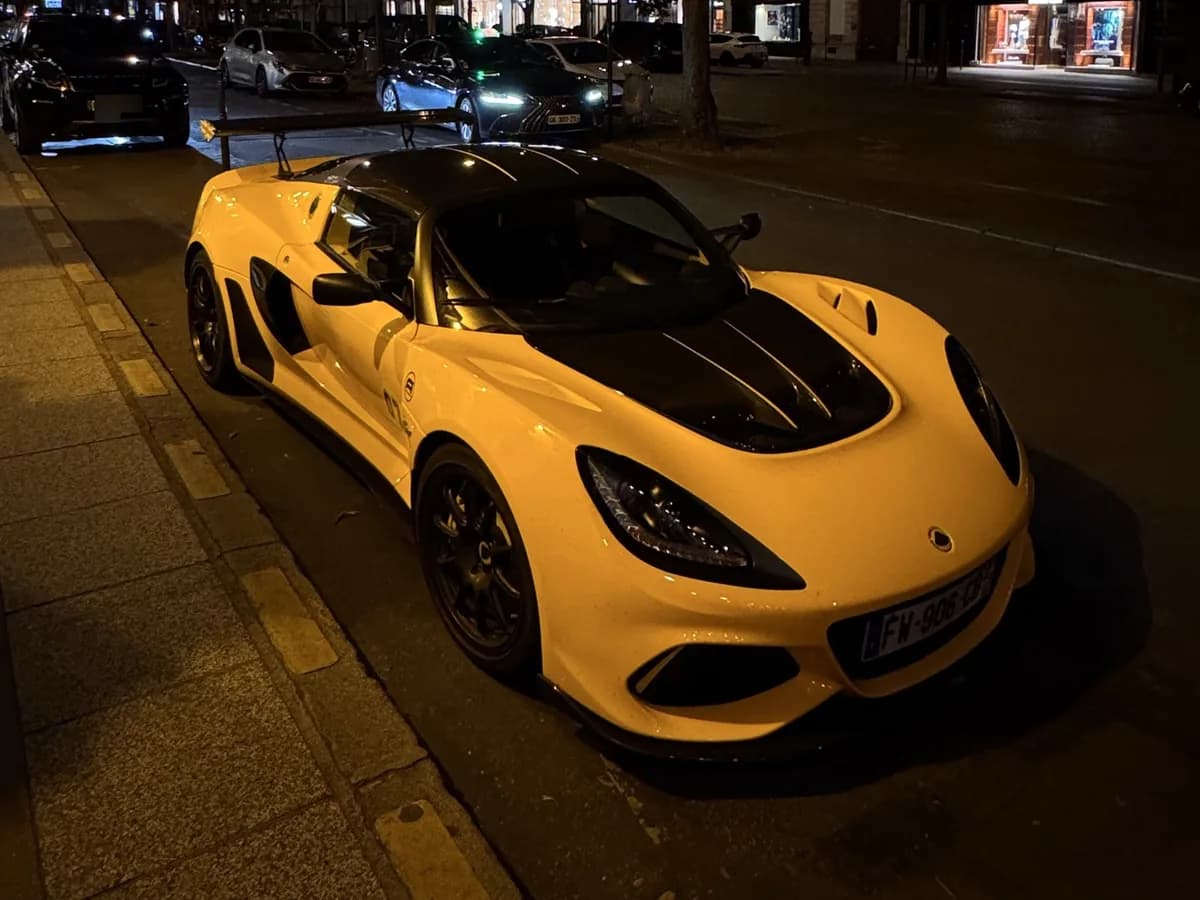
The Lotus Exige Series 3 arrived in 2012 with a substantially revised architecture and a supercharged 3.5-litre V6. Sold as the Exige S, it replaced the previous generations’ four-cylinder engine with a Toyota-sourced unit related to the Evora S, producing 345 bhp. The new car was longer and wider than the outgoing Exige, yet it retained a lightweight aluminium structure, highly focused chassis tuning and a six-speed manual gearbox. Its character also broadened: the car remained uncompromising on track, but the V6’s extra torque and selectable driving modes made it more usable on the road. The 2012 model therefore marked a major change for the Exige, positioning it between a compact track-oriented sports car and a more substantial performance coupé.
Curious about this car?
Explore Exige, then try your own photo.
No account needed for the result · Publish only if you choose
History
The third-generation Exige was unveiled at the Frankfurt Motor Show in September 2011 before reaching customers in 2012. Lotus retained its traditional emphasis on low weight and precise handling, but substantially reworked the car to accommodate the supercharged V6 used by the Evora S. The transverse 3.5-litre engine sits behind the two occupants and required a new rear subframe. Wheelbase increased by 70 mm, while the body became longer and wider. These changes altered the car’s proportions without removing its essential character: steering remained direct, the cockpit stayed compact and the aerodynamic treatment became more assertive, with revised bumpers, side sections and rear wing. The 2012 model also introduced Lotus Dynamic Performance Management, allowing the driver to adjust the electronic systems’ intervention. The result was a faster and more mature Exige that remained firmly focused on driver involvement.
Latest scans
Photos added by the community for this page.
Anecdotes
The name Exige comes from the French verb “exiger”, meaning “to demand”, reflecting Lotus’s intention to create a car that asks more of its driver. The Series 3 kept that character, even though the V6 delivered greater flexibility than the previous four-cylinder Exiges. It also shared an important mechanical link with the Evora S, but placed that powertrain in a smaller package with a more direct emphasis on chassis precision and driver feedback.
Production
Lotus does not provide, in the sources consulted, a separate production figure for the 2012 Exige S alone. The manufacturer’s heritage information does state that approximately 2,700 examples of all Exige models from the 2011–2021 generation were built. That figure covers multiple years, body styles and derivatives, including the S, Roadster, Cup and Sport versions. It should therefore not be treated as the production total for the 2012 model. The Series 3 remains a relatively low-volume generation within Lotus production, but an exact number for 2012 cars cannot be confirmed from the available evidence.
Press reception
Specialist publications responded positively to the 2012 Lotus Exige S, while recognising that the V6 changed the car’s personality. Auto Express praised the combination of Lotus chassis responses and additional power, but pointed to the firm ride, noise and awkward access as limitations for everyday use. Evo highlighted the gains in speed, composure and versatility over the Series 2, while noting that the new car was heavier and more substantial. The magazine later named it a joint winner of its 2012 Car of the Year award alongside the Pagani Huayra. Overall, the reception was strongly favourable, with practicality and cabin space remaining the principal criticisms.
Evolution
Variants
References
- Lotus Exige – Raises the barLotus Cars
Supports the Exige lineage, 2011 unveiling, Series 3 engine, power, transmission and approximate generation production volume.
- The Lotus Exige S Mini Brochure 2012Lotus Cars
Supports the 2012 Exige S engine, power, supercharger, driving modes, equipment packs and six-speed manual specification.
- Lotus Exige S: review, specs and used buying guideevo
Supports the Series 3 launch timing, dimensional and mechanical changes, performance context, later derivatives and 2012 press recognition.
- Lotus Exige S reviewAuto Express
Supports the 2012 road test, V6 origin, body and wheelbase changes, performance character and everyday-use criticisms.
- Lotus Heritage TimelineLotus Cars
Supports the 2012 Exige S Roadster entry and its supercharged 3.5-litre V6 performance claim.
- https://www.rac.co.uk/drive/car-reviews/lotus/exige/exige-s3-2012-2021/rac.co.uk
Source found by OpenAI web search for this vehicle page.
- https://www.completecar.ie/car-reviews/article/Lotus/Exige/Exige_S/550/2043/2012-Lotus-Exige_S-review.htmlcompletecar.ie
Source found by OpenAI web search for this vehicle page.
- https://www.motorauthority.com/news/1077677_lotus-explains-its-track-focused-exige-s-videomotorauthority.com
Source found by OpenAI web search for this vehicle page.