
Agera
Unveiled at the Geneva Motor Show in March 2010, the Koenigsegg Agera marked a new stage in the development of Swedish hypercars. It introduced a 5.0-liter twin-turbocharged V8, a seven-speed transmission, and a lightweight carbon-fiber body. The name combines the Swedish verb for “to act” with the idea of timelessness associated with the ancient Greek word Ageratos. Agera describes an evolving family rather than one fixed specification: the Agera R, S, and RS progressively developed power, aerodynamics, materials, and fuel compatibility. The available model data covers the 2010–2018 period and includes Base, R, S, N, RS, XS, and Final Edition entries. The N and XS labels should be treated as specific catalog entries unless documented technical details are available, rather than assigned unverified mechanical differences.
Variants by year
2018
2016
2015
2012
2011
2010
Model summary
Data from the ScanRacer library, organized to compare versions quickly.
Model introduction
Unveiled at the Geneva Motor Show in March 2010, the Koenigsegg Agera marked a new stage in the development of Swedish hypercars. It introduced a 5.0-liter twin-turbocharged V8, a seven-speed transmission, and a lightweight carbon-fiber body. The name combines the Swedish verb for “to act” with the idea of timelessness associated with the ancient Greek word Ageratos. Agera describes an evolving family rather than one fixed specification: the Agera R, S, and RS progressively developed power, aerodynamics, materials, and fuel compatibility. The available model data covers the 2010–2018 period and includes Base, R, S, N, RS, XS, and Final Edition entries. The N and XS labels should be treated as specific catalog entries unless documented technical details are available, rather than assigned unverified mechanical differences.
History
Koenigsegg introduced the Agera in 2010 as the successor to the CCX and CCXR family. The car retained the basic layout of a mid-engined, two-seat hypercar but brought several major developments: a 5.0-liter twin-turbocharged V8, a seven-speed transmission with an electronic differential, and an interior featuring the company’s “Ghost” illumination system. Koenigsegg also highlighted its VGR wheels, designed to help extract heat from the brakes while contributing to aerodynamic performance. According to Koenigsegg, the Agera R was produced from 2011 to 2014. It added flex-fuel management capable of operating on gasoline or ethanol fuels up to E100, together with distinctive aerodynamic components, an Aero exhaust, and the brand’s own ceramic-piston brake system. The Agera S followed in 2012 for markets where E85 was less available. Its gasoline-focused engine exceeded 1,000 hp, and the model introduced Koenigsegg’s hollow carbon-fiber Aircore wheels. Produced from 2015 to 2018 in 25 examples, the Agera RS combined technology from the R, S, and One:1 programs. It became the most extreme road-legal member of the family. Three Agera Final Edition cars, based on the RS, then brought the line to a close with an unusually broad scope for customer-specific equipment and aerodynamic development.
Generations
The Agera does not divide into formal generations in the conventional sense; its development is better understood as a sequence of programs and variants. The initial phase, represented by the base Agera, established the 5.0-liter twin-turbocharged V8, seven-speed transmission, VGR wheels, and Ghost-illuminated cabin. In the available model data, this version mainly spans 2010 to 2016. The Agera R was the first clearly defined transformation. Its fuel-management system accepted a broad range of gasoline and ethanol fuels, while power and aerodynamic equipment increased. The Agera S followed the same general formula but focused on conventional gasoline for markets where high-performance bioethanol was difficult to obtain. Its Aircore hollow carbon-fiber wheels provide an important technical identification point. The Agera RS represents the most comprehensive stage of development. It combined worldwide road homologation, active aerodynamic devices, reduced weight, and technology derived from the One:1 program. The N and XS names appear as separate entries in the available catalog, but the selected sources do not provide enough reliable information to assign definitive mechanical specifications here. Finally, the Final Edition was based on the RS and emphasized individual commissioning rather than a new underlying architecture.
Key differences
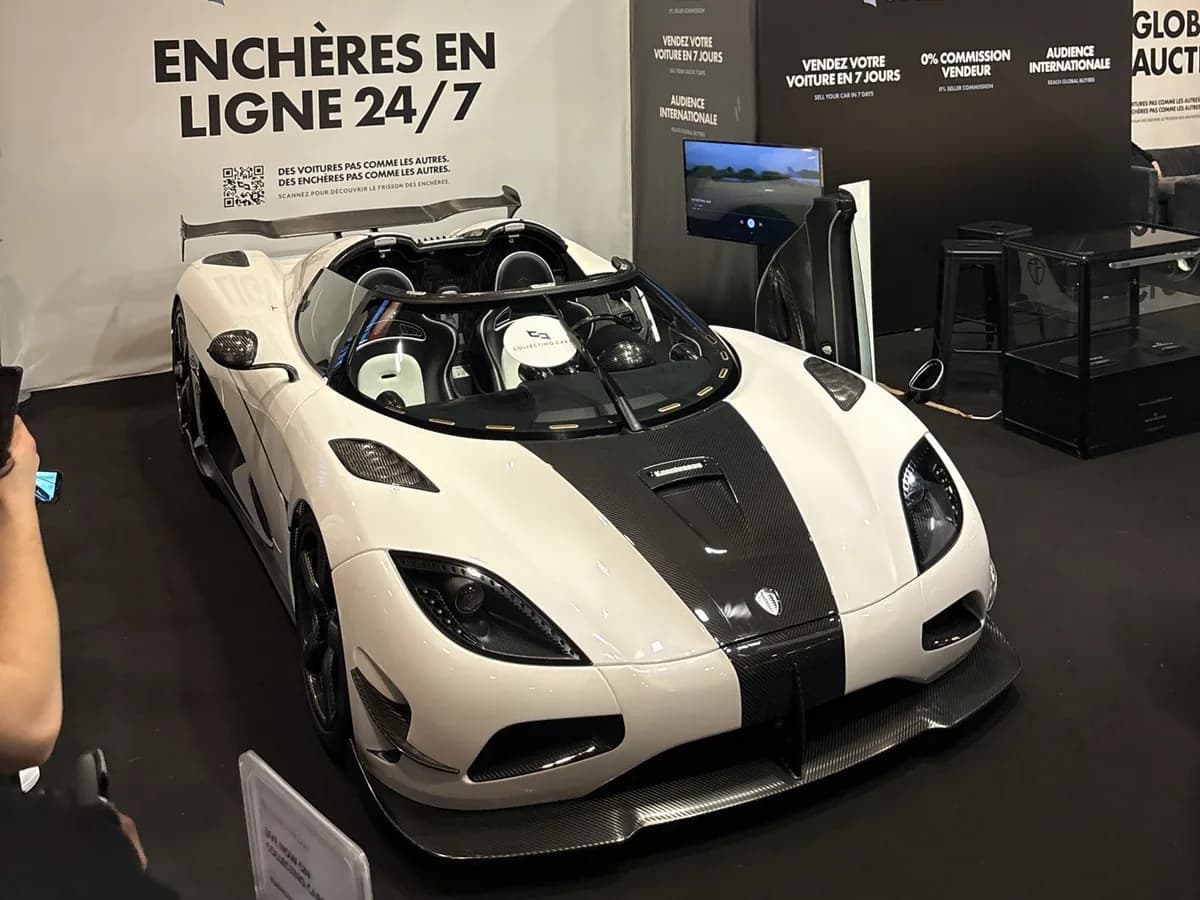
The main differences between versions concern fuel management and engine calibration. The Agera R can operate on gasoline and ethanol fuels, while the Agera S is optimized for gasoline in markets where E85 is not readily available. Published power figures therefore depend on the fuel and specification used. Aerodynamics also evolved significantly. The R added front side winglets and an Aero exhaust, while the RS received a track-optimized front splitter, side skirts, active underbody devices, and an active rear wing. The wheels provide another useful distinction: VGR wheels identify the earlier Agera concept, while hollow Aircore carbon-fiber wheels were introduced with the S and carried into later development. The RS also used composite materials and One:1-derived solutions to reduce weight. For the N, XS, and individual Final Edition cars, a single universal specification should not be assumed. Customer-specific equipment and bespoke aerodynamic work can change the appearance and equipment of otherwise related cars.
Photo recognition
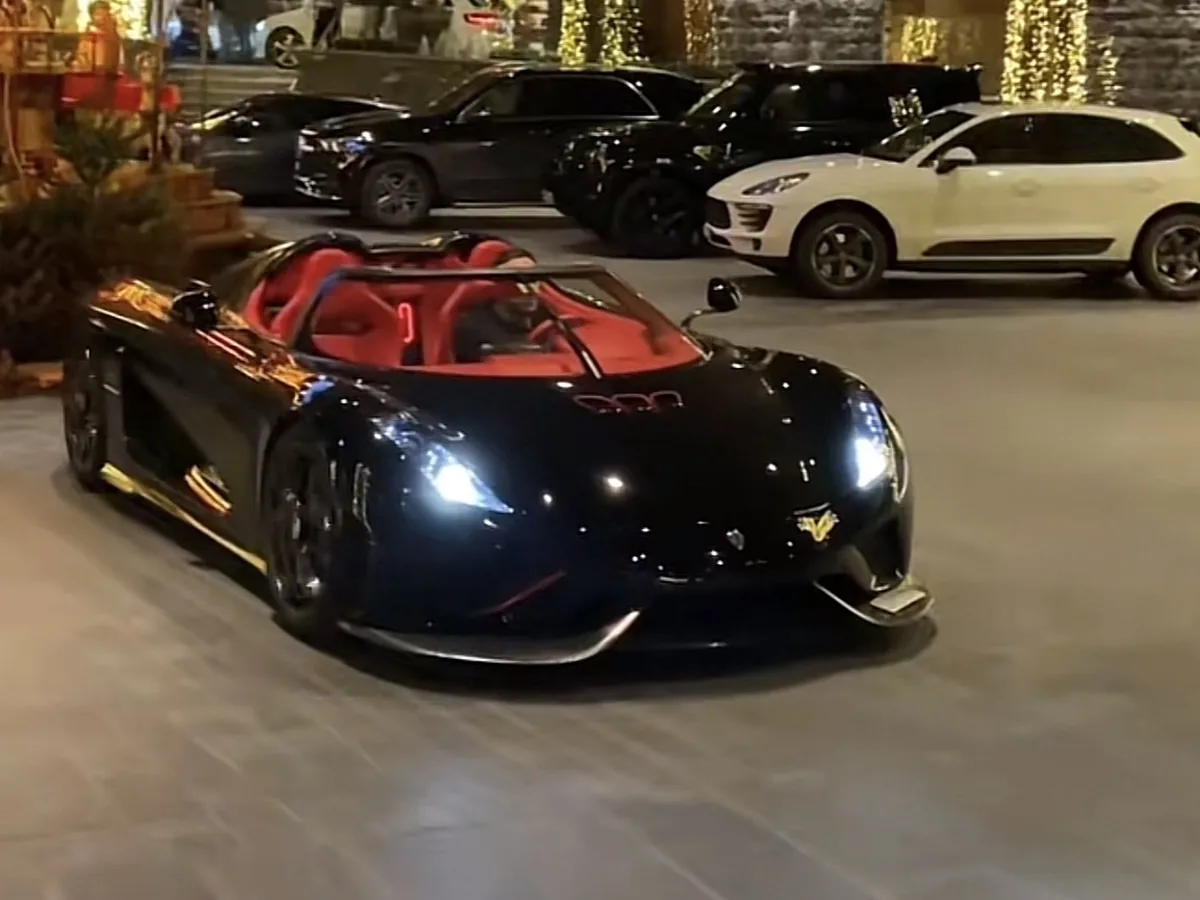
To identify an Agera, begin with its extremely low profile, characteristic dihedral doors, and carbon-fiber body, then check the details rather than relying on paint color alone. The early Agera’s VGR wheels have a turbine-like design intended to help move air around the brakes. Inside, the Ghost illumination system can identify the model family: symbols appear through the machined aluminum controls when the lighting is activated. An Agera R is commonly associated with visible carbon accents, front side winglets, and an Aero exhaust. The Agera S is linked to hollow Aircore carbon-fiber wheels, although similar wheels may appear on later or customized cars. The RS has more advanced aerodynamic hardware, including a front splitter, flaps, side skirts, and a large active rear wing. Identification should remain cautious because Koenigsegg produced very small numbers and offered extensive personalization. A visual feature can suggest a version, but chassis records, factory documentation, or a reliable specification sheet are preferable for definitive identification.
Important versions
The key versions begin with the base Agera, which launched the family in 2010. Introduced in 2011, the Agera R added flex-fuel capability, higher output, and distinctive aerodynamic equipment. The Agera S followed in 2012, adapting the concept for markets relying mainly on gasoline and introducing Aircore wheels. Produced from 2015 to 2018 in 25 examples, the Agera RS combined the family’s most advanced developments while remaining road-legal. The Final Edition concluded production with three RS-based cars that received extensive customer-specific treatment. The N and XS entries also appear in the available model data, but their technical distinctions are not sufficiently documented by the selected sources to state them as confirmed specifications.
References
- AgeraKoenigsegg
- Agera RKoenigsegg
- Agera SKoenigsegg
- Agera RSKoenigsegg
- Agera RS Technical SpecificationsKoenigsegg
- https://www.koenigsegg-registry.com/models/agerakoenigsegg-registry.com
- https://www.onlymanuals.com/manuals/cars/koenigsegg/ageraonlymanuals.com
- https://www.auto-brochures.com/makes/koenigsegg/koenigsegg_int-agera_2012.pdfauto-brochures.com
Technical specifications
Structured data available for versions linked to this model.
| Version | Power | Torque | Top speed | Drivetrain | Fuel |
|---|---|---|---|---|---|
| — | 1,140 hp at 7,100 rpm on E85/E100; 960 hp on 95-octane petrol | — | — | Seven-speed dual-clutch transmission with paddle shift | — |
Frequently asked questions
- What years was the Koenigsegg Agera produced?
- ScanRacer's referenced versions cover 2010 - 2018.
- How many Koenigsegg Agera examples are documented on ScanRacer?
- 11 published scans from 7 members, with the latest photo added in September 2026.
- What is the power output of the Koenigsegg Agera?
- The sourced technical data lists 1,140 hp at 7,100 rpm on E85/E100; 960 hp on 95-octane petrol.