
Koenigsegg
Founded in Sweden on August 12, 1994, by Christian von Koenigsegg, the company built its reputation through very high-performance cars produced in small numbers. The CC prototype was publicly driven in 1996 and led to the CC8S, Koenigsegg’s first production model, shown at the Paris Motor Show in 2000 and built from 2002. Since then, the CC, Agera, One:1, Regera, Jesko, and Gemera families have showcased an approach focused on low weight, aerodynamic efficiency, and in-house engineering. Koenigsegg cars commonly combine carbon-fiber structures, supercharged or turbocharged V8 power, and unusual drivetrain solutions such as Koenigsegg Direct Drive and the Light Speed Transmission. Their limited production and engineering-led development place them in a different category from high-performance cars built in conventional volumes.
Models from A to Z
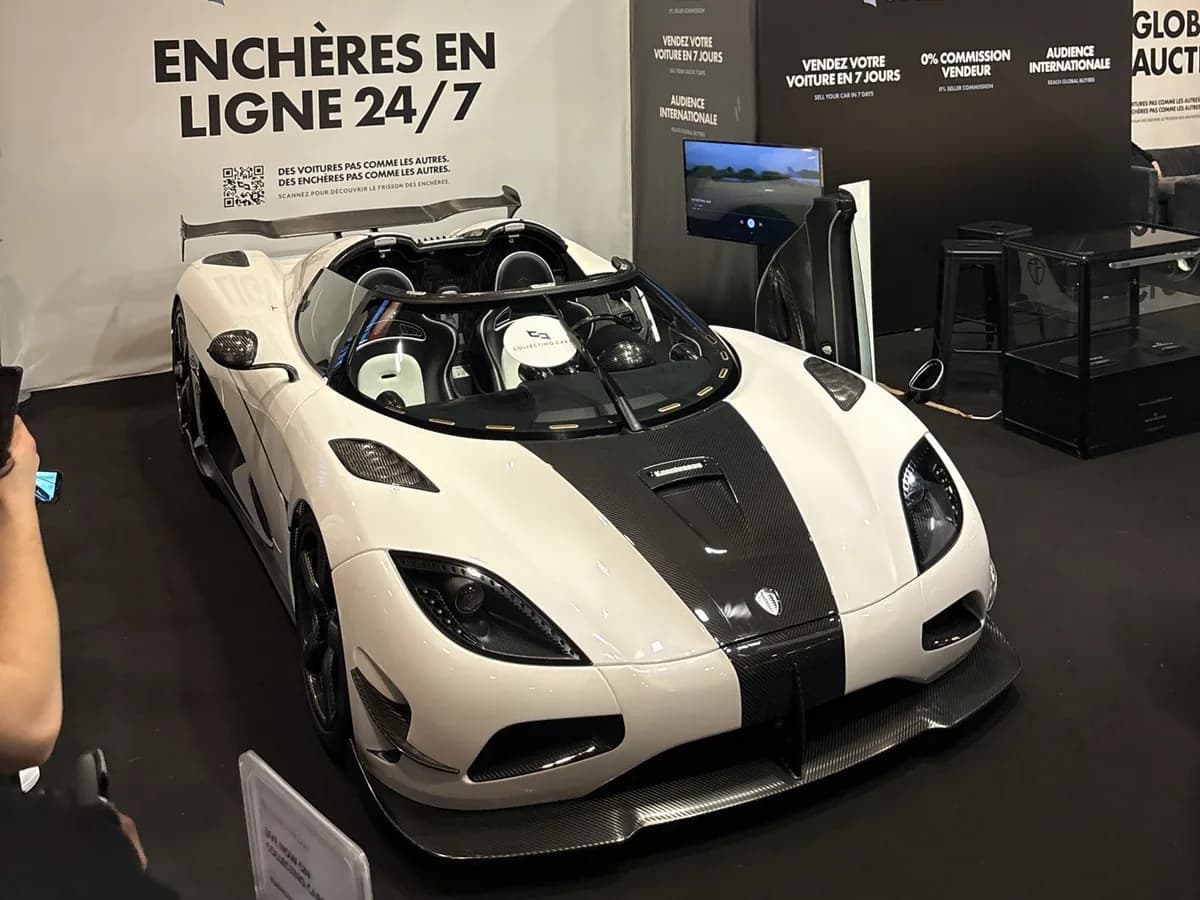
Agera
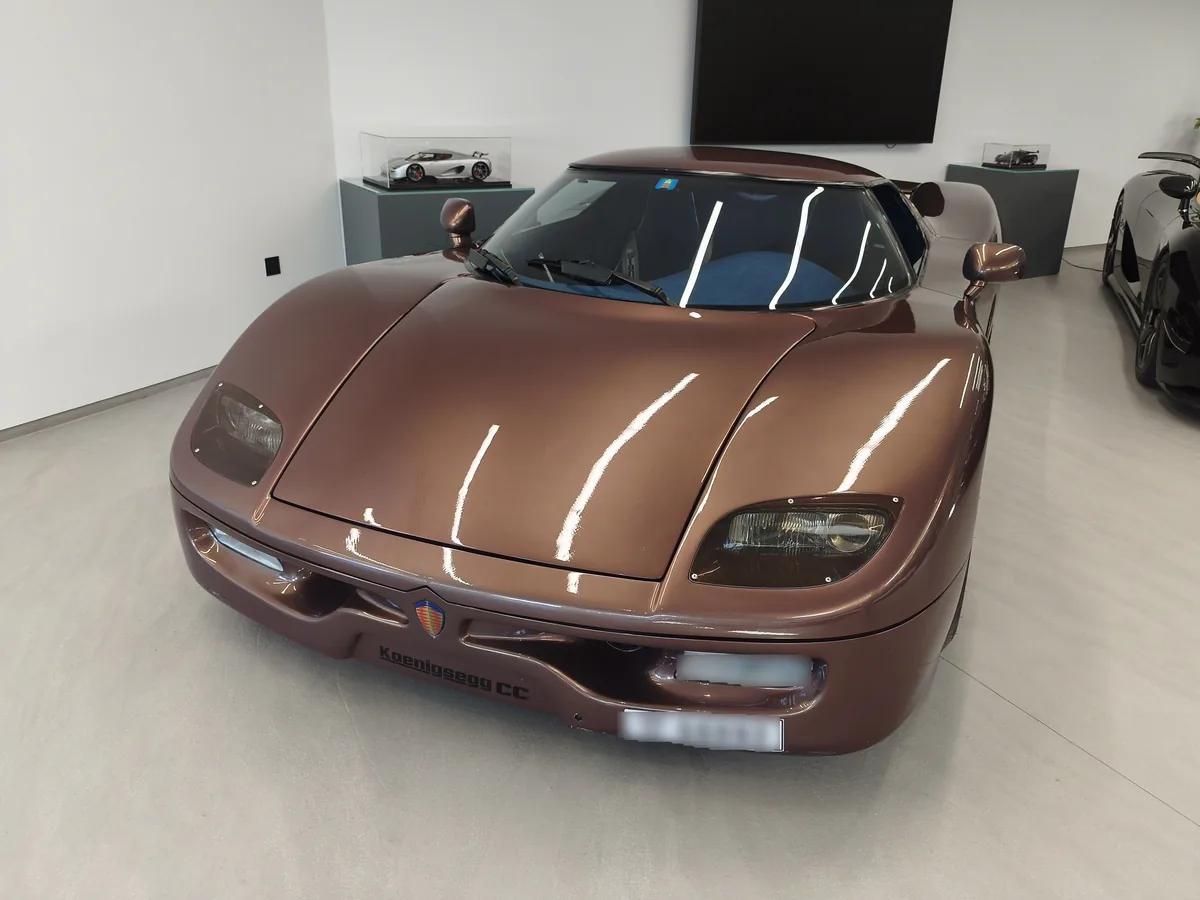
CC
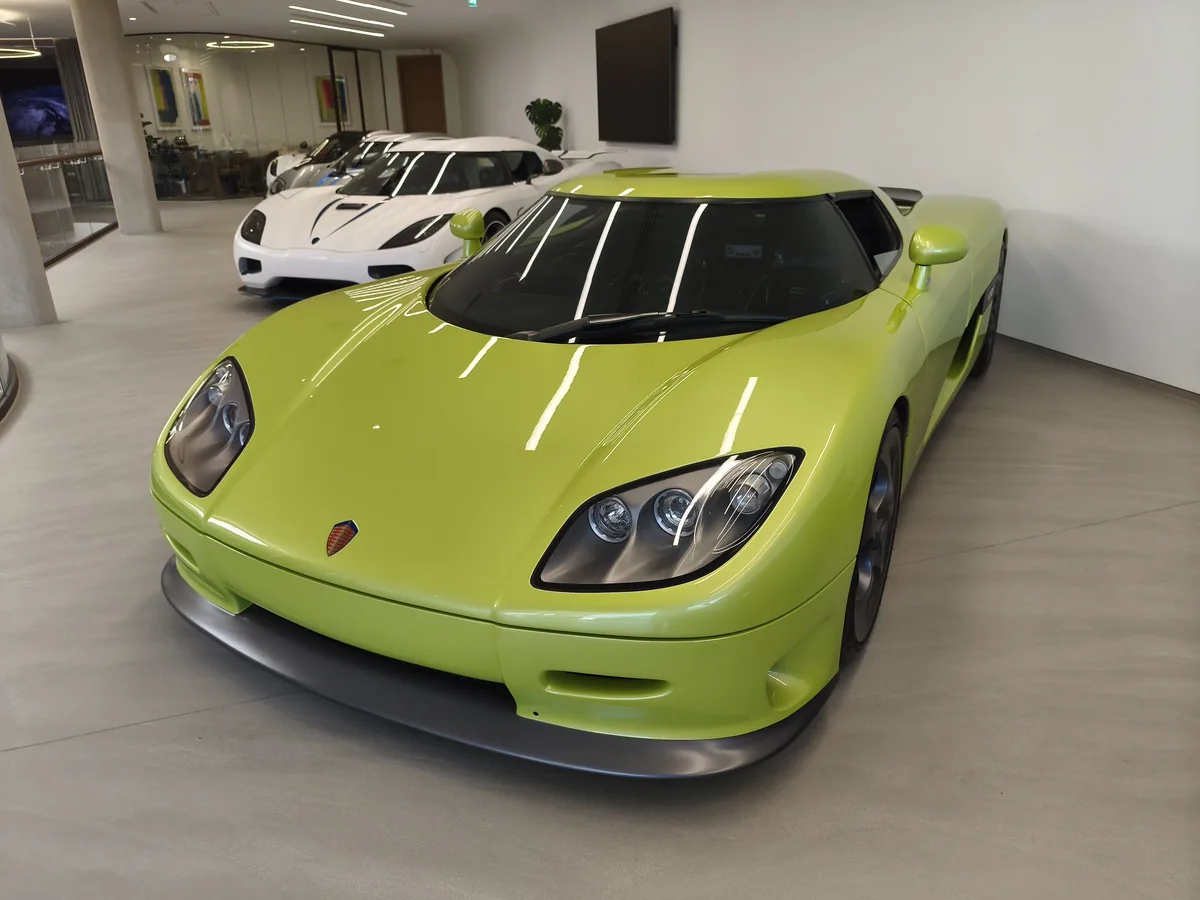
CC-Series
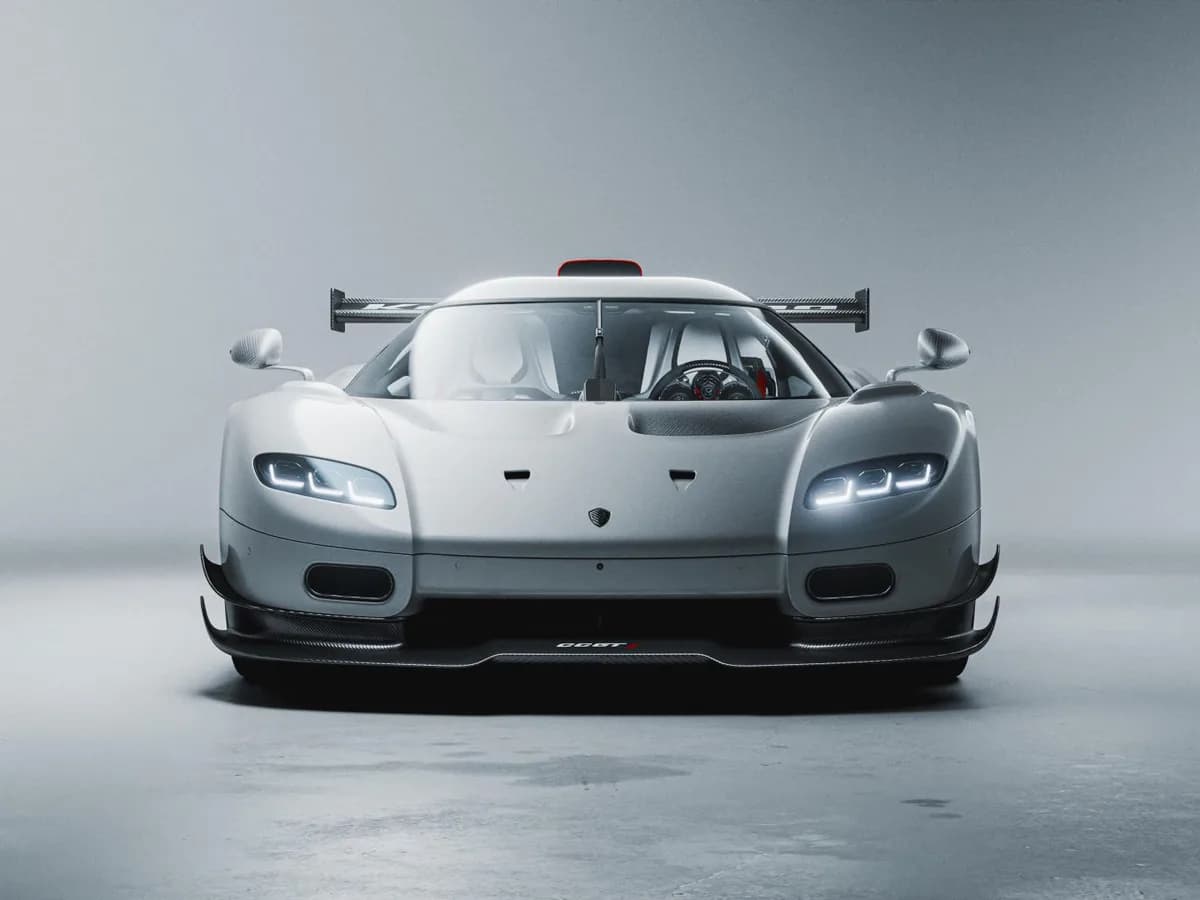
CCGT1

Gemera

Jesko
One 1

Regera
Koenigsegg overview
Koenigsegg history
Koenigsegg’s history began with the CC project, whose prototype was publicly driven at Anderstorp circuit in 1996. After a well-received appearance at the Cannes Film Festival in 1997, the first CC8S production prototype debuted in Paris in September 2000. Delivered from 2002, the CC8S established the design and engineering principles that shaped later Koenigseggs. It also earned a Guinness World Record for the most powerful production engine at the time, before the CCR followed as an evolution of the concept. The CCR was produced from 2004 to 2006, and an example reached 387.86 km/h at Nardò in February 2005, according to Koenigsegg’s official history. Introduced in 2006, the CCX was developed as a substantially new car intended to meet worldwide safety and emissions requirements, including those of the United States. The 2007 CCXR added E85 compatibility. The Agera then brought a newer platform, Vortex Generating Rims, and R and S derivatives. The 2014 One:1 introduced a claimed 1:1 power-to-weight ratio. The Regera combined hybrid power with Koenigsegg Direct Drive, while the Jesko and Gemera continued the company’s technology-led development with the Light Speed Transmission and increasingly sophisticated hybrid systems.
Koenigsegg positioning
Koenigsegg positions itself as a Swedish builder of extremely high-performance cars, with limited production and unusually deep involvement in technical development. The company states that it manufactures many complex metal and carbon-fiber components in-house while working with a network of specialist suppliers, most of them based in Sweden. This structure helps separate its cars from prestige models developed within large-volume automotive groups. Koenigsegg’s use of the term “megacar” reflects an ambition that extends beyond headline horsepower. Its cars combine road legality, track capability, lightweight construction, and distinctive transmission or powertrain solutions. The Regera adds a grand-touring interpretation, while the Gemera broadens the concept with four seats and hybrid propulsion. It is more accurate, however, to view Koenigsegg as a maker of ultra-limited, technology-focused vehicles than as a conventional manufacturer with a broad range of mainstream segments.
Recognizing a Koenigsegg in a photo
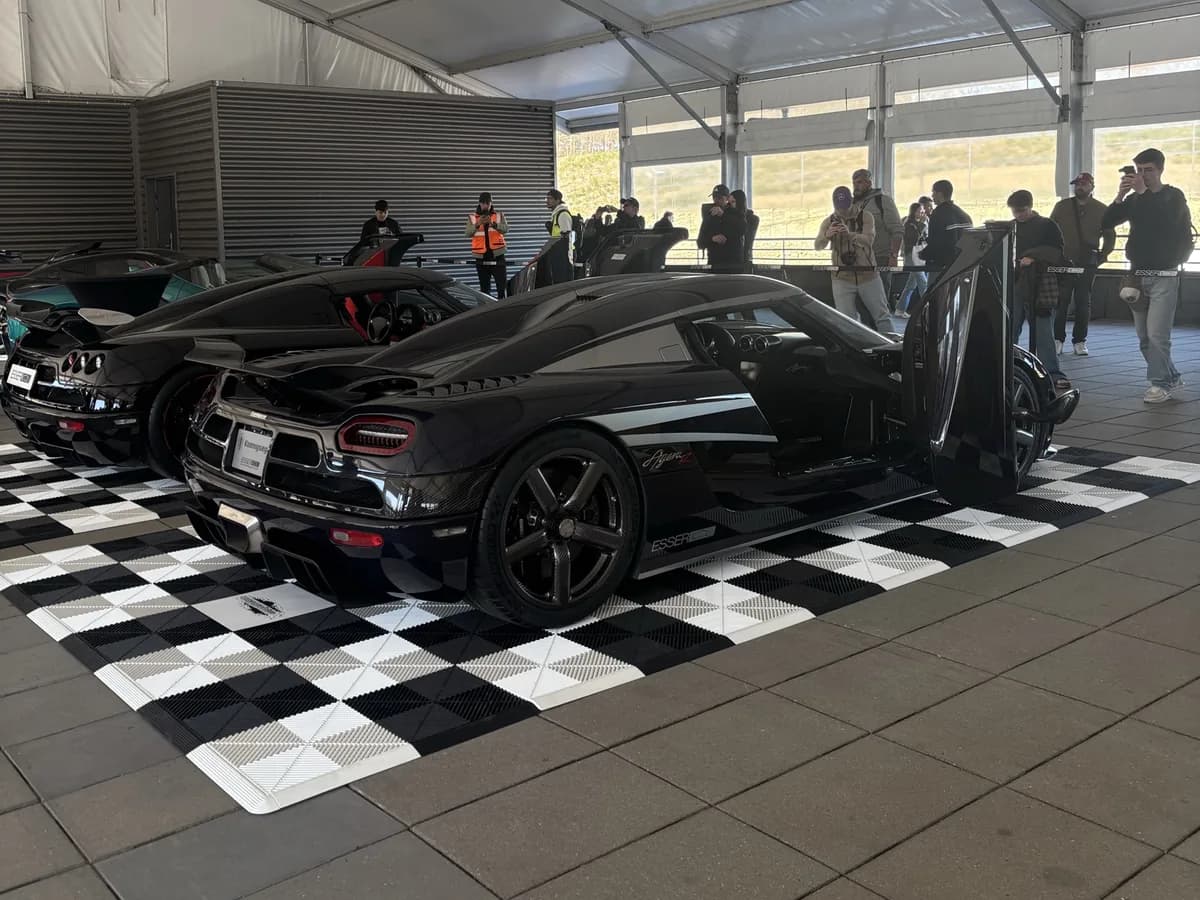
When identifying a Koenigsegg, start with the proportions: a rear-mid-engine layout, a forward-set cabin, dihedral synchro-helix doors, and a removable roof commonly designed to fit beneath the front hood. The carbon-fiber structure, compact glazing, and carefully developed aerodynamic surfaces are also recurring clues. The CC8S, CCR, and CCX share a low, rounded profile, although the CCX is slightly larger and was developed with worldwide homologation requirements in mind. The Agera has a more sculpted appearance, prominent side intakes, and, depending on specification, Vortex Generating Rims or Aircore wheels. The Regera can be distinguished by its constellation-style rear lighting and more grand-touring-oriented design. The Jesko uses far more dramatic aerodynamic hardware, while the Gemera is immediately recognizable by its long body and four-door layout. Details can change between customer specifications and special editions, so badges, wheels, wing designs, and body finishes should be treated as supporting clues rather than absolute identifiers.
Important Koenigsegg models
The CC is the founding prototype publicly shown in 1996, while the CC-Series represents Koenigsegg’s first production cars and their successive developments. The CC8S established the company’s visual language and technical foundation. The CCR extended that architecture with greater power and a record-setting speed run, while the CCX represented a new generation developed around broader international safety and emissions requirements. Produced from 2010 to 2018 across its variants, the Agera is one of the central families in Koenigsegg’s history. Its R and S versions expanded performance and fuel flexibility. The 2014 One:1 remains a landmark because of its stated one-horsepower-per-kilogram ratio. The Regera, introduced in 2016, brought hybrid power and a grand-touring interpretation through Koenigsegg Direct Drive. The Jesko, associated with 2021 in the available data, targets extreme performance with its nine-speed transmission. Finally, the 2024 Gemera adds a four-seat, hybrid interpretation of the Koenigsegg concept.