
Jesko
Unveiled at the Geneva Motor Show on March 5, 2019, the Koenigsegg Jesko is a Swedish hypercar developed as the successor to the Agera RS. It combines a 5.0-liter twin-turbocharged V8, a nine-speed gearbox known as the Light Speed Transmission, and highly developed aerodynamic systems. The engine is rated at 1,280 hp on conventional gasoline and up to 1,600 hp on E85 fuel where that fuel is available. Koenigsegg presents the Jesko in two principal configurations: the Jesko Attack, engineered around aerodynamic load and circuit performance, and the Jesko Absolut, shaped to reduce drag and pursue extreme top speed. The name honors Jesko von Koenigsegg, the father of company founder Christian von Koenigsegg.
Variants by year
2021
2019

Model summary
Data from the ScanRacer library, organized to compare versions quickly.
Model introduction
Unveiled at the Geneva Motor Show on March 5, 2019, the Koenigsegg Jesko is a Swedish hypercar developed as the successor to the Agera RS. It combines a 5.0-liter twin-turbocharged V8, a nine-speed gearbox known as the Light Speed Transmission, and highly developed aerodynamic systems. The engine is rated at 1,280 hp on conventional gasoline and up to 1,600 hp on E85 fuel where that fuel is available. Koenigsegg presents the Jesko in two principal configurations: the Jesko Attack, engineered around aerodynamic load and circuit performance, and the Jesko Absolut, shaped to reduce drag and pursue extreme top speed. The name honors Jesko von Koenigsegg, the father of company founder Christian von Koenigsegg.
History
The Jesko was officially introduced in Geneva in 2019 as Koenigsegg’s new road-legal, high-performance model. It followed the Agera RS, but introduced a substantially revised technical package rather than being a simple continuation of that car. The 5.0-liter twin-turbocharged V8 uses a 180-degree flat-plane crankshaft, larger turbochargers, and more precise pressure control. Koenigsegg quotes 1,280 hp on gasoline and 1,600 hp on E85 fuel, together with an 8,500-rpm maximum engine speed. The transmission is another defining development. The Light Speed Transmission has nine forward gears and multiple wet multi-disc clutches in a compact assembly. Its design allows rapid selection of different ratios without always following the conventional sequential order associated with a normal gearbox. The carbon-fiber monocoque was also redesigned to provide more room and improved outward visibility. Koenigsegg announced a total production run of 125 cars divided between the Jesko Attack and Jesko Absolut configurations. The model is named after Jesko von Koenigsegg, who made an important contribution during the company’s formative years.
Generations
Koenigsegg does not describe the Jesko as a sequence of separate generations. Available official information instead presents one model family, introduced in 2019, with two configurations designed for different performance priorities. This distinction matters because the Attack and Absolut should not be treated as unrelated generations. The Jesko Attack is the circuit-focused version, developed around aerodynamic load and cornering performance. It uses a large rear wing and bodywork intended to generate substantial downforce. Koenigsegg quotes up to 1,400 kg of aerodynamic load for this configuration. The Jesko Absolut shares the same basic engine and transmission, but uses a smoother body. Its large rear wing is removed, the tail is lengthened, and several surfaces are reshaped to reduce turbulence and drag. Koenigsegg gives the Absolut a drag coefficient of 0.278 Cd. In practical terms, the Jesko generation is a common technical foundation, while the Attack and Absolut names identify two aerodynamic philosophies and operating objectives. No additional official generation should be added without specific documentation from Koenigsegg.
Key differences
The main difference between the two Jesko configurations is aerodynamic rather than mechanical. The Attack prioritizes downforce: its large rear wing and supporting aerodynamic elements are intended to increase available grip on a circuit. The Absolut retains the 5.0-liter twin-turbocharged V8 and the Light Speed Transmission, but replaces that emphasis on load with a body designed to move more cleanly through the air. It has a longer rear section, smoother surfaces, redesigned front winglets, and removable wheel covers. Koenigsegg quotes a 0.278 Cd drag coefficient for the Absolut, while the Attack has a much more visibly load-focused appearance and function. The documented differences should not be interpreted as evidence of two separate engines or mechanically unrelated cars; they mainly concern bodywork, aerodynamics, and the intended performance objective.
Photo recognition
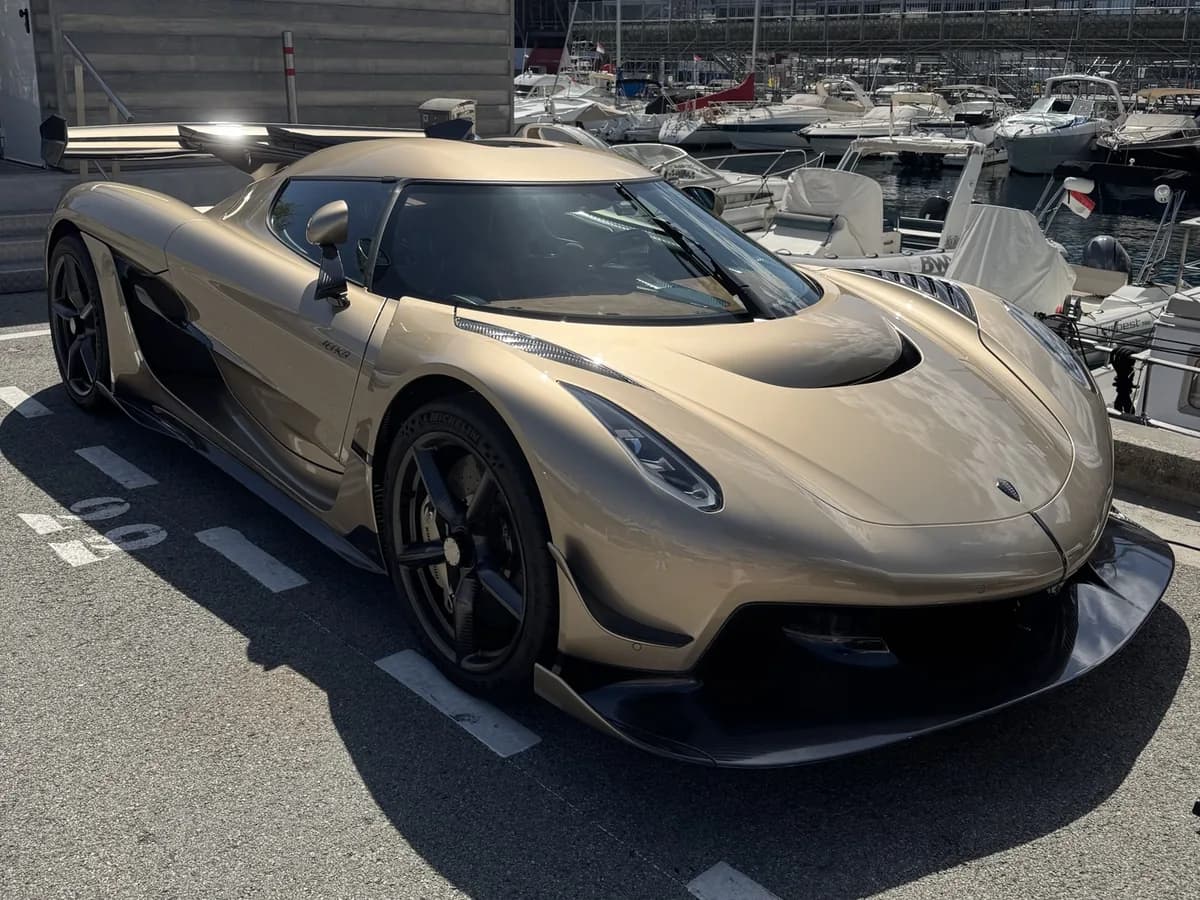
The Jesko Attack is most easily identified by its prominent rear wing, mounted high above the tail and integrated with heavily developed bodywork. Its aerodynamic appendages are numerous, and the overall shape looks more aggressive and clearly focused on generating load. The Jesko Absolut has a smoother appearance. The absence of the large fixed wing, the elongated rear body, and the cleaner side surfaces are its most dependable visual clues. The wheels may also be fitted with removable aerodynamic covers intended to reduce drag. To identify a Jesko regardless of configuration, look for Koenigsegg’s characteristic design language: extensive carbon-fiber construction, distinctive dihedral doors, an extremely low stance, and a forward-set cabin. Paint colors, exposed-carbon finishes, and customer-specific trim are not reliable indicators of version. A careful identification should begin with the rear wing, the shape of the tail, and the presence of the Absolut’s drag-reduction features.
Important versions
The Jesko Attack is the version that best represents the model’s circuit-focused direction. It concentrates on aerodynamic load and is the more visually dramatic configuration. The Jesko Absolut is the other official interpretation, developed around top speed and reduced drag through a smoother body and a quoted 0.278 Cd coefficient. Both use the 5.0-liter twin-turbocharged V8, the nine-speed Light Speed Transmission, and the same core model architecture. Koenigsegg announced a total of 125 cars for the Jesko Attack and Jesko Absolut combined. Any additional name should be treated as a customer specification, finish, or special series only when supported by an official source.
References
- All-New Koenigsegg Jesko announced at Geneva 2019Koenigsegg
- JeskoKoenigsegg
- Jesko AbsolutKoenigsegg
- The Man Behind The Name: Jesko von KoenigseggKoenigsegg
- The Koenigsegg Jesko Absolut: The fastest Koenigsegg ever – foreverKoenigsegg
- https://www.koenigseggnc.com/models/jesko/koenigseggnc.com
- https://www.koenigseggbingosports.jp/car/jesko/jesko/koenigseggbingosports.jp
- https://gear.koenigsegg.com/product/jesko-absolut-art-deco-poster/gear.koenigsegg.com
Frequently asked questions
- What years was the Koenigsegg Jesko produced?
- ScanRacer's referenced versions cover 2019 - 2021.
- How many Koenigsegg Jesko examples are documented on ScanRacer?
- 32 published scans from 20 members, with the latest photo added in September 2026.