
CC-Series
The Koenigsegg CC-Series represents the first major chapter in the Swedish manufacturer’s production history. The CC8S, shown at the 2000 Paris Motor Show, became Koenigsegg’s first production model, with six examples built in 2002 and 2003. The CCR followed with a more powerful specification and recorded 387.86 km/h at Nardò in 2005. In 2006, the CCX marked a deeper technical step, using an enlarged chassis, a new engine and development aimed at worldwide safety and emissions requirements, including the United States. The CC-Series is therefore best understood as an evolving family rather than a single uniform generation. In the ScanRacer context, the listed coverage runs from the 2002 CC8S to the 2022 CC850, with CCR Revo recorded separately as a 2012 variant. (koenigsegg.com)
Variants by year
2022
2012
2006
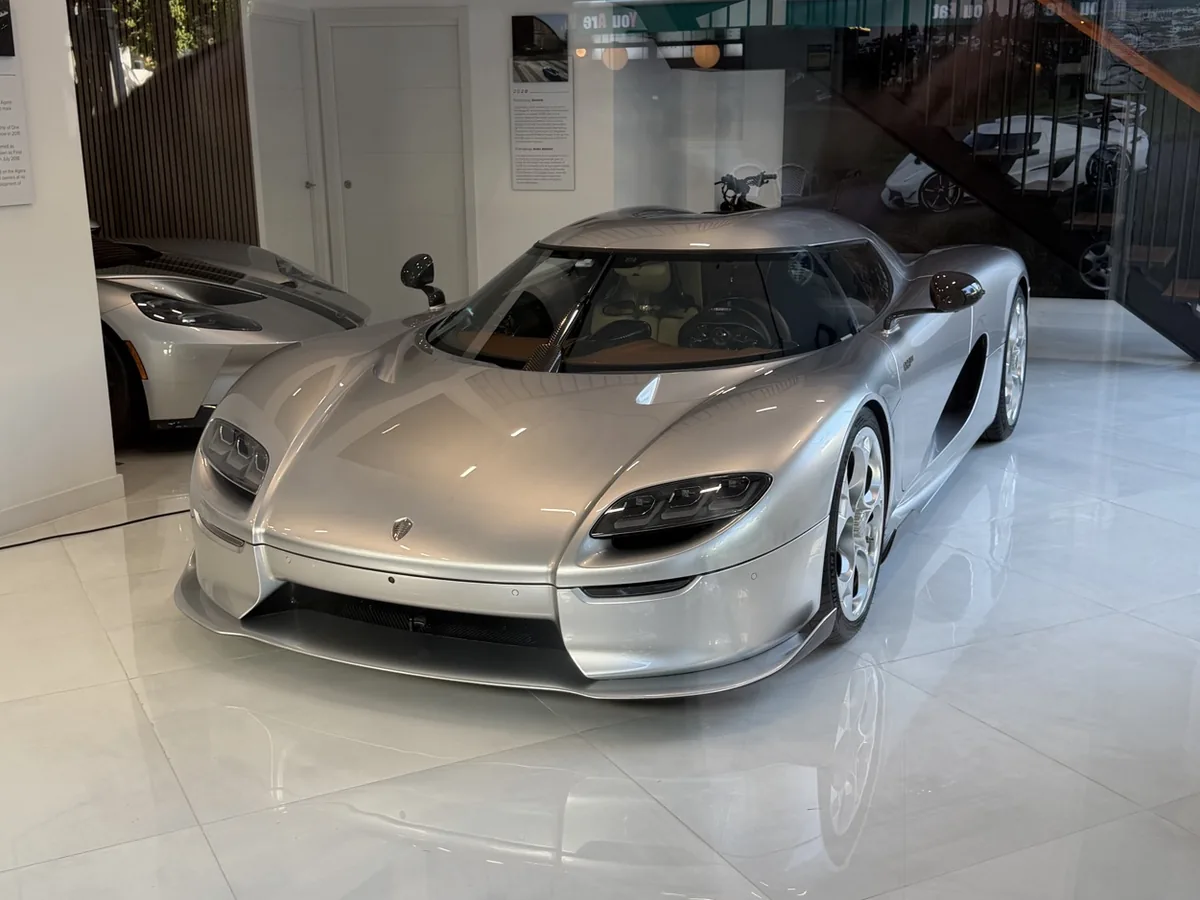
2004
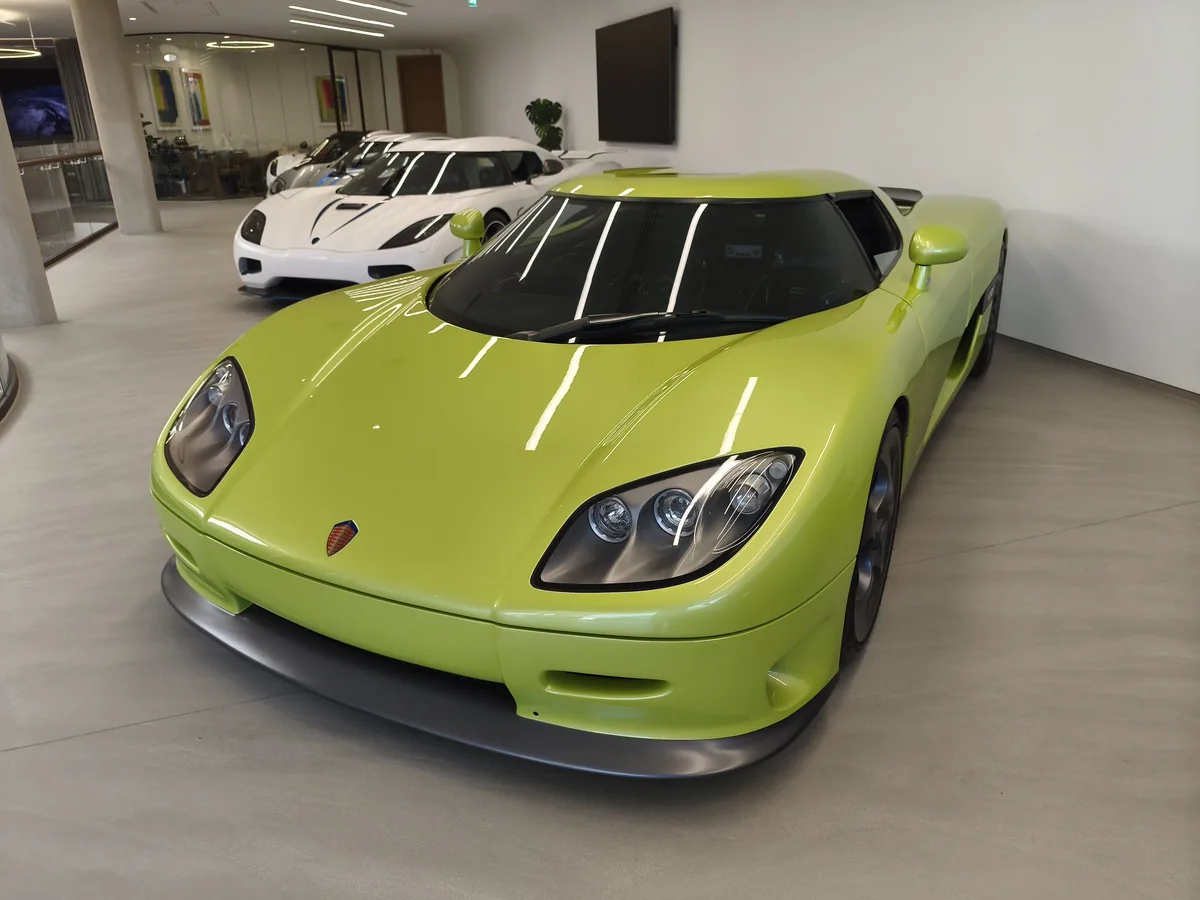
2002
Model summary
Data from the ScanRacer library, organized to compare versions quickly.
Model introduction
The Koenigsegg CC-Series represents the first major chapter in the Swedish manufacturer’s production history. The CC8S, shown at the 2000 Paris Motor Show, became Koenigsegg’s first production model, with six examples built in 2002 and 2003. The CCR followed with a more powerful specification and recorded 387.86 km/h at Nardò in 2005. In 2006, the CCX marked a deeper technical step, using an enlarged chassis, a new engine and development aimed at worldwide safety and emissions requirements, including the United States. The CC-Series is therefore best understood as an evolving family rather than a single uniform generation. In the ScanRacer context, the listed coverage runs from the 2002 CC8S to the 2022 CC850, with CCR Revo recorded separately as a 2012 variant. (koenigsegg.com)
History
The CC project dates back to Koenigsegg’s formative years and established several features that would define the marque for years: a mid-mounted engine, a lightweight carbon-fiber structure, a removable roof and dihedral doors. The CC8S was the production result of that development phase. Koenigsegg states that the car followed eight years of development before its public debut in 2000. With only six cars built in 2002 and 2003, it was both a foundational model and an exceptionally low-volume production car. (koenigsegg.com) Produced from 2004 to 2006, the CCR retained the basic CC8S architecture but raised performance substantially. Koenigsegg lists 806 bhp and 920 Nm, while the car recorded 387.86 km/h at Nardò in February 2005. The manufacturer states that 14 examples were produced. (koenigsegg.com) The CCX, introduced in 2006, should not be treated as merely an updated CCR. Koenigsegg describes it as a third-generation car, with an enlarged chassis and largely new engine, suspension and aerodynamic systems. It was also the first Koenigsegg sold in the United States. The CC850, revealed in 2022, later revived the idea of a CC8S homage while combining contemporary technology with a dual-mode transmission. (koenigsegg.com)
Generations
The first clearly identifiable stage is the CC8S. It combines composite bodywork and chassis construction with a supercharged 4.7-liter V8 and a removable hardtop that can be stored in the car. The distinctive dihedral doors are already present and remain one of the family’s strongest visual signatures. Koenigsegg lists 655 bhp for this version. (koenigsegg.com) The CCR is an evolution of that foundation. Its overall shape remains familiar, but the official specification rises to 806 bhp. Exterior and chassis systems were revised for higher performance, including more developed aerodynamic and braking equipment. It is nevertheless directly connected to the original CC architecture. (koenigsegg.com) The CCX is the largest technical break in the historical sequence. Koenigsegg describes it as having an enlarged chassis and being developed with almost no components carried over. Its technical sheet lists a 4.7-liter Koenigsegg V8, twin centrifugal superchargers and compliance with Euro IV and United States emissions requirements. (koenigsegg.com) The CC850, listed by ScanRacer for 2022, is a modern reinterpretation rather than a direct continuation of CCX production. Its styling pays tribute to the CC8S, while its engineering and powertrain belong to a much newer technological era. (koenigsegg.com)
Key differences
The main versions are best separated by considering styling and engineering together. The CC8S is the earliest and most minimalist of the listed production cars: its compact proportions, removable roof and official 655-bhp specification are key reference points. The CCR retains the same overall appearance but is usually associated with more aggressive aerodynamic equipment and an official output of 806 bhp. (koenigsegg.com) The CCX can look similar to the CCR at first glance, yet it uses a larger chassis and introduces different details around the air intakes and aerodynamic hardware. Its technical documentation also identifies a new engine architecture and suspension system. (koenigsegg.com) The CC850 is easier to distinguish from the earlier cars. It echoes the CC8S through its design, but uses modern bodywork, a contemporary cabin and a transmission designed to operate in both manual and automatic modes. The “CCR Revo” designation should be handled cautiously: it appears in the ScanRacer context as a 2012 variant, but the official pages reviewed primarily document the standard CCR rather than defining CCR Revo as a separate factory model. (koenigsegg.com)
Photo recognition
Reliable identification should begin with the overall silhouette. The CC8S, CCR and CCX share a very low body, a removable roof panel and Koenigsegg’s distinctive dihedral doors. In photographs, it is risky to rely only on paint, wheels or the rear wing, since these details may vary with specification, options or later modifications. (koenigsegg.com) The CC8S is usually the easiest to place chronologically because it was the company’s first production car and has a comparatively restrained presentation. The CCR keeps the same visual cell but is often associated with a more pronounced front treatment and additional aerodynamic hardware. The CCX can be identified through its slightly larger proportions and different body and intake details linked to its enlarged chassis. These clues are useful, but they should not replace a chassis-number or provenance check. (koenigsegg.com) The CC850 is immediately distinguishable through its modern interpretation of the CC8S theme, contemporary equipment and separate cabin design. Identification of a CCR Revo should remain documentary unless the vehicle’s provenance and the exact meaning of the designation have been established. (koenigsegg.com)
Important versions
The CC8S is the foundational version: Koenigsegg states that six examples were built in 2002 and 2003. The CCR is the closest direct development of that first car and remains one of the family’s key historical models, with 14 examples reported and the 2005 Nardò record. (koenigsegg.com) The CCX marks the move toward a more broadly homologable car and is described by Koenigsegg as a genuine third technical generation. The CC850 is significant for a different reason: revealed in 2022, it explicitly pays tribute to the CC8S and reconnects the marque with its origins. In the supplied ScanRacer data, CCR Revo appears as a separate 2012 variant; its exact status should be confirmed through provenance documents rather than inferred from the name alone. (koenigsegg.com)
Frequently asked questions
- What years was the Koenigsegg CC-Series produced?
- ScanRacer's referenced versions cover 2002 - 2022.
- How many Koenigsegg CC-Series examples are documented on ScanRacer?
- 3 published scans from 3 members, with the latest photo added in August 2026.