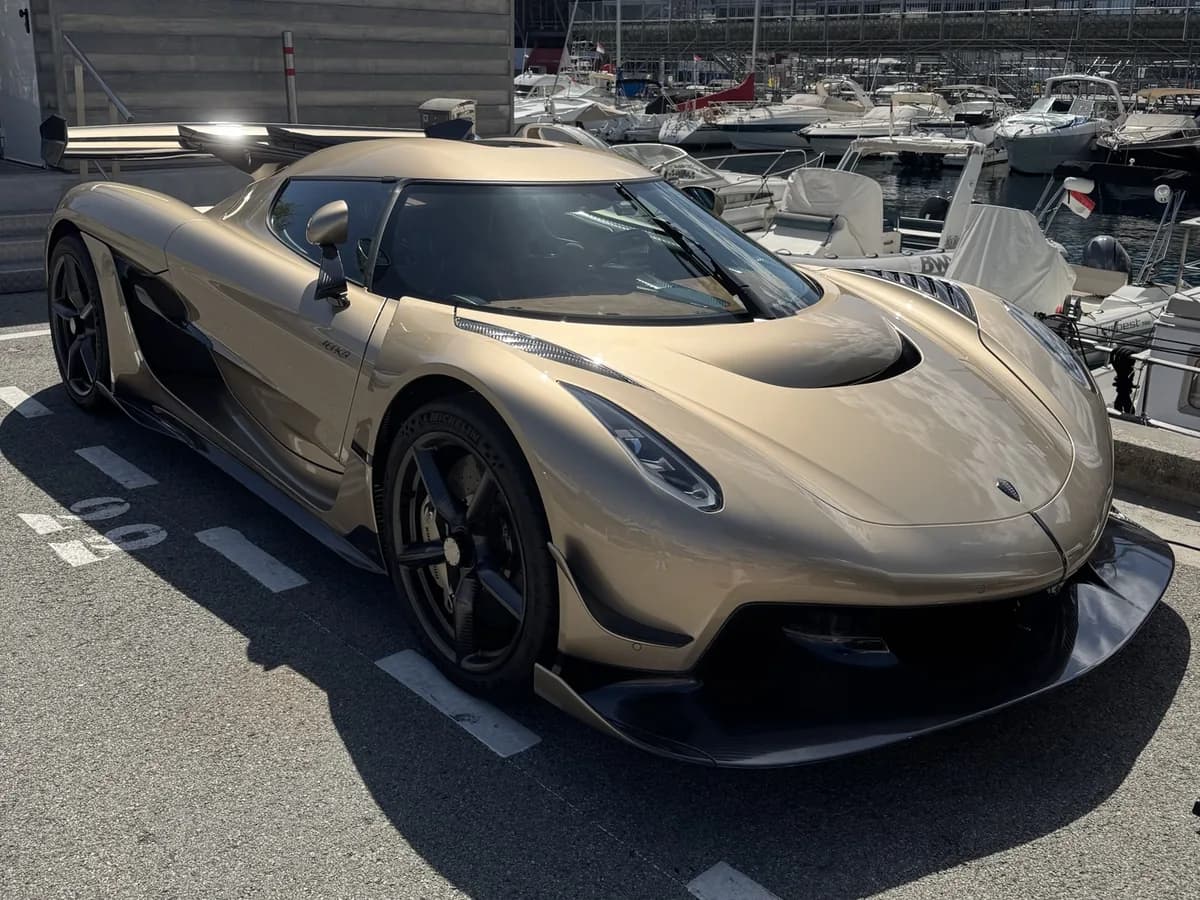
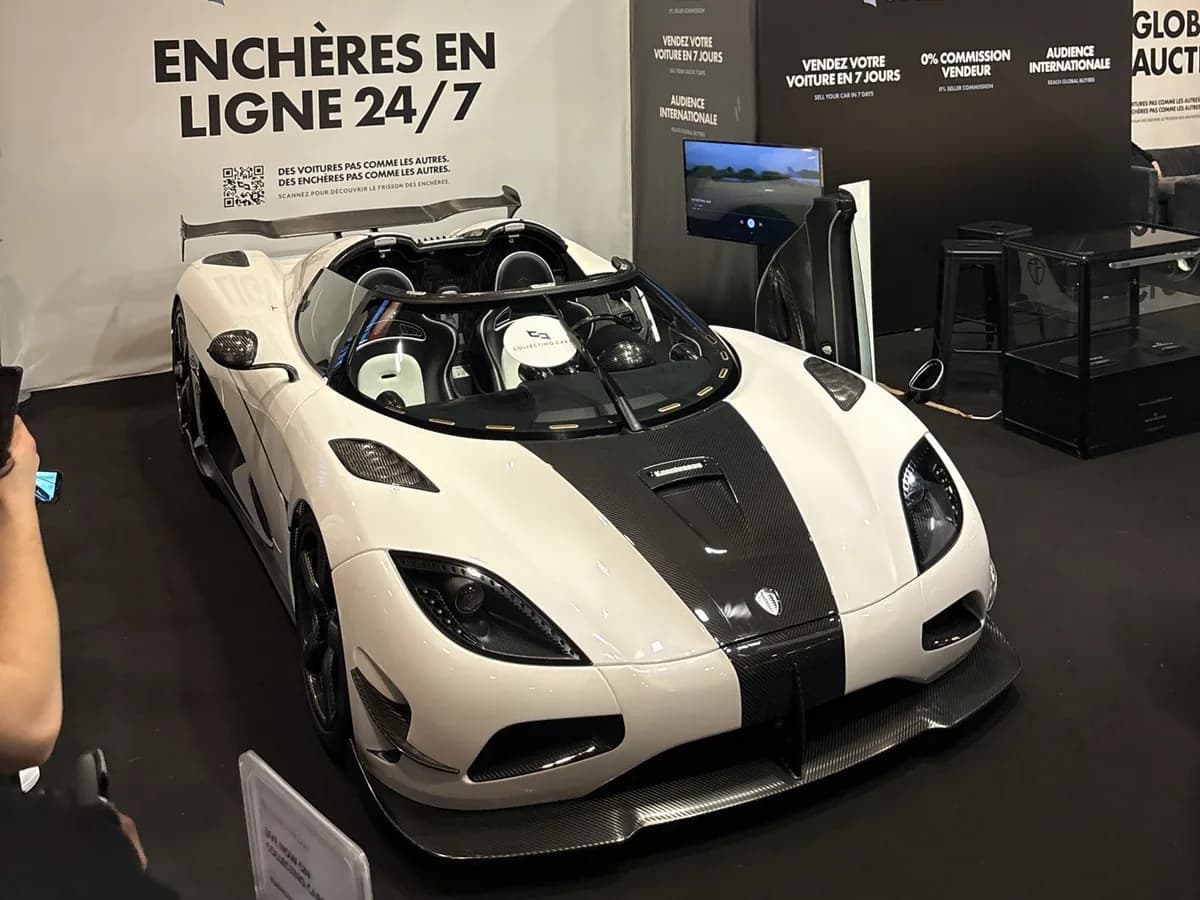
Koenigsegg Agera R 2011
Unveiled at the Geneva Motor Show in March 2011, the Koenigsegg Agera R is a two-seat supercar powered by a 5.0-litre twin-turbo V8. It builds on the standard Agera while adding flex-fuel management designed to operate on anything from 95-octane petrol to E85 and E100 biofuel. Koenigsegg’s official specification lists 1,140 bhp and 1,200 Nm when using ethanol-based fuel. Its lightweight construction combines carbon-fibre and Kevlar bodywork with a detachable hardtop and active aerodynamic elements. The Agera R also established a major performance benchmark in 2011, completing the 0-300-0 km/h test in 21.19 seconds.
History
The Agera R emerged from Koenigsegg’s continuing work with renewable fuels and high-output engines. Following the CCXR’s flex-fuel technology, the Swedish manufacturer adapted the concept to the Agera, first unveiled in 2010. The R version received revised engine and fuel-management systems that could detect the fuel mixture and alter the engine’s operation accordingly. Output therefore depended on the fuel used: Koenigsegg lists 960 bhp on 95-octane petrol and as much as 1,140 bhp on E85 or E100, with 1,200 Nm of torque. The changes extended beyond the powertrain. The Agera R introduced visible carbon-fibre body sections, front side winglets, an Aero exhaust and Koenigsegg’s own ceramic-piston braking system. In 2011, it completed the 0-300-0 km/h test in 21.19 seconds, a benchmark later surpassed by the One:1 in 2015.
Latest scans
Photos added by the community for this page.
Anecdotes
The Agera R’s Geneva presentation included an unusual accessory for a hypercar: a roof-mounted ski box designed for carrying skis. The option highlighted Koenigsegg’s attempt to preserve a measure of practicality despite the car’s extreme performance. The Agera R is also notable for its ability to run on different fuel blends, from petrol to E100, using electronic management that adjusts the engine’s operating parameters to the fuel detected.
Production
Koenigsegg states that 18 examples of the Agera R were produced between 2011 and 2014. The total covers cars built during the model’s production period, including vehicles specified to individual customer requirements. Its rarity therefore reflects both the very small production run and its position at the top of the Agera range before later derivatives such as the Agera S, Agera RS and One:1 appeared. The production figure used here follows Koenigsegg’s own published information rather than estimates from unofficial databases. Individual cars may differ in colour, trim and equipment, but those customer choices do not necessarily represent separate production versions.
Press reception
Automotive media quickly placed the Agera R among the most extreme hypercars of its era. Evo presented it as a particularly powerful development of the Agera and praised its 5.0-litre twin-turbo V8, careful construction and unexpectedly manageable road manners given its performance. The magazine also highlighted its acceleration and braking ability during performance testing. Figures published during the car’s early years sometimes differ according to the fuel grade and technical specification being discussed, which explains variations between period reports. Koenigsegg’s later official technical information lists 1,140 hp and 1,200 Nm for the model.
Evolution
Variants
References
- Agera RKoenigsegg
Official overview, technical highlights, flex-fuel operation, power figures, braking system and 18-car production total.
- Agera R - Technical SpecificationsKoenigsegg
Official powertrain, transmission, body style, performance and chassis specifications.
- HistoryKoenigsegg
Official chronology of the Agera, Agera R, Agera S, Agera RS and the 0-300-0 km/h record.
- A-Z Supercars: Koenigsegg Agera R (2011-2014)evo
Independent automotive context, period performance assessment and discussion of the Agera R’s road manners.
- Koenigsegg Agera R performance details releasedSgcarmart
Contemporary report on the 2011 launch, flex-fuel outputs, performance claims and available equipment.
- https://www.koenigsegg-registry.com/models/agera-rkoenigsegg-registry.com
Source found by OpenAI web search for this vehicle page.
- https://www.koenigsegg-registry.com/registry/85koenigsegg-registry.com
Source found by OpenAI web search for this vehicle page.
- https://www.koenigsegg-registry.com/registry/80koenigsegg-registry.com
Source found by OpenAI web search for this vehicle page.