
Tucson
Introduced in 2004, the Hyundai Tucson was developed as Hyundai’s entry in the growing compact-SUV market. In the United States, the first generation was offered with either a 2.0-liter four-cylinder or a 2.7-liter V6, with available all-wheel drive depending on configuration. The model then moved toward a more road-focused and technology-oriented formula, particularly with the major redesign for 2010 and the later generations introduced for 2016 and 2022. In some markets, the second-generation vehicle was sold under the ix35 name before Hyundai returned to the Tucson badge. ScanRacer’s coverage spans model years from 2004 through 2023 and includes seven catalogued variants, making it possible to follow the nameplate from Hyundai’s first compact SUV through its newer electrified offerings.
Variants by year
2023
2020

2019
2018
2015
2009
2004
Model summary
Data from the ScanRacer library, organized to compare versions quickly.
Model introduction
Introduced in 2004, the Hyundai Tucson was developed as Hyundai’s entry in the growing compact-SUV market. In the United States, the first generation was offered with either a 2.0-liter four-cylinder or a 2.7-liter V6, with available all-wheel drive depending on configuration. The model then moved toward a more road-focused and technology-oriented formula, particularly with the major redesign for 2010 and the later generations introduced for 2016 and 2022. In some markets, the second-generation vehicle was sold under the ix35 name before Hyundai returned to the Tucson badge. ScanRacer’s coverage spans model years from 2004 through 2023 and includes seven catalogued variants, making it possible to follow the nameplate from Hyundai’s first compact SUV through its newer electrified offerings.
History
Hyundai introduced the Tucson in the United States for 2004 as the brand’s first entry in the small-SUV segment. The original model combined a five-door body, raised seating, and available all-wheel drive while remaining smaller than the Santa Fe. Hyundai listed a 2.0-liter four-cylinder and a 2.7-liter V6 for the U.S. market. Electronic stability control and six airbags were also among the safety features highlighted when the model was launched. The 2010 redesign represented a major change in direction. Hyundai described the new Tucson as a more fluidly styled crossover with greater power, improved fuel economy, and a broader technology package. The next major generation arrived for 2016, bringing a stiffer body structure, a longer wheelbase, and additional driver-assistance systems. Hyundai revealed the fourth generation in 2020, with the vehicle reaching U.S. showrooms as a 2022 model. It introduced a wider, more angular design and added hybrid and plug-in-hybrid powertrains to the range. These successive redesigns account for the variety of Tucson vehicles built and sold between 2004 and 2023.
Generations
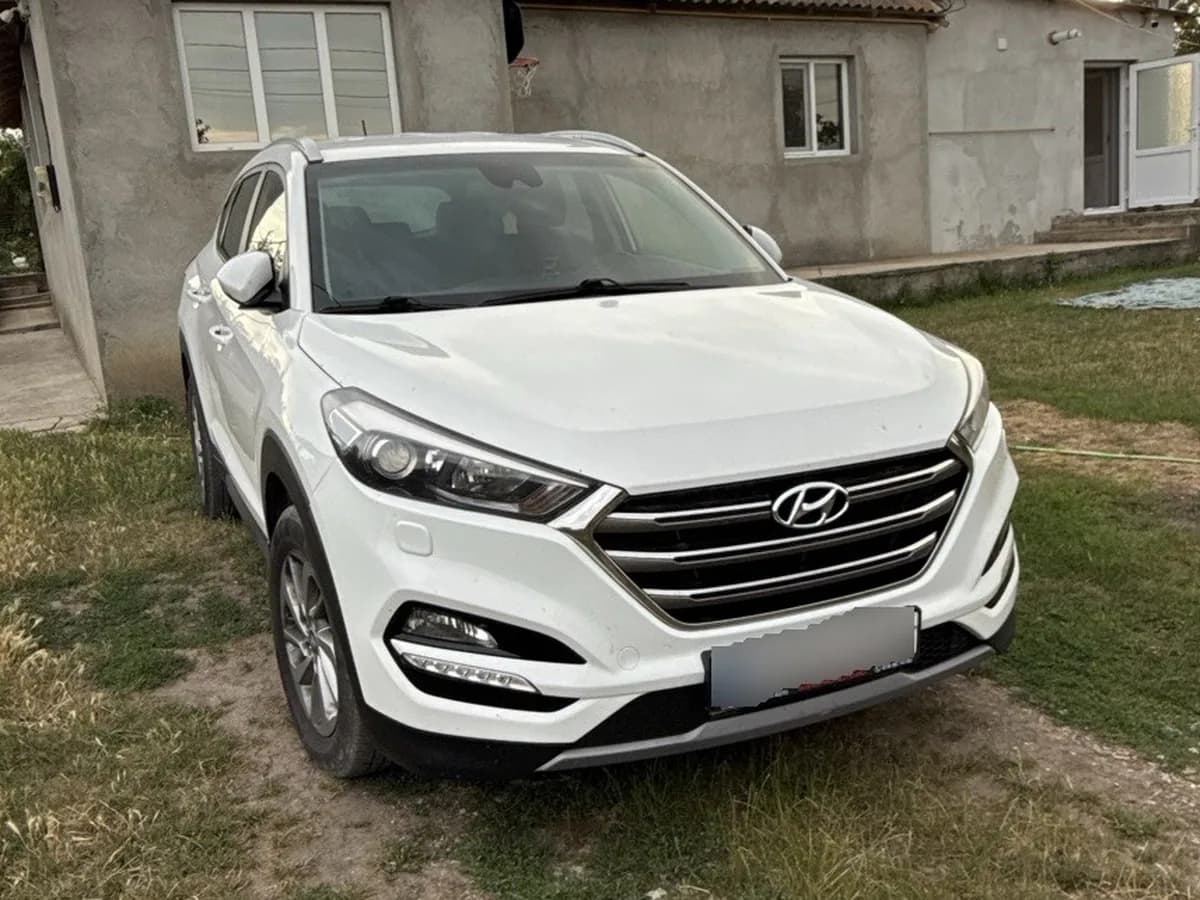
The first generation began with the 2004 launch and is identified by relatively compact proportions, rounded bodywork, and a straightforward front end. In the United States, it could be equipped with either a 2.0-liter four-cylinder or a 2.7-liter V6. Its replacement arrived for 2010 with a much more sculpted appearance shaped by Hyundai’s Fluidic Sculpture design language. This second generation was also sold as the ix35 in several international markets, which can make identification more difficult when examining an imported vehicle. The third generation is represented by the North American 2016 Tucson. It introduced a hexagonal grille, more defined bodywork, and a longer wheelbase than the preceding model. Hyundai also increased body rigidity and expanded the available driver-assistance technology. The fourth generation was revealed in September 2020 and reached U.S. dealerships as a 2022 model. Its main visual signatures include daytime running lights integrated into the grille, angular body surfaces, and market-dependent short- and long-wheelbase versions. Model-year timing can therefore differ by region, so ScanRacer’s coverage years should not be treated as a universal launch calendar for Europe, Asia, or North America.
Key differences
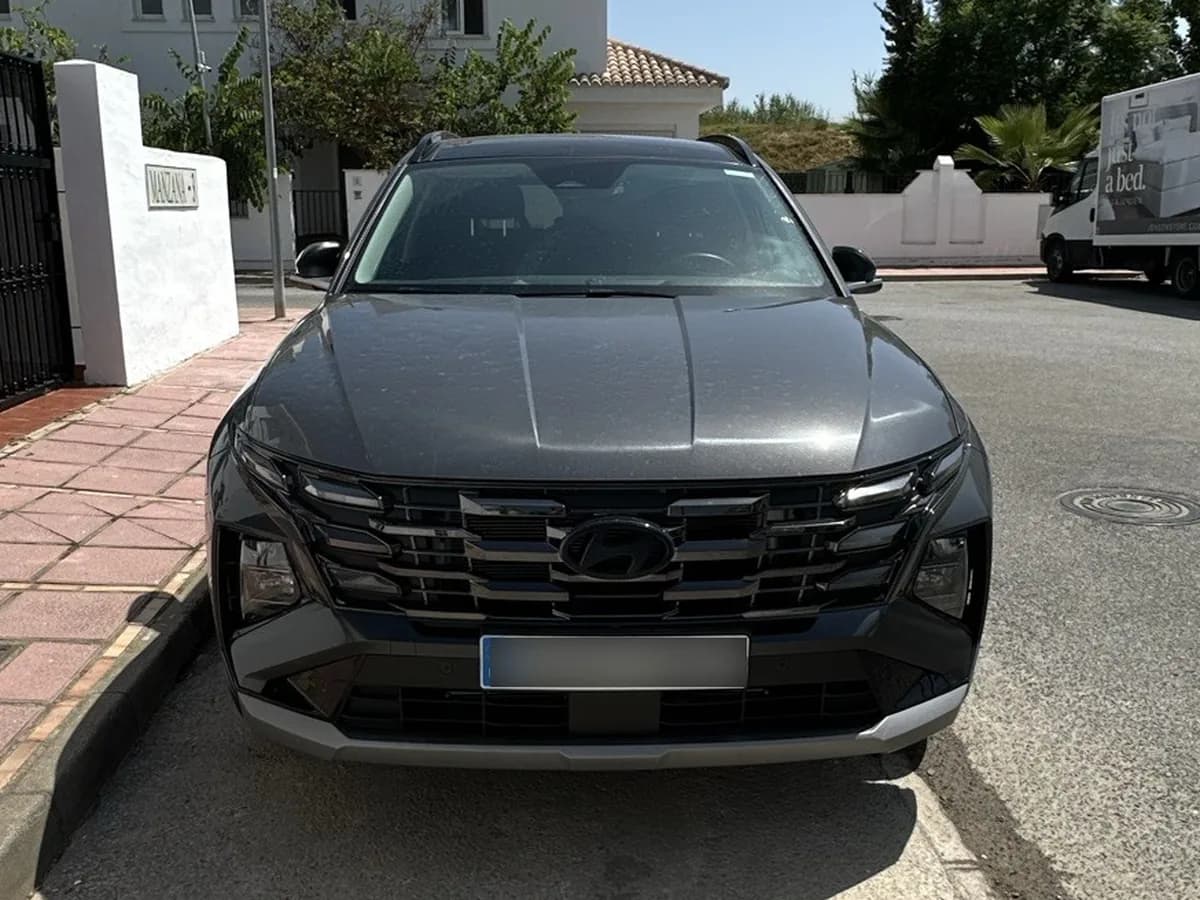
Differences between Tucson models are not limited to their engines. The first generation uses rounded bodywork and a more conventional presentation. The 2010 model looks lower and more streamlined, with styling strongly influenced by Hyundai’s Fluidic Sculpture design language. The 2016 Tucson adopts a sturdier appearance, a hexagonal grille, and more pronounced body surfacing. The generation introduced for 2022 takes another step with a highly graphic front end, grille-integrated hidden lighting, and a substantially larger U.S.-market body. Equipment also varies by model year, trim level, and country. Automatic emergency braking, blind-spot monitoring, and lane-departure warning were not fitted in the same way across every year. Hybrid and plug-in-hybrid powertrains belong to the newest generation and should not be assumed on earlier Tucson vehicles. Accurate identification therefore requires several checks at once: exterior design, model year, market, wheelbase, trim equipment, and body details. A badge alone is not always enough, particularly on vehicles imported from regions where the ix35 name was used.
Photo recognition
A first-generation Tucson can usually be recognized by its compact rounded body, small horizontal grille, and upright rear light clusters. The 2010 model has a more streamlined profile, a rising beltline, and a hexagonal grille set into a more expressive front bumper. The 2016 Tucson uses a taller grille and swept-back headlamps, while its side character lines are sharper and more defined than those of the earlier vehicle. The Tucson introduced for 2022 is the most immediately distinctive. Its daytime running lights are visually integrated into the grille and can appear hidden when switched off. The body sides use angular surfaces and pronounced wheel arches. To avoid market-related confusion, check the model badge, body length, and whether an ix35 emblem is present. Wheels, lamps, and grille designs can vary with trim level or facelift, so they are best treated as supporting clues rather than definitive proof. The most reliable identification combines the exterior with the model year, market, VIN documentation, and equipment layout.
Important versions
Several model years provide useful reference points in the Tucson’s history. The 2004 launch represents the first generation and Hyundai’s first U.S. entry in the small-SUV segment. The 2010 Tucson was a full redesign with smoother styling and major changes to powertrain presentation and equipment. The 2014 model is an important transition year in the United States, adding direct-injection engines and upgraded technology. The 2016 Tucson introduced the third North American generation, with a more rigid structure and additional driver-assistance systems. The 2022 model marked the U.S. arrival of the fourth generation, bringing a larger body and hybrid-related variants. These milestones are generally more useful for identification than trim names alone, because equipment grades and marketing labels can differ substantially between countries and model years.
References
- All-New Tucson Delivers Better Fuel Economy and More PowerHyundai Motor America, reproduced by Autoblog
- Refreshed 2014 Hyundai Tucson Ups Fun and Value QuotientsHyundai Motor America
- All-New 2016 Hyundai Tucson Crossover Debuts at New York International Auto ShowHyundai Motor America
- All-New Hyundai Tucson Adds Revolutionary RedesignHyundai Motor Company
- Hyundai Reveals All-New 2022 Tucson SUV for the U.S. MarketHyundai Motor America
- 2022 Hyundai Tucson Review, Pricing, and SpecsCar and Driver
- https://www.caranddriver.com/hyundai/tucson/specscaranddriver.com
- https://www.caranddriver.com/photos/g36687866/2022-hyundai-tucson-25-by-the-numbers-gallery/caranddriver.com
Technical specifications
Structured data available for versions linked to this model.
| Version | Power | Torque | Top speed | Drivetrain | Fuel |
|---|---|---|---|---|---|
| Base | 158.1 kw (215 hp) | 195.5 lb-ft (265 Nm) | 116 mph (187 km/h) | Front Wheel Drive / 6-speed automatic | Hybrid Gasoline |
Frequently asked questions
- What years was the Hyundai Tucson produced?
- ScanRacer's referenced versions cover 2004 - 2023.
- How many Hyundai Tucson examples are documented on ScanRacer?
- 3 published scans from 3 members, with the latest photo added in July 2026.
- What is the power output of the Hyundai Tucson?
- The sourced technical data lists 158.1 kw (215 hp).