Honda NSX 2016
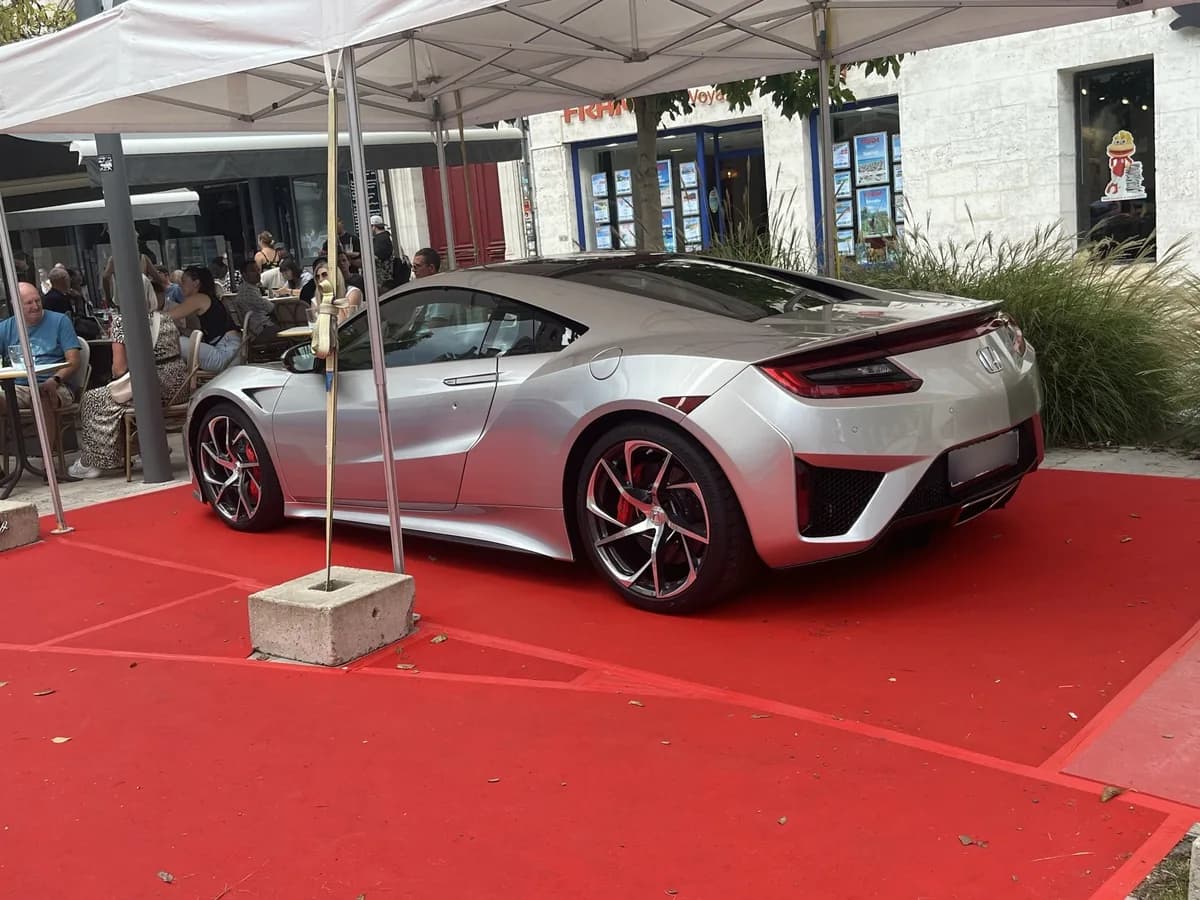
The 2016 Honda NSX introduced the second generation of Honda’s hybrid sports car. Revealed in production form at the Detroit auto show in January 2015, it replaced the original NSX’s simpler layout with a mid-mounted twin-turbocharged V6, three electric motors and a nine-speed dual-clutch transmission. Its Sport Hybrid SH-AWD system drives all four wheels and can vary torque at the front axle independently. In North America, the car was sold under Honda’s Acura luxury brand, while the Honda NSX name was used in several other markets. Series production began in spring 2016 at Honda’s Performance Manufacturing Center in Ohio. (global.honda)
History
The second-generation project first appeared as a concept before Honda revealed the production car in Detroit in January 2015. The company used the NSX name to introduce a different interpretation of the sports car: instead of a lightweight, naturally aspirated layout, the new model combined a longitudinal twin-turbocharged V6, electric assistance and active all-wheel drive. The production car made its European debut at Geneva in March 2015. Honda later confirmed that assembly would take place exclusively at the Performance Manufacturing Center in Marysville, Ohio, a facility created for specialized, low-volume vehicle production. Series production was scheduled to begin in late April 2016. In Japan, Honda began accepting custom orders for the new NSX on August 25, 2016. In the United States, the car was introduced as the Acura NSX for the 2017 model year, which explains why the same generation can appear as a 2016 Honda NSX or a 2017 Acura NSX depending on the market and catalog system. (global.honda)
Latest scans
Photos added by the community for this page.
Anecdotes
The first serial-production car, identified by VIN 001, was scheduled to be auctioned by Barrett-Jackson in January 2016. Acura announced that the proceeds would benefit the Pediatric Brain Tumor Foundation and Camp Southern Ground. The charity sale accompanied the American launch and highlighted the significance of bringing the NSX name back after a long production gap. (acura.com)
Production
Production of the second-generation NSX began at the Performance Manufacturing Center in Marysville, Ohio, in late April 2016. Honda identified the facility as the NSX’s exclusive assembly site and emphasized a combination of advanced manufacturing technology and specialized human craftsmanship. The center was designed for low-volume specialty production rather than the output levels of a conventional high-volume vehicle plant. The sources consulted confirm the location and production start date but do not provide an official worldwide total for calendar year 2016 alone. Available U.S. sales figures for 2016 should therefore not be presented as a global production count. (manufacturing.honda.com)
Press reception
Specialist road tests generally recognized the NSX’s technical ambition, particularly its hybrid system, active all-wheel drive and ability to make high performance approachable. Car and Driver noted that the car favored a highly controlled and confidence-inspiring handling balance, although that character could make it feel less expressive than some rivals. MotorTrend likewise praised the NSX as sophisticated and fast while concluding that it did not completely redefine the category in comparative testing. The overall editorial response was therefore mixed but informed: the NSX impressed with its engineering integration and usable performance, yet its filtered, highly managed driving character did not appeal equally to readers seeking a more raw supercar experience. (caranddriver.com)
Evolution
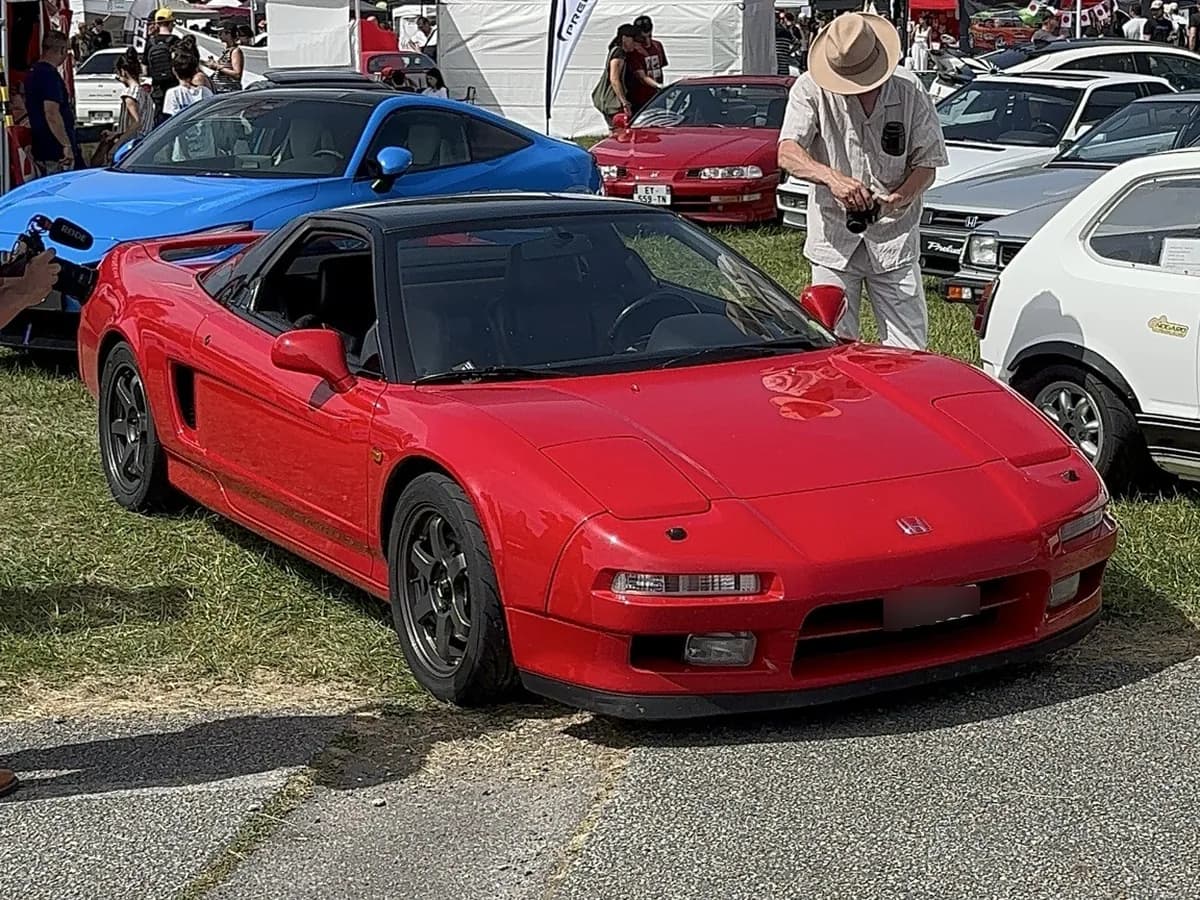
The 2016 NSX represented a major technical departure from the first generation. Its engine became a longitudinally mounted 3.5-liter twin-turbocharged V6, with one electric motor positioned between the engine and transmission. Two additional electric motors were mounted at the front, with each motor able to influence one front wheel. This arrangement provided all-wheel drive without a conventional mechanical shaft connecting the axles. The structure used an aluminum-intensive space frame, supplemented by steel and carbon fiber in selected areas. Quiet, Sport, Sport+ and Track modes altered the behavior of the powertrain and electronic control systems. (acura.com)

Variants
References
- Rebirth of an Icon: Next Generation Acura NSX UnveiledHonda Global
Supports the second-generation architecture, hybrid system, production site and manufacturing approach.
- Honda announces series production of 2017 NSX to commence in April 2016Honda Europe News
Supports the late-April 2016 start of series production at the Ohio Performance Manufacturing Center.
- Honda to Begin Sales of All-new NSXHonda Global
Supports the Japanese order opening on August 25, 2016 and the 3.5-liter V6 description.
- 2017 Acura NSX Press Kit - ExteriorAcura
Supports launch-generation dimensions and the production-car design context.
- Press Releases: Sport Hybrid SH-AWD Power UnitAcura
Supports the engine, 573-hp system output, electric motors, drivetrain and nine-speed dual-clutch transmission.
- Acura Shares Details of Next-Generation Acura NSX Sales PlanAcura
Supports the American 2017 model-year designation, $156,000 launch MSRP, build-to-order strategy and VIN 001 charity auction.
- Tested: 2017 Acura NSXCar and Driver
Supports the contemporary press assessment of the NSX’s controlled handling and hybrid performance.
- 2016 Motor Trend Best Driver's CarMotorTrend
Supports the contemporary comparative assessment of the NSX’s speed, technology and overall competitive position.