Ferrari F50 1995
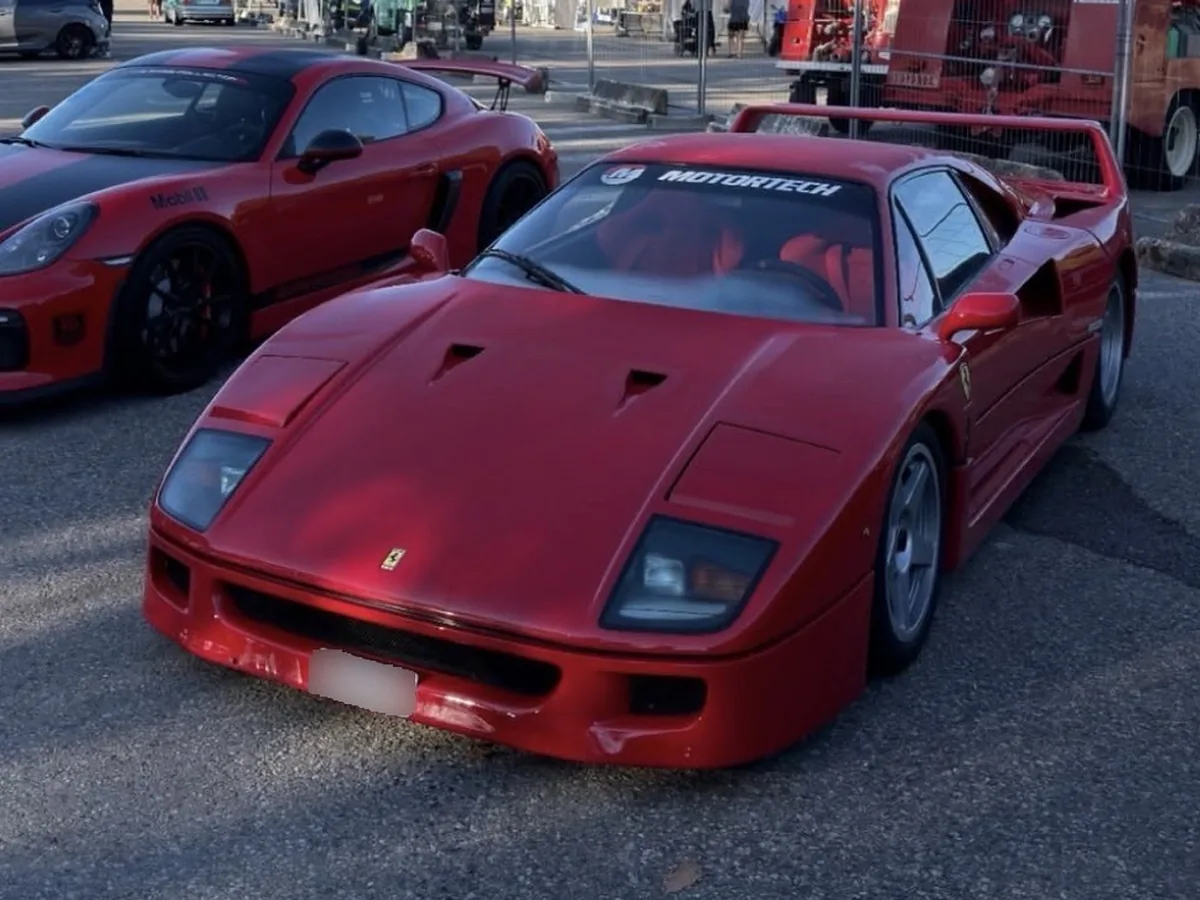
Unveiled at the Geneva Motor Show in March 1995, the Ferrari F50 Base marked the brand’s most extreme road-going supercar as Ferrari approached its fiftieth anniversary. In its production specification, it combined a very competition-oriented layout with a naturally aspirated V12 mounted at the rear in a central position, a six-speed manual gearbox, and a two-seat body with a removable Targa roof. Its low, technical shape emphasizes large air intakes, a flat underbody, and a fixed rear wing. The F50 Base therefore continued Ferrari’s tradition of limited-production mid-engined flagships while pushing even closer to a racing-inspired concept.

History
The F50 arrived in 1995 as a car created to celebrate a major milestone for Ferrari, with its official debut taking place in Geneva in March of that year. It succeeded the F40 as the brand’s most radical road-going model and carried forward the tradition of limited-production, mid-engined Ferraris. Ferrari framed the car as a showcase for technology transferred from Formula 1 to the road, and that intention is reflected in an architecture much closer to a racing machine adapted for street use than to a conventional GT.
Its mechanical foundation is a naturally aspirated 4,698.5 cc V12 derived from Ferrari’s racing engine family, though extensively adapted for road use. Historical Ferrari documentation also notes five valves per cylinder. The package is completed by a central composite cell, a load-bearing engine, and a six-speed manual gearbox. Ferrari stated that 349 examples were built, underlining the highly exclusive nature of the F50 Base within the 1995 range.
Latest scans
Photos added by the community for this page.
Anecdotes
The removable Targa roof is one of the F50’s most recognizable features. It changes the experience on board without turning the car into a conventional convertible. The silhouette also combines highly visible elements such as the large fixed rear wing and the transparent rear engine cover that often exposes the V12. Together, these details give the car a very technical appearance, almost as if it had been lifted directly from motorsport.
Production
Ferrari stated that a total of 349 production F50s were built. That figure confirms the highly exclusive positioning of the 1995 Base version and helps explain its place in the brand’s road-car history. The dossier places production mainly in the 1995-1997 period, but does not provide a year-by-year breakdown for the Base specification.
Evolution
Variants
References
- F50 - Technical SpecificationsFerrari
Supports the 4.7-liter 65-degree V12, 520 hp output, dimensions, six-speed manual gearbox, performance figures and tire sizes.
- F50 - Ferrari HistoryFerrari
Supports the model’s placement in Ferrari’s 1995 history and its identity as a Ferrari road car associated with Formula 1 technology.
- Ferrari F50 Legacy Tour 2025Ferrari
Supports the Geneva debut, carbon-fiber monocoque, load-bearing V12, pushrod suspension, removable Targa roof, lack of ABS and power assistance, and production of 349 examples.
- F50 GT - Ferrari HistoryFerrari
Supports the separate 1996 F50 GT project, its competition-oriented identity, carbon-fiber monocoque and 750 hp specification.
- 1997 Ferrari F50 Alters the Perception of PerformanceCar and Driver
Provides independent automotive context on the F50’s aerodynamics, fixed rear wing, braking system, road-car behavior and Formula 1-inspired engineering.
- https://www.motortrend.com/reviews/1995-ferrari-f50-2motortrend.com
Source found by OpenAI web search for this model page.
- https://www.caranddriver.com/reviews/a71177435/1996-ferrari-f50-archive-test/caranddriver.com
Source found by OpenAI web search for this model page.