
458
Introduced in 2009, the Ferrari 458 Italia uses a 4,497 cc naturally aspirated V8 mounted longitudinally in a mid-rear position. Ferrari lists 570 hp at 9,000 rpm, a seven-speed dual-clutch gearbox, and a top speed above 325 km/h. (ferrari.com) The 458 family was expanded with the retractable-hardtop Spider, the more focused 458 Speciale, and the open-top 458 Speciale A. In the chronology represented here, the range runs from the 2009 Italia to the 2014 Speciale A, with a 2010 base version and a 2011 Spider also identified. The 458 therefore occupies a distinctive place in Ferrari history: it combines a modern chassis, advanced electronic controls, and a high-revving naturally aspirated engine, shortly before Ferrari’s V8 road-car range moved to turbocharging with the 488.
What about the car you photographed?
Upload a photo to get a suggested make, model and likely year.
No account needed for the result · Publish only if you choose
Variants by year
Make: Ferrari · Model: 458
5 / 5 versions shown
2014

2013
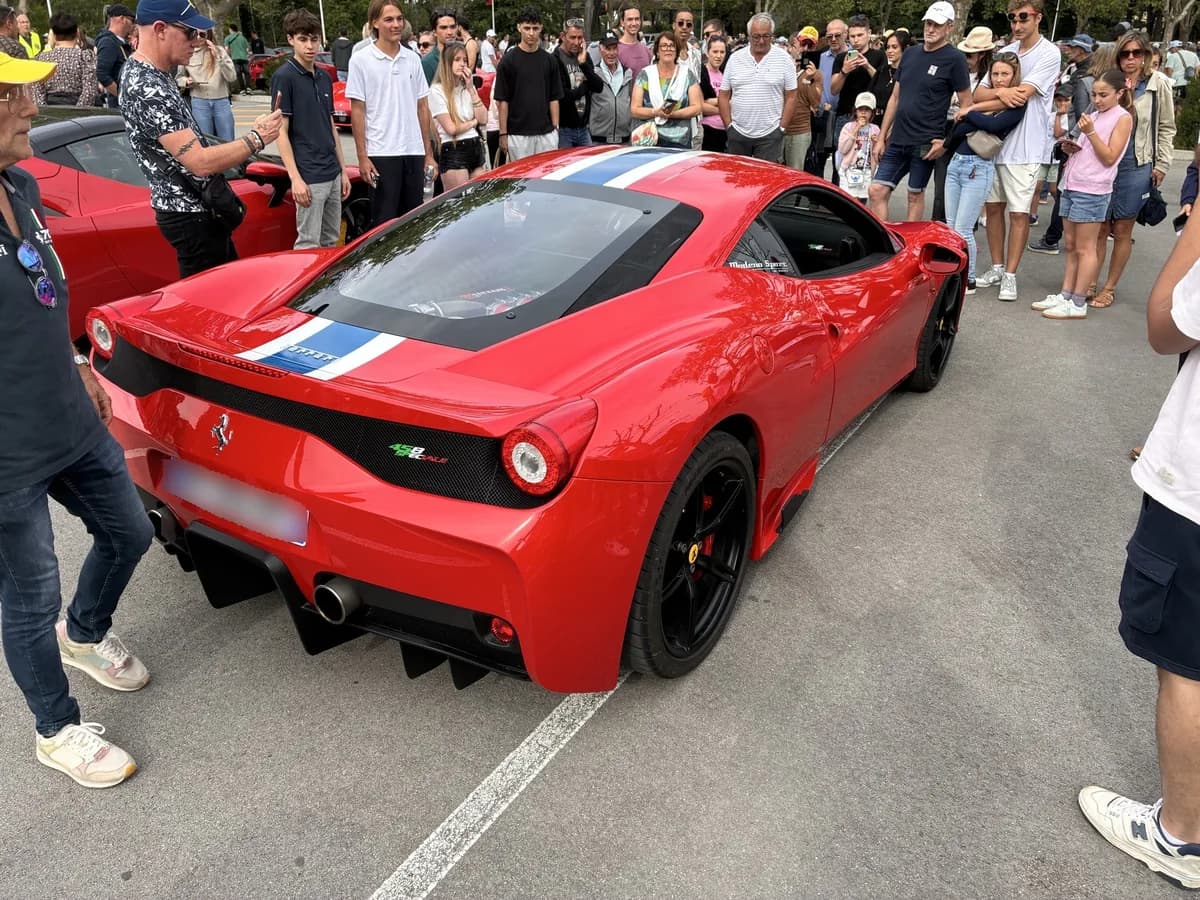
2011
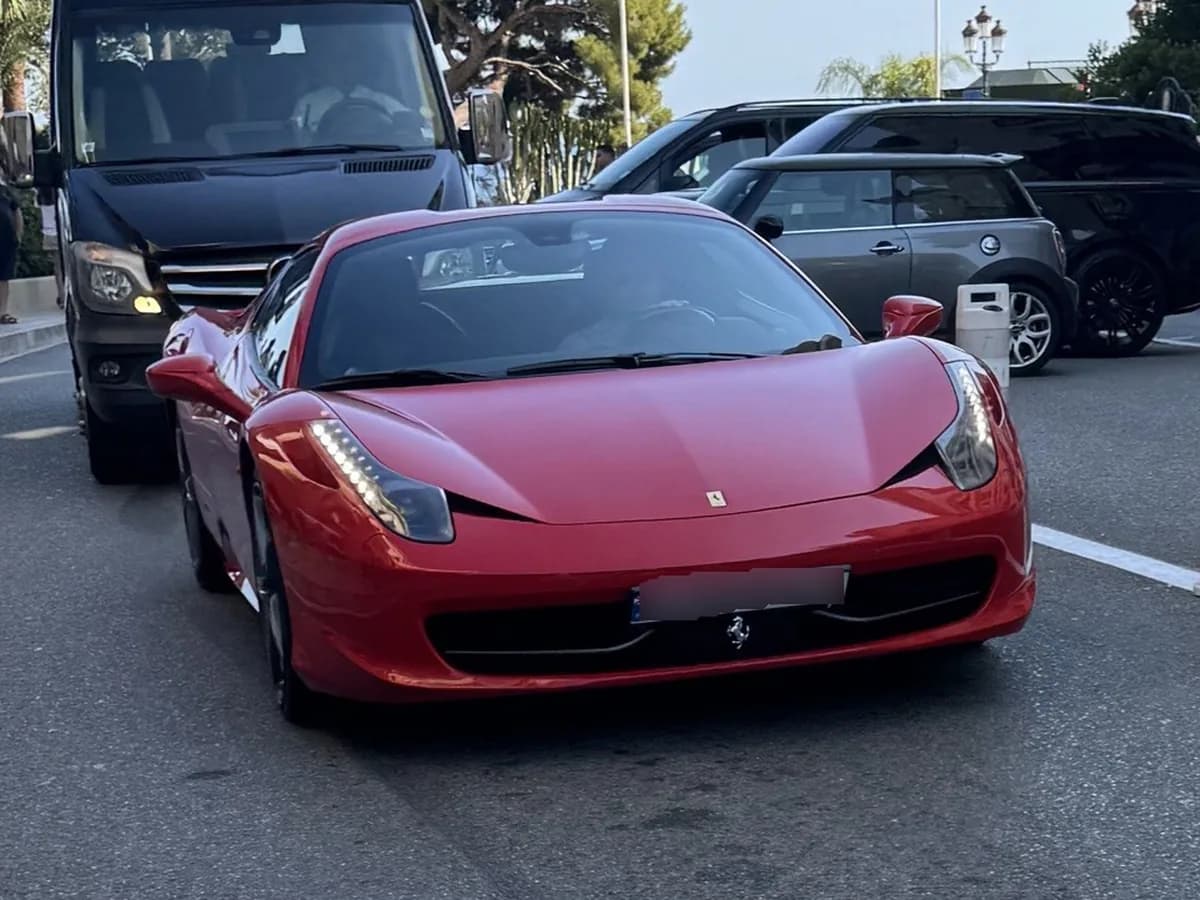
2010
2009
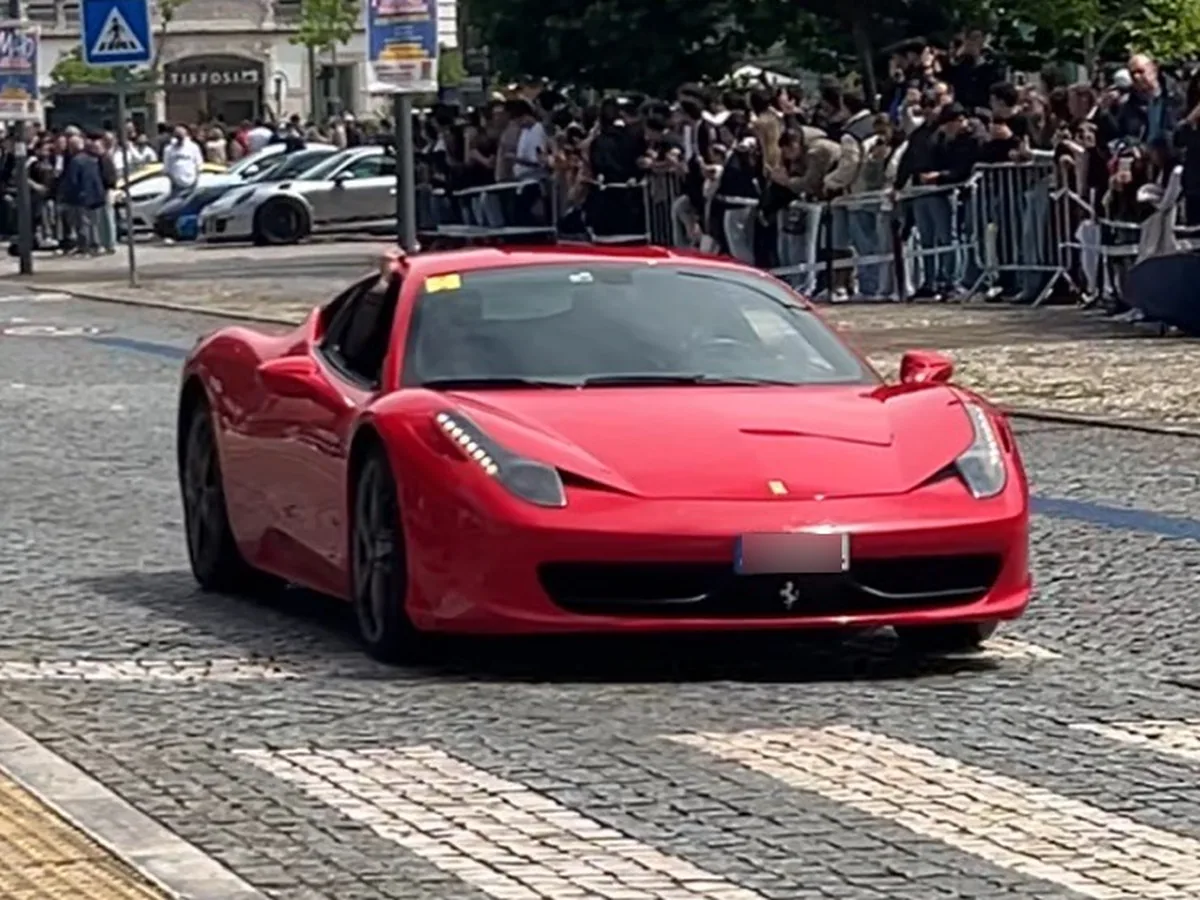
Ferrari 458 photos
Model summary
Data from the ScanRacer library, organized to compare versions quickly.
Model introduction
Introduced in 2009, the Ferrari 458 Italia uses a 4,497 cc naturally aspirated V8 mounted longitudinally in a mid-rear position. Ferrari lists 570 hp at 9,000 rpm, a seven-speed dual-clutch gearbox, and a top speed above 325 km/h. (ferrari.com) The 458 family was expanded with the retractable-hardtop Spider, the more focused 458 Speciale, and the open-top 458 Speciale A. In the chronology represented here, the range runs from the 2009 Italia to the 2014 Speciale A, with a 2010 base version and a 2011 Spider also identified. The 458 therefore occupies a distinctive place in Ferrari history: it combines a modern chassis, advanced electronic controls, and a high-revving naturally aspirated engine, shortly before Ferrari’s V8 road-car range moved to turbocharging with the 488.
History
The Ferrari 458 Italia was unveiled in 2009 as a new mid-rear-engined V8 berlinetta. Ferrari described it as using an all-new aluminium chassis with greater torsional rigidity than the F430, together with electronic systems informed by the company’s competition experience. (ferrari.com) Its naturally aspirated 4.5-litre V8 produces 570 hp and drives the rear wheels through a seven-speed F1 dual-clutch transmission. Launched in 2011, the Spider retained the same basic mechanical layout while adding a retractable hardtop; Ferrari identified it as the first mid-rear-engined car to use that type of roof. (ferrari.com) In 2013, the 458 Speciale developed the concept further through lower weight, quicker responses, active aerodynamics, and Side Slip Angle Control, while raising output to 605 hp. (ferrari.com) The 2014 Speciale A applied the same performance brief to an open body. The 488 GTB and 488 Spider replaced the 458 Italia and Spider in 2015, introducing Ferrari’s move to a turbocharged V8 road-car family. (cdn.ferrari.com)
Generations
The 458 is not best understood as a sequence of separate generations. It is one model family developed into different body styles and levels of performance. The starting point is the 458 Italia, a two-seat mid-rear-engined berlinetta powered by a naturally aspirated V8. Its aluminium structure, dual-clutch gearbox, and electronic chassis controls provide the common foundation for the range. (ferrari.com) The 458 Spider retains the Italia’s main mechanical layout but replaces the fixed roof with a retractable hardtop, creating a distinct body style and use case. (ferrari.com) The 458 Speciale is the performance-focused derivative: Ferrari specifies 605 hp, a lower quoted dry weight than the Italia, active aerodynamics, and Side Slip Angle Control. (ferrari.com) The Speciale A then combines that sharper specification with open-top construction and a retractable hardtop; Ferrari describes it as a limited special series. (ferrari.com) Accordingly, Italia, Spider, Speciale, and Speciale A are best treated as derivatives within the 458 family rather than as independent generations.
Key differences
The clearest distinction is between the Italia and Spider: the former is a fixed-roof berlinetta, while the latter uses a retractable hardtop. The Speciale differs less through its basic silhouette than through its engineering specification, including 605 hp, reduced weight, wider tyres, active aerodynamics, and Side Slip Angle Control. (ferrari.com) The Speciale A applies that performance concept to an open body and is the most specialized road-going derivative represented in the family. (ferrari.com) Differences between a base 458 and an Italia may depend on market, model year, and naming conventions, so the name “Base” alone should not be used to infer a specific technical change. Optional equipment, wheel designs, and exterior finishes can also alter the appearance considerably without changing the official variant. Identification is therefore strongest when body style, badges, wheels, and technical details are considered together.
Photo recognition
A 458 can first be recognized by its mid-engine berlinetta shape, deeply sculpted sides, and three centrally positioned exhaust outlets, a particularly visible feature on the Italia and Spider. The Spider is identified by its retractable hardtop and the different rear-deck treatment surrounding the roof mechanism; Ferrari confirms this construction in its model description. (ferrari.com) The Speciale generally has a more aggressive appearance, with more pronounced aerodynamic openings and devices, dedicated wheels, and longitudinal stripes often associated with the model, although equipment can vary. Ferrari’s published specifications also list wider tyres than those of the standard 458 Italia. (ferrari.com) The Speciale A combines these visual cues with a retractable roof. Badges alone are not conclusive: chassis documentation, manufacturer plates, and the mechanical specification provide a more reliable way to confirm the exact variant.
Important versions
The 458 Italia is the founding version, combining a 570 hp naturally aspirated V8 with a fixed-roof berlinetta body. (ferrari.com) The Spider uses the same basic platform in an open configuration with a retractable hardtop. (ferrari.com) The 458 Speciale is the major performance derivative: its V8 produces 605 hp, supported by extensive work on weight, aerodynamics, and vehicle control. (ferrari.com) Launched in 2014, the Speciale A transfers that engine and dynamic specification to an open body; Ferrari describes it as a limited special series. (ferrari.com) In the chronology represented, these variants cover the 2009–2014 period, from the first Italia examples to the final Speciale A derivative.
References
- Ferrari 458 Italia (2009)Ferrari
- Ferrari 458 Italia: Ferrari HistoryFerrari
- Ferrari 458 Speciale (2013)Ferrari
- Ferrari 458 Speciale A (2014)Ferrari
- https://www.ferrari.com/it-IT/history/garage/2013/458-specialeferrari.com
- https://www.ferrari.com/en-EN/history/garage/2013/458-specialeferrari.com
- https://preowned.ferrari.com/en-US/r/north-america/used-ferrari/usa/458-speciale-a/rfcmpreowned.ferrari.com
Technical specifications
Structured data available for versions linked to this model.
| Version | Power | Torque | Top speed | Drivetrain | Fuel |
|---|---|---|---|---|---|
| — | 605 ch | — | — | roues arrière motrices / transmission F1 à double embrayage et sept rapports | — |
Frequently asked questions
- What years was the Ferrari 458 produced?
- ScanRacer's referenced versions cover 2009 - 2014.
- How many Ferrari 458 examples are documented on ScanRacer?
- 52 published scans from 32 members, with the latest photo added in October 2026.
- What is the power output of the Ferrari 458?
- The sourced technical data lists 605 ch.
What about the car you photographed?
Upload a photo to get a suggested make, model and likely year.
No account needed for the result · Publish only if you choose