Power
198.6 KW @ 7000 RPM270 HP @ 7000 RPM266 BHP @ 7000 RPM
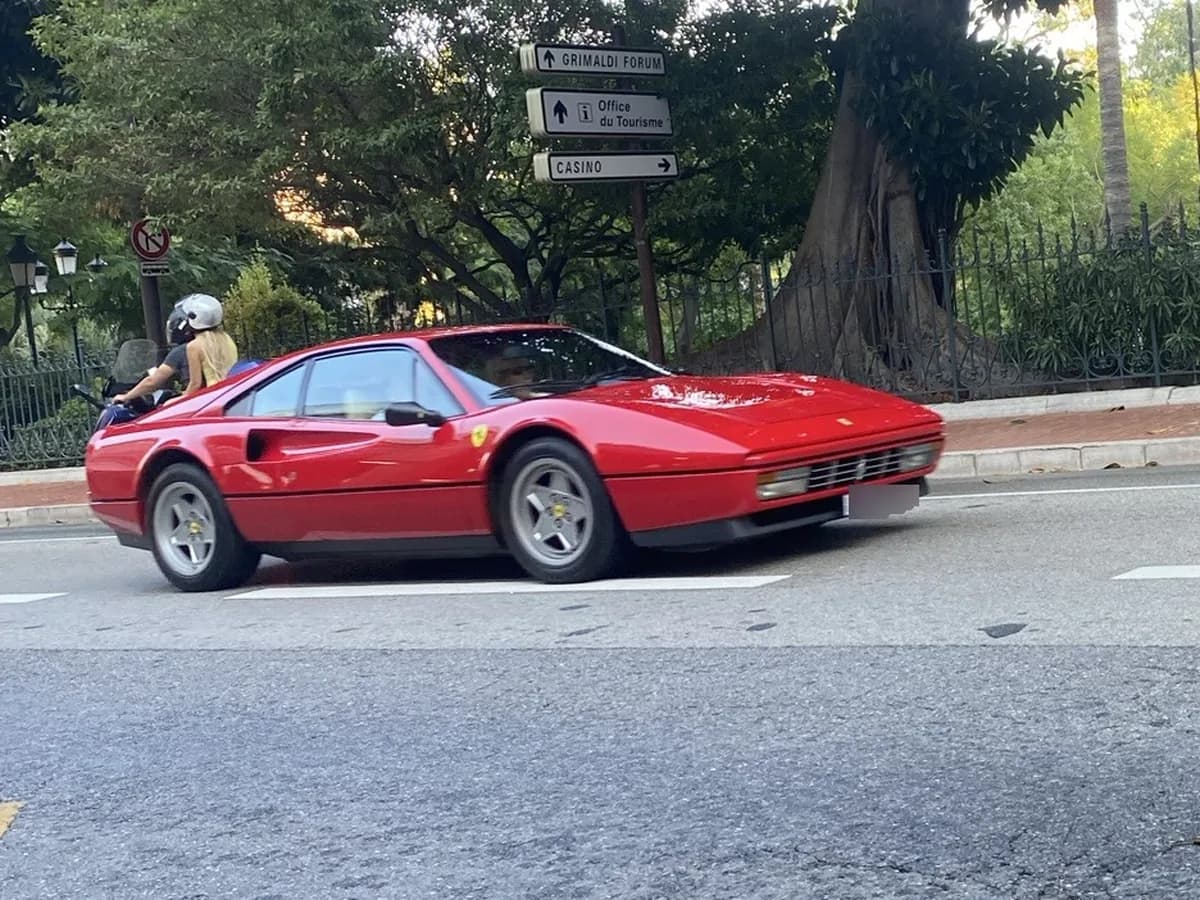
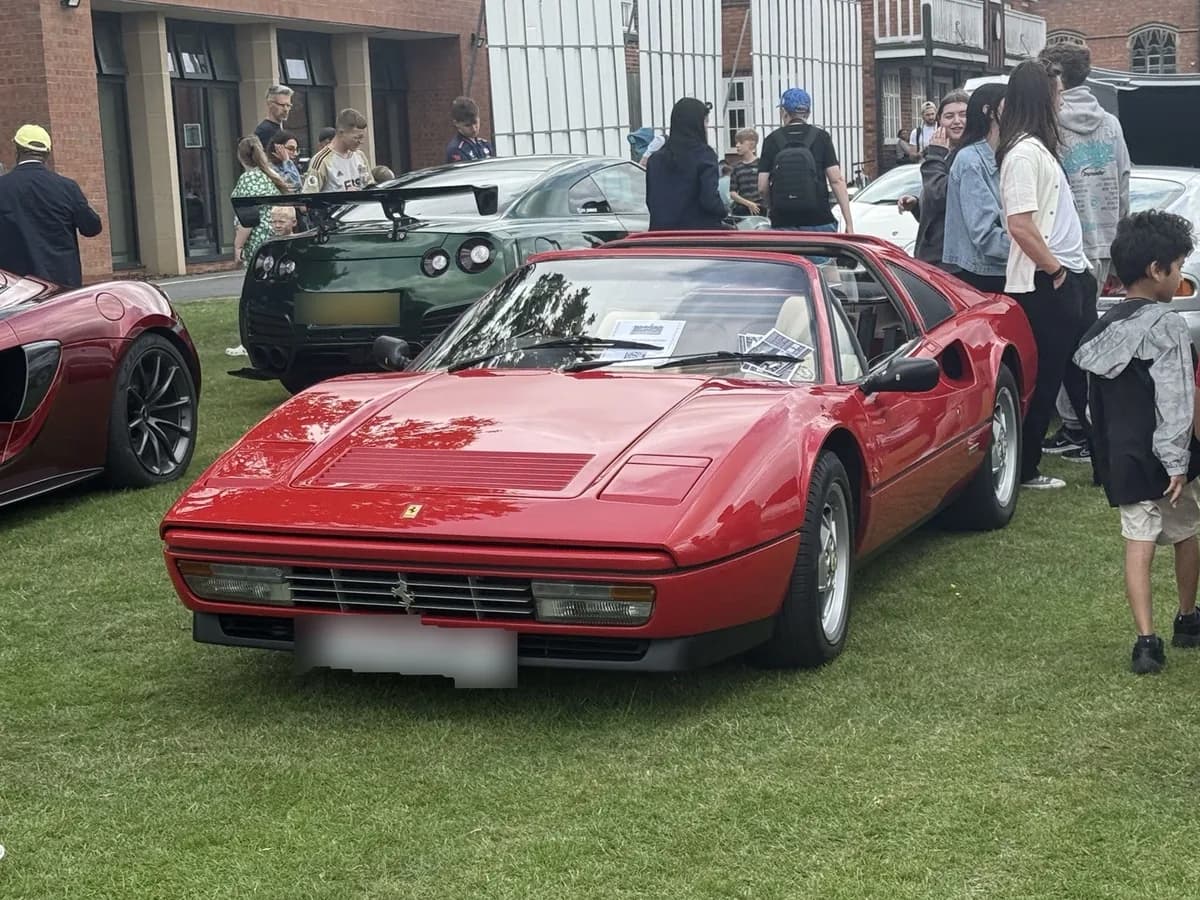
Introduced in 1985, the Ferrari 328 GTS was the removable-roof version of Maranello’s new mid-engined V8 sports car. Its name combined a 3.2-liter displacement with an eight-cylinder engine, while the GTS designation referred to a targa-style body rather than a conventional soft-top convertible. Styled by Pininfarina, the car retained the basic layout of the 308 but received revised front and rear sections, body-colored bumpers, and a more refined cabin. Ferrari’s historical specifications list a 3,185.76 cc rear-transverse V8 producing 270 hp. A five-speed manual gearbox was standard. With its smoother styling and more mature presentation, the 328 GTS became the final development of Ferrari’s naturally aspirated transverse V8 two-seater line before the arrival of the 348.
Curious about this car?
Explore 328, then try your own photo.
No account needed for the result · Publish only if you choose
The Ferrari 328 GTS made its public debut at the 1985 Frankfurt Motor Show, alongside the Mondial 3.2. It directly replaced the 308 GTS and retained the earlier car’s basic mechanical layout and wedge-shaped profile, but Ferrari used the opportunity to update nearly every visible area. Pininfarina reshaped the nose and tail, softened the geometry, and added integrated body-colored bumpers. The result was an evolution rather than a clean-sheet design, giving the established two-seat V8 formula a more contemporary appearance.
The four-valve V8 grew to 3,185.76 cc, with Ferrari quoting 270 hp at 7,000 rpm and a top speed of 263 km/h. The cabin was revised as well, with improved ergonomics and redesigned seats intended to better support spirited driving. Production continued through 1989, when the 328 was replaced by the 348. In Ferrari’s own historical account, the 328 represented the final stage of the naturally aspirated transverse V8 two-seater family that had begun with the 308.
Photos added by the community for this page.
Source: autoevolution
The “328” name was more descriptive than arbitrary: Ferrari linked it to the car’s 3.2-liter displacement and eight-cylinder engine. The manufacturer also treated the GTS as more of a targa than a true spider because its open-air configuration used a removable roof panel rather than a folding soft top. That distinction explains the car’s combination of open driving and a relatively formal, fixed-roof structure when closed.
Ferrari produced the 328 from 1985 until 1989, when the model was replaced by the 348. Figures commonly cited by established Ferrari publications indicate that 6,068 GTS cars and 1,344 GTB cars were built, for a combined total of 7,412 examples. These numbers cover the complete production run and do not establish a fully verified year-by-year total for 1985 alone. The first-year cars therefore belong to the model’s launch phase, following its Frankfurt debut in 1985 and preceding several years of continued development and production. The GTS was considerably more numerous than the fixed-roof GTB.
Specialist coverage generally presents the 328 as a successful refinement of the 308 rather than a radical technical departure. Retrospective articles have praised Pininfarina’s treatment of the bumpers, front and rear body sections, and overall proportions. They also tend to describe the car as a more mature and usable Ferrari than some earlier models, while retaining the appeal of a naturally aspirated V8 and manual gearbox. This assessment should be understood as a summary of later specialist commentary rather than a complete survey of every road test published around the car’s 1985 launch.
The 328 range consisted primarily of two body styles. The 328 GTB was the fixed-roof berlinetta, while the 328 GTS used a removable hard roof panel and was therefore closer to a targa than to a traditional soft-top convertible. Both versions shared the same rear-transverse 3.2-liter V8, five-speed manual gearbox, and two-seat sports-car layout. The GTS offered open-air driving while retaining a rigid roof structure when closed. The term “Targa” is therefore an accurate description of this car’s body configuration, although Ferrari’s official designation was 328 GTS. Beyond the roof treatment, the two versions followed the same mechanical and design philosophy.
Official technical specifications, body style, engine, power, transmission, and performance data.
Official historical overview covering the Frankfurt debut, Pininfarina styling, model evolution, and the meaning of the 328 name.
Retrospective assessment of the 328’s design, usability, development from the 308, and total GTB/GTS production figures.
Established automotive publication coverage of the 1985 launch, styling changes, and relationship with the 308.
Source found by OpenAI web search for this vehicle page.
Source found by OpenAI web search for this vehicle page.
Source found by OpenAI web search for this vehicle page.
Source found by OpenAI web search for this vehicle page.