
Veyron
Introduced in 2005, the Bugatti Veyron 16.4 was a mid-engined sports car that combined more than 1,000 PS with a top speed above 400 km/h in series production. Its initial version used a 7,993 cc W16 engine with four turbochargers, producing 1,001 PS and 1,250 Nm. Permanent all-wheel drive and a seven-speed dual-clutch gearbox delivered that output to all four wheels. According to Bugatti, the original coupé reached 407 km/h and accelerated from 0 to 100 km/h in 2.5 seconds. The range later expanded with the Grand Sport roadster, the Super Sport coupé and the Grand Sport Vitesse, which raised output to 1,200 PS. Production of the complete Veyron family ended in 2015 after 450 cars had been built. These figures describe factory specifications; individual special editions could differ in equipment, finish and calibration.
Variants by year
2012
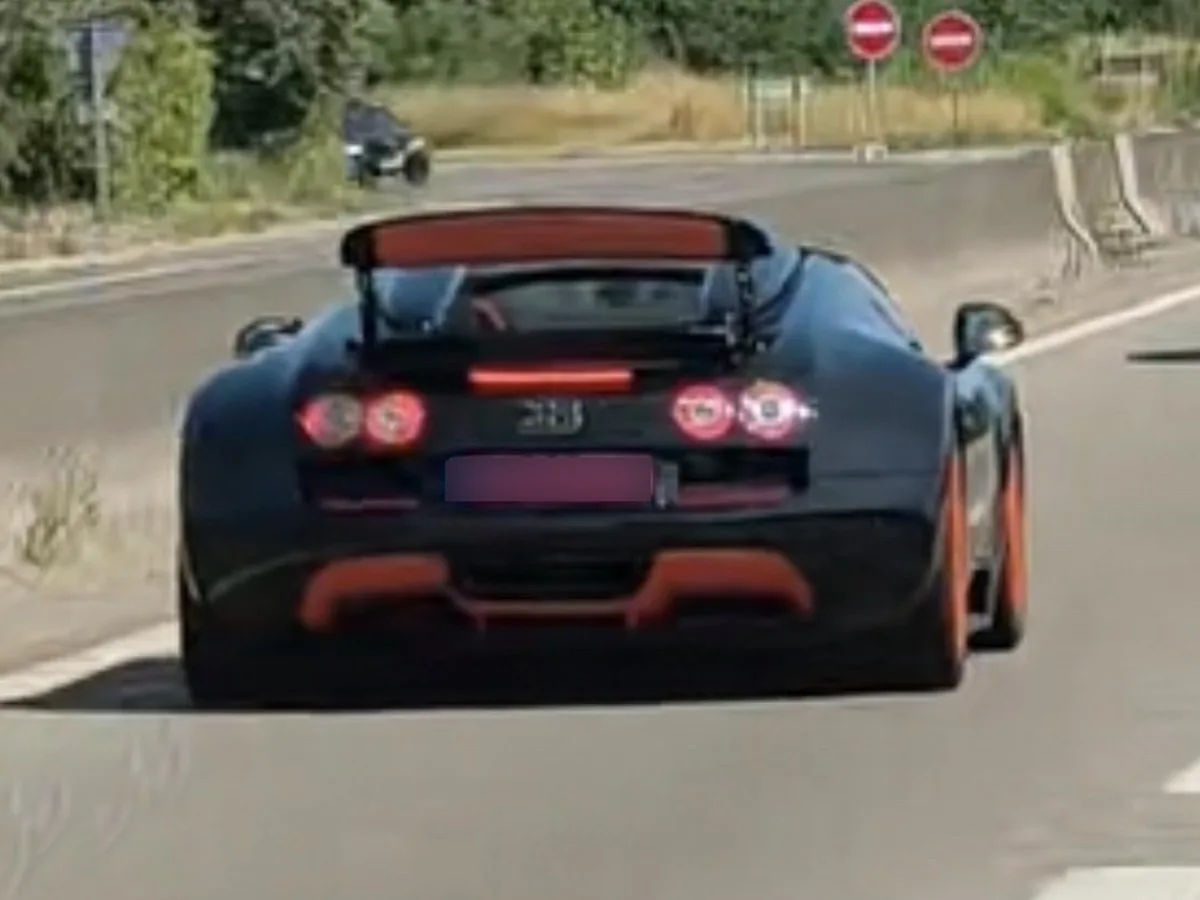
2010

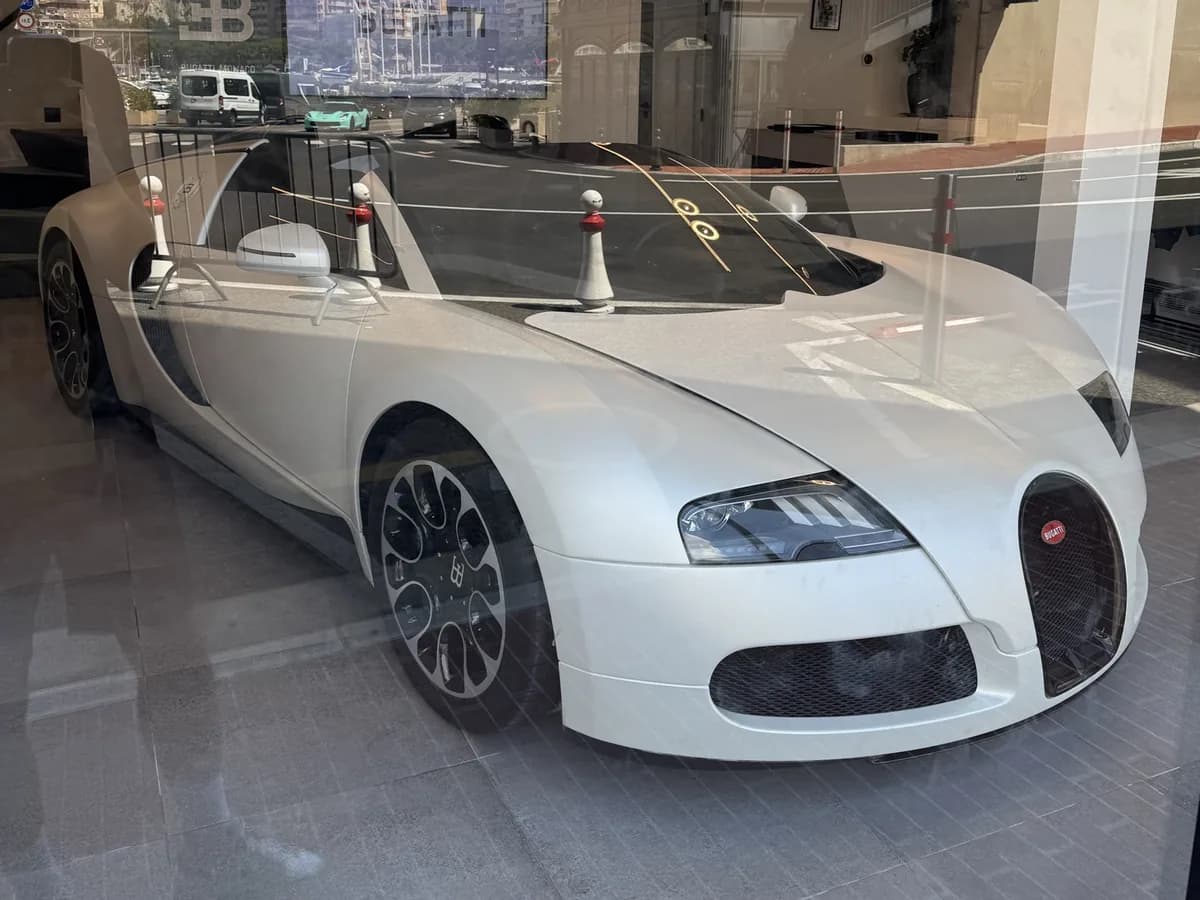
2009
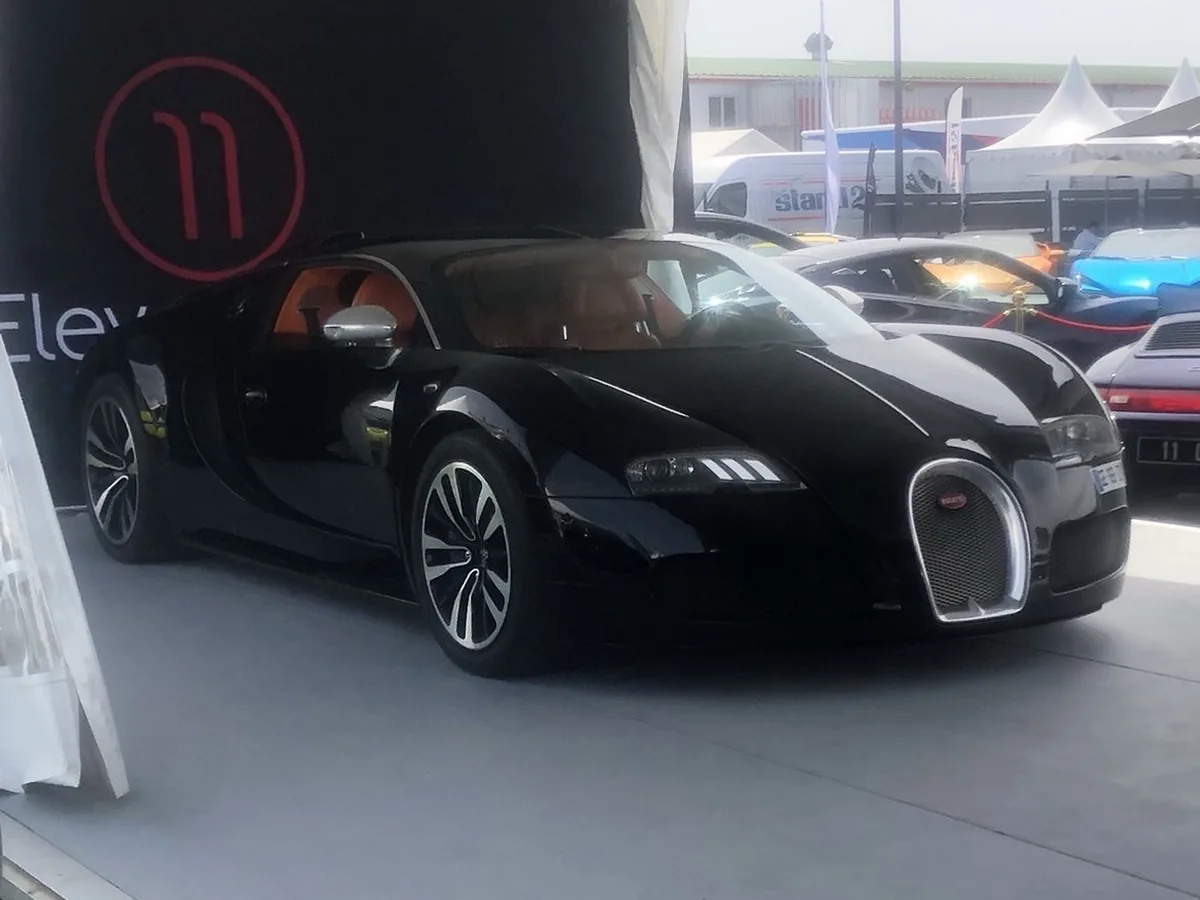
2005
Model summary
Data from the ScanRacer library, organized to compare versions quickly.
Model introduction
Introduced in 2005, the Bugatti Veyron 16.4 was a mid-engined sports car that combined more than 1,000 PS with a top speed above 400 km/h in series production. Its initial version used a 7,993 cc W16 engine with four turbochargers, producing 1,001 PS and 1,250 Nm. Permanent all-wheel drive and a seven-speed dual-clutch gearbox delivered that output to all four wheels. According to Bugatti, the original coupé reached 407 km/h and accelerated from 0 to 100 km/h in 2.5 seconds. The range later expanded with the Grand Sport roadster, the Super Sport coupé and the Grand Sport Vitesse, which raised output to 1,200 PS. Production of the complete Veyron family ended in 2015 after 450 cars had been built. These figures describe factory specifications; individual special editions could differ in equipment, finish and calibration.
History
The Veyron project formed part of Bugatti’s revival under Volkswagen Group ownership, which acquired the rights to the marque in 1998. A near-production concept, the EB 18/4 Veyron, appeared at the 1999 Tokyo Motor Show. The decision to build the car in series was taken in 2001, initially with production capped at 300 coupés. Its targets were unusually demanding: more than 1,000 PS, a top speed above 400 km/h, 0–100 km/h in under three seconds and enough refinement for long-distance road use. Production began at the Molsheim Atelier in September 2005. The Veyron 16.4 coupé was the foundation of the range. The Grand Sport, shown in 2008 and built from 2009, adapted the concept into a roadster with a removable roof. In 2010, the Veyron Super Sport introduced major changes to the powertrain and aerodynamic package. Its 431.072 km/h run established a production-car speed record under the stated Guinness conditions. The Grand Sport Vitesse, unveiled in 2012, combined open-top bodywork with the 1,200-PS specification. The final Veyron was a Grand Sport Vitesse La Finale, completed in 2015.
Generations
The Veyron is not divided into generations in the conventional sense of a sedan being replaced by successive platforms. It is more accurate to view it as one architecture developed through several major derivatives. The first phase was the Veyron 16.4 coupé, with its 1,001-PS quad-turbo W16, permanent all-wheel drive and claimed 407 km/h top speed. The Grand Sport was the next major step: its roadster body retained the basic powertrain but added a removable roof and structural reinforcement to compensate for the loss of a fixed roof. The Super Sport was a performance evolution rather than a new generation. It introduced larger turbochargers and intercoolers, revised aerodynamics, roof-mounted NACA ducts and a dedicated rear diffuser. The Grand Sport Vitesse carried much of that development into an open-top body. Its output rose to 1,200 PS, while the chassis, brakes, tyres, stability-control calibration and transmission were revised accordingly. This stage-based description is a technical interpretation of the model’s development, not an official Bugatti generation numbering system. Special editions varied in trim, colour and equipment without necessarily representing separate mechanical generations.
Key differences
The main differences involve body style, output and aerodynamic hardware. The 2005 Coupé and the 2009 Grand Sport Targa follow the 1,001-PS Veyron specification, but the Grand Sport adds a removable roof and twin air scoops behind the seats. The 2010 Super Sport Coupé rises to 1,200 PS and is technically distinguished by roof-mounted NACA ducts, enlarged front intakes, a double diffuser and a centrally positioned exhaust system. The 2012 Grand Sport Vitesse Targa combines the Grand Sport’s open body with the Super Sport’s powertrain development and several of its aerodynamic solutions. It retains the roadster’s characteristic engine-cover scoops, however. Published top-speed figures also depend on whether the roof is fitted or removed and on the selected operating mode, so those figures should not be compared without stating the test conditions.
Photo recognition
From the front, the Veyron is identified by its horseshoe grille, separated headlamps and large side air intakes. The body often uses a strong two-tone division between the central section and the wings, but extensive customer commissions make colour an unreliable way to identify a derivative. The standard Coupé has air scoops above the engine compartment. The Grand Sport and Grand Sport Vitesse are roadsters, with two scoops positioned on either side of the engine cover; these feed the engine and form part of the rollover protection. The Super Sport is easier to distinguish by its lower, longer appearance, two roof-mounted NACA ducts, enlarged front intakes and double rear diffuser. A Vitesse should combine open-top bodywork with broad front intakes, a double diffuser and a centrally mounted twin exhaust. Photographs can still be misleading because special editions altered trim and exterior details.
Important versions
Four names stand out in the supplied selection: the 2005 Coupé, representing the original 1,001-PS Veyron 16.4; the 2009 Grand Sport Targa, an open version with a removable roof; the 2010 Super Sport Coupé, a 1,200-PS development associated with the 431.072 km/h production-car record; and the 2012 Grand Sport Vitesse Targa, a 1,200-PS roadster derived from the Super Sport. These model years correspond to the versions listed in the ScanRacer context and should not be read as the complete production span of every Veyron derivative. Special editions and individual customer commissions also created substantial differences in trim, exposed bodywork, colour schemes and equipment.
References
- 15 years of Bugatti Veyron – how it all beganBugatti Newsroom
- Final Bugatti Veyron 16.4 sold to a customer in EuropeBugatti Newsroom
- Bugatti Veyron legends – the modern-day hyper sports carBugatti Newsroom
- Bugatti Presents Veyron 16.4 Super Sport to PublicBugatti Newsroom
- World premiere of the Bugatti Veyron 16.4 Grand Sport VitesseBugatti Newsroom
- Ten Years of the Bugatti Veyron 16.4 Grand Sport VitesseBugatti Newsroom
- Geneva International Motor Show 2015: Bugatti celebrates the VeyronBugatti Newsroom
- 408,84 km/h : la Bugatti Veyron 16.4 Grand Sport Vitesse bat le record mondialBugatti Newsroom
Technical specifications
Structured data available for versions linked to this model.
| Version | Power | Torque | Top speed | Drivetrain | Fuel |
|---|---|---|---|---|---|
| — | 1,200 hp | — | — | Four-wheel drive / Seven-speed dual-clutch DSG | — |
Frequently asked questions
- What years was the Bugatti Veyron produced?
- ScanRacer's referenced versions cover 2005 - 2012.
- How many Bugatti Veyron examples are documented on ScanRacer?
- 42 published scans from 30 members, with the latest photo added in September 2026.
- What is the power output of the Bugatti Veyron?
- The sourced technical data lists 1,200 hp.