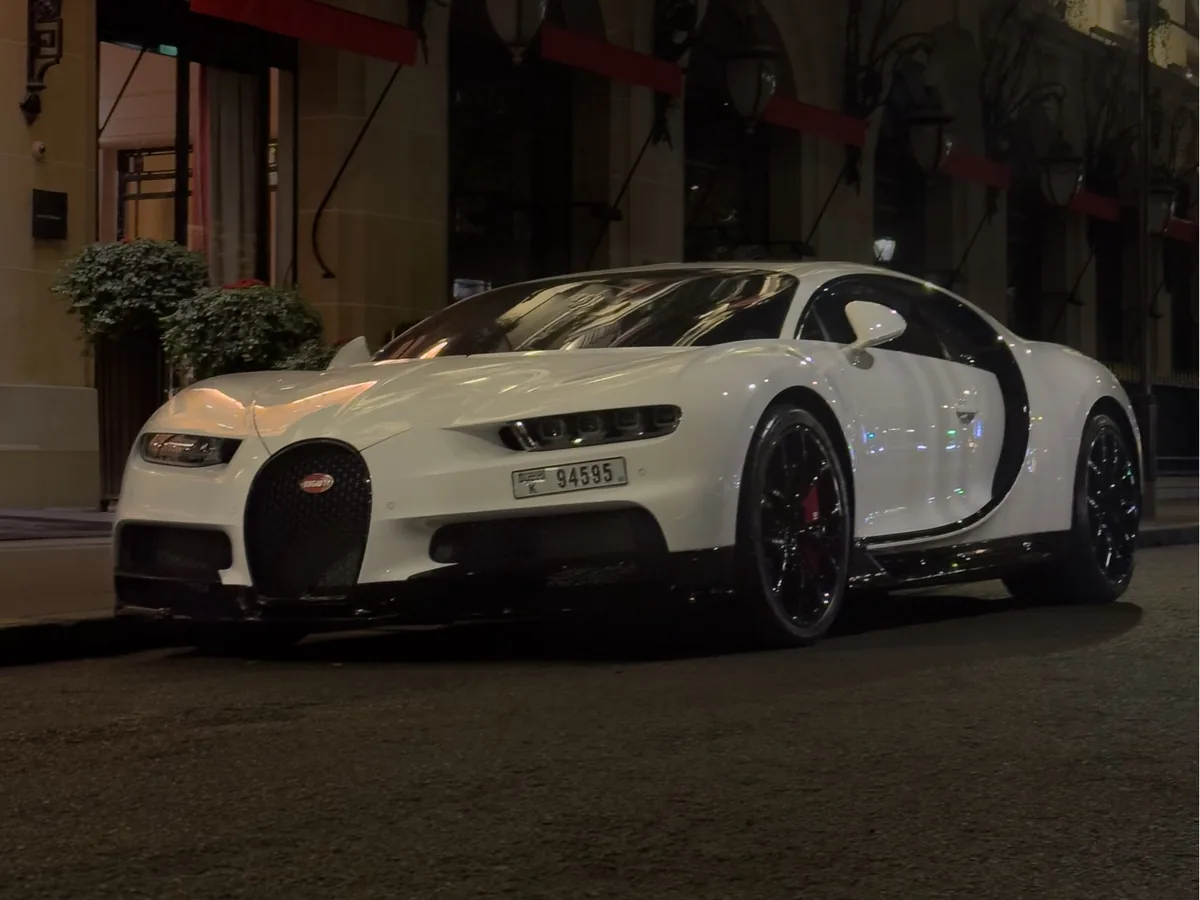
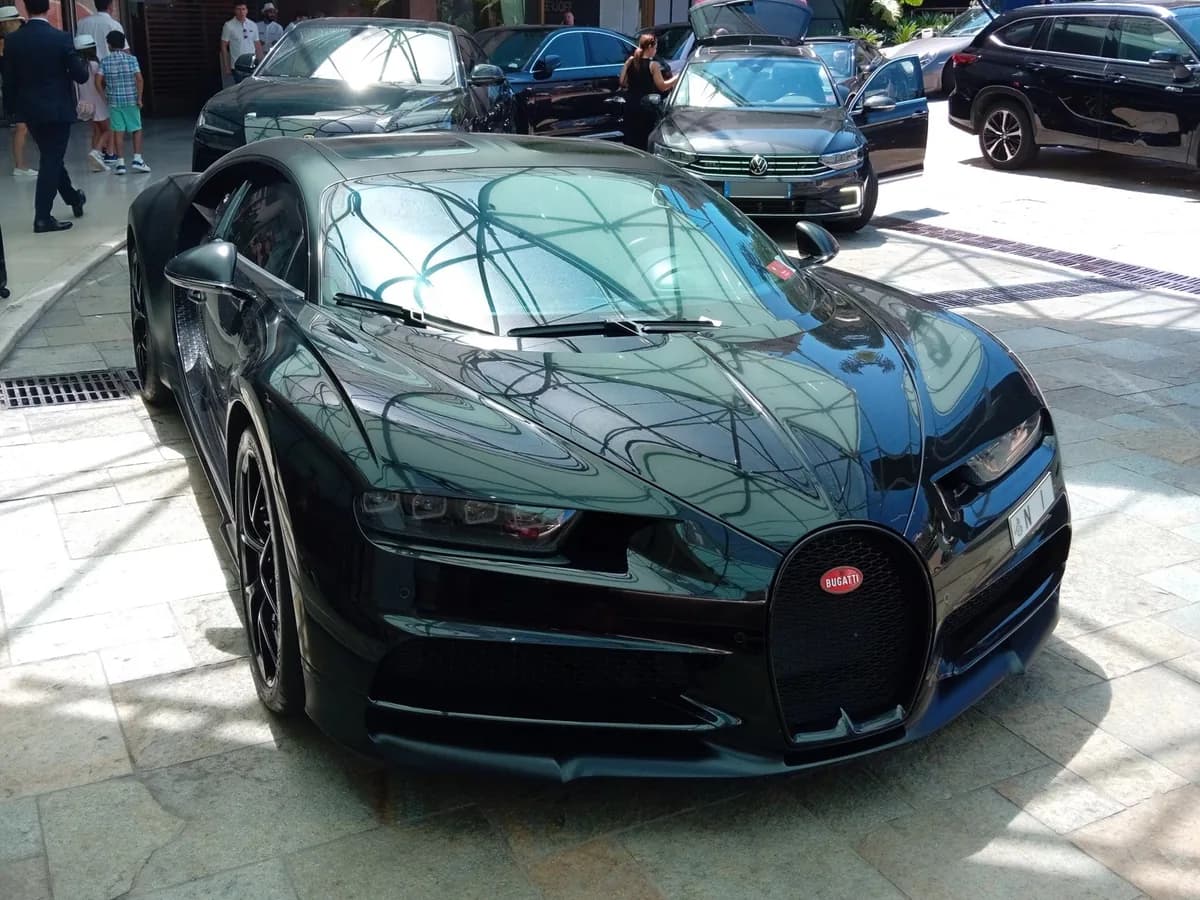
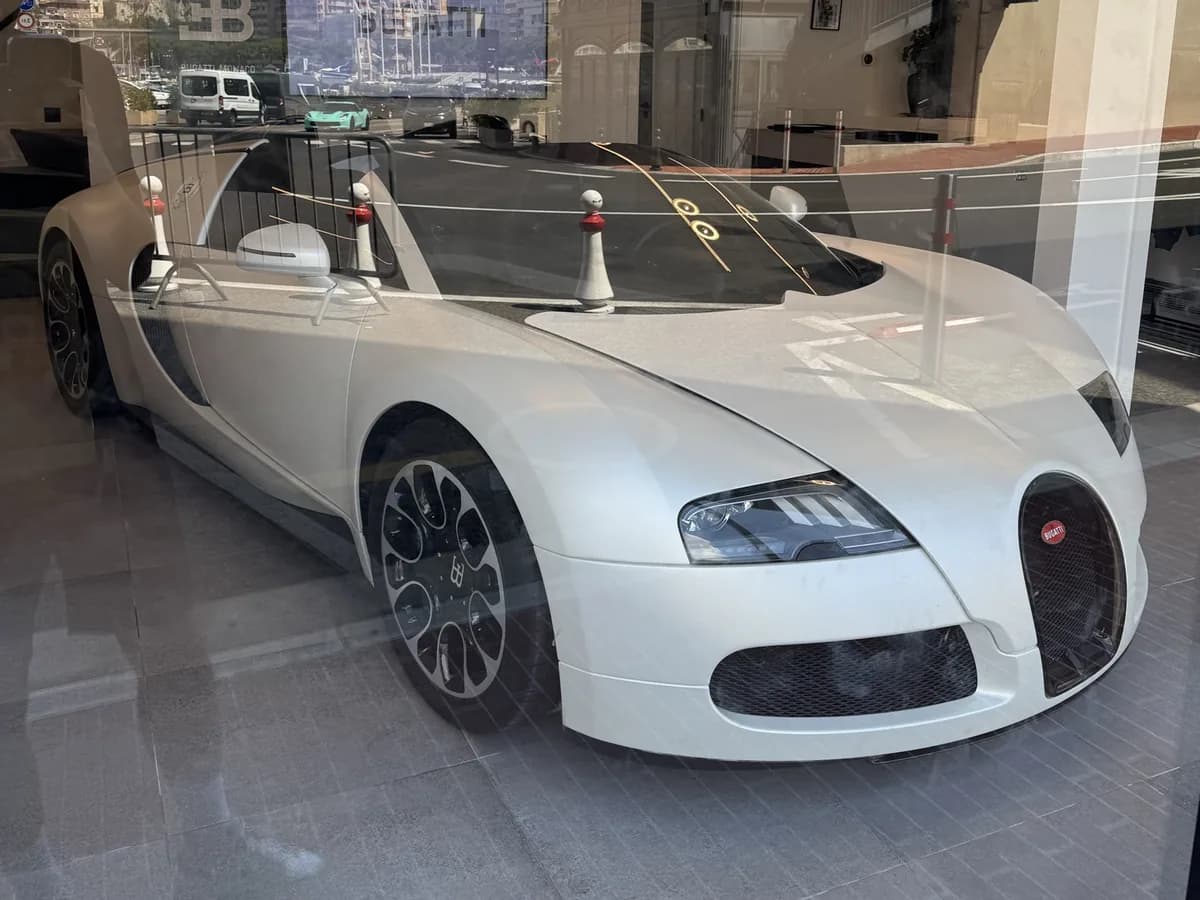
Bugatti Veyron Grand Sport Targa 2009
Presented at Pebble Beach on August 16, 2008, the Bugatti Veyron 16.4 Grand Sport was the removable-roof version of the Molsheim-built hypercar. Sales began in March 2009, and the car retained the 8.0-liter, 1,001-hp powertrain of the Veyron 16.4 while receiving extensive structural reinforcement to replace the fixed roof’s contribution to rigidity. Its targa-style body allowed open-air driving, with a temporary fabric roof supplied for use in bad weather. A mid-engined layout, two-seat cabin, and four-wheel drive remained central to the Veyron formula. The Grand Sport therefore combined the coupe’s extraordinary performance with a more exposed, dramatic driving experience.
History
The Veyron Grand Sport was developed to bring open-air driving to the Veyron without sacrificing the model’s safety and performance targets. Because the fixed roof formed part of the coupe’s monocoque structure, Bugatti had to redesign the vehicle’s load paths. Reinforcements were added around the side sills and transmission tunnel, while the B-pillars received a carbon-fiber cross-brace. The carbon-fiber doors incorporated longitudinal beams, and the redesigned engine air intakes included protective carbon elements intended to improve rollover protection. The car made its public debut at Pebble Beach in August 2008, ahead of sales scheduled for March 2009. Bugatti stated that production would be carried out by hand in Molsheim and announced a price of 1.4 million euros before tax. The first production allocation was auctioned at Pebble Beach, with the final reported sale reaching 3.19 million dollars.
Latest scans
Photos added by the community for this page.
Anecdotes
The first production car was sold at a Pebble Beach auction in August 2008. Bugatti announced that the amount above the car’s retail price would be donated to the Pebble Beach Company Foundation. The company also stated that the first fifty examples would be offered exclusively to registered Bugatti customers. For poor weather, the emergency fabric roof could be stored in the luggage compartment and deployed in an umbrella-like manner, with a limited operating speed.
Production
Bugatti stated that the Veyron 16.4 Grand Sport would be built by hand at its Molsheim, Alsace headquarters. At launch, the company planned a run of 150 cars and reserved the first fifty for registered Bugatti customers. Later Bugatti material described total roadster production for the Grand Sport and Grand Sport Vitesse families together as 150 cars. The figure should therefore be read carefully, since the stated production scope changed with the arrival of the Vitesse. The 2009 Grand Sport remains the 1,001-hp open-roof model, separate from the higher-output Vitesse introduced later.
Press reception
Automotive coverage focused on the contrast between the Grand Sport’s considerable mass and the ease with which it delivered extreme acceleration. Car and Driver noted the additional weight over the coupe without suggesting that it erased the car’s extraordinary performance. Auto Express presented it as an exceptional open car, while broader Veyron road tests emphasized the unusual combination of top speed, all-wheel drive, and refinement. Reviewers also highlighted the theatrical quality of driving the car with the roof removed. Overall, the response was strongly admiring, while acknowledging the price, weight, and technical complexity inherent in this class of hypercar.
Evolution
Variants
References
- Bugatti expands product range with Bugatti Veyron 16.4 Grand SportBugatti Newsroom
Supports the launch date, removable-roof design, structural changes, performance figures, pricing, hand assembly, initial production plan, and first-customer allocation.
- Photos: Bugatti Veyron 16.4 Grand Sport unveiledBugatti Newsroom
Supports the Pebble Beach unveiling and the reported auction result for chassis number one.
- 2009 Bugatti Veyron 16.4 Grand Sport: First DriveCar and Driver
Supports the 2009 model identification, targa body style, W16 engine description, 1,001-bhp output, transmission, and four-wheel-drive specification.
- Bugatti Veyron 16.4 Grand Sport Vitesse premieres in AsiaBugatti Newsroom
Supports the later 1,200-hp Grand Sport Vitesse and Bugatti’s statement that Grand Sport and Vitesse roadster production was limited to 150 units combined.
- Bugatti sells the last VeyronBugatti Newsroom
Supports Bugatti’s later summary of the Veyron range, including the 1,001-hp Grand Sport and the 150-roadster total for Grand Sport and Grand Sport Vitesse.
- Bugatti Veyron Grand SportAuto Express
Supports contemporary press context and the road test’s assessment of the Grand Sport as an exceptionally capable open hypercar.
- https://newsroom.bugatti.com/api/en/press-releases/pdf/bugatti-expands-product-range-with-bugatti-veyron-16-4-grand-sport-studio-photos-newsroom.bugatti.com
Source found by OpenAI web search for this vehicle page.
- https://newsroom.bugatti.com/api/en/press-releases/pdf/a-new-bugatti-veyron-16-4-shows-its-open-sidenewsroom.bugatti.com
Source found by OpenAI web search for this vehicle page.