
X4
Presented at the New York International Auto Show in April 2014, the BMW X4 introduced a coupe-like SUV shape to BMW’s mid-size range. BMW places it among its “Sports Activity Coupés”: it combines the raised driving position and all-weather character of an SUV with a sharply sloping roofline. Developed alongside the BMW X3, the X4 emphasizes a more expressive appearance and a sportier driving character, while giving up some rear-seat headroom and cargo practicality compared with a conventional SUV. The first generation was built at BMW’s Spartanburg plant in the United States. A second generation arrived in 2018, followed by a substantial refresh for the 2021 model year. Production continued through the 2025 model year, making the X4 a relatively short-lived two-generation nameplate rather than a model with a third-generation replacement.
What about the car you photographed?
Upload a photo to get a suggested make, model and likely year.
No account needed for the result · Publish only if you choose
Variants by year
Make: BMW · Model: X4
5 / 5 versions shown
2021

2018
 R
2014
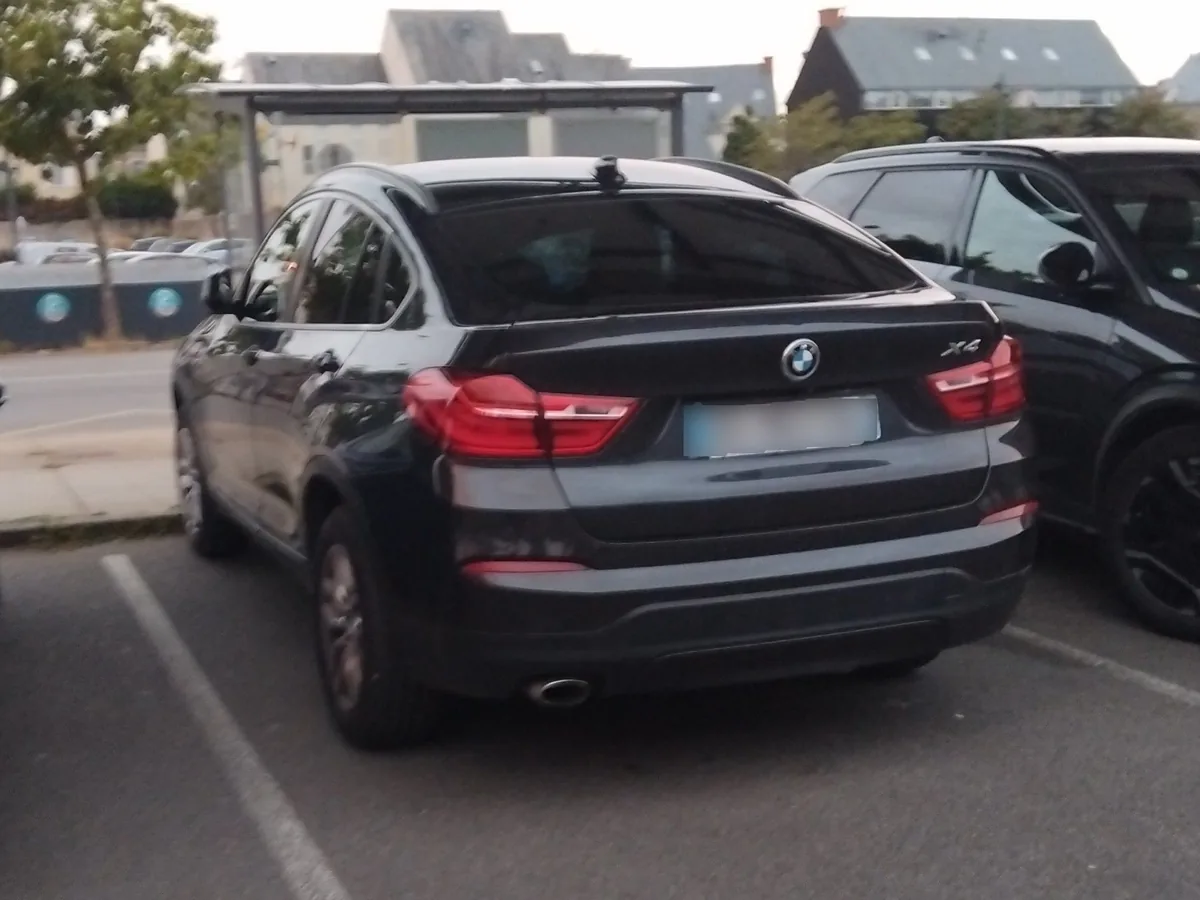
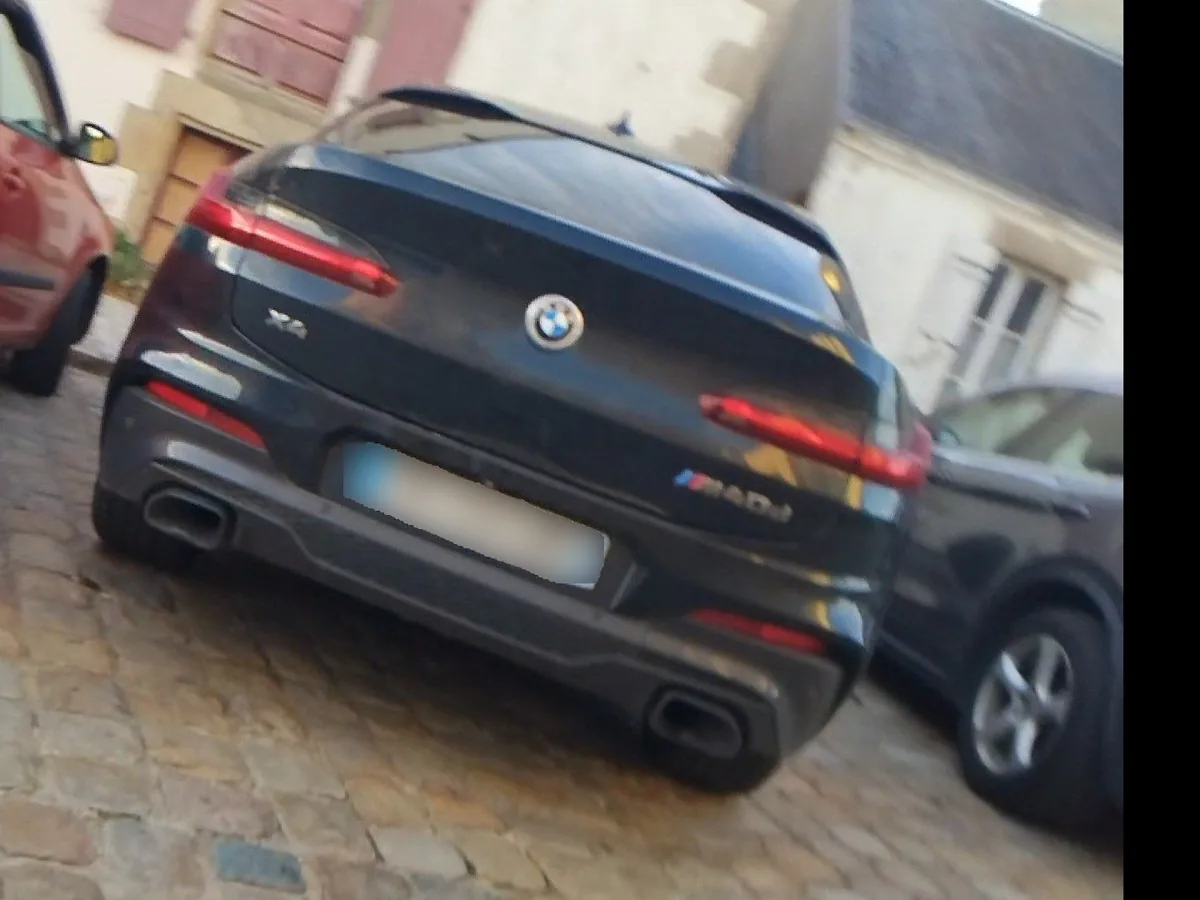
BMW X4 photos
Model summary
Data from the ScanRacer library, organized to compare versions quickly.
Model introduction
Presented at the New York International Auto Show in April 2014, the BMW X4 introduced a coupe-like SUV shape to BMW’s mid-size range. BMW places it among its “Sports Activity Coupés”: it combines the raised driving position and all-weather character of an SUV with a sharply sloping roofline. Developed alongside the BMW X3, the X4 emphasizes a more expressive appearance and a sportier driving character, while giving up some rear-seat headroom and cargo practicality compared with a conventional SUV. The first generation was built at BMW’s Spartanburg plant in the United States. A second generation arrived in 2018, followed by a substantial refresh for the 2021 model year. Production continued through the 2025 model year, making the X4 a relatively short-lived two-generation nameplate rather than a model with a third-generation replacement.
History
The BMW X4 grew out of the concept established by the larger X6: a more dramatic body than a conventional SUV, combined with a raised driving position and all-wheel-drive capability. BMW introduced the first X4 to the public in New York in April 2014. Early versions used a selection of TwinPower Turbo petrol and diesel engines, with BMW’s xDrive all-wheel-drive system specified across the launch range according to BMW’s media information. Production took place at the Spartanburg plant in South Carolina alongside the BMW X3. The first generation reached 200,000 vehicles produced by January 2018. BMW announced that production would end in March 2018 as the replacement model was being prepared. Revealed in February 2018 and shown at the Geneva Motor Show the following month, the second-generation X4 retained the coupe-SUV formula while receiving a longer body, a larger wheelbase and a more contemporary cabin. BMW also expanded the performance range with M Performance versions and, from 2019, the BMW X4 M and X4 M Competition in selected markets. For 2021, BMW revised the second generation with redesigned front and rear styling, updated displays and connectivity, a reorganized model range and mild-hybrid assistance on several engines. Available production information indicates that the X4 remained in the line-up through the 2025 model year before production ended, with no third generation announced as a direct successor.
Generations
The first generation, commonly identified by BMW’s F26 internal code, covers the 2014–2018 period. It shares its general engineering basis with the BMW X3 of the same era, but its sloping roof and sharply angled tailgate give it a noticeably sportier profile. Key visual traits include the rising shoulder line, pronounced rear haunches and sculpted side surfaces. Powertrains and badges varied by market, with four- and six-cylinder xDrive models alongside the M40i performance version introduced late in the cycle. The second generation, known internally as the G02, launched in 2018 and provided the basis for models sold through 2025. It uses larger proportions, a more elongated body and an interior aligned with newer BMW products. Common North American versions included the xDrive30i and M40i, while other markets received diesel engines and additional variants. The range also expanded to include the more specialized BMW X4 M and X4 M Competition. The facelift announced in 2021, introduced for the following model-year cycle in many markets, brought revised front and rear styling, a distinctive mesh grille on certain versions and an updated cabin. Equipment, engine availability and model names varied by region, so a badge or registration year alone does not always identify every specification accurately.
Key differences
The most important differences are generation-related. A 2014–2018 F26 X4 has a visually smaller body and an older-style dashboard, while the G02 introduced in 2018 is longer, wider and generally more modern inside. The newer generation also brought a broader range of connectivity features and driver-assistance technology. The 2021 refresh is another useful dividing point. It introduced slimmer headlights, revised bumpers and, on selected versions, BMW’s mesh-pattern kidney grille. The cabin gained a larger central display and updated equipment. M40i and X4 M models are separated from standard versions by their sport-oriented trim, chassis tuning and dedicated powertrains. Badges such as xDrive30i, xDrive20d and xDrive30d should not be treated as universal specifications: engine availability, equipment and naming differed between countries and model years. Registration dates can also differ from production or model-year dates.
Photo recognition
The roofline is the quickest way to identify a BMW X4: it drops gradually toward a short, steeply angled tailgate instead of using the more upright shape of an X3. The first-generation F26 has a triangular rear-quarter window and strongly sculpted side panels. Its headlights and kidney grille appear taller and narrower than those of the G02. The G02 can be recognized by its larger, longer body, broader rear treatment and, depending on trim, flush-fitting door handles. Pre-facelift cars have a different lighting signature and front bumper design from vehicles updated for 2021. The facelifted version uses slimmer headlights and may feature BMW’s mesh-pattern kidney grille, especially on sport-oriented configurations. Badges such as M40i, X4 M and X4 M Competition identify performance derivatives, but they do not by themselves establish a model year. For a dependable identification, compare the lamps, bumper shapes and center-console design, then confirm the generation through the vehicle identification number or factory documentation. Market-specific equipment can make otherwise similar cars look different.
Important versions
The X4 range combined mainstream models with more performance-focused derivatives. The xDrive30i and regional equivalents formed core versions of the second generation, while the M40i added stronger performance without being a full BMW M model. The BMW X4 M and X4 M Competition, offered on the G02 generation, occupied the top of the range with dedicated chassis and powertrain development. Within the years covered by this library, the Base version runs from 2014 to 2021 in the supplied model data. The Alpina XD4 is listed from 2018 to 2021. It should not be treated as a simple BMW trim level: Alpina developed its own versions from BMW vehicles, with separate engineering, styling and branding. Exact engines, equipment and availability varied by country, so a version name should always be read together with its market and model year.
The name “X4” follows BMW naming, with its rules and its exceptions. Decode a BMW name
References
- The new BMW X4BMW Group PressClub
- The first BMW X4 takes its leaveBMW Group PressClub
- The all-new BMW X4 is comingBMW Group PressClub
- The new BMW X3 and the new BMW X4BMW Group PressClub
- BMW X4 - Model Years, Generations & NewsCars.com
- BMW X4BMW USA
- https://www.rac.co.uk/drive/car-reviews/bmw/x4/x4-2014-2018/rac.co.uk
Technical specifications
Structured data available for versions linked to this model.
| Version | Power | Torque | Top speed | Drivetrain | Fuel |
|---|---|---|---|---|---|
| Base | 230 KW @ 4400 RPM313 HP @ 4400 RPM308 BHP @ 4400 RPM | 465 lb-ft @ 1500–2500 RPM630 Nm @ 1500–2500 RPM | 153 mph (246 km/h) | All Wheel Drive / 8-speed automatic (Steptronic) | Diesel |
Frequently asked questions
- What years was the BMW X4 produced?
- ScanRacer's referenced versions cover 2014 - 2021.
- How many BMW X4 examples are documented on ScanRacer?
- 5 published scans from 3 members, with the latest photo added in September 2026.
- What is the power output of the BMW X4?
- The sourced technical data lists 230 KW @ 4400 RPM313 HP @ 4400 RPM308 BHP @ 4400 RPM.
What about the car you photographed?
Upload a photo to get a suggested make, model and likely year.
No account needed for the result · Publish only if you choose