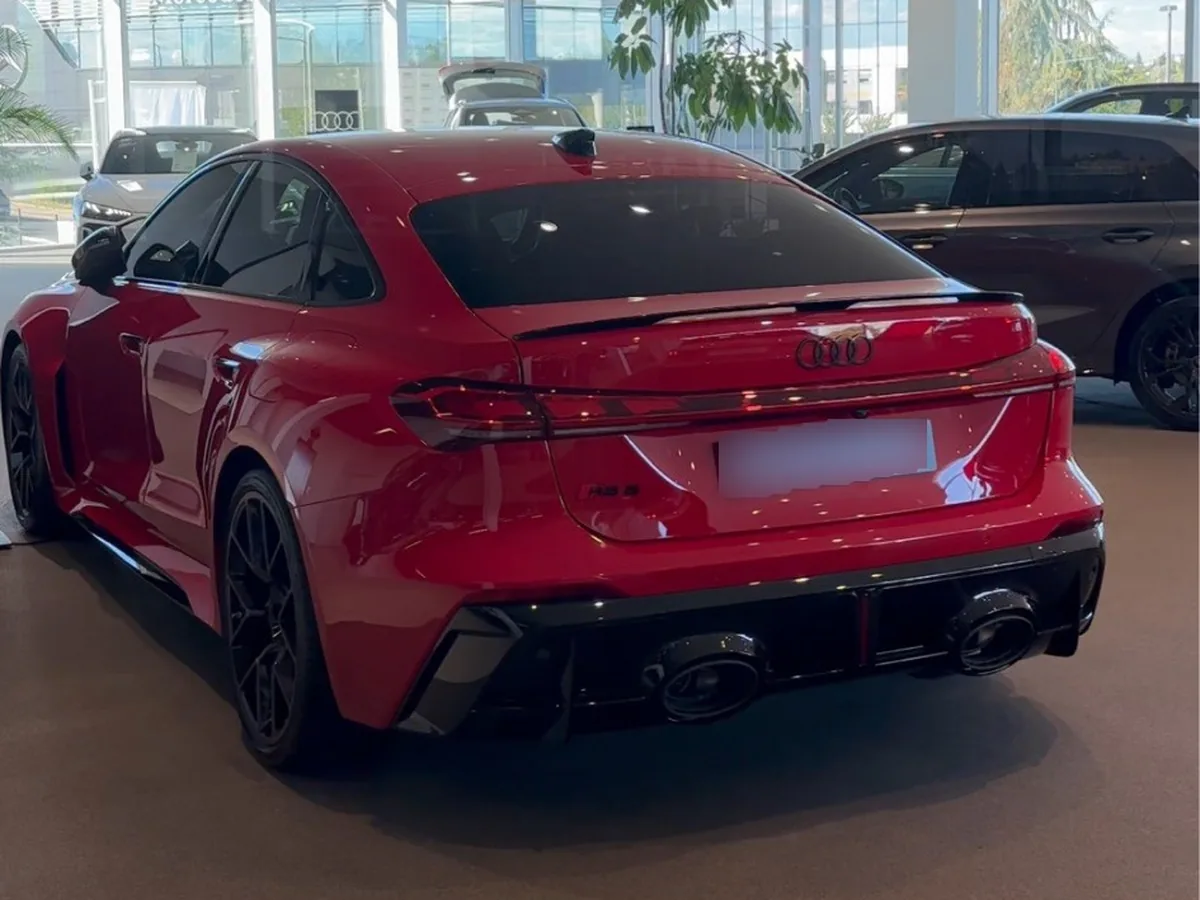
Audi RS5 Sedan 2026
The Audi RS5 Sedan 2026 introduces a 470 kW (639 PS), 825 Nm high-performance plug-in hybrid powertrain. It combines a 2.9-litre twin-turbo V6 with an electric motor integrated into a rear transaxle, plus quattro drive and electromechanical torque vectoring.
History
This generation opens a new chapter for Audi’s mid-size range. Introduced under the A5 name after thirty years of A4, it adopts the Premium Platform Combustion, a new electronic architecture and a cabin centred on the curved OLED MMI panoramic display.
Latest scans
Photos added by the community for this page.
Editorial photos
Manufacturer press photos, relayed by ScanRacer until the community shoots this car.
Technical data
Official Audi technical data for the RS5 Sedan, matched precisely to this version and model year.
Performance
- System output
- 470 kW
- System torque
- 825 Nm
- 0-100 km/h
- 3.6 s
- Top speed
- 250 km/h
- Top speed, electric
- 140 km/h
Combustion engine
- Layout
- V6 engine
- Displacement
- 2,894 cm³
- Bore × stroke
- 84.5 × 86 mm
- Compression ratio
- 10.9
- Engine output
- 375 kW
- Engine torque
- 600 Nm
- Emission standard
- Euro 6e-bis
- Fuel
- Electricity / Gasoline
Electrification and charging
- Peak electric output
- 130 kW
- Continuous electric output
- 70 kW
- Electric torque
- 460 Nm
- Gross / usable battery
- 25.9 / 22 kWh
- Battery technology
- Lithium-Ion
- HV system voltage
- 400 V
- Electric range WLTP
- 84–75 km
- Electric range, city
- 87 km
- Maximum AC charging
- 11 kW
Consumption and emissions
- WLTP consumption
- 4.3–3.8 l/100 km
- WLTP electric consumption
- 18.4–17.7 kWh/100 km
- CO₂ emissions
- 98–86 g/km
- CO₂ class
- C–B
- Consumption, battery depleted
- 10–9.5 l/100 km
- CO₂, battery depleted
- 228–217 g/km
- CO₂ class, battery depleted
- G
Drivetrain
- Transmission
- 8-speed tiptronic
- Drive type
- quattro permanent all-wheel drive with self-locking center differential
- Rear differential
- quattro sport
Chassis and brakes
- Front suspension
- 5-link front axle
- Rear suspension
- 5-link rear axle
- Steering
- Electromechanical progressive steering with speed-dependent power assistance
- Steering ratio
- 15.2
- Turning circle
- 12.9 m
- Brake discs front / rear
- 420 / 400 mm
- Wheels
- Forged aluminum 10 J x 20
- Tyres
- 285/35 R 20
Dimensions and volumes
- Length
- 4,896 mm
- Width (excl. mirrors)
- 1,952 mm
- Width (incl. mirrors)
- 2,099 mm
- Height
- 1,428–1,454 mm
- Wheelbase
- 2,906–2,907 mm
- Track front / rear
- 1673 / 1659 mm
- Boot
- 331 l
- Boot, seats folded
- 1,170 l
- Doors / seats
- 5 / 5
- Drag coefficient Cd
- 0.34
- Body structure
- Unitary steel/aluminum composite construction
Weights and loads
- Unladen weight
- 2,355 kg
- Unladen weight with driver
- 2,430 kg
- Gross weight limit
- 2,905 kg
- Axle load front / rear
- 1390 / 1600 kg
- Braked trailer (8%)
- 2,100 kg
- Unbraked trailer
- 750 kg
- Roof load
- 90 kg
- Fuel tank
- 48 l
Source: Audi
Anecdotes
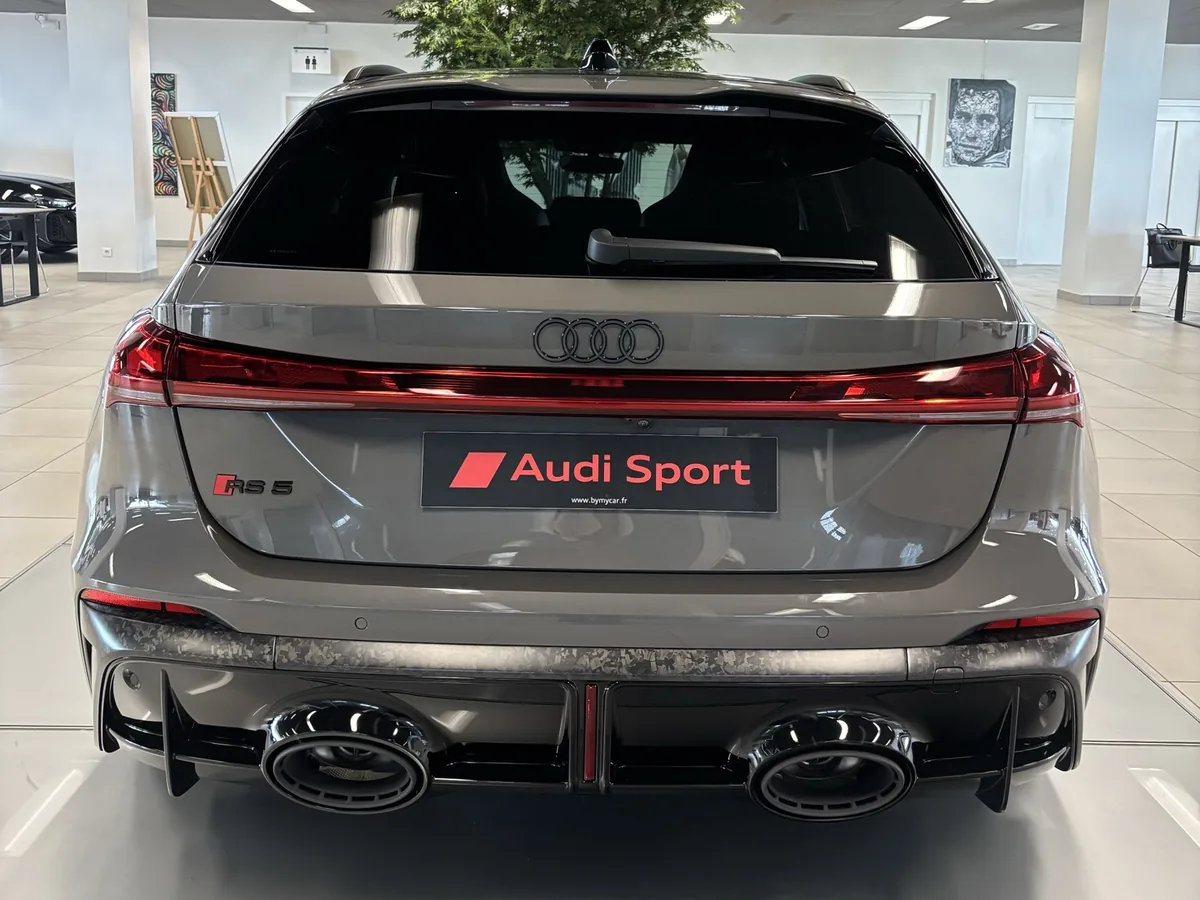
Second-generation digital OLED rear lights can display selectable signatures and contribute to light-based communication with other road users.
Production
Figures correspond to the Audi Germany programme and manufacturer technical data sheets available for model year 2026.
Press reception
Audi highlights the balance between sporting proportions, a digital interface and electrification tailored to each performance level.
Evolution
Variants
References
- Audi RS5 SedanAudi
Official model presentation, images and technical data
- The new Audi RS 5: the first performance hybrid provides top driving dynamicsAudi
Official product press release