
RAV4
Launched in Japan in 1994, the Toyota RAV4 was designed from the outset to combine passenger-car manners with the ability to travel beyond paved roads. Its name stands for “Recreational Active Vehicle with 4-wheel drive.” The first generation used a monocoque body, independent suspension at all four wheels, and full-time four-wheel drive—an unusual combination in such a compact vehicle at the time. Toyota initially offered a three-door body, followed by a five-door version. Across subsequent generations, the RAV4 grew in size, became a genuinely global model, and moved from its original playful small 4x4 identity toward the role of a practical family SUV. Its history also includes significant electric variants: an early RAV4 EV introduced in the late 1990s and a second electric model developed with Tesla for 2012.
Variants by year
2025
2018
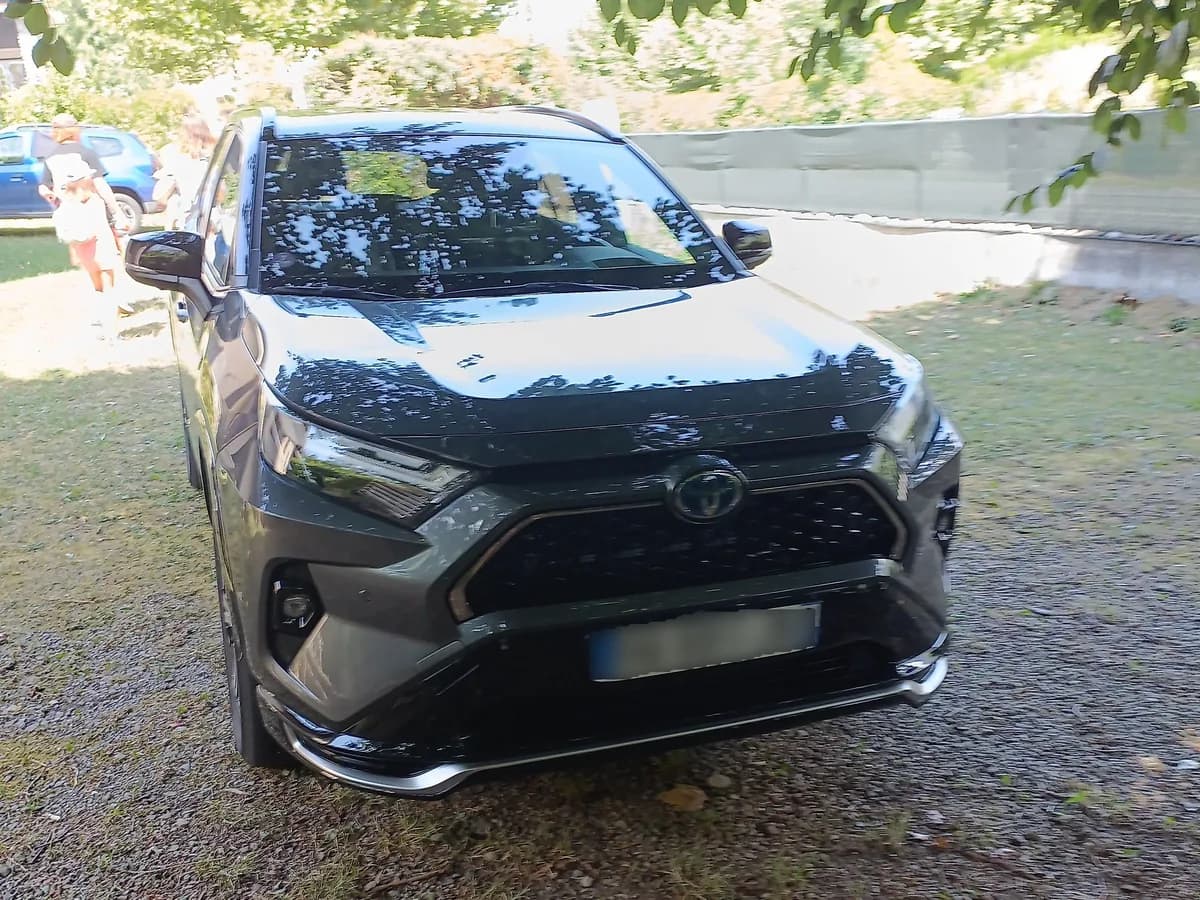
2015
2012
 C
C2005
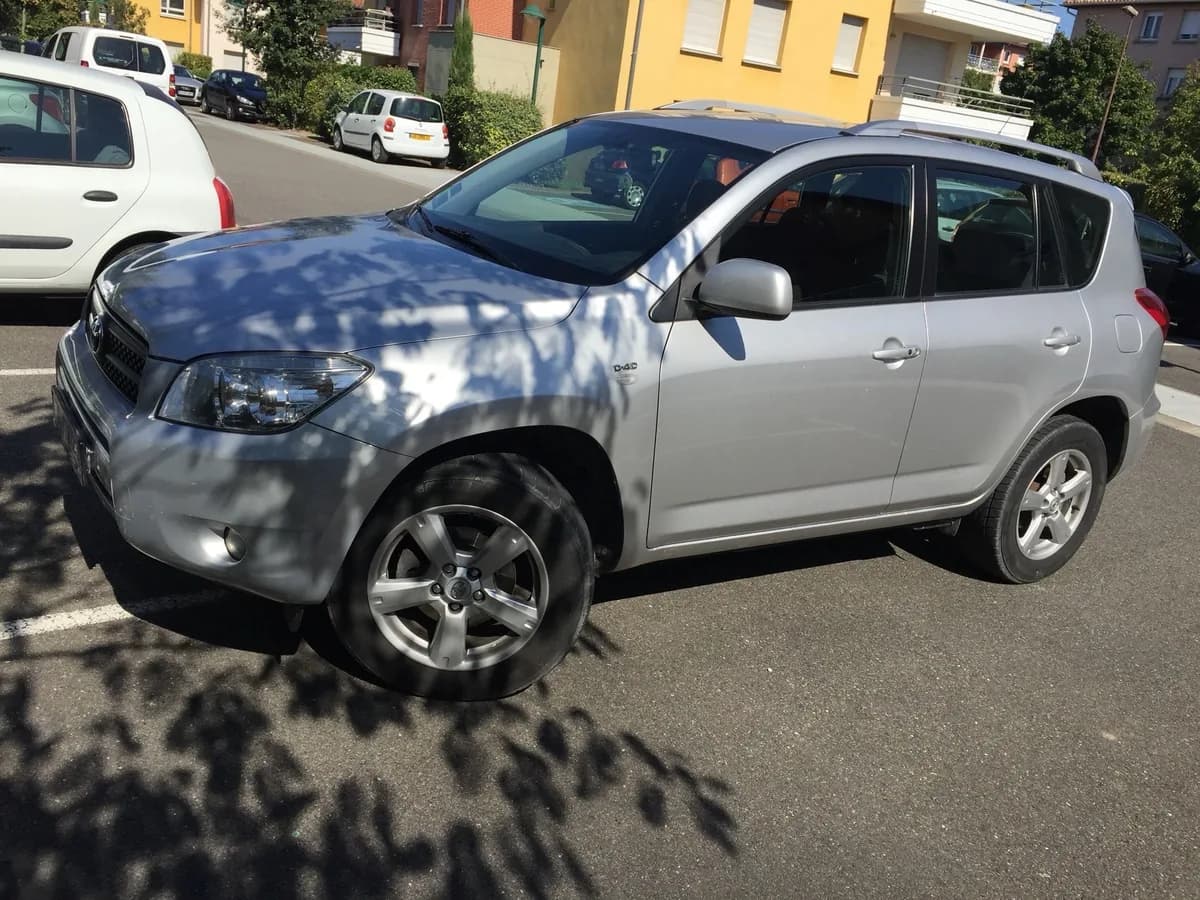
2000
1998
1994
Model summary
Data from the ScanRacer library, organized to compare versions quickly.
Model introduction
Launched in Japan in 1994, the Toyota RAV4 was designed from the outset to combine passenger-car manners with the ability to travel beyond paved roads. Its name stands for “Recreational Active Vehicle with 4-wheel drive.” The first generation used a monocoque body, independent suspension at all four wheels, and full-time four-wheel drive—an unusual combination in such a compact vehicle at the time. Toyota initially offered a three-door body, followed by a five-door version. Across subsequent generations, the RAV4 grew in size, became a genuinely global model, and moved from its original playful small 4x4 identity toward the role of a practical family SUV. Its history also includes significant electric variants: an early RAV4 EV introduced in the late 1990s and a second electric model developed with Tesla for 2012.
History
The RAV4 appeared as a concept at the 1993 Tokyo Motor Show before going on sale in Japan in May 1994. Toyota presented it as a new type of four-wheel-drive vehicle, using a transverse 2.0-liter engine, a monocoque body, and independent suspension at both axles. The formula combined a raised driving position and four-wheel drive with dimensions closer to those of a compact passenger car. Early examples were identified by their three-door body, while removable roof panels were offered in some markets to create a soft-top-style experience. A five-door model later broadened the vehicle’s family appeal. The second generation arrived in 2000, bringing greater dimensions and a stronger international role. The third generation appeared in Japan in 2005 and reached several European markets from 2006, with an exclusively five-door body in some regions and a more road-focused character. The fourth generation followed from 2012-2013 depending on market. The fifth generation launched in 2019 on a platform derived from Toyota’s TNGA architecture and gave hybrid powertrains a much more prominent role. Alongside the conventional range, Toyota produced an early RAV4 EV from 1996-1997 and later introduced a second electric model in 2012 using a Tesla-derived electric powertrain.
Generations
The first generation, generally associated with 1994-2000, is recognizable by its short proportions, three- or five-door body styles, and tailgate-mounted spare wheel. It retained the character of a compact, versatile 4x4, with a monocoque structure and full-time four-wheel drive. Removable-roof versions and the RAV4 EV belong to this period, although availability varied by country. The second generation arrived in 2000 with greater length and interior space. It marked the RAV4’s transition into a broadly international compact SUV while retaining three- and five-door bodies in some markets. The third generation, launched in 2005, brought a larger body and a more road-oriented presentation; Toyota described it as using a new platform, revised suspension systems, and a renewed powertrain range. The fourth generation reached markets from 2012-2013 and replaced the early cars’ upright styling with a more aerodynamic family-SUV shape. The fifth generation, introduced in 2019, is identified by sharper exterior surfacing, Toyota’s TNGA-based platform, and a much stronger emphasis on hybrid power. Exact model-year boundaries differ between countries, body styles, and local launch schedules, so a vehicle’s market specification should be confirmed before assigning a generation solely by date.
Key differences
The main differences between RAV4 generations appear in their proportions and body styles. The 1994-2000 vehicles are the smallest and most directly connected to the compact 4x4 concept, with three-door, five-door, hardtop, and soft-top versions offered in different markets. The 2000-2005 generation gained length and cabin space, while the generation introduced in 2005 adopted a more family-oriented design and a stronger road-going focus. The next generation, launched from 2012-2013 depending on market, moved toward a more unified five-door SUV shape. The 2019-2025 generation is more angular, uses a TNGA-based architecture, and gives much greater prominence to hybrid and plug-in hybrid powertrains. The EV designation does not simply identify a trim level; it refers to a distinct electric powertrain and vehicle program. Engines, transmissions, equipment, and names can vary substantially between countries, so accurate identification should consider the vehicle’s original market and model year rather than exterior appearance alone.
Photo recognition
Start with the body style when identifying an older RAV4. First-generation vehicles are short and often three-door, with a vertically styled rear end and an externally mounted spare wheel. Examples fitted with removable roof panels may correspond to soft-top versions, but that equipment was not available in every market. A five-door body from the same period usually indicates the more practical configuration, but it does not by itself establish the exact trim level. Second-generation RAV4s remain compact but have smoother sides and larger overall proportions. The generation introduced in 2005 is visibly bigger and more modern; some versions still carry the spare wheel on the outside of the rear door. Models from 2012-2013 have a more unified five-door profile, slimmer-looking lamps, and a less upright appearance. Vehicles launched in 2019 use more pronounced wheel arches and sharper body surfacing. To verify a RAV4 EV, check the badges, the electric charging hardware, and the vehicle identification number rather than relying only on exterior details.
Important versions
The SUV and Base descriptions cover the mainstream RAV4 configurations, although equipment and body styles varied by country. Hardtop and Softtop versions are especially associated with the early three-door RAV4: the former uses a fixed roof, while the latter could feature removable panels or a more open presentation depending on market. The RAV4 EV is a separate and comparatively rare branch of the model’s history, produced in limited numbers in the late 1990s and introduced again in California in 2012 with an electric powertrain developed with Tesla. Commercial naming was not consistent worldwide, so the same label may represent different equipment or body specifications in different markets.
References
- Toyota Introduces the RAV4—A New-Concept 4X4Toyota Motor Corporation
- Toyota Unveils New RAV4 at Frankfurt Motor ShowToyota Motor Corporation
- Toyota Launches New RAV4 in JapanToyota Motor Corporation
- RAV4 Vehicle GalleryToyota Motor Corporation
- New RAV4 Makes World Premiere in JapanToyota Motor Corporation
- RAV4 EV Jointly Developed with TeslaToyota Motor Corporation
- Celebrating the Original: 20 Years of the Toyota RAV4Toyota UK Media Site
Technical specifications
Structured data available for versions linked to this model.
| Version | Power | Torque | Top speed | Drivetrain | Fuel |
|---|---|---|---|---|---|
| — | 176 hp | — | — | Front-wheel drive standard; all-wheel drive available / Six-speed automatic | — |
Frequently asked questions
- What years was the Toyota RAV4 produced?
- ScanRacer's referenced versions cover 1994 - 2025.
- How many Toyota RAV4 examples are documented on ScanRacer?
- 9 published scans from 6 members, with the latest photo added in September 2026.
- What is the power output of the Toyota RAV4?
- The sourced technical data lists 176 hp.