
Kwid
Launched in India in September 2015, the Renault Kwid is a small five-door hatchback developed for emerging markets around the Renault-Nissan Alliance’s CMF-A modular architecture. Its raised city-car shape borrows several SUV-inspired cues, including a compact body, lower protective cladding and a relatively high seating position. The Kwid was conceived as an affordable entry-level model, but Renault also equipped it with features that were unusual in its class, including a digital instrument cluster and, depending on specification, a touchscreen multimedia system. In India, the range began with a 0.8-litre petrol engine before expanding to a 1.0-litre unit and the Easy-R automated manual transmission. The ScanRacer catalogue covers the 2015-2019 period and the Base version.
Variants by year
2019
2015
Model summary
Data from the ScanRacer library, organized to compare versions quickly.
Model introduction
Launched in India in September 2015, the Renault Kwid is a small five-door hatchback developed for emerging markets around the Renault-Nissan Alliance’s CMF-A modular architecture. Its raised city-car shape borrows several SUV-inspired cues, including a compact body, lower protective cladding and a relatively high seating position. The Kwid was conceived as an affordable entry-level model, but Renault also equipped it with features that were unusual in its class, including a digital instrument cluster and, depending on specification, a touchscreen multimedia system. In India, the range began with a 0.8-litre petrol engine before expanding to a 1.0-litre unit and the Easy-R automated manual transmission. The ScanRacer catalogue covers the 2015-2019 period and the Base version.
History
The Kwid was developed as part of Renault’s effort to create a global small car suited to price-sensitive markets. Groupe Renault’s 2015 annual report states that several teams contributed to its design, with Renault Design India playing an important role. The model used the Alliance’s new CMF-A architecture and was launched in India in September 2015, where Renault positioned it as an affordable city car with a more expressive appearance than a conventional entry-level hatchback. The first Indian Kwid used a 799cc three-cylinder petrol engine paired with a five-speed manual gearbox. Renault later expanded the range with a 1.0-litre engine, manual transmission and the Easy-R automated manual gearbox. Renault also highlighted a 300-litre boot on early versions, while the 1.0L model presented in 2016 used a 2,422mm wheelbase and measured 3,679mm long. The model soon moved beyond India. Renault adapted it for Latin America in 2017, with production in Curitiba, Brazil, and changes intended to meet local regulations. In India, 2019 brought a substantial update: the Kwid gained a redesigned front end, additional safety equipment and a more modern interior presentation. These changes represent an important evolution of the original model without establishing a completely separate vehicle line.
Generations
The 2015-2019 period mainly corresponds to the first Renault Kwid phase represented in the ScanRacer catalogue. Individual equipment updates should not automatically be treated as completely separate generations. Renault retained the same name and the same raised city-car concept while changing engines, equipment and selected exterior details. The initial phase, launched in India in 2015, is identified by its upright front end, high-mounted headlamps, pronounced wheel arches and black protective cladding. It was initially associated with the 0.8-litre engine and later gained a 1.0-litre powertrain. Renault’s 2016 presentation of the Kwid 1.0L highlighted a three-cylinder 1.0-litre engine, a seven-inch MediaNav system on selected grades and a claimed 300-litre boot. The 2019 update was the period’s most visible styling change. Renault introduced lower-mounted headlamps with separate daytime-running lights, a more elaborate lighting signature, revised wheels and a larger MediaNav screen on certain versions. The boot figure quoted for this updated model was 279 litres. Specifications varied by country, model year and trim level, so Indian dimensions and equipment should not be applied automatically to Latin American versions. For the 2015-2019 ScanRacer coverage, the safest identification is therefore a single Kwid model line with an early phase and a substantial 2019 refresh.
Key differences
Differences between 2015-2018 Kwids and the 2019 updated cars mainly concern equipment, styling and safety. Early cars generally used the 0.8-litre engine, while the 1.0-litre engine and Easy-R gearbox expanded the range during the model’s development. Higher trim levels could receive a digital instrument cluster, MediaNav touchscreen, reversing camera and convenience features that were not necessarily included on entry versions. The 2019 Kwid is easiest to identify by its extensively revised front end, with lower-mounted headlamps, LED daytime-running lights and redesigned bumpers. Renault also announced ABS with EBD, a driver airbag, seat-belt reminders and a speed alert across the Indian range. Exact dimensions, boot capacity and equipment depended on the market. The Base version listed by ScanRacer should therefore not be treated as equivalent to higher trims, special editions or later market-specific specifications.
Photo recognition
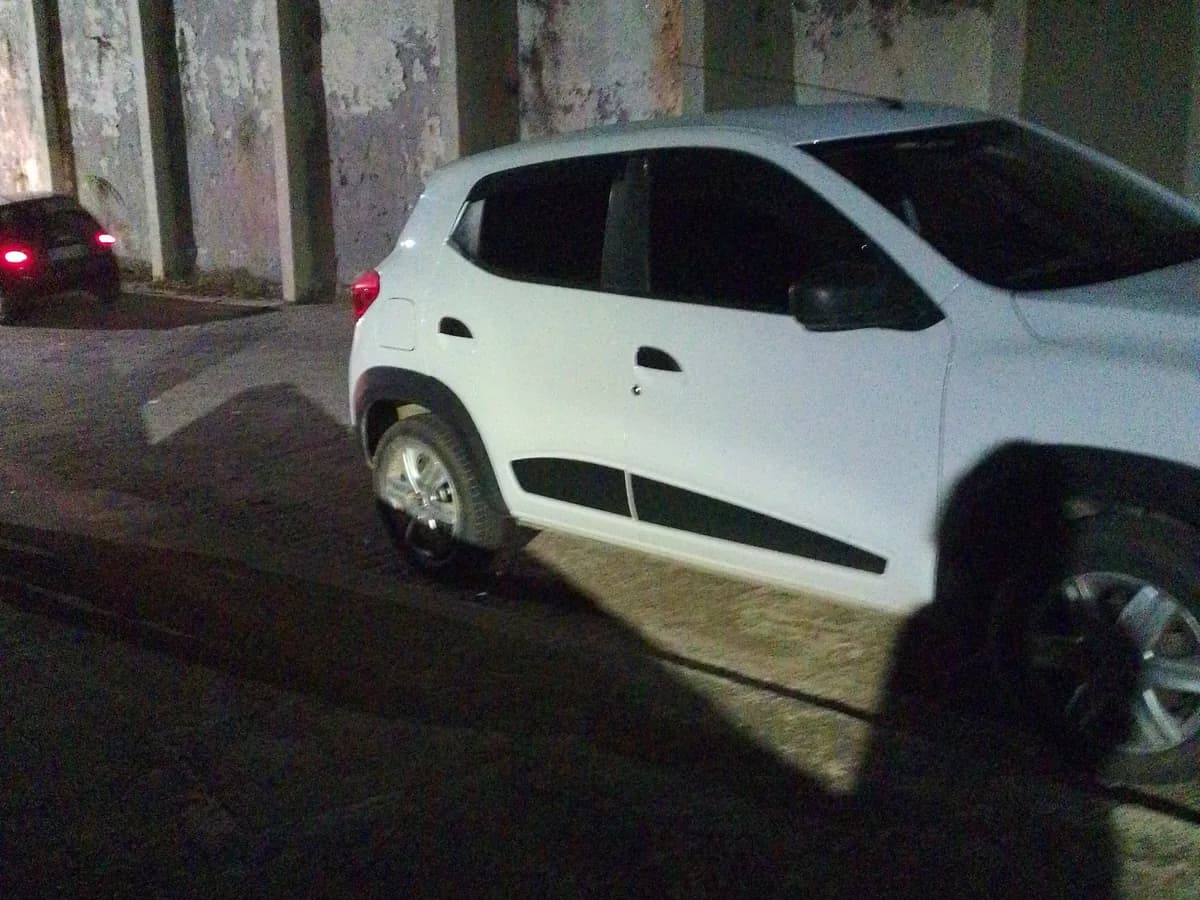
An early Kwid can be identified by its short, tall-looking body, squared wheel arches and black protective elements around the lower doors and bumpers. The front end uses an upright grille with the Renault diamond at its centre, while the main headlamps sit on either side of the upper bumper area. The generous glasshouse and near-vertical tailgate reinforce its practical city-car design. The 2019 update is easiest to recognise from the front. The main headlamps moved lower into the bumper, while the daytime-running lights became a separate element above them. Updated versions may also have a revised lighting signature, 14-inch wheels, skid-plate styling and two-tone presentation. Inside, the digital instrument cluster and MediaNav touchscreen can help with identification, but both depended on trim level and market. Engine, gearbox and equipment should be confirmed using the vehicle identification plate, registration documents or the original sales literature rather than appearance alone.
Important versions
The first significant version was the 0.8L Kwid launched in India in 2015, using a 799cc three-cylinder petrol engine and a five-speed manual gearbox. Renault later introduced the 1.0L Kwid with a three-cylinder 1.0-litre engine, followed by the Easy-R automated manual transmission on selected trims. The Indian range also included styling derivatives such as the Climber, but these should not be confused with the Base version listed in the ScanRacer context. The 2019 update brought together the main changes of the period: revised exterior styling, a larger multimedia screen on selected grades and expanded safety equipment. Latin American versions, produced in Brazil from 2017, may differ in structure, mechanical specification and equipment because they were adapted to local regulations. Trim names and engine availability should therefore always be checked against the relevant country’s original brochure.
The name “Kwid” follows Renault naming, with its rules and its exceptions. Decode a Renault name
References
- Renault Kwid 1.0L SCe Press ReleaseRenault India
- Renault Kwid Crosses 1,30,000 Sales MilestoneRenault India
- Renault Kwid Arrive à Buenos AiresRenault Global Media
- Renault Launches the All-New KwidRenault India
- Renault Kwid: Story Behind the DesignAutocar India
- Renault Kwid - All Models by Yearautoevolution
- https://cdn.group.renault.com/ren/in/31st-may-press-release/Renault_KWID_Most_popular_used_car.pdf.asset.pdf/01759e597a.pdfcdn.group.renault.com
Frequently asked questions
- What years was the Renault Kwid produced?
- ScanRacer's referenced versions cover 2015 - 2019.
- How many Renault Kwid examples are documented on ScanRacer?
- 1 published scan from 1 member, with the latest photo added in August 2026.