Renault Clio V6 2000
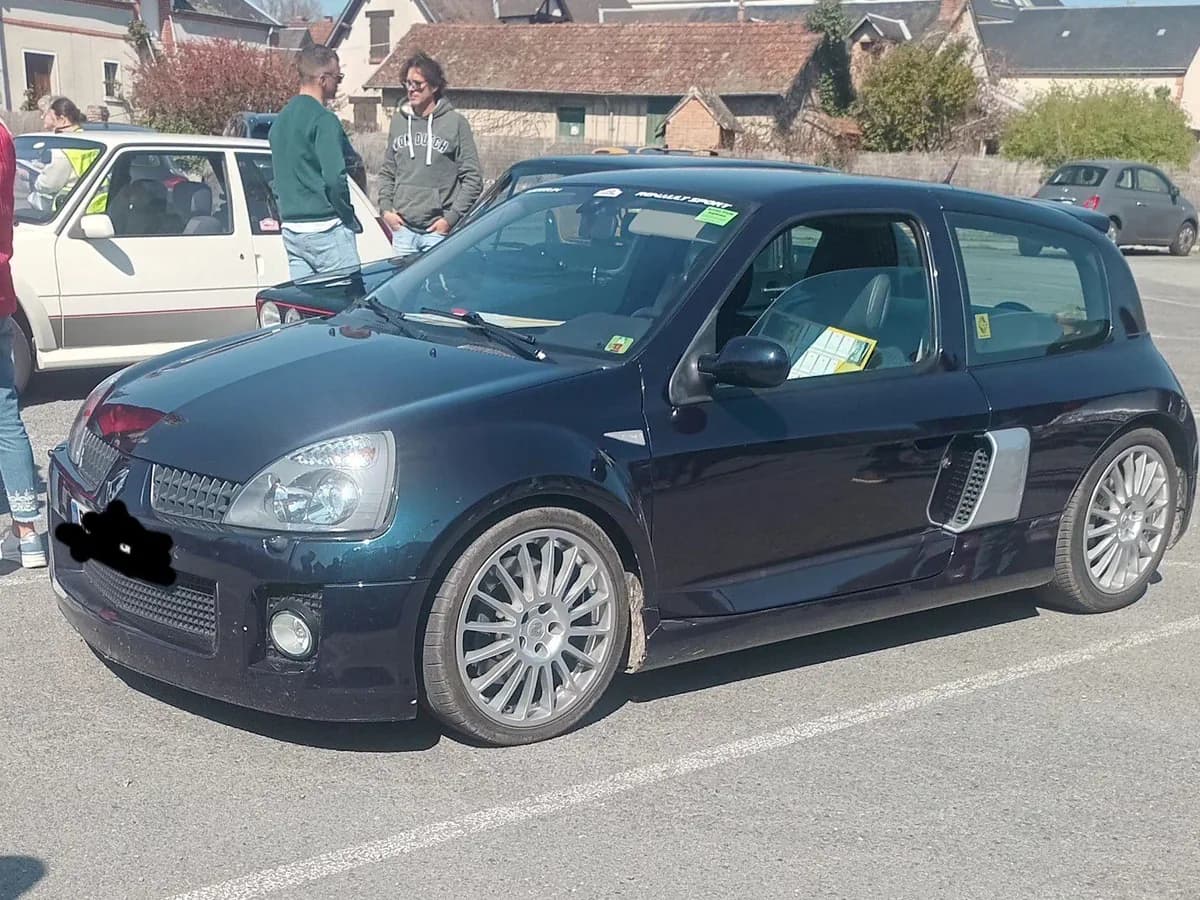
The Renault Clio V6 launched in November 2000 turned the Clio II supermini into a mid-engined sports car. Developed with assistance from Tom Walkinshaw Racing, this first version used a naturally aspirated 2.9-litre V6 mounted where the rear bench would normally be, driving the rear wheels. Wide arches, increased track widths and an unusually aggressive stance clearly separated it from the front-engined Clio Renault Sport 172, even though the two cars shared some structural elements. The Clio V6 Phase 1 produced 230 bhp, used a six-speed manual gearbox and was quoted at 0–100 km/h in 6.4 seconds. Built in limited numbers, it occupies a distinctive place in Renault Sport history: part hot hatch, part compact supercar and part uncompromising collector car.

Curious about this car?
Explore Clio, then try your own photo.
No account needed for the result · Publish only if you choose
History
The Clio V6 concept appeared at the Paris Motor Show in October 1998, only a few months after the second-generation Clio had been introduced. Renault initially used the concept to gauge public interest before committing to production. Feasibility work and development of the first production car were assigned to Tom Walkinshaw Racing, which re-engineered the Clio around a very different layout. The engine was no longer mounted at the front: a naturally aspirated V6 derived from the unit used by Renault in the Laguna was installed behind the front seats, requiring the rear bench to be removed. Sales began in November 2000. Although the body retained selected panels from the Clio Renault Sport 172, its wings, bumpers, sills, track widths and rear structure were specific to the V6. The Phase 1 produced 230 bhp and used a six-speed manual gearbox. Leather and Alcantara trim, air conditioning and a six-CD system gave it more equipment than its uncompromising layout might suggest. Its unusual engineering and limited production made it closer to a hand-built sports car than to an ordinary supermini derivative.
Latest scans
Photos added by the community for this page.
Anecdotes
The Clio V6 revived an idea already associated with the Renault 5 Turbo: remove the rear bench and use the space for an engine mounted behind the occupants. The concept shown in 1998 was close enough to the eventual production car that Renault retained most of its visual character. That unusual decision helped give the Phase 1 its exceptionally wide and dramatic appearance.
Production
The Renault Clio V6 Phase 1 was built in Sweden by Tom Walkinshaw Racing, while Phase 2 production later moved to Dieppe. This arrangement reflected the specialised nature of the project, which required far more extensive changes than a conventional hot-hatch conversion. Specialist references list 1,631 Phase 1 cars. Published totals for both generations vary depending on counting methods and market records, so the Phase 1 figure is the most useful production reference for a 2000 example. Limited-series construction, the deletion of the rear bench and the use of a dedicated rear structure all contributed to the car’s exclusive position within the Renault range.
Press reception
Automotive media often admired the Clio V6’s ambition while criticising the Phase 1’s handling. Contemporary road tests found a car that was memorable for its engine, appearance and driving position, but demanding when grip suddenly ran out. Autocar described the original car as particularly difficult to manage at the limit, while evo noted that the production version delivered 230 bhp rather than the 250 bhp quoted for the prototype. That criticism helped prompt the rapid development of Phase 2, whose chassis and suspension settings were extensively revised. With hindsight, the Phase 1 has become one of the most distinctive Renault Sport models precisely because it is less polished and less predictable than a conventional front-engined hot hatch. Its character is a central part of its appeal.
Evolution
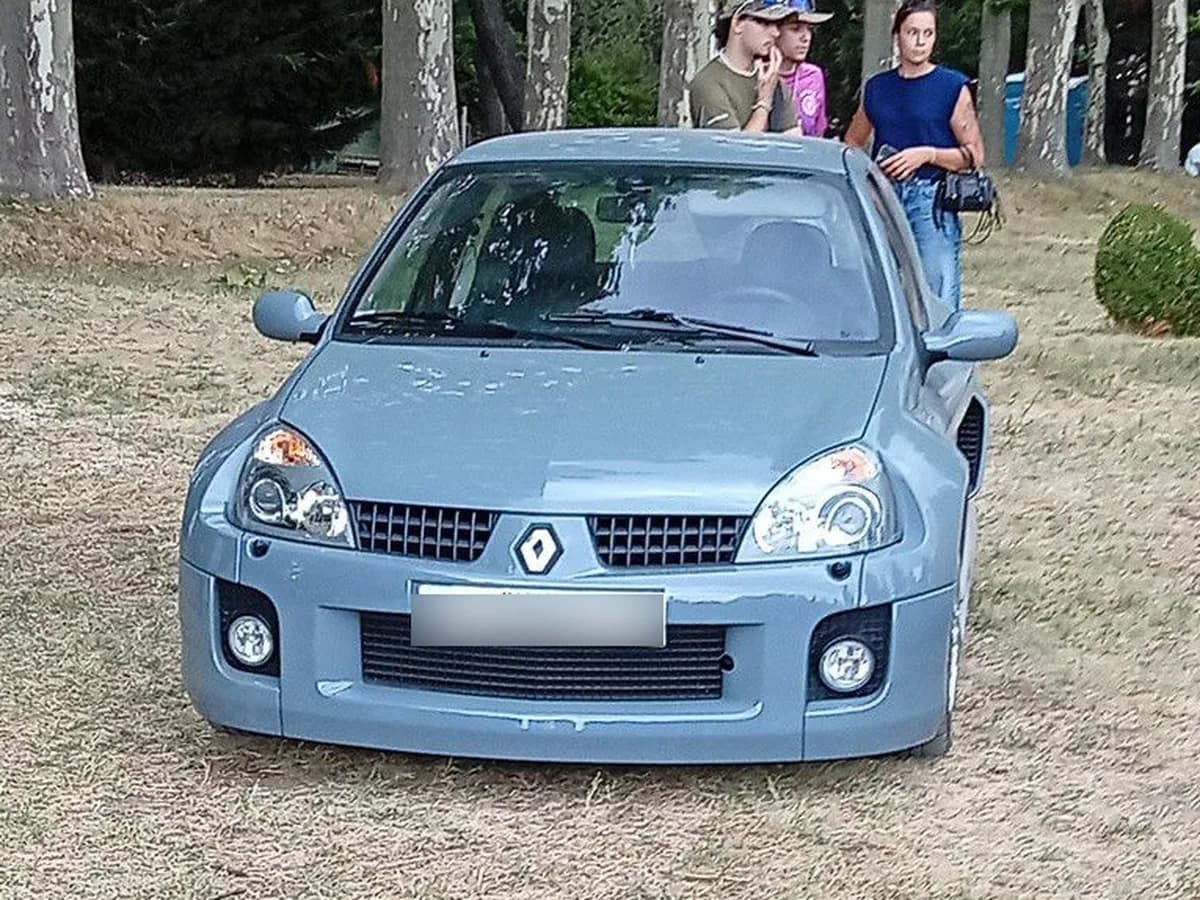
The 2000 Clio V6 is the Phase 1, identifiable by its original Clio II front styling and 230-bhp engine. Its defining characteristics are a rear-mid-mounted engine, rear-wheel drive, very wide tracks and different tyre sizes front and rear. It did not yet include the major revisions introduced with Phase 2. Unveiled in 2003, the later car received a 255-bhp V6, a revised chassis, a longer wheelbase and suspension changes intended to make its handling more manageable. Production also moved to Dieppe, at Renault’s former Alpine factory. These changes preserved the fundamental Clio V6 formula while addressing several criticisms aimed at the first-generation car. For a 2000 example, the Phase 1 specification is therefore the relevant reference, rather than the more powerful and substantially revised Phase 2.
Variants
References
- Renault Clio V6: 20 anosRenault Portugal
Supports the 1998 concept, TWR development, Phase 1 engine, power, gearbox, architecture, equipment and technical specifications.
- Renault Clio V6The Originals Renault Museum
Supports the 1998 concept, November 2000 launch, lack of rear seats, TWR involvement, production locations and Phase 2 evolution.
- The Renault Clio: our history, your storiesRenault Group
Supports the 2000 Renault Sport launch, 230-hp output, rear-mounted engine and visual link with the Renault 5 Turbo.
- Nine things you need to know about the Renault Clio V6Top Gear
Supports Phase 1 production of 1,631 cars and the distinction between Phase 1 and Phase 2.
- Middle management: Revisiting the Renault Clio V6Autocar
Supports contemporary criticism of Phase 1 handling and the extensive chassis revisions made for Phase 2.
- Renault Sport Clio V6evo
Supports the prototype-to-production power change, dimensions, rear-seat deletion, TWR involvement and evolution toward Phase 2.
- https://fr.wikipedia.org/wiki/Renault_Clio_V6fr.wikipedia.org
Source found by OpenAI web search for this vehicle page.
- https://www.largus.fr/actualite-automobile/renault-clio-v6-connaissez-vous-lamusante-histoire-de-ses-origines-10850416.htmllargus.fr
Source found by OpenAI web search for this vehicle page.