
4
Launched in 1961, the Renault 4 was a front-wheel-drive compact designed to carry both passengers and everyday loads. Its flat floor, tailgate and removable rear bench made it unusually adaptable, whether used in town, in the countryside or for work. Renault records show that 8,135,424 examples were produced between 1961 and 1992, across 29 countries. The range included a hatchback passenger car and F4 and F6 panel vans aimed at professional users. After a long absence, the Renault 4 name returned in 2025 with the Renault 4 E-Tech electric, a battery-powered compact that borrows visual cues and the original car’s emphasis on versatility. It is a modern successor in concept and branding, not a mechanical continuation of the classic petrol-powered model. (theoriginals.renault.com)
Variants by year
2025
1961
Model summary
Data from the ScanRacer library, organized to compare versions quickly.
Model introduction
Launched in 1961, the Renault 4 was a front-wheel-drive compact designed to carry both passengers and everyday loads. Its flat floor, tailgate and removable rear bench made it unusually adaptable, whether used in town, in the countryside or for work. Renault records show that 8,135,424 examples were produced between 1961 and 1992, across 29 countries. The range included a hatchback passenger car and F4 and F6 panel vans aimed at professional users. After a long absence, the Renault 4 name returned in 2025 with the Renault 4 E-Tech electric, a battery-powered compact that borrows visual cues and the original car’s emphasis on versatility. It is a modern successor in concept and branding, not a mechanical continuation of the classic petrol-powered model. (theoriginals.renault.com)
History
The Renault 4 emerged from a Renault project developed during the mid-1950s to create a practical, roomy car for a broad customer base. Introduced in 1961, it used front-wheel drive, an important change for Renault’s family-car range at the time. With no transmission tunnel, the cabin floor remained flat, while the tailgate made loading easier. These choices helped the R4 appeal to private owners, public services, tradespeople and businesses. The model quickly became an international product. Its career lasted for more than three decades, with production spread across several European, Latin American, African and Oceanian locations. The F4 panel van and the longer F6 extended its role into professional transport. Special editions such as Parisienne, Safari, Sixties and Jogging also gave the basic design different identities while retaining its practical character. Classic production ended in 1992 after 8,135,424 vehicles had been built. Renault revived the idea with the 4EVER Trophy concept shown in 2022. The Renault 4 E-Tech electric was unveiled in 2024 and entered the market in 2025. Built in Maubeuge, France, it uses the AmpR Small platform shared with the Renault 5 E-Tech electric. (theoriginals.renault.com)
Generations
The classic Renault 4 was not divided into formally named generations in the way later Renault models such as the Clio or Mégane were. It is more accurate to describe a long, continuously updated production run. The first passenger cars of 1961 established the key layout: a two-box body, front-wheel drive, a flat floor and a large rear opening. The F4 and F6 vans formed a separate utility branch. The F4 retained a compact body, while the F6 used a longer structure and offered a higher payload. Renault’s heritage museum lists approximately 300 kg for the F4 and up to 475 kg for the F6. During production, Renault revised engines, brakes, suspension components, wheels, interior trim and safety equipment. Those changes can help date an individual car, but they do not represent clearly defined, officially named generations. The 2025 Renault 4 E-Tech electric is a separate modern chapter. It is battery-powered, larger, based on the AmpR Small platform and built as a five-door compact crossover. It carries forward the original model’s versatility and selected design references, but its structure, powertrain and electronics are entirely contemporary. (theoriginals.renault.com)
Key differences
The main differences within the Renault 4 family relate to body style and intended use. The hatchback is the passenger-oriented, all-purpose version, with a low two-box profile and a wide rear opening. The F4 is a compact panel van derived from the R4 and intended for tradespeople, public services and businesses; its body prioritises cargo space and can use a glazed side-hinged rear door. The F6 is the longer van, with a greater load capacity than the F4. Renault’s heritage museum gives approximate lengths of 3.65 metres for the F4 and 3.85 metres for the F6. The Renault 4 E-Tech electric should not be treated as a lightly updated classic R4. It has an electric powertrain, a 4.14-metre body and a modern dedicated vehicle platform. Its connection with the original model is mainly functional and stylistic: compact proportions, a rear hatch, adaptable space and design references to the historic front end. (theoriginals.renault.com)
Photo recognition
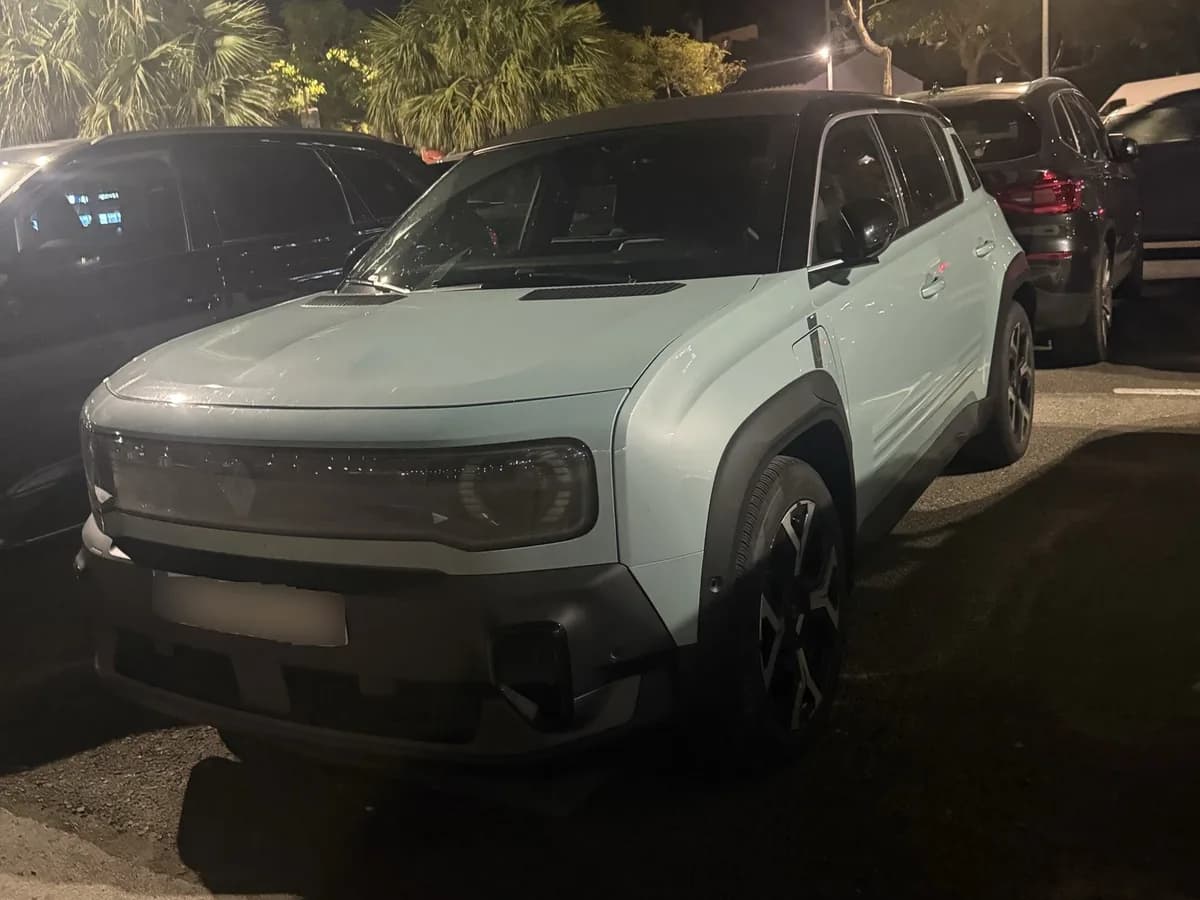
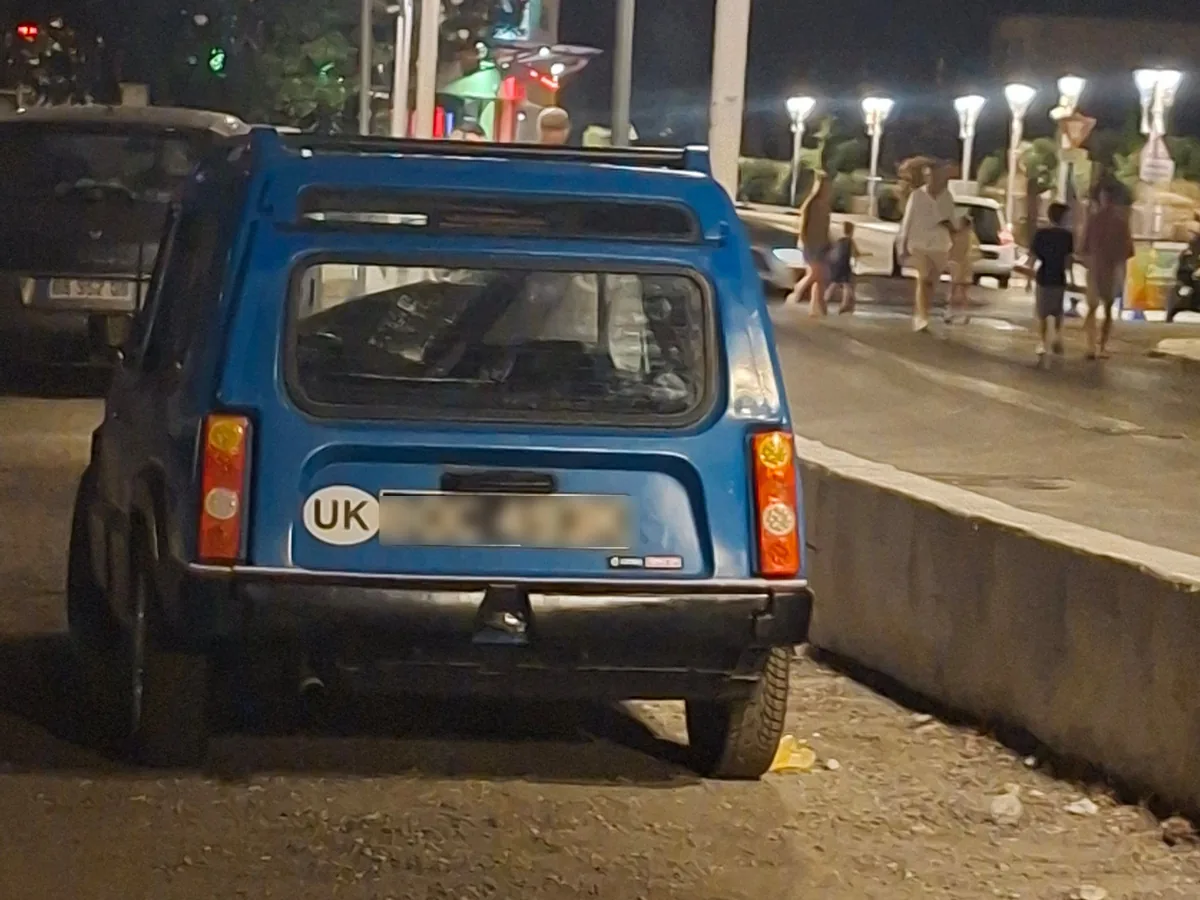
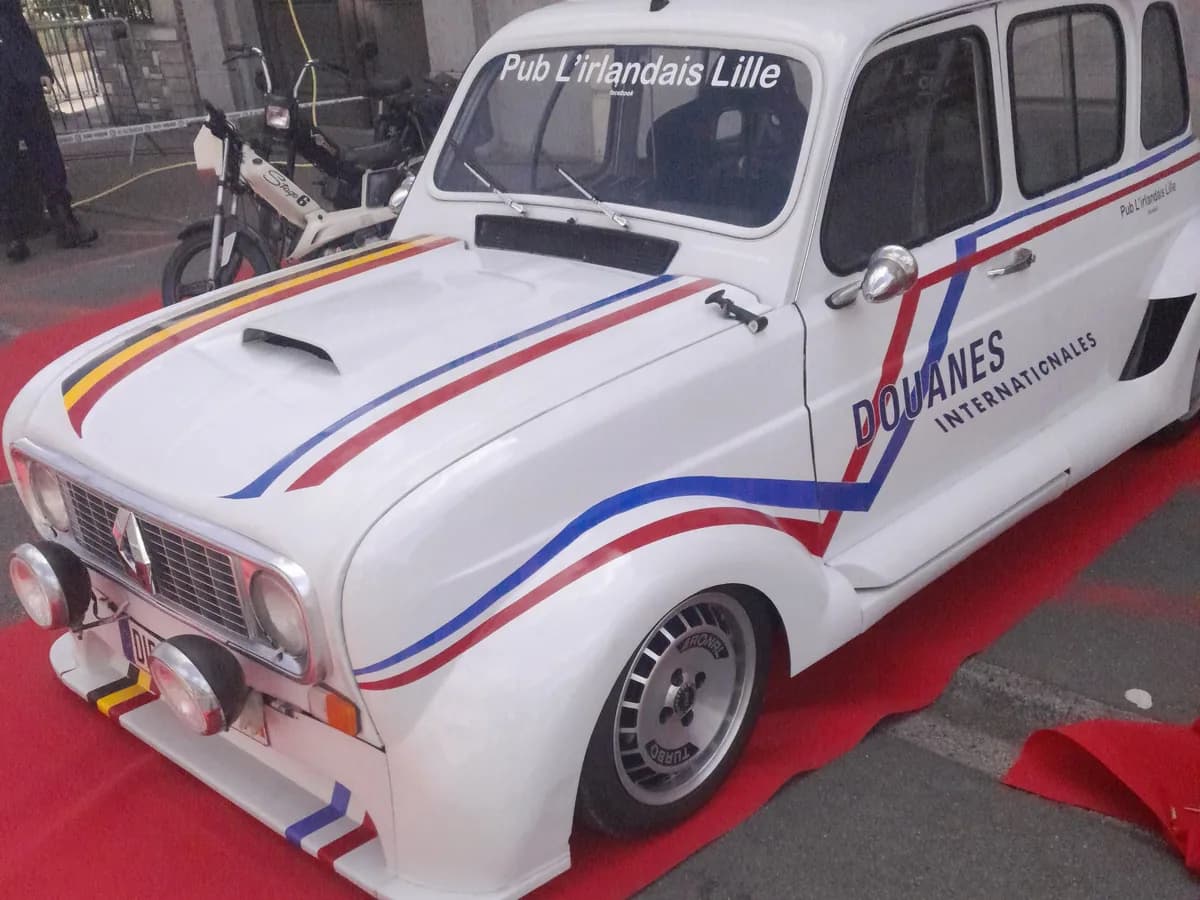
A classic Renault 4 is first identified by its simple two-box shape, four side doors and tall rear hatch. Its short bonnet, forward-set cabin and lack of a separate boot distinguish it from a conventional three-box saloon. Early examples can have very basic trim, while later cars received different bumpers, wheels, grilles and equipment. These details can help with an approximate date, although old Renault 4s are often modified and parts may have been exchanged during repairs. The F4 has a taller commercial rear body with side panels designed for loading. The F6 appears longer, with an extended wheelbase and rear structure. The Renault 4 E-Tech electric is easy to separate from the historic car: it uses a full-width illuminated grille surround, integrated round headlamps, a modern interpretation of the rear side glass and crossover-like proportions. Its battery architecture and contemporary bodywork identify the 2025 model; those features are not evidence of a restored classic R4 but of a completely new electric vehicle. (theoriginals.renault.com)
Important versions
The key versions are the hatchback passenger car, which formed the core family range, and the F4 and F6 panel vans, which extended the R4 into professional transport. Special editions including Parisienne, Safari, Sixties and Jogging show how Renault adapted the classic model’s image over time. In the modern era, the Renault 4 E-Tech electric, introduced from 2025, is the major revival of the name. At launch, Renault described two battery and power configurations: an urban version with a 40 kWh battery and 90 kW motor, and a longer-range version with a 52 kWh battery and 110 kW motor, depending on market and trim. These specifications belong to the electric model and should not be applied to the petrol-powered classic Renault 4. (theoriginals.renault.com)
The name “4” follows Renault naming, with its rules and its exceptions. Decode a Renault name
References
- Renault 4The Originals Renault Museum
- Renault 4 FourgonnetteThe Originals Renault Museum
- R4: A trailblazer for globalizationRenault Group
- The first images of Renault 4 E-Tech electric unveiledRenault Global Media
- Renault 4 E-Tech electric available to order with two battery rangesRenault Global Media
- https://www.user-manual.renault.com/en/content/renault-4-e-tech-electric/technical-specificationsuser-manual.renault.com
- https://media.renault.com/2024-business-results-for-renault-brand-global-growth-driven-by-winning-in-product-and-technology-choices/?lang=engmedia.renault.com
Frequently asked questions
- What years was the Renault 4 produced?
- ScanRacer's referenced versions cover 1961 - 2025.
- How many Renault 4 examples are documented on ScanRacer?
- 12 published scans from 11 members, with the latest photo added in September 2026.