
10
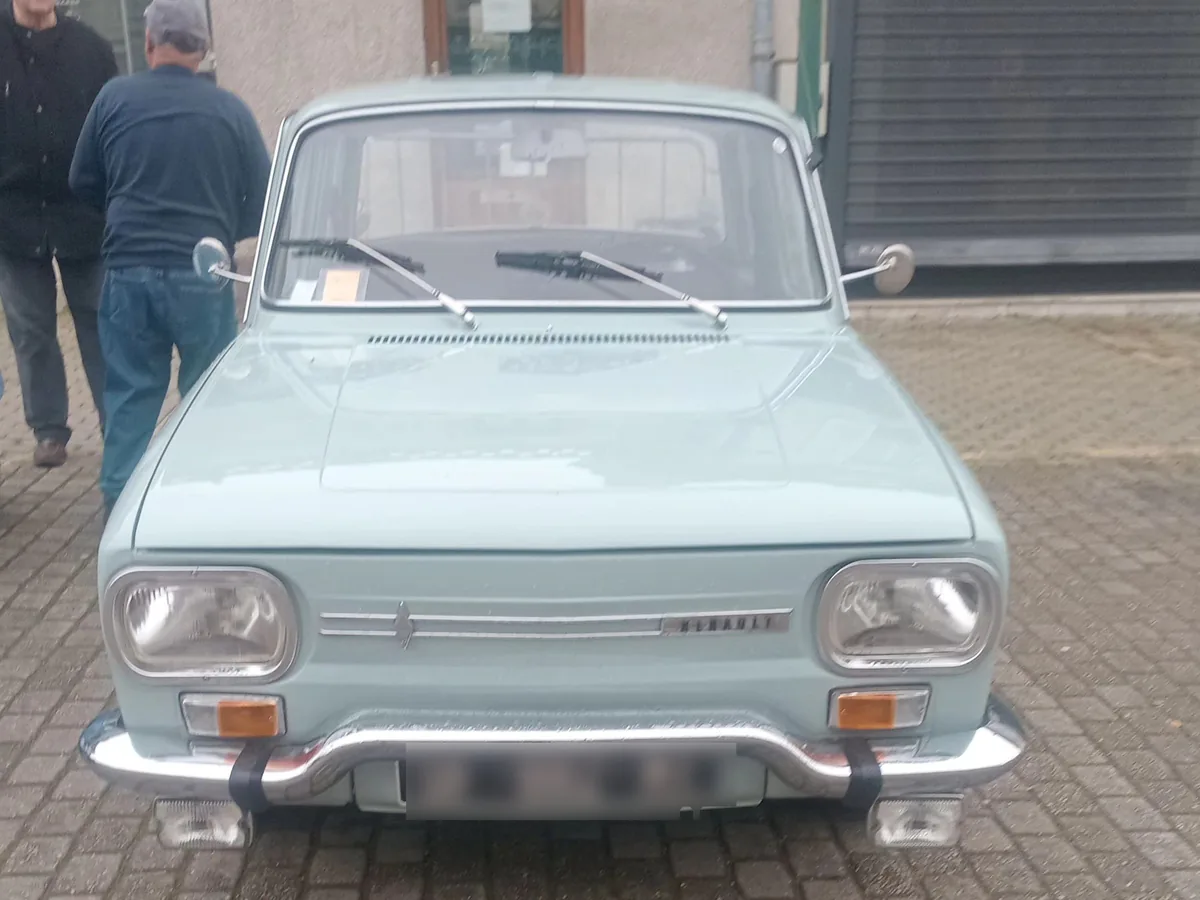
Introduced in 1965, the Renault 10 was a rear-engined, rear-wheel-drive sedan derived from the Renault 8. Renault lengthened the body at both ends while retaining the same wheelbase, creating more room for passengers and increasing the capacity of the front luggage compartment. Early cars used a longitudinal 1,108 cc four-cylinder engine mounted behind the rear axle and were equipped with disc brakes on all four wheels. The styling remained related to the Renault 8, but the longer overhangs and more carefully finished interior gave the 10 a more comfort-oriented character. A significant visual update arrived in 1967, bringing rectangular headlamps and revised rear styling. Cars from 1965 through 1967 therefore cover an especially useful identification period, from the original round-headlamp design to the first facelifted Renault 10.
Variants by year
1967
1965
Model summary
Data from the ScanRacer library, organized to compare versions quickly.
Model introduction
Introduced in 1965, the Renault 10 was a rear-engined, rear-wheel-drive sedan derived from the Renault 8. Renault lengthened the body at both ends while retaining the same wheelbase, creating more room for passengers and increasing the capacity of the front luggage compartment. Early cars used a longitudinal 1,108 cc four-cylinder engine mounted behind the rear axle and were equipped with disc brakes on all four wheels. The styling remained related to the Renault 8, but the longer overhangs and more carefully finished interior gave the 10 a more comfort-oriented character. A significant visual update arrived in 1967, bringing rectangular headlamps and revised rear styling. Cars from 1965 through 1967 therefore cover an especially useful identification period, from the original round-headlamp design to the first facelifted Renault 10.
History
The Renault 10 appeared in the autumn of 1965 as a roomier development of the Renault 8. Its mechanical layout remained typical of Renault’s small rear-engined cars: a longitudinal 1,108 cc inline-four was installed at the rear and drove the rear wheels. The central passenger cell stayed closely related to the Renault 8, while the front and rear overhangs were extended. This created additional luggage space and a modest improvement in interior room without changing the wheelbase. Renault also positioned the 10 as a more carefully finished and comfort-oriented car. Its cabin was presented in a more upmarket manner than that of ordinary Renault 8 versions, while four-wheel disc brakes remained an important technical feature for the class. Early cars were known as the Renault 10 Major in some markets, while export versions could use different commercial names. The 1967 model year brought a clear styling transition. On the updated European version, the original round headlamps gave way to rectangular units, and the position lamps, indicators, and rear treatment were revised. The Renault 10 continued in production after this period, but cars built between 1965 and 1967 offer a particularly clear view of the model’s development, from its original launch appearance to its first major visual update.
Generations
The Renault 10 does not have modern-style generations. For the cars covered here, it is more accurate to distinguish two successive designs. The first design belongs to the cars launched in 1965 and commonly associated with the Renault 10 Major name. It is identified by two round headlamps positioned on either side of the grille, early-style rear lamp clusters, and a body closely related to the Renault 8 but extended at both ends. The mechanical layout remained a rear-mounted 1,108 cc four-cylinder engine driving the rear wheels. Equipment and commercial names could differ between markets, so the badge alone should not be treated as definitive proof of specification. The second design appeared in 1967 as a body update. European cars received rectangular headlamps, with smaller position and indicator lamps arranged below them, while the rear styling was also revised. These changes were primarily a facelift rather than a new technical generation. Export cars could retain different lighting equipment to meet local regulations, which explains why headlamp shape is not an infallible dating tool on every surviving car. When identifying an example, the complete combination of lights, trim, dashboard, engine specification, and market equipment is more dependable than a seller’s stated model year alone.
Key differences
The most visible difference between 1965-1966 Renault 10s and the updated cars introduced in 1967 is the body styling. Early cars have round headlamps and a front treatment closely related to the Renault 8. The 1967 European version changed to rectangular headlamps, smaller position and indicator lamps mounted below them, and revised rear styling. The mechanical foundation remained largely unchanged: a rear-mounted 1,108 cc four-cylinder engine, rear-wheel drive, and the same wheelbase as the Renault 8. Equipment could vary according to the destination market, particularly lighting, instruments, and interior trim. For that reason, no single exterior detail should be treated as an absolute rule. A round-headlamp Renault 10 will usually predate the 1967 facelift, but an imported or restored car may carry components from another specification. Identification is strongest when the headlamps, rear lamps, trim, dashboard, and engine details are considered together.
Photo recognition
Start with the Renault 10’s architecture and proportions. It is a four-door sedan with a rear-mounted engine, a front luggage compartment, and a longer body than the Renault 8 while retaining a compact overall shape. The connection with the Renault 8 is clear in the passenger cell and general profile, but the Renault 10 has more pronounced front and rear overhangs. The earliest 1965 and 1966 cars are most easily recognized by their round headlamps. The version introduced during 1967 is marked by rectangular headlamps, smaller lamps positioned beneath them, and revised rear styling. Rear lamp clusters, side trim, dashboard design, and the identification plate can provide useful supporting evidence. Market of origin matters when dating a car. Export versions could use different lighting equipment, and restorations may combine parts from several production years. A reliable identification should therefore compare the chassis number and surviving documentation with the engine, body details, interior trim, and lighting arrangement. Headlamp shape is a useful first clue, but it should not be the only basis for assigning an exact year.
Important versions
Two designs are especially important for the 1965-1967 period. The Renault 10 Major launched in 1965 represents the original body style, with round headlamps and a 1,108 cc engine. It retained the Renault 8’s rear-engined layout while adding a longer body and a more carefully finished cabin. The updated Renault 10 introduced in 1967 brought rectangular headlamps to the European version and included several rear styling revisions. Commercial names and equipment could differ by country, particularly on export markets. It is therefore safer to describe these cars by their design or market specification rather than assuming that one universal trim name applies to every surviving Renault 10.
The name “10” follows Renault naming, with its rules and its exceptions. Decode a Renault name
References
- Renault 10FIA Historic Database
- Renault 10: Longer Car, Shorter StoryOld Motors
- Renault 10 Technical SpecificationsUnique Cars and Parts
- https://www.automobile-catalog.com/make/renault/10r/10/1965.htmlautomobile-catalog.com
- https://www.brochure-catalogue-voiture-neuve.fr/brochures/renault/10brochure-catalogue-voiture-neuve.fr
- https://www.hemmings.com/stories/vive-la-difference-1965-1971-renault-10/hemmings.com
Frequently asked questions
- What years was the Renault 10 produced?
- ScanRacer's referenced versions cover 1965 - 1967.
- How many Renault 10 examples are documented on ScanRacer?
- 1 published scan from 1 member, with the latest photo added in June 2026.