
404
Introduced in 1960, the Peugeot 404 was a Pininfarina-designed family saloon developed as the successor to the 403. Its clean flanks, slim pillars, generous glass area and small rear fins give it a distinctive appearance influenced by contemporary American styling. Peugeot soon expanded the range with estate, family, convertible, coupé and pickup bodies, making the 404 one of the company’s most versatile cars of the 1960s. It also represented an important technical step for Peugeot, with fuel-injected versions and a diesel engine aimed at drivers covering long distances. Strong, comfortable and well suited to international markets, the 404 remained in European production until 1975, while certain commercial derivatives continued to be built abroad for several more years. Its combination of conservative engineering, elegant design and proven durability explains its lasting reputation among classic Peugeot models.
What about the car you photographed?
Upload a photo to get a suggested make, model and likely year.
No account needed for the result · Publish only if you choose
Variants by year
Make: Peugeot · Model: 404
5 / 5 versions shown
1969
1963
1962

1960
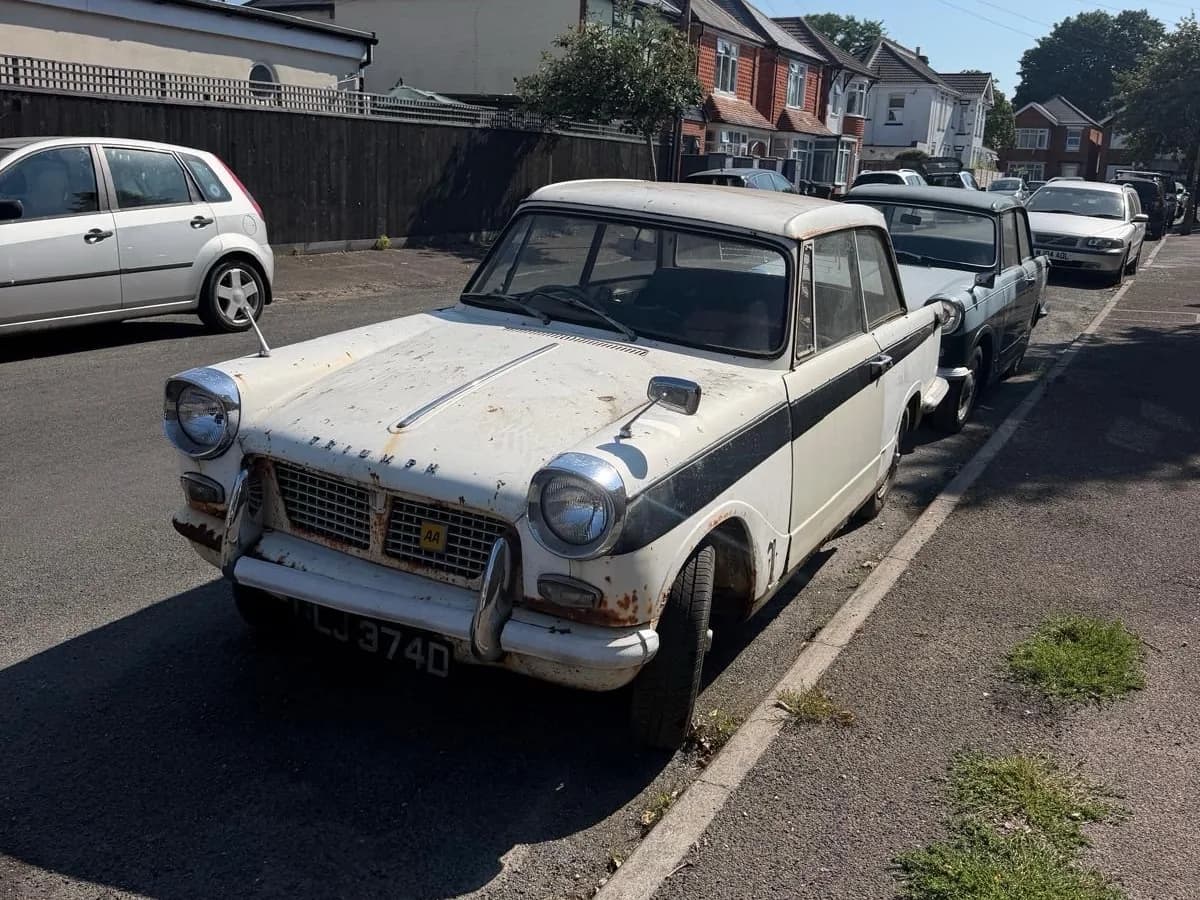
Peugeot 404 photos
Model summary
Data from the ScanRacer library, organized to compare versions quickly.
Model introduction
Introduced in 1960, the Peugeot 404 was a Pininfarina-designed family saloon developed as the successor to the 403. Its clean flanks, slim pillars, generous glass area and small rear fins give it a distinctive appearance influenced by contemporary American styling. Peugeot soon expanded the range with estate, family, convertible, coupé and pickup bodies, making the 404 one of the company’s most versatile cars of the 1960s. It also represented an important technical step for Peugeot, with fuel-injected versions and a diesel engine aimed at drivers covering long distances. Strong, comfortable and well suited to international markets, the 404 remained in European production until 1975, while certain commercial derivatives continued to be built abroad for several more years. Its combination of conservative engineering, elegant design and proven durability explains its lasting reputation among classic Peugeot models.
History
The Peugeot 404 was unveiled in 1960 as the successor to the 403. Peugeot aimed to modernise its family saloon while retaining the durable engineering approach that had served the company well. Pininfarina’s design brought a cleaner and more upright shape, a larger glass area, slim pillars and restrained rear fins. The car used a front-engine, rear-wheel-drive layout, with early versions fitted with a four-speed manual gearbox operated by a column-mounted shifter. Peugeot expanded the range quickly. Estate, Commerciale and Familiale bodies joined the saloon in the early 1960s, while the convertible was shown at the Paris Motor Show in October 1961 and the coupé followed in 1962. These two stylish cars used distinctive bodies closely associated with Pininfarina rather than simply being altered saloons. Peugeot also offered diesel engines and mechanically fuel-injected petrol engines, giving the 404 technical features that were unusual for a mass-market family car at the time. The model’s reputation grew through demanding road use and competition. Victories in the East African Safari Rally in 1963, 1966, 1967 and 1968 highlighted its strength and traction on difficult terrain. European passenger-car production ended in 1975, although pickups and other derivatives remained in production in several countries. Peugeot sources give total worldwide production at approximately 2.88 million vehicles.
Generations
The Peugeot 404 is not normally divided into formal generations in the modern sense. Its development is better understood as a series of production phases combined with an expanding body-style range. The first phase began in 1960 with the four-door saloon, a conventional family car using petrol power and rear-wheel drive. Trim levels and equipment changed over time, including updates to the dashboard, braking system and exterior details. The second phase brought a much wider family of derivatives. Estate, Commerciale and Familiale versions addressed the needs of luggage carrying, commercial work and passenger transport, with some configurations offering seating for up to seven people. The convertible, shown in 1961, and the coupé, introduced the following year, used lower and more elegant bodies developed with Pininfarina. Both were produced in far smaller numbers than the saloon and are now particularly distinctive within the 404 range. The later phase was defined by maturity and international use. The pickup became an important working vehicle for professional and rural markets, while diesel and fuel-injected versions broadened the model’s appeal. In Europe, Peugeot gradually shifted attention toward the newer 304 and 504, yet the 404 remained relevant because of its durability, straightforward mechanical layout and unusually broad choice of body styles. Production continued beyond the European passenger-car era in selected overseas markets.
Key differences
The main differences between Peugeot 404 versions concern body style and intended use. The saloon was designed around comfortable family transport for five occupants and retained the most traditional three-box shape. The estate used a longer roof and a tailgate, while the Familiale focused more directly on carrying passengers. The Commerciale was oriented toward practical load carrying. The convertible and coupé are easy to separate from the saloon because they have low two-door bodies, different proportions and a more elegant profile. They were not simply saloons with their roofs removed or shortened. The pickup used a cab-and-bed layout and was developed for commercial, agricultural and export-market work. Mechanical differences vary by year, market and trim level. The 404 was offered with carburetted petrol engines, mechanically fuel-injected petrol engines and diesel power. Brakes, lamps, grille designs, dashboards and interior controls also changed during the production run. As a result, a single engine or trim detail should not be used on its own to establish an exact model year. Chassis identification and comparison with period documentation are safer methods.
Photo recognition
To identify a Peugeot 404, begin with its upright three-box shape, slim windscreen pillars and small vertical rear fins. The grille carries the Peugeot lion, while the headlamps sit within a restrained front end whose details changed during production. The vertical rear lamps, positioned at the ends of the rear wings, are useful clues on saloons and related bodies. The saloon has four doors and a separate boot. The estate can be identified by its extended roof and tailgate. The Familiale follows the same basic outline but gives greater priority to passenger carrying. The convertible and coupé sit lower and have two-door bodies with noticeably different proportions; Pininfarina’s badge may be found on the sides of these cars. The pickup is immediately recognisable by its open rear bed. For a closer date estimate, inspect the grille, bumpers, lamps, wheel covers, dashboard and braking equipment. These details changed throughout the model’s career, and equipment could vary between markets. A reliable identification should therefore combine several visual clues with the chassis number and period Peugeot documentation rather than relying on one trim feature.
Important versions
The saloon formed the core of the range and appeared from 1960. Estate and Familiale versions addressed family transport, commercial work and passenger carrying through a longer body with a tailgate. The convertible, introduced in the early 1960s, and the coupé represent the most elegant and least common members of the 404 family; their distinctive bodies are closely associated with Pininfarina. The pickup, represented here by the 1969 model year, extended the vehicle’s working life and shows how Peugeot adapted the 404 for markets where simplicity and durability mattered more than prestige. Fuel-injected and diesel versions are also historically significant because they broadened the 404 beyond the conventional petrol saloon. Together, these derivatives explain why the 404 should be viewed as a complete model family rather than as a single four-door car.
The name “404” follows Peugeot naming, with its rules and its exceptions. Decode a Peugeot name
References
- The legendary Peugeot 404 celebrates its 50th anniversaryPEUGEOT / Stellantis Media
- Peugeot, 60 years of the 404L’Automobile ACI
- Peugeot 404 BerlinaToyota Automobile Museum
- https://www.autoencyclopedie.com/peugeot-404--1960-1979autoencyclopedie.com
- https://www.thesahb.com/peugeot-404/thesahb.com
- https://classics.honestjohn.co.uk/reviews/peugeot/404/classics.honestjohn.co.uk
- https://www.peugeot404vereniging.nl/documenten.phppeugeot404vereniging.nl
Frequently asked questions
- What years was the Peugeot 404 produced?
- ScanRacer's referenced versions cover 1960 - 1969.
- How many Peugeot 404 examples are documented on ScanRacer?
- 5 published scans from 4 members, with the latest photo added in September 2026.
What about the car you photographed?
Upload a photo to get a suggested make, model and likely year.
No account needed for the result · Publish only if you choose