
309
Introduced on October 17, 1985, the Peugeot 309 was a compact hatchback born from Project C28, originally developed as a replacement for the Talbot Horizon. It used a number of Peugeot 205 components, including a lengthened platform and shared body hardware, while adopting a taller rear section to create more passenger and luggage space. Its name was unusual within Peugeot’s range, sitting between the 305 and 405 rather than following the expected sequence. At launch, the 309 focused on a five-door body, petrol engines ranging from 1.1 to 1.9 liters, and practical family use. The 1985 reference therefore represents the early launch specification, before the range expanded with three-door, diesel, and GTI derivatives. It is best understood as the original, pre-facelift form of Peugeot’s compact family hatchback.
What about the car you photographed?
Upload a photo to get a suggested make, model and likely year.
No account needed for the result · Publish only if you choose
Variants by year
Make: Peugeot · Model: 309
1 / 1 versions shown
1985
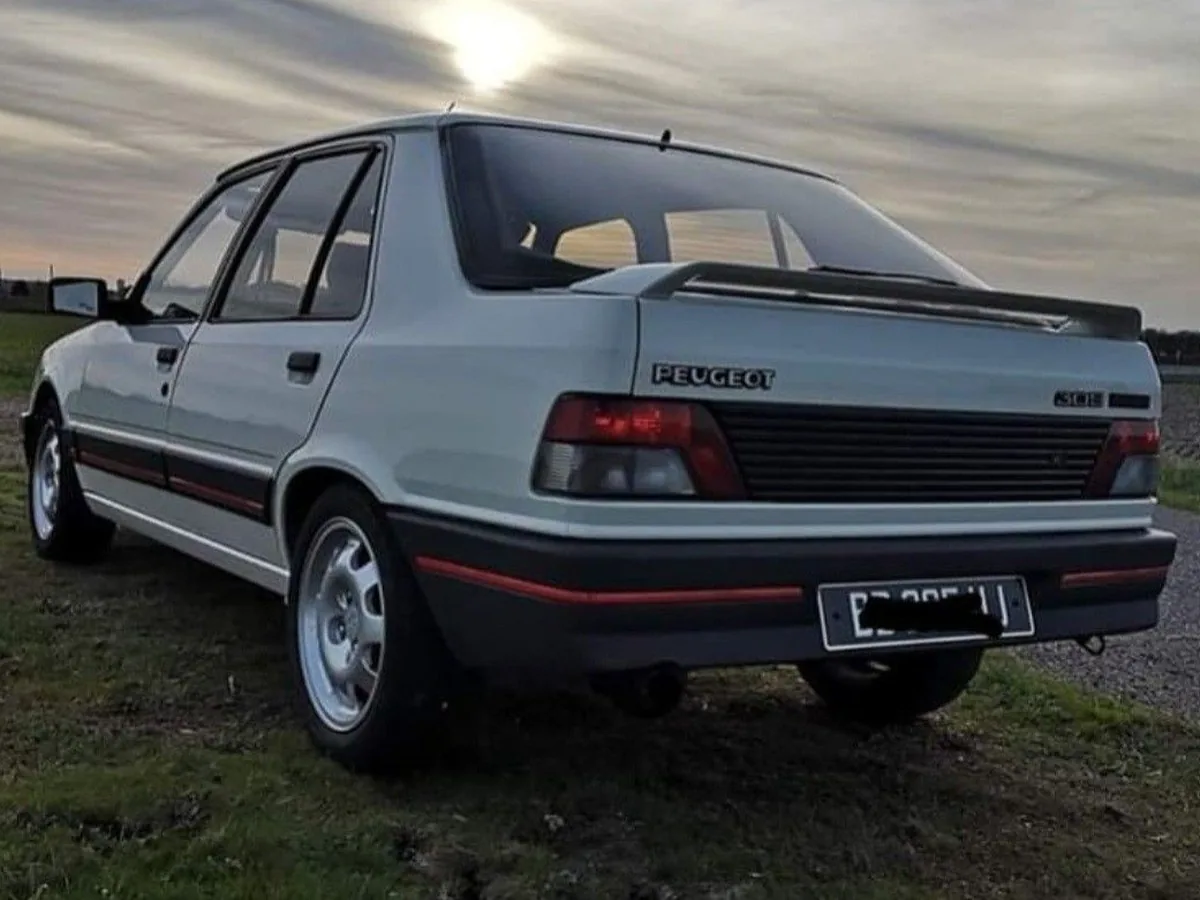
Peugeot 309 photos
Model summary
Data from the ScanRacer library, organized to compare versions quickly.
Model introduction
Introduced on October 17, 1985, the Peugeot 309 was a compact hatchback born from Project C28, originally developed as a replacement for the Talbot Horizon. It used a number of Peugeot 205 components, including a lengthened platform and shared body hardware, while adopting a taller rear section to create more passenger and luggage space. Its name was unusual within Peugeot’s range, sitting between the 305 and 405 rather than following the expected sequence. At launch, the 309 focused on a five-door body, petrol engines ranging from 1.1 to 1.9 liters, and practical family use. The 1985 reference therefore represents the early launch specification, before the range expanded with three-door, diesel, and GTI derivatives. It is best understood as the original, pre-facelift form of Peugeot’s compact family hatchback.
History
The Peugeot 309 emerged during a period of major restructuring within PSA. Project C28 had been developed through the former Chrysler Europe and Simca engineering organization as a successor to the Talbot Horizon. When PSA chose to concentrate its resources on Peugeot and the increasingly successful 205, the project was transferred to the Peugeot brand. The resulting car retained elements of its original background: some engines and transmissions came from the Simca family, while the platform and door shells were related to the 205, with a longer wheelbase. The 309 was presented in October 1985, with sales following in different markets soon afterward. Its initial range combined several trim levels with petrol engines from 1.1 to 1.9 liters. A naturally aspirated diesel arrived in 1986, followed by the three-door body and the 309 GTI in 1987. The GTI used the 1.9-liter fuel-injected four-cylinder associated with the 205 GTI, giving the 309 an unusual position among late-1980s performance hatchbacks. A substantial facelift arrived in autumn 1989. It revised the grille, rear lamps, tailgate, dashboard, and interior finish. The range later gained further engine and equipment changes, including the GTI 16. Production ended in 1993, after Peugeot reported more than 1.6 million cars built.
Generations
The Peugeot 309 was not officially divided into completely separate generations in the way many modern cars are. Automotive references nevertheless commonly identify two broad phases that are useful for recognition. Phase 1 covers the cars introduced in 1985 and built before the 1989 facelift. These models have the original front-end treatment, large wraparound rear lamps, and a tailgate with a relatively high loading sill. Their cabin uses a Talbot-influenced dashboard design, with a more angular appearance than the interiors of later Peugeot models. Early cars were primarily offered as five-door hatchbacks; the three-door body was added later, in 1987. Phase 2 arrived in autumn 1989. It brought a revised grille, rear lamps styled more closely to those of the 205 and 405, a redesigned tailgate with a lower loading edge, and a revised dashboard and steering wheel. The changes were not only cosmetic: newer engines, equipment updates, and additional derivatives were introduced progressively. The GTI 16, launched around 1990, became the sporting peak of the 309 range. A 1985 car should therefore be treated as a first-phase example, before the facelift and before the later engine and equipment revisions that changed the appearance and character of the model.
Key differences
The most important difference between a 1985 Peugeot 309 and later cars is its body phase and equipment level. Early cars have the original front end and rear lamps, together with a tailgate featuring a higher loading sill. Their dashboard is specific to the pre-facelift models and may appear simpler in finish. Exact engines and transmissions varied by market, but the launch range was centered on petrol power and the five-door body. From 1986 and 1987 onward, Peugeot added diesel power, a three-door body, automatic transmission, and the GTI. The 1989 facelift visibly changed the grille, rear lamps, tailgate, and interior. Engine options also evolved, with TU-family units gradually appearing on some versions. As a result, the name “309” alone does not identify a car’s specification. Accurate identification requires checking the model year, body style, trim, engine, and original market. A 1985 hatchback should not automatically be treated as equivalent to a later Phase 2 car or to one of the higher-performance GTI derivatives.
Photo recognition
A first-phase Peugeot 309 is most easily recognized by its distinctive rear end. The rear lamps are broad and wrap around the corners, while the tailgate has a relatively high loading edge. The body has a three-box-in-profile appearance, with a more pronounced rear section than the smaller 205. Early cars also use a simple, straight-edged front grille that differs from the later facelift design. The cabin provides another useful clue. Pre-1989 cars have an angular dashboard with a more visibly Talbot-influenced layout, while Phase 2 cars received a revised dashboard and steering wheel. For a car identified as a 1985 model, the five-door hatchback is the most consistent launch configuration because the three-door body arrived later. Caution is necessary with surviving examples, however. Replacement tailgates, lamps, dashboards, and trim pieces are common on cars several decades old. The vehicle identification plate, factory documentation, and market-specific equipment are more reliable than a single visual detail when confirming an exact version.
Important versions
The key specification for the 1985 entry is the launch-era 309 hatchback, primarily offered as a five-door car with petrol engines ranging from 1.1 to 1.9 liters depending on trim and market. The GL Profil was notable for its focus on aerodynamic efficiency and reduced fuel consumption. Later derivatives became especially important to the model’s reputation. The 309 GTI arrived in 1987 with the fuel-injected 1.9-liter engine associated with the 205 GTI. The 309 GTI 16 appeared around 1990 in selected markets, using the 1.9-liter 16-valve engine from the Peugeot 405 Mi16. Diesel models, including the GRDT turbodiesel, broadened the car’s practical family role. These later versions are historically significant, but they should not be confused with the 1985 Hatch reference, which represents the original launch configuration.
The name “309” follows Peugeot naming, with its rules and its exceptions. Decode a Peugeot name
References
- Ad ottobre i 40 anni di Peugeot 309Stellantis Media / Peugeot
- Peugeot 309 (1986–1994) used car reviewRAC Drive
- Peugeot 309 GTI 130 ch (1987–1993): oubliée mais redoutableCaradisiac
- Peugeot 309 GTIFIA Historic Database
- Track Test — Peugeot 309 GTI 16VMotor Sport Magazine
- https://www.automobile-catalog.com/make/peugeot/309/309/1985.htmlautomobile-catalog.com
- https://www.auto-data.net/en/peugeot-309-10c-10a-generation-1247auto-data.net
Frequently asked questions
- What years was the Peugeot 309 produced?
- ScanRacer's referenced versions cover 1985.
- How many Peugeot 309 examples are documented on ScanRacer?
- 3 published scans from 3 members, with the latest photo added in August 2026.
What about the car you photographed?
Upload a photo to get a suggested make, model and likely year.
No account needed for the result · Publish only if you choose