
206
Introduced in 1998, the Peugeot 206 was a versatile supermini that carried the spirit of the 205 into a new era with more expressive styling and a rapidly expanding range. Its identity comes from almond-shaped headlamps, a sloping bonnet and a strongly raked windscreen. The car began as a three- or five-door hatchback before spawning the 206 CC coupe-convertible, the 206 SW estate and sedan versions for selected markets. The 206 also became a major motorsport name through the 206 WRC, which won the World Rally Championship manufacturers’ and drivers’ titles from 2000 to 2002. Its story continued after the launch of the 207 through the 206+, a heavily updated version with a front end influenced by its successor. The recorded range includes the Hatch, CC Cabriolet, SW Wagon, SD Sedan and Escapade Wagon variants.
What about the car you photographed?
Upload a photo to get a suggested make, model and likely year.
No account needed for the result · Publish only if you choose
Variants by year
Make: Peugeot · Model: 206
6 / 6 versions shown
2009
2006
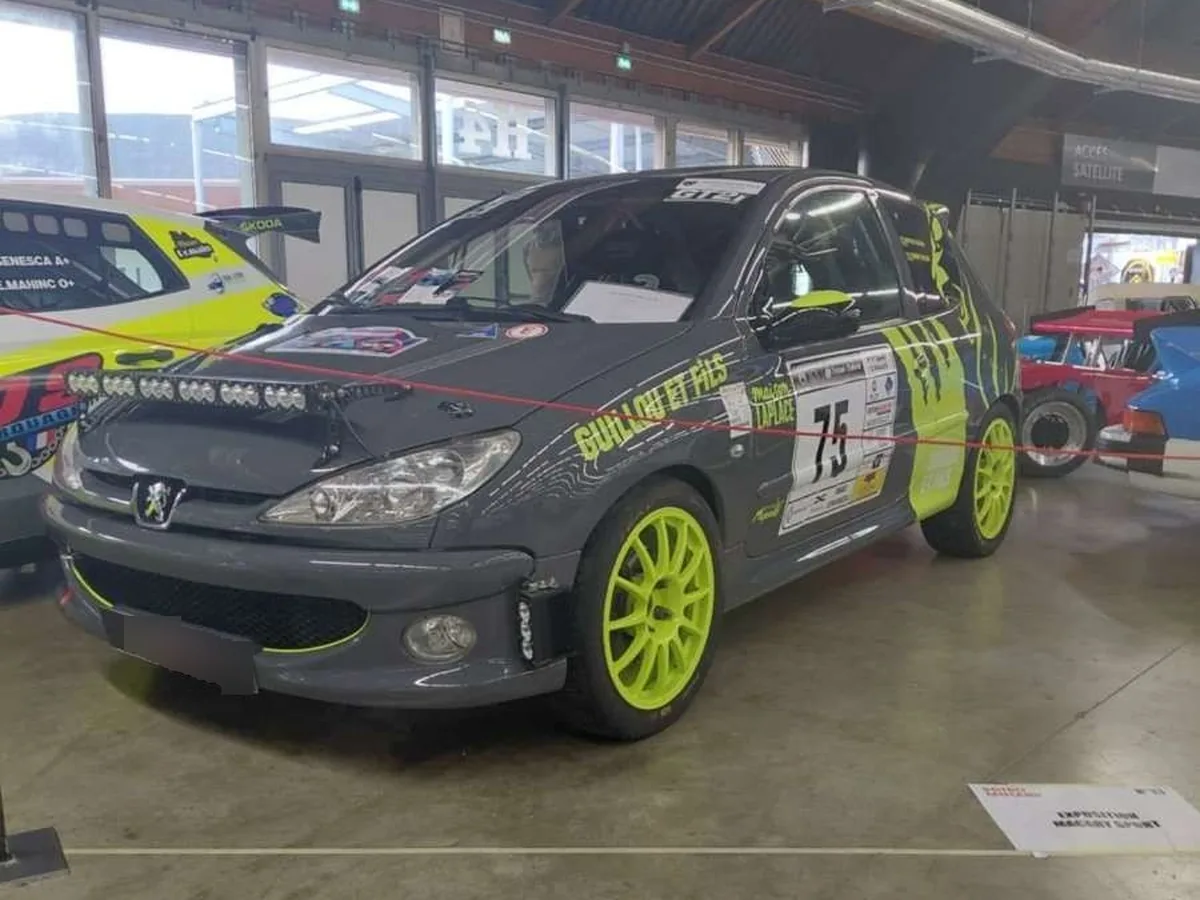
2002
2000
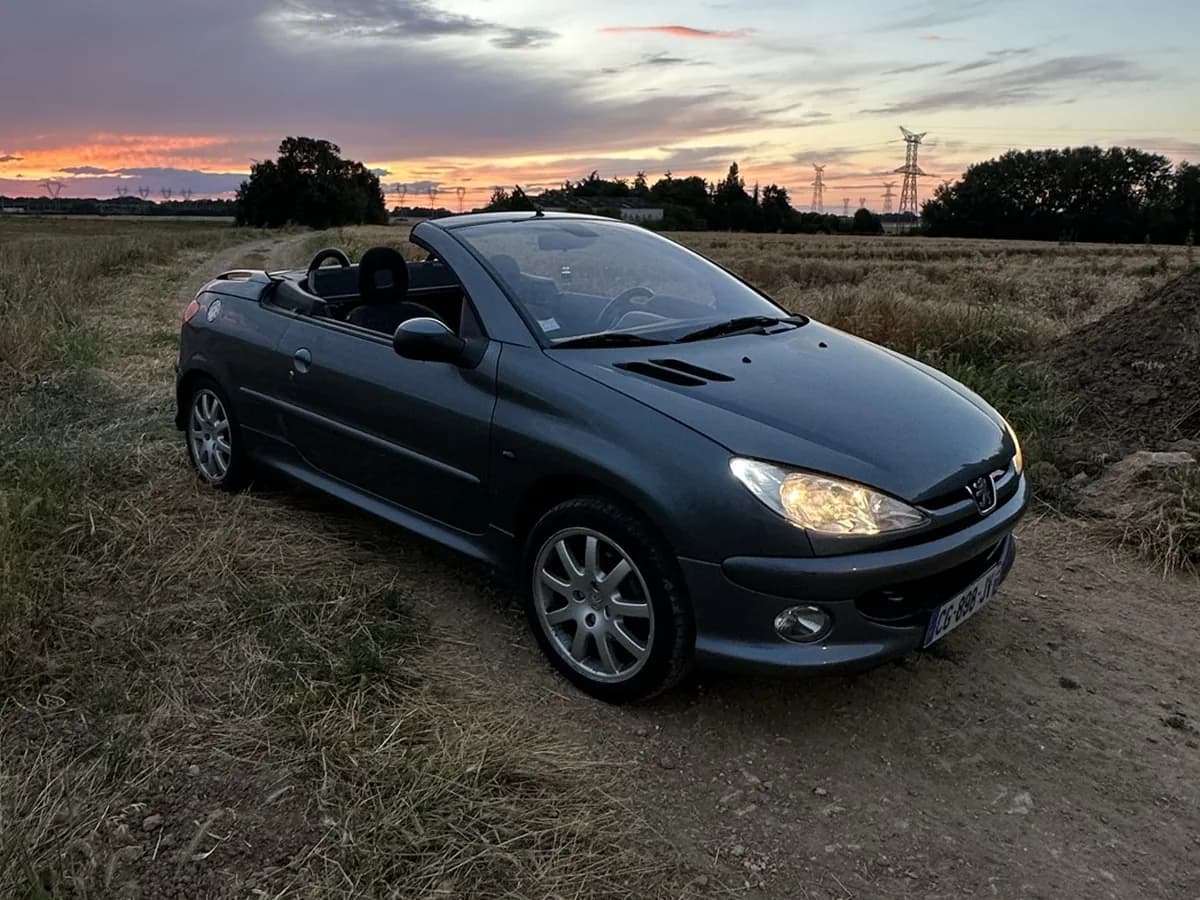
1998

Peugeot 206 photos
Model summary
Data from the ScanRacer library, organized to compare versions quickly.
Model introduction
Introduced in 1998, the Peugeot 206 was a versatile supermini that carried the spirit of the 205 into a new era with more expressive styling and a rapidly expanding range. Its identity comes from almond-shaped headlamps, a sloping bonnet and a strongly raked windscreen. The car began as a three- or five-door hatchback before spawning the 206 CC coupe-convertible, the 206 SW estate and sedan versions for selected markets. The 206 also became a major motorsport name through the 206 WRC, which won the World Rally Championship manufacturers’ and drivers’ titles from 2000 to 2002. Its story continued after the launch of the 207 through the 206+, a heavily updated version with a front end influenced by its successor. The recorded range includes the Hatch, CC Cabriolet, SW Wagon, SD Sedan and Escapade Wagon variants.
History
The Peugeot 206 appeared in September 1998 as the brand’s new supermini, at a time when the 205 remained a difficult commercial success to replace. Peugeot chose a clear visual break: the 206 used softer surfacing, stretched headlamps and a sharply inclined front end. The launch range consisted of three- and five-door hatchbacks, with petrol and diesel engines suited to the class. In 1999, the sporty S16 and the homologation-focused 206 GT added a more performance-oriented dimension to the line-up. The family expanded with the 206 CC, introduced in 2000. Its retractable steel roof allowed it to change from a coupe into a convertible, making it an unusual proposition in the supermini segment. The 206 SW estate followed in the early 2000s, while a four-door notchback sedan, known as the 206 Sedan or 206 SD depending on the market, targeted regions where a separate luggage compartment was preferred. The 206 WRC gave the model international sporting credibility by taking three consecutive World Rally Championship titles from 2000 to 2002. A restrained facelift arrived in 2003, and Peugeot kept the 206 in production alongside the 207 after the newer car launched in 2006. In 2009, the 206+ received a much more substantial exterior update, with styling influenced by the 207. Peugeot Argentina states that the 206 family exceeded seven million units produced, while Stellantis presents it as one of the most successful model lines in Peugeot history.
Generations
The 206 does not divide into formal generations as clearly as a 208 or 308. It is more accurate to describe several production phases and body styles. The first phase is the Hatch launched in 1998, offered with three or five doors. It can be identified by its almond-shaped headlamps, slatted grille and relatively simple bumper design. The S16, GT and RC performance versions all remained part of the same basic family, although they used dedicated engines, equipment and chassis tuning. The second phase began as Peugeot expanded the range. The 206 CC, introduced in 2000, used a distinct body and a retractable steel roof. The 206 SW estate arrived in the early 2000s, retaining the hatchback’s general architecture while extending the rear body to provide greater carrying capacity. The SD Sedan adopted a three-box profile and was aimed at markets where a separate boot was especially desirable. The Escapade Wagon added a more rugged-looking interpretation of the estate body in selected countries. The 2003 facelift represents an intermediate evolution: the headlamps, grille, selected rear-light details and parts of the interior were revised without changing the car’s fundamental structure. Finally, the 206+, launched in 2009, is best understood as a major continuation of the 206 rather than a completely new generation. It retained the principal underpinnings while adopting front-end and interior styling closer to the 207.
Key differences
The main differences between versions concern body style and intended use. The Hatch is the most compact and widespread form, offered with three or five doors. The SW adds a taller tailgate and a longer rear overhang, improving luggage capacity without completely changing the passenger compartment. The CC is distinguished by its token rear seats and retractable steel roof; on an older example, the roof mechanism, seals and body condition deserve particular attention. The SD Sedan has a separate boot and was not sold consistently across Europe. Its availability depends strongly on the market. The Escapade Wagon uses the estate body as a basis but adds a more rugged presentation, while equipment and engines can vary by country. Differences between model years also include engines, safety systems, trim levels and exterior details. The 2003 facelift was relatively restrained, whereas the 206+ received a much more obvious visual transformation. A model’s exact specification should therefore be checked against its market, build year and identification plate rather than inferred from the badge alone.
Photo recognition
A standard Peugeot 206 can be identified by its short proportions, sloping bonnet and almond-shaped headlamps. Early cars generally use a horizontal-slat grille, while side indicators are often orange on the oldest examples. After the 2003 facelift, the lamps became clearer, the grille adopted a honeycomb pattern and several trim details were modernised. The rear-light graphics also changed, even though the overall body shape remained familiar. The body style is the quickest way to separate the main versions. The Hatch has a compact tailgate and either two or four side doors. The SW is visibly longer, with a roofline extending into a squarer rear section. The CC has a distinctive windscreen, a dedicated roof profile and a retractable steel roof mechanism. The SD Sedan uses a separate boot and a three-box silhouette. The 206+ can be confused with the 207 at first glance: its enlarged front end, large lion emblem in the bumper and stretched headlamps are the clearest clues, while its general dimensions remain close to the original 206.
Important versions
The Hatch is the core of the range, with three- and five-door bodies available from 1998. The 206 CC Cabriolet, introduced in 2000, is the most distinctive derivative because of its retractable steel roof. The SW Wagon, added in the early 2000s, targets drivers wanting more versatility and luggage space. The SD Sedan uses a separate boot and was mainly associated with selected international markets. The Escapade Wagon gives the estate a more adventurous presentation and remains strongly market-dependent. Among the sporting versions, the S16, GT and RC hold a special place in the model’s history. The RC, introduced from 2003, represents the most performance-focused European road version of the family. The 206 WRC should not be mistaken for an ordinary trim level: it was a dedicated rally programme that helped establish the 206 as an internationally recognised Peugeot. Exact equipment, engine choices and production dates can differ by country, so badges alone are not sufficient to identify every specification.
The name “206” follows Peugeot naming, with its rules and its exceptions. Decode a Peugeot name
References
- Peugeot 206 schreibt GeschichteStellantis Media
- Assistance and first aid - 206Peugeot Servicebox
- Avant/après : tout savoir sur les restylages de la Peugeot 206Caradisiac
- La Peugeot 206 en occasion : les meilleures et les pires versionsCaradisiac
- 206 CCStellantis Media
- https://public.servicebox.peugeot.com/AP/secours/AP/documents/PDF_FAD/FAD_206_1PT1_en_GB.pdfpublic.servicebox.peugeot.com
Technical specifications
Structured data available for versions linked to this model.
| Version | Power | Torque | Top speed | Drivetrain | Fuel |
|---|---|---|---|---|---|
| Base | 80 KW @ 4000 RPM109 HP @ 4000 RPM107 BHP @ 4000 RPM | 177 lb-ft @ 1750 RPM240 Nm @ 1750 RPM | 118.1 mph (190 km/h) | Front Wheel Drive / 5-speed manual | Diesel |
Frequently asked questions
- What years was the Peugeot 206 produced?
- ScanRacer's referenced versions cover 1998 - 2009.
- How many Peugeot 206 examples are documented on ScanRacer?
- 3 published scans from 3 members, with the latest photo added in August 2026.
- What is the power output of the Peugeot 206?
- The sourced technical data lists 80 KW @ 4000 RPM109 HP @ 4000 RPM107 BHP @ 4000 RPM.
What about the car you photographed?
Upload a photo to get a suggested make, model and likely year.
No account needed for the result · Publish only if you choose