
Pagani
Pagani presented its first car, the Zonda C12, at the 1999 Geneva Motor Show. Based in San Cesario sul Panaro near Modena, the manufacturer built its identity around small production runs, advanced composite materials, and a design philosophy that treats styling and engineering as closely connected disciplines. The Zonda was followed by the Huayra in 2011, then by the Utopia, unveiled in 2022 for production from 2023. The four families represented here cover the Zonda, Huayra, Huayra Roadster, and Utopia, with variants recorded from 1999 through 2023. Together, they trace Pagani’s progression from a new Modenese supercar maker to an established hypercar specialist. (pagani.com)
Models from A to Z
Pagani overview
Pagani history
Pagani’s history is inseparable from Horacio Pagani, the Argentine-born designer who moved to Italy’s Motor Valley in 1983. After working with composite materials at Lamborghini and establishing Modena Design, he founded Pagani Automobili in San Cesario sul Panaro in 1998. The C8 project became the Zonda C12, unveiled in Geneva on March 9, 1999. Its carbon-fiber monocoque and centrally mounted Mercedes-Benz AMG V12 immediately gave the company a clear technical direction. (pagani.com) The Zonda then developed through a series of road-going and track-focused versions. In 2003, Pagani began work on the Huayra, internally known as project C9. After eight years of development, it replaced the Zonda in 2011 with a new carbo-titanium monocoque, a Mercedes-AMG V12 built specifically for Pagani, and active aerodynamics. The Huayra Roadster followed in 2017, while the Utopia began a third chapter in 2022. It retained a non-hybrid V12 and offered, among its transmission choices, a seven-speed manual gearbox. (pagani.com)
Pagani positioning
Pagani operates at the most exclusive end of the high-performance car market, but its approach is not based solely on acceleration figures or peak output. The company emphasizes limited production, construction at its atelier in San Cesario sul Panaro, and extensive personalization of individual cars. Across its model lines, Pagani has combined Mercedes-AMG V12 engines with structures using carbon fiber, carbo-titanium, or carbo-triax materials. (pagani.com) Design is another defining characteristic. Central exhaust outlets, exposed mechanical details, machined metal components, and highly elaborate cabins make the Zonda, Huayra, and Utopia recognizable at a glance. It is fair to describe Pagani as a hypercar manufacturer combining craftsmanship, materials research, and Renaissance-inspired design, although the engineering is more than decorative. The same philosophy extends to structural rigidity, weight reduction, aerodynamic development, and driver control. (italia.it)
Recognizing a Pagani in a photo
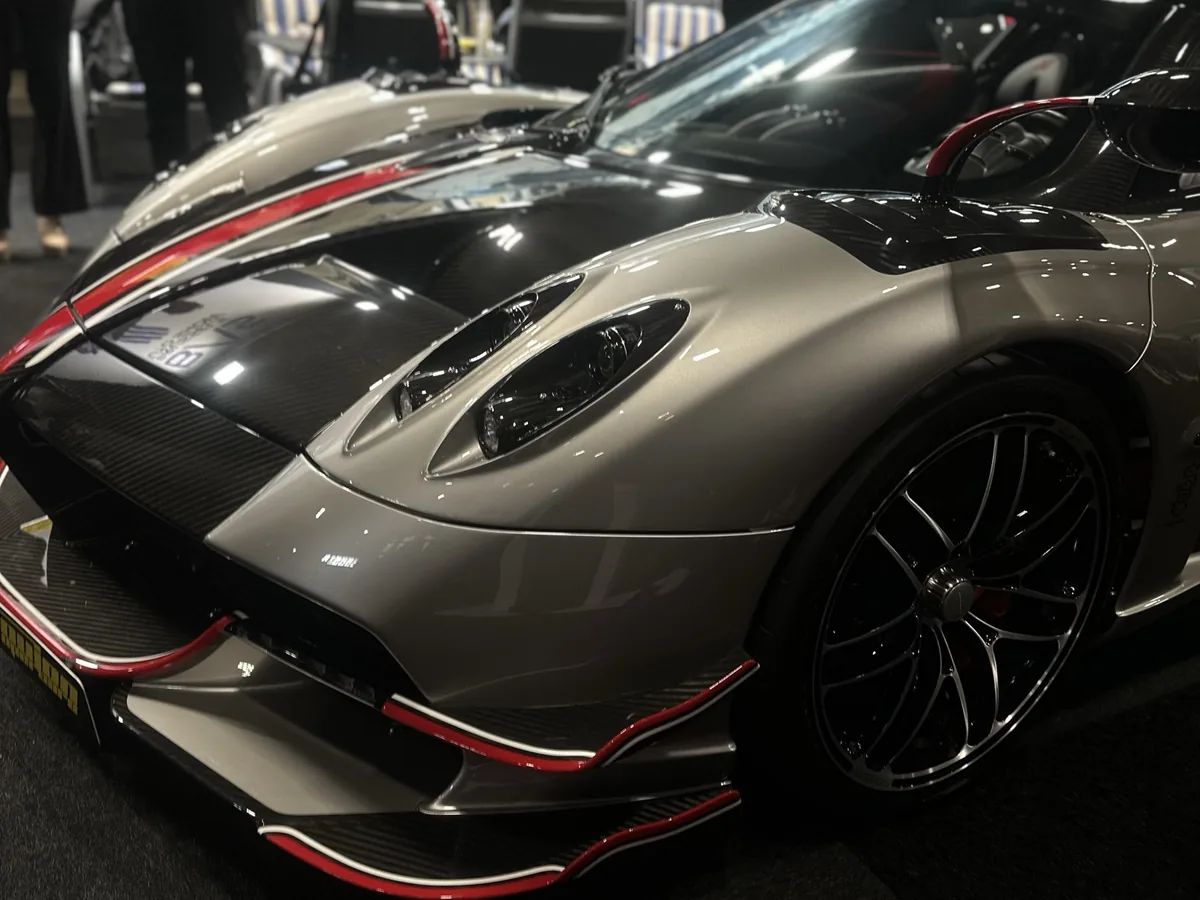
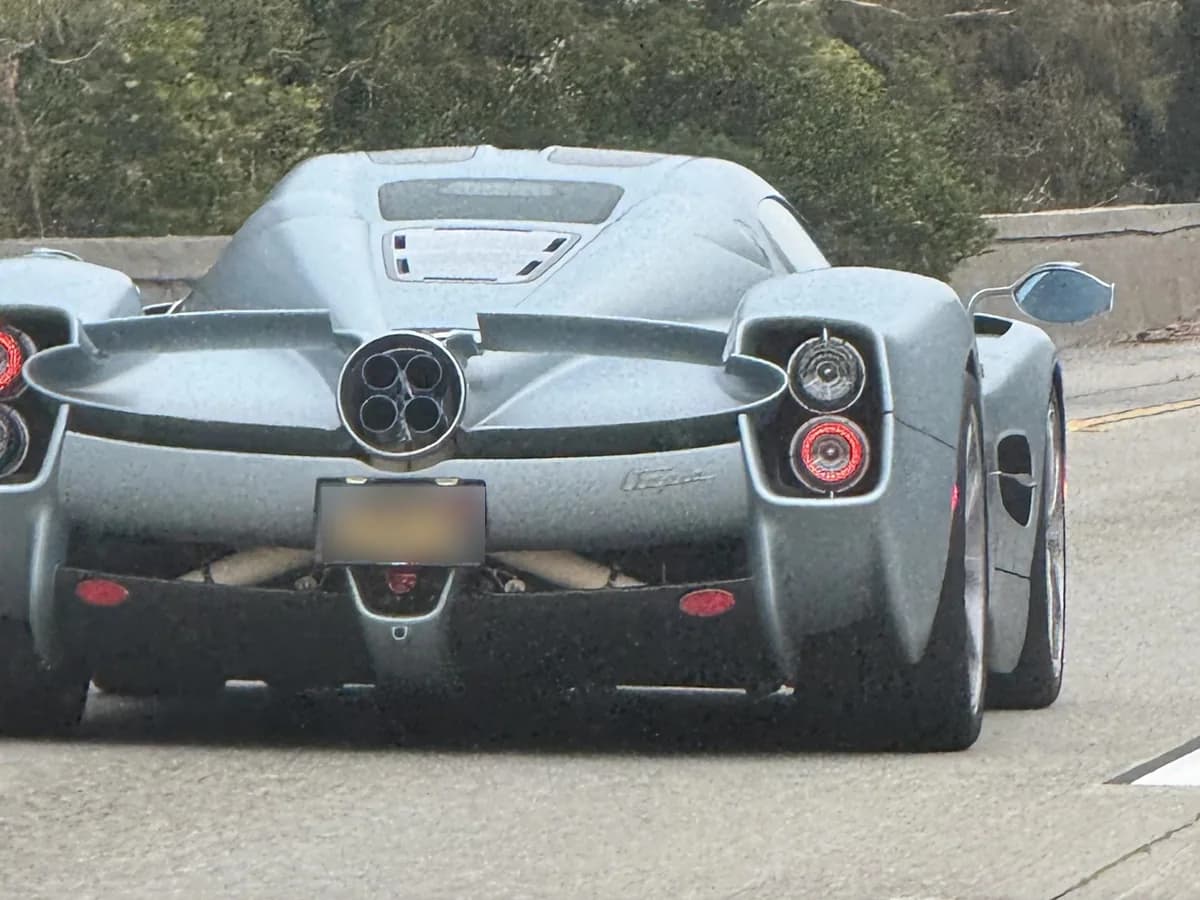
To identify a Pagani, start at the rear: four exhaust outlets are grouped in the center within a circular or elliptical surround, a feature strongly associated with the Zonda and Huayra. The bodywork is usually highly sculpted, with a forward-set cabin, pronounced fenders, and numerous exposed carbon components. Slim mirrors, intricate lighting units, and visible machined-metal details add to the marque’s visual identity. The Zonda generally has a rounder profile, a deeply curved windshield, and its distinctive central exhaust layout. The Huayra adds visible active aerodynamic flaps on the front and rear bodywork. The Huayra Roadster uses the same design language with an open cabin and heavily exposed side surfaces. The Utopia is more restrained in appearance, with rounder headlamp elements and central exhausts, while its cabin places greater emphasis on analog-style instruments. These clues should be treated as guides rather than absolute rules, because Pagani’s one-off and highly personalized cars can look substantially different from standard versions. (pagani.com)
Important Pagani models
The Zonda is Pagani’s founding model. Unveiled in 1999, the C12 established the company’s core technical and design language. Later versions, including the S, F, Cinque, and R, show how the family expanded into more powerful road cars and track-oriented creations. (pagani.com) The Huayra replaced the Zonda in 2011 with an entirely new design. Its twin-turbo V12, carbo-titanium monocoque, and active aerodynamic flaps made it the company’s second major chapter. The Huayra Roadster deserves particular attention: introduced in 2017, it was presented as lighter than the coupé, achieved through extensive revisions to the structure and composite materials. (pagani.com) The Utopia is the newest family represented in the supplied catalogue. Revealed in 2022 and recorded from 2023, it retains a twin-turbo V12 without hybrid assistance and offers either a seven-speed manual or automated transmission. (pagani.com)
References
- HistoryPagani Automobili
- Zonda C12Pagani Automobili
- Pagani HuayraPagani Automobili
- Pagani Huayra RoadsterPagani Automobili
- 2017: Huayra RoadsterPagani Automobili
- Pagani UtopiaPagani Automobili
- Utopia: Pagani, Act IIIPagani Automobili
- Museo Horacio PaganiItalia.it