
Zonda
Unveiled on March 9, 1999, at the Geneva Motor Show, the Pagani Zonda C12 was Pagani Automobili’s first production car. Its mid-mounted V12, carbon-fibre central structure and Mercedes-AMG powertrain established the technical and visual foundations of the Zonda family. Over time, the name covered coupes, roadsters and derivatives developed specifically for track use. The F, Cinque, R and 760 versions represent different stages of the project: improved road performance, more advanced aerodynamics, uncompromised circuit capability and highly individual customer commissions. Production remained highly specialised, with each car capable of receiving distinctive materials, colours and trim details. The recorded designations range from the 1999 C12 to the 760-series and bespoke examples associated with the final years of the model’s development, including cars listed for 2017.
Variants by year
2017
2015
 L
L2012
2010
2009
2008
2005
1999
Model summary
Data from the ScanRacer library, organized to compare versions quickly.
Model introduction
Unveiled on March 9, 1999, at the Geneva Motor Show, the Pagani Zonda C12 was Pagani Automobili’s first production car. Its mid-mounted V12, carbon-fibre central structure and Mercedes-AMG powertrain established the technical and visual foundations of the Zonda family. Over time, the name covered coupes, roadsters and derivatives developed specifically for track use. The F, Cinque, R and 760 versions represent different stages of the project: improved road performance, more advanced aerodynamics, uncompromised circuit capability and highly individual customer commissions. Production remained highly specialised, with each car capable of receiving distinctive materials, colours and trim details. The recorded designations range from the 1999 C12 to the 760-series and bespoke examples associated with the final years of the model’s development, including cars listed for 2017.
History
The Zonda project grew from Horacio Pagani’s work with composite materials and high-performance cars. The earliest prototype was known as the Fangio F1, a tribute to the Argentinian racing driver Juan Manuel Fangio. After Fangio’s death in 1995, the project was renamed Zonda, referring to a characteristic wind from Argentina. The C12 was unveiled in Geneva in 1999, using a Mercedes-Benz V12 prepared by AMG and a carbon-based central structure. Pagani continued to develop the car while retaining its core architecture. Introduced in 2005, the Zonda F was named after Fangio and used a 7.3-litre AMG engine rated at up to 650 hp depending on specification. The 2009 Cinque, limited to five coupes, transferred several ideas from the Zonda R into a road-legal car. The Zonda R followed a different brief: it was developed exclusively for track use and limited to 15 examples. Later, the 760 family brought together special commissions and individually developed cars rather than a conventional high-volume series. Pagani states that 140 road-going Zondas were built, with each car tailored to its customer.
Generations
The Zonda does not have formal generations in the conventional mass-market sense. It is better understood as a sequence of technical and stylistic phases. The first phase comprises the C12 and C12 S, establishing the forward-set cabin, central exhaust outlets and Mercedes-AMG V12 layout. The F phase, introduced in 2005, brought more developed structure and aerodynamics, together with a 7.3-litre AMG engine. The coupe and Roadster F followed the same philosophy, although the open car received dedicated reinforcement to maintain structural rigidity. The next phase split into two distinct interpretations. The Cinque was an exceptionally limited road car influenced by the engineering work carried out for the R, while the Zonda R was designed as a track-only machine. Its carbon-titanium chassis, sequential transmission and adjustable aerodynamic package set it apart from the road cars. The later 760 cars and other special commissions do not form one uniform generation. Instead, they represent a final period of customer-led development, with power, bodywork and equipment varying between individual chassis. Names such as 760, 760LH, AB, HH, Uno, Viola and Fantasma Evo should therefore be treated as individual specifications or commissions rather than standard trim levels.
Key differences
The main differences concern intended use, engine specification, structure and aerodynamics. The C12 represents the original Zonda concept, while the F is a more developed and powerful road car, using a 7.3-litre AMG V12 rated by Pagani at up to 650 hp. The Cinque remains road legal but incorporates ideas from the R programme, including a carbon-titanium structure and more aggressive aerodynamic treatment. The R belongs to a different category altogether: its 6.0-litre AMG V12 produces 750 hp, the engine contributes to the chassis structure and the sequential gearbox is designed for circuit use. The 760 name does not describe one single technical specification. It generally identifies a group of special commissions whose bodywork, output and equipment can vary from one chassis to another. Figures quoted for the R or Cinque should therefore not be automatically applied to every Zonda carrying a related or personalised designation.
Photo recognition
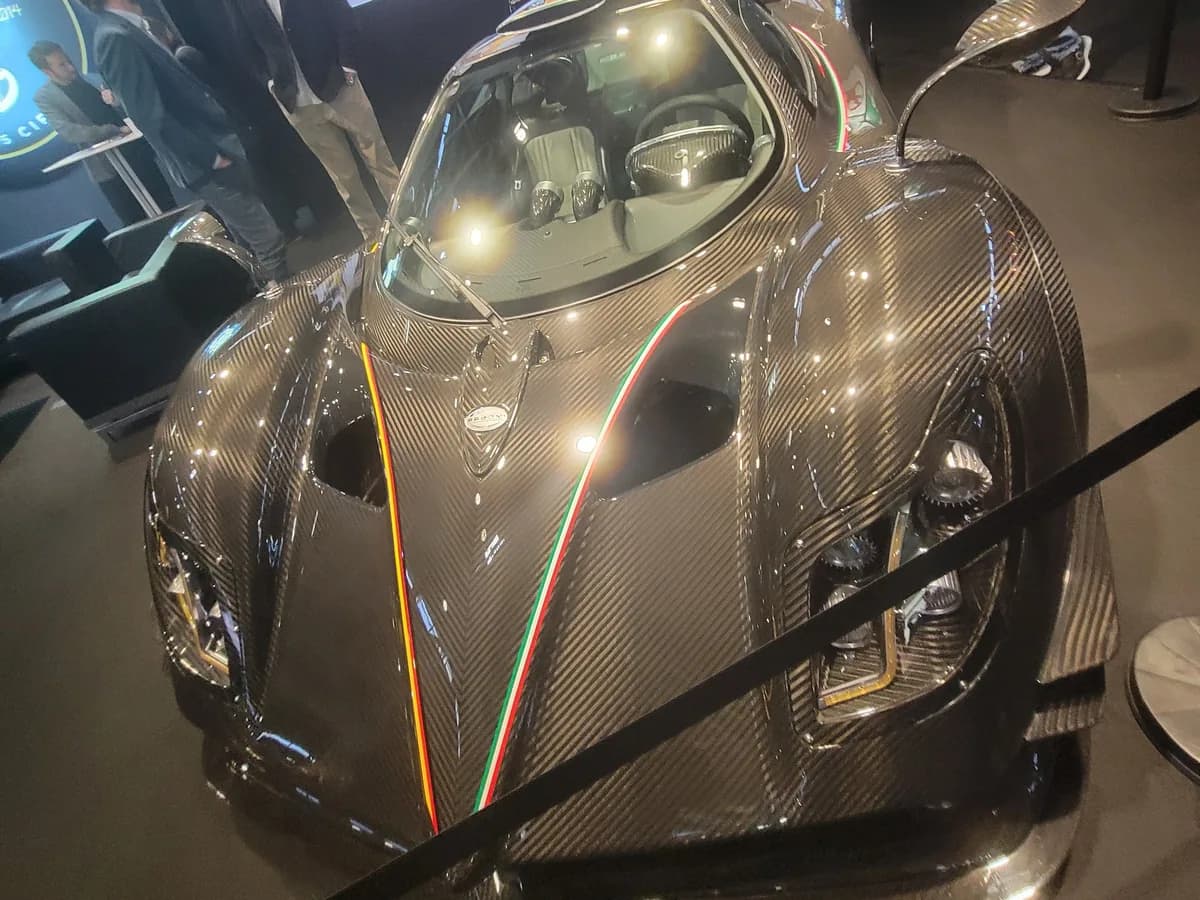
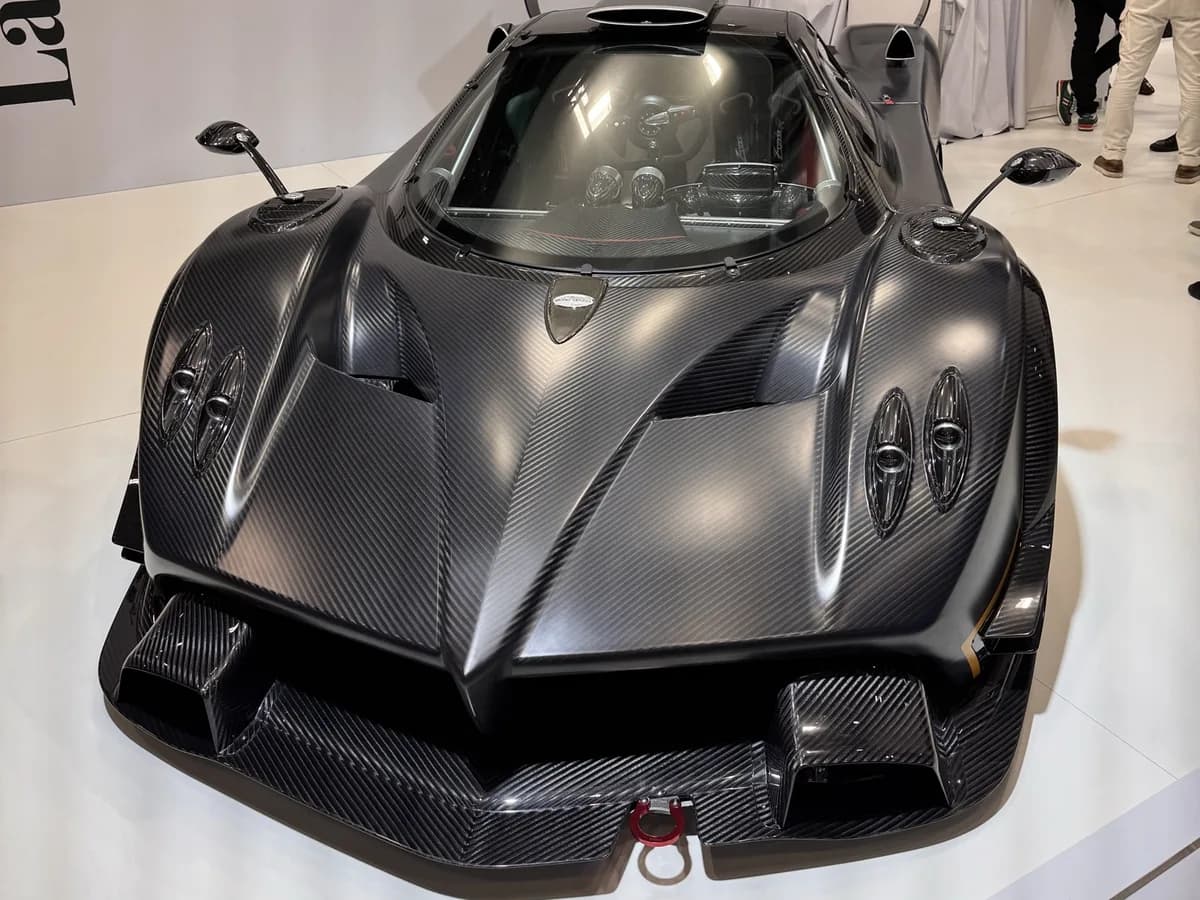
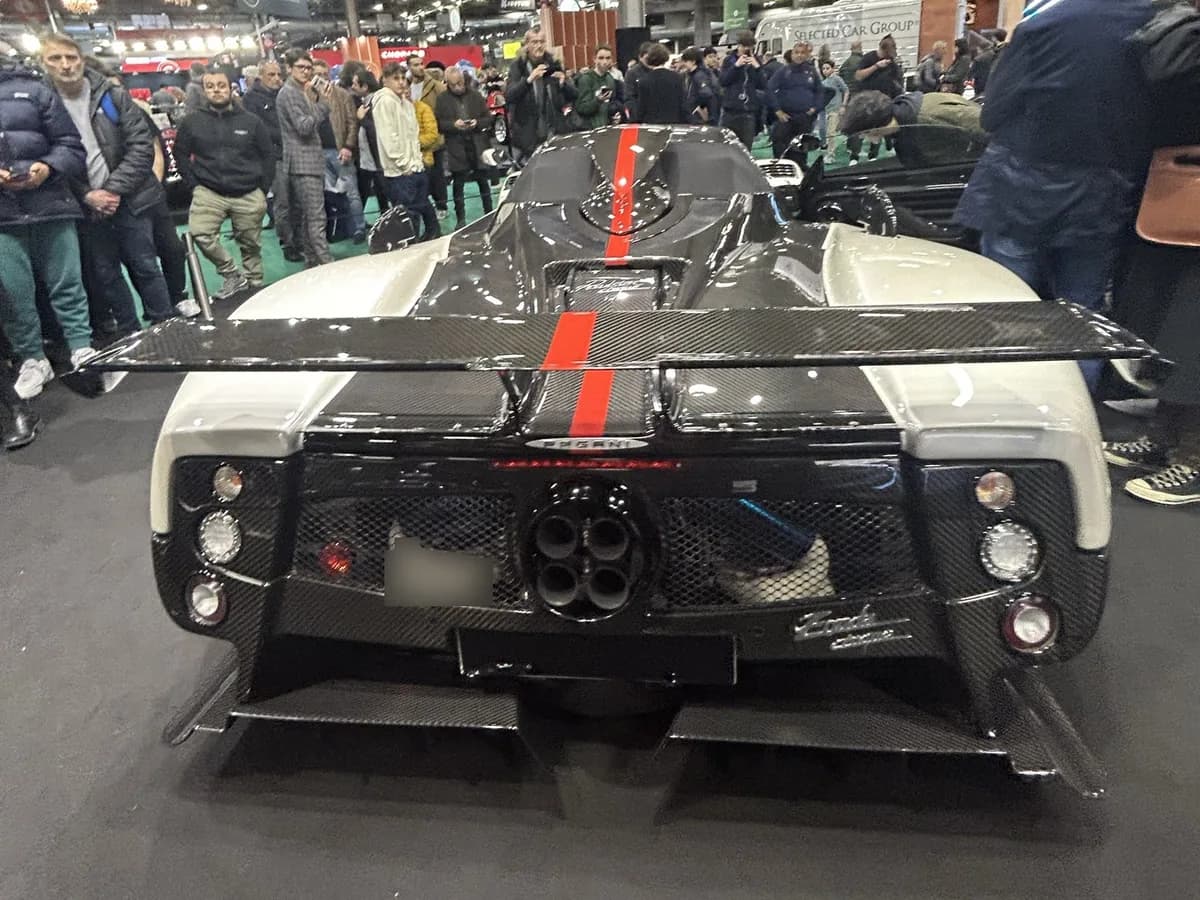
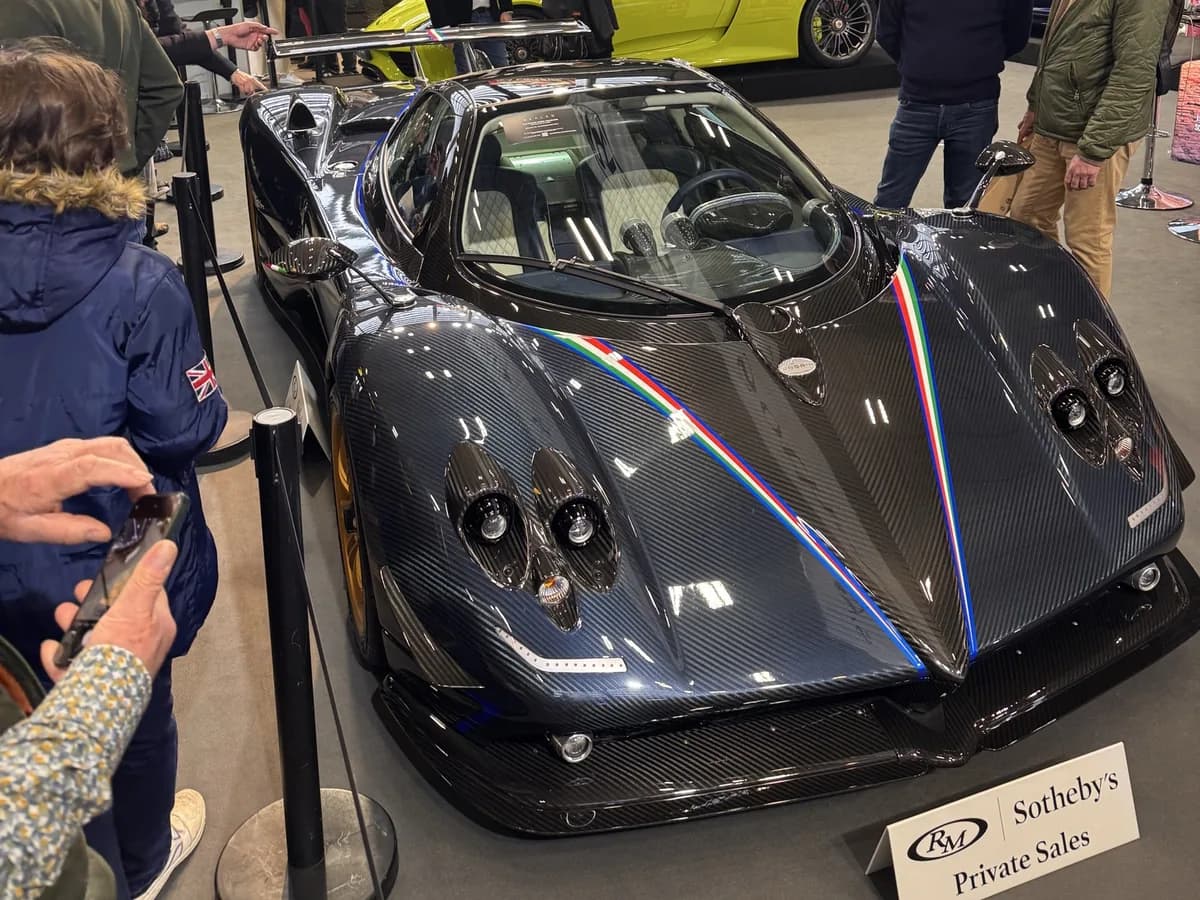
A Zonda is first identified by its extremely low shape, forward-set cabin and four central exhaust outlets at the rear. Round rear lamps, slim mirrors and extensive carbon-fibre bodywork are also typical, although details can change with the year and the customer specification. The C12 has the earliest interpretation of the design and generally appears less aerodynamically elaborate. The F normally adds a more developed nose, additional aerodynamic detailing and distinctive wheel designs. The Cinque is more dramatic, with larger aerodynamic appendages, a roof-mounted air intake and highly individual colour schemes. The R is the easiest derivative to distinguish from the road cars: it has a wider body, large rear wing, prominent diffuser, roof intake and a stripped interior with a roll cage and racing harnesses. The 760 cars require more caution. Their appearance may combine elements from several Zonda versions, so reliable identification depends on the chassis number, build documentation and records of later factory or specialist conversions.
Important versions
The 1999 C12 is the founding version and the key reference for understanding the original Zonda design. Introduced from 2005, the F combined a tribute to Juan Manuel Fangio with major development of the chassis, aerodynamics and AMG V12. The 2008-2009 Cinque is one of the rarest road-going versions, with five coupes stated by Pagani. The R was developed for track use and limited to 15 examples, making it a technical departure from the road-legal cars. Later designations include 760, 760LH, AB, HH, Uno, Viola, Fantasma Evo and Oliver Evolution. These names refer to highly individual cars and commissions; they should not be read as a regular trim hierarchy comparable with the model ranges of a mainstream manufacturer.
References
- Pagani Automobili celebrates the 20th anniversary of the ZondaPagani Automobili
- Pagani Zonda FPagani Automobili
- Pagani Zonda RPagani Automobili
- https://www.carcollectorinternational.com/research/buyers-guides/pagani/zondacarcollectorinternational.com
- https://supercarnostalgia.com/blog/pagani-zonda-cinquesupercarnostalgia.com
- https://www.pagani.com/news/pagani-zonda-revolucion-at-the-9-pagani-gathering/pagani.com
- https://www.autozine.org/Archive/Pagani/old/Zonda_C12.htmlautozine.org
Frequently asked questions
- What years was the Pagani Zonda produced?
- ScanRacer's referenced versions cover 1999 - 2017.
- How many Pagani Zonda examples are documented on ScanRacer?
- 7 published scans from 5 members, with the latest photo added in September 2026.