
Eclipse
Introduced in the United States in 1989 for the 1990 model year, the Mitsubishi Eclipse was a compact sports coupe created through the Mitsubishi-Chrysler partnership. Built in Normal, Illinois, it shared its basic architecture with the Plymouth Laser and Eagle Talon. The nameplate went through four generations: early Eclipses built their reputation around turbocharged four-cylinder engines and, on selected versions, all-wheel drive, while later cars placed greater emphasis on comfort, styling and naturally aspirated power. The Spyder convertible joined the range in 1996, adding a four-seat open-body option. Within the model years covered by the library, the Eclipse therefore moved from a technically focused compact coupe to a more expressive grand-touring-style sports car, particularly in 2006 and 2007, when the range included a 3.8-liter V6.
What about the car you photographed?
Upload a photo to get a suggested make, model and likely year.
No account needed for the result · Publish only if you choose
Variants by year
Make: Mitsubishi · Model: Eclipse
7 / 7 versions shown
2007
2005
1999
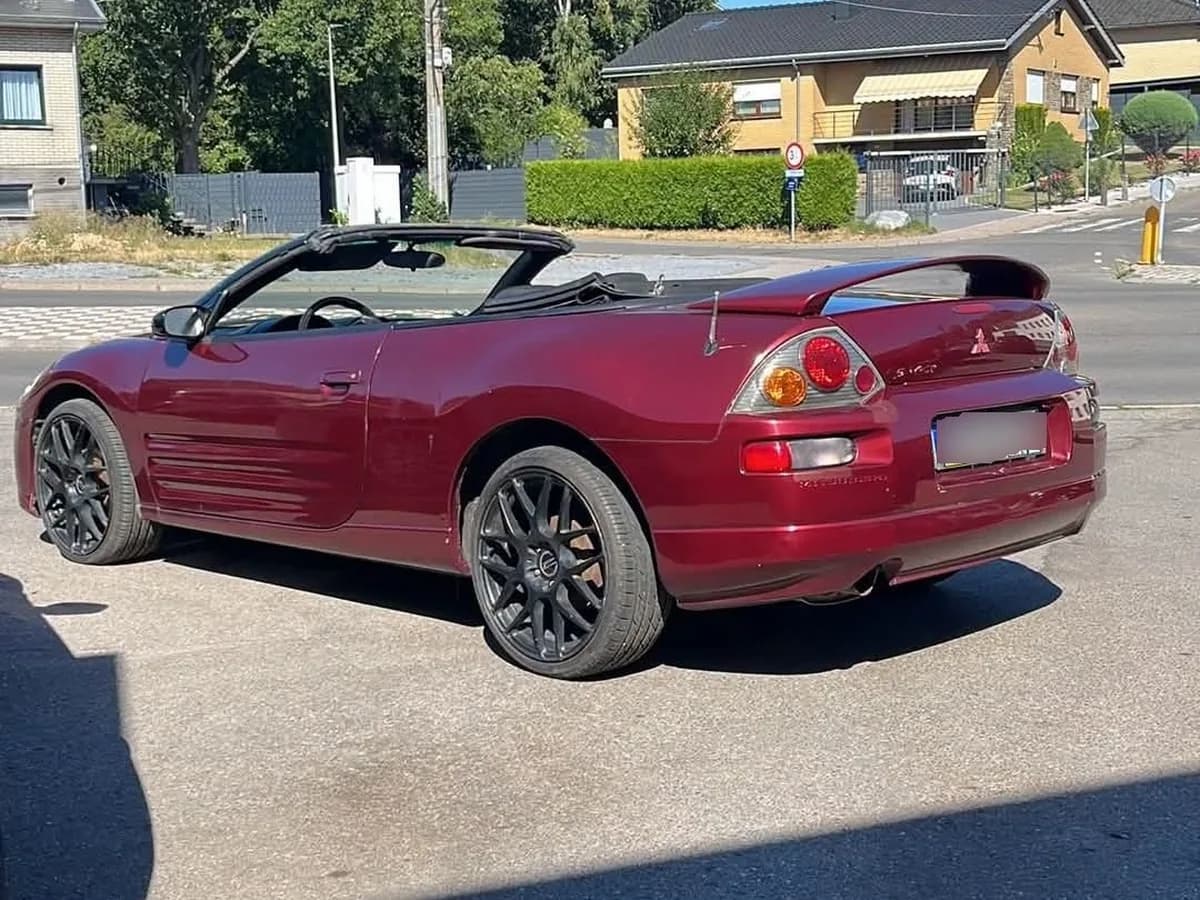
1996
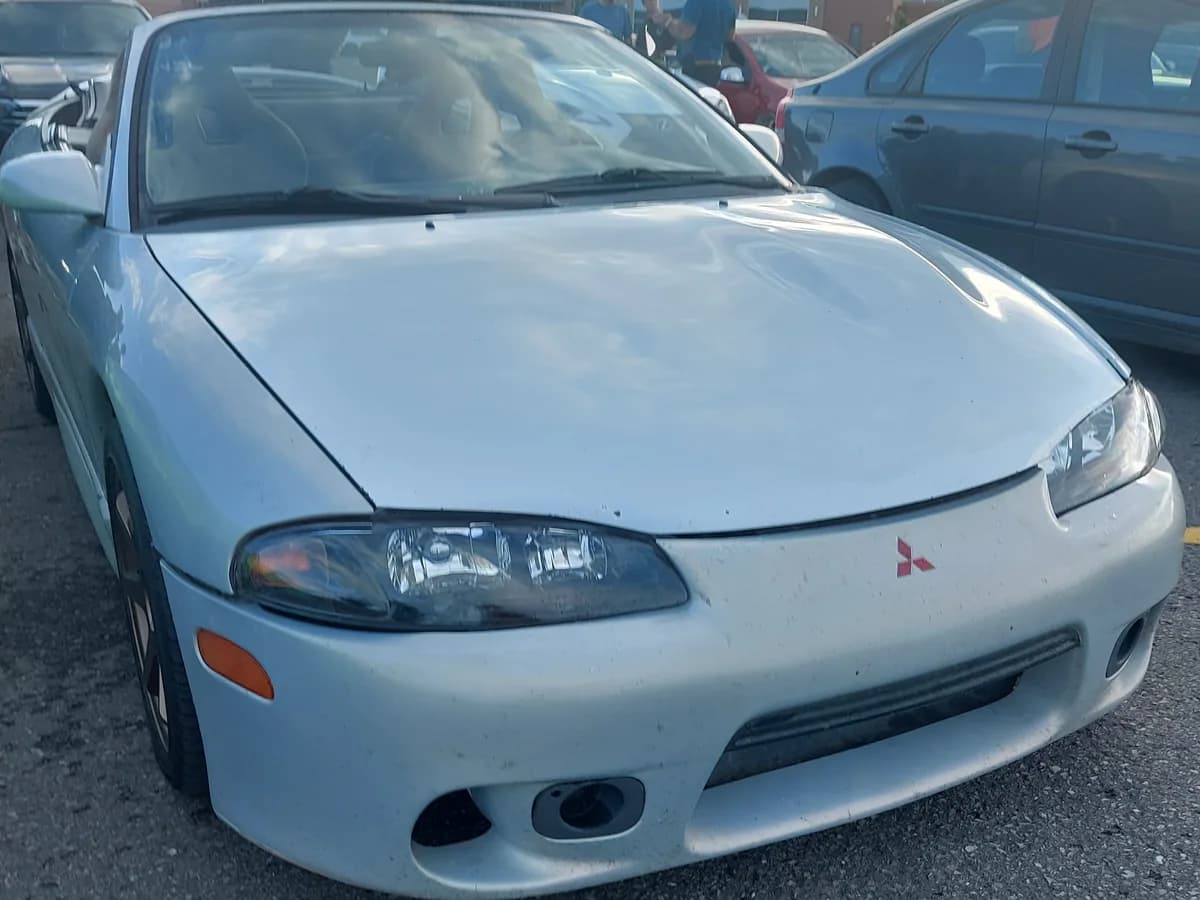
1994
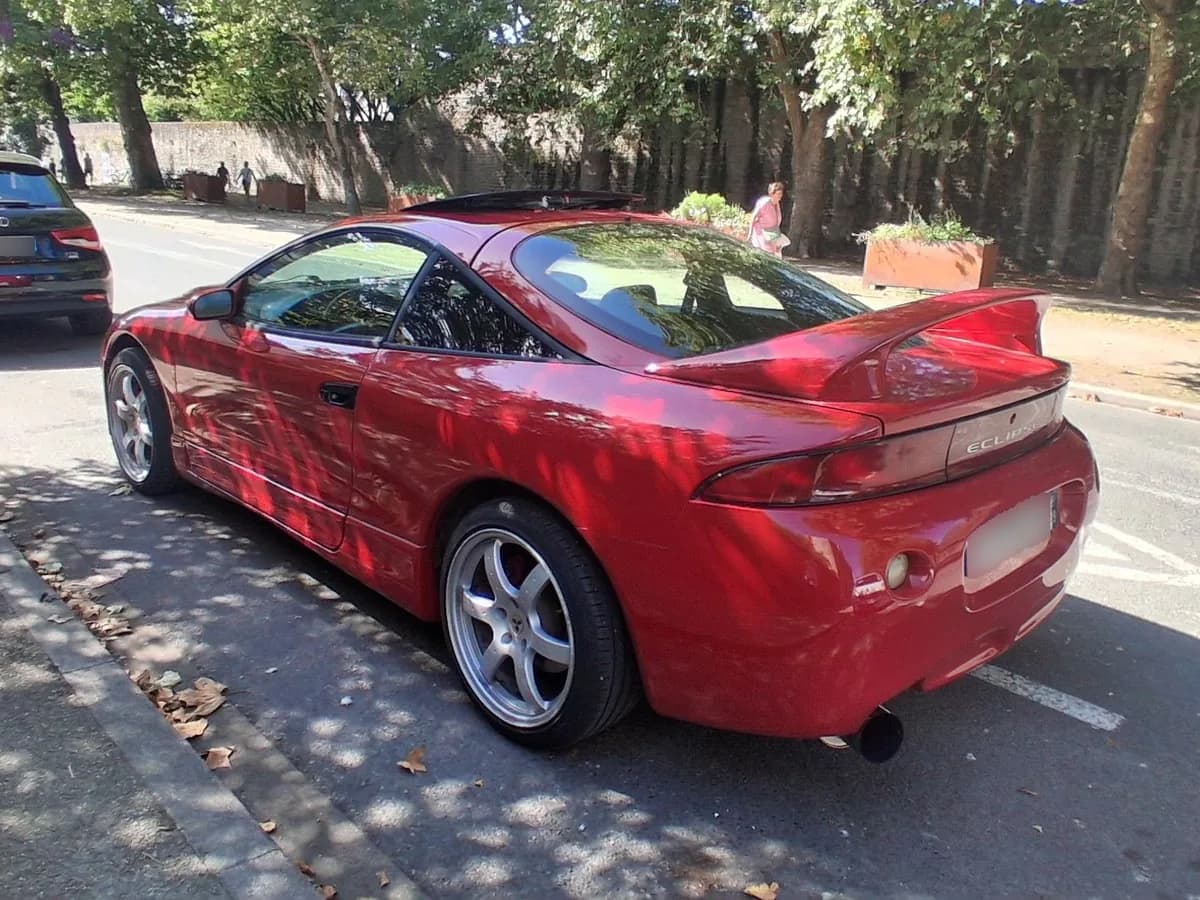
1989
Mitsubishi Eclipse photos
Model summary
Data from the ScanRacer library, organized to compare versions quickly.
Model introduction
Introduced in the United States in 1989 for the 1990 model year, the Mitsubishi Eclipse was a compact sports coupe created through the Mitsubishi-Chrysler partnership. Built in Normal, Illinois, it shared its basic architecture with the Plymouth Laser and Eagle Talon. The nameplate went through four generations: early Eclipses built their reputation around turbocharged four-cylinder engines and, on selected versions, all-wheel drive, while later cars placed greater emphasis on comfort, styling and naturally aspirated power. The Spyder convertible joined the range in 1996, adding a four-seat open-body option. Within the model years covered by the library, the Eclipse therefore moved from a technically focused compact coupe to a more expressive grand-touring-style sports car, particularly in 2006 and 2007, when the range included a 3.8-liter V6.
History
The first Mitsubishi Eclipse appeared in 1989 as a 1990 model. It was built at the Normal, Illinois, plant created through the Diamond-Star Motors partnership between Mitsubishi and Chrysler. That production arrangement explains its close relationship with the Plymouth Laser and Eagle Talon, two related cars sold through Chrysler and Eagle dealer networks. From the beginning, the Eclipse used a 2+2 coupe layout and offered a mixture of naturally aspirated models, turbocharged variants and, depending on trim, all-wheel drive. The second generation arrived for 1995 with smoother bodywork and a more refined presentation. It retained the performance-focused turbo models while broadening the car’s appeal as an everyday coupe. Mitsubishi then added the Eclipse Spyder for 1996, a convertible derivative of the coupe. The third generation appeared in 2000 with a different emphasis: a 3.0-liter V6 became the main performance option, while all-wheel drive was no longer part of the North American range. For 2006, the fourth generation introduced a wider body and stronger engines, including a 3.8-liter V6. The 2006 and 2007 cars therefore represent the final major evolution of the Eclipse within the period covered here.
Generations
The first generation covers the cars introduced in 1989 for the 1990 model year and built through 1994. It is identified by compact proportions, a hatchback body and, on early examples, pop-up headlights. The GS-T and GSX performance trims helped establish the Eclipse’s reputation, with the GSX combining a turbocharged four-cylinder engine and all-wheel drive. The second generation mainly spans the 1995 through 1999 model years. Its design is smoother and more rounded, with a visually lower beltline. Turbo models remained available in parts of the North American market, while the Spyder joined the lineup in 1996. It was a genuine four-seat convertible derivative rather than merely an appearance package. The third generation ran from 2000 through 2005. It moved away from the highly technical image of the early cars in favor of more assertive styling and a 3.0-liter V6 in upper versions. Front-wheel drive became the standard configuration for the North American range. The fourth generation began in 2006. Its body was wider and its cabin placed greater emphasis on comfort. Entry versions used a 2.4-liter four-cylinder, while the 3.8-liter V6 identified GT models. The Spyder continued into this generation.
Key differences
The main differences involve body style, drivetrain and engine family. Eclipses from the first two generations are most closely associated with compact sports-coupe culture: some versions used a turbocharged four-cylinder and, depending on trim, all-wheel drive. Market, model year and equipment level should always be checked before assigning those specifications to a particular car. The third generation introduced the 3.0-liter V6 and adopted a more road-oriented character. The fourth generation continued that shift with a larger body, a 2.4-liter four-cylinder in entry versions and a 3.8-liter V6 in GT models. Spyder cars added a convertible body, but equipment and engines could vary by model year. Within the 1989-2007 catalog range, the labels “Coupe,” “Spyder” and “Base” should therefore be understood as body-style or trim categories, not as separate generations. The generation itself remains the more reliable starting point for identifying the car’s underlying design and mechanical package.
Photo recognition
Start identification by looking at the body and roof. A folding roof indicates a Spyder, introduced in 1996; a coupe has a fixed roof and rear hatch. Early cars, generally associated with the 1990-1994 generation, may feature pop-up headlights. Later cars from that period use fixed aerodynamic headlamp units. The 1995-1999 generation has softer volumes and a rounded front end. It can be mistaken for the first generation in older photographs, but the headlamp and front-fender shapes help separate the two. Cars from 2000 through 2005 have a more angular body and a different visual identity, with the V6 becoming particularly important in higher trims. The 2006-2007 cars are wider and more substantial in appearance; GT models can be identified with the 3.8-liter V6 specification. Badges, wheels and bumpers may have been changed during the car’s life, so the most reliable approach combines the model year, body style, lamp design and vehicle identification plate.
Important versions
The most significant versions include the GS-T and GSX from the early generations, which represent the combination of turbocharged power and a performance-oriented mission; the GSX adds all-wheel drive. The Spyder was another major development because it arrived in 1996 as a four-seat convertible while retaining the Eclipse’s sports-coupe positioning. In the third generation, the GT is notable for its 3.0-liter V6. The 2006 and 2007 Eclipse GT models are especially important because they used a 3.8-liter V6, while GS versions used a 2.4-liter four-cylinder. Exact trim names and equipment availability varied by market and model year, so badges alone should not be treated as definitive evidence of a car’s mechanical specification.
References
- Mitsubishi Eclipse HistoryMitsubishi Motors Canada
- 2006 Mitsubishi Eclipse Press KitMitsubishi Motors North America
- 2005 Mitsubishi Eclipse Press KitMitsubishi Motors North America
- Total Eclipse of the Mitsubishi: History of the Ill-Starred Sports CoupeCar and Driver
- https://importarchive.com/brochure/mitsubishieclipse2000_01importarchive.com
- https://media.mitsubishicars.com/presskits/2006-eclipse-press-kitmedia.mitsubishicars.com
- https://www.carsart.net/en/download/mitsubishi/eclipsecarsart.net
Frequently asked questions
- What years was the Mitsubishi Eclipse produced?
- ScanRacer's referenced versions cover 1989 - 2007.
- How many Mitsubishi Eclipse examples are documented on ScanRacer?
- 7 published scans from 7 members, with the latest photo added in September 2026.
What about the car you photographed?
Upload a photo to get a suggested make, model and likely year.
No account needed for the result · Publish only if you choose