
SLK-Klasse
Unveiled at the 1996 Turin Motor Show, the Mercedes-Benz SLK helped establish the compact roadster with a retractable metal roof. Its Vario roof could transform the two-seat convertible into a coupé-like car, while the model retained a front-engine, rear-wheel-drive layout. The first generation, known internally as the R 170, was replaced by the R 171 in 2004 and the R 172 in 2011. The range recorded here covers model years from 1996 through 2011, following the SLK from its original launch to the arrival of its third generation. Beyond its appearance, the car’s defining idea was consistent across the series: combine open-air driving with everyday usability, greater weather protection than a conventional soft-top roadster, and the comfort and equipment expected from Mercedes-Benz.
Variants by year
2011

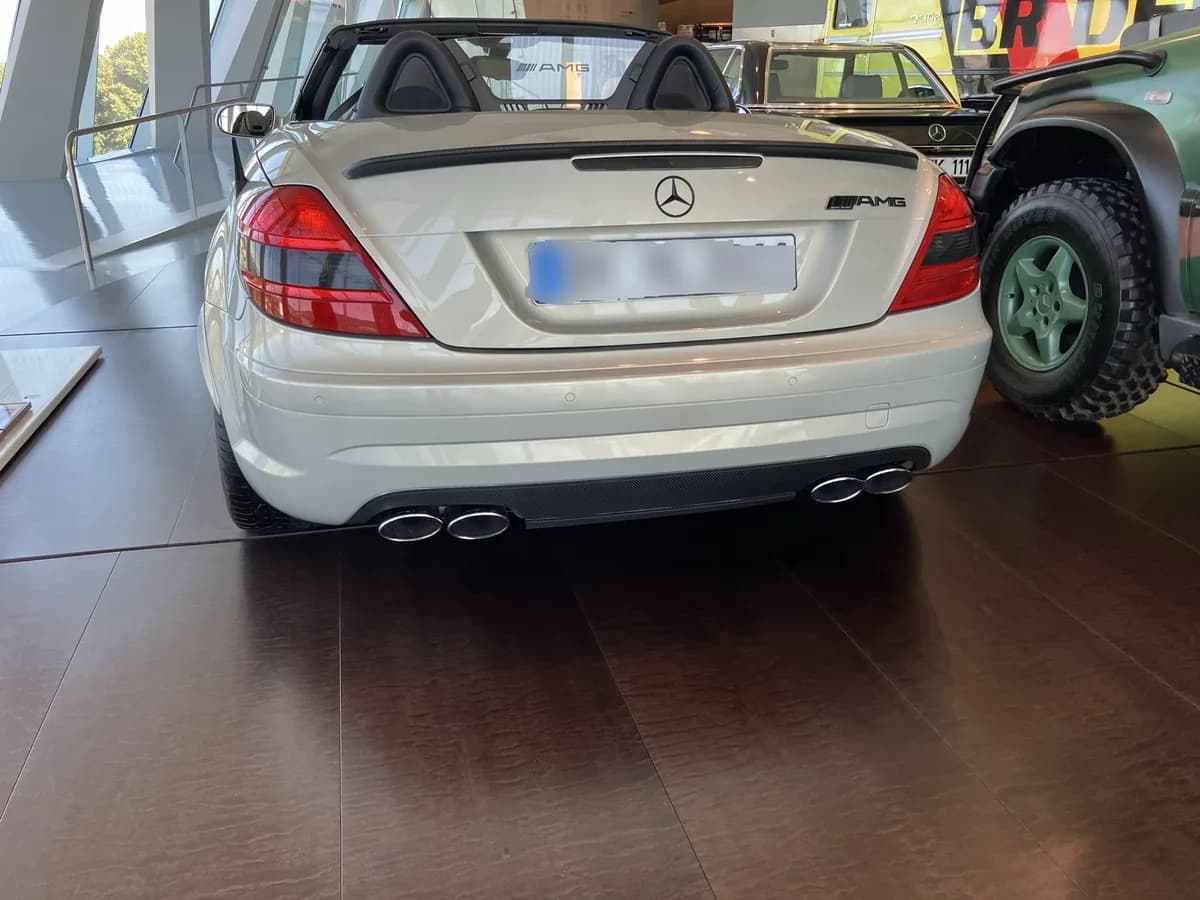
2004
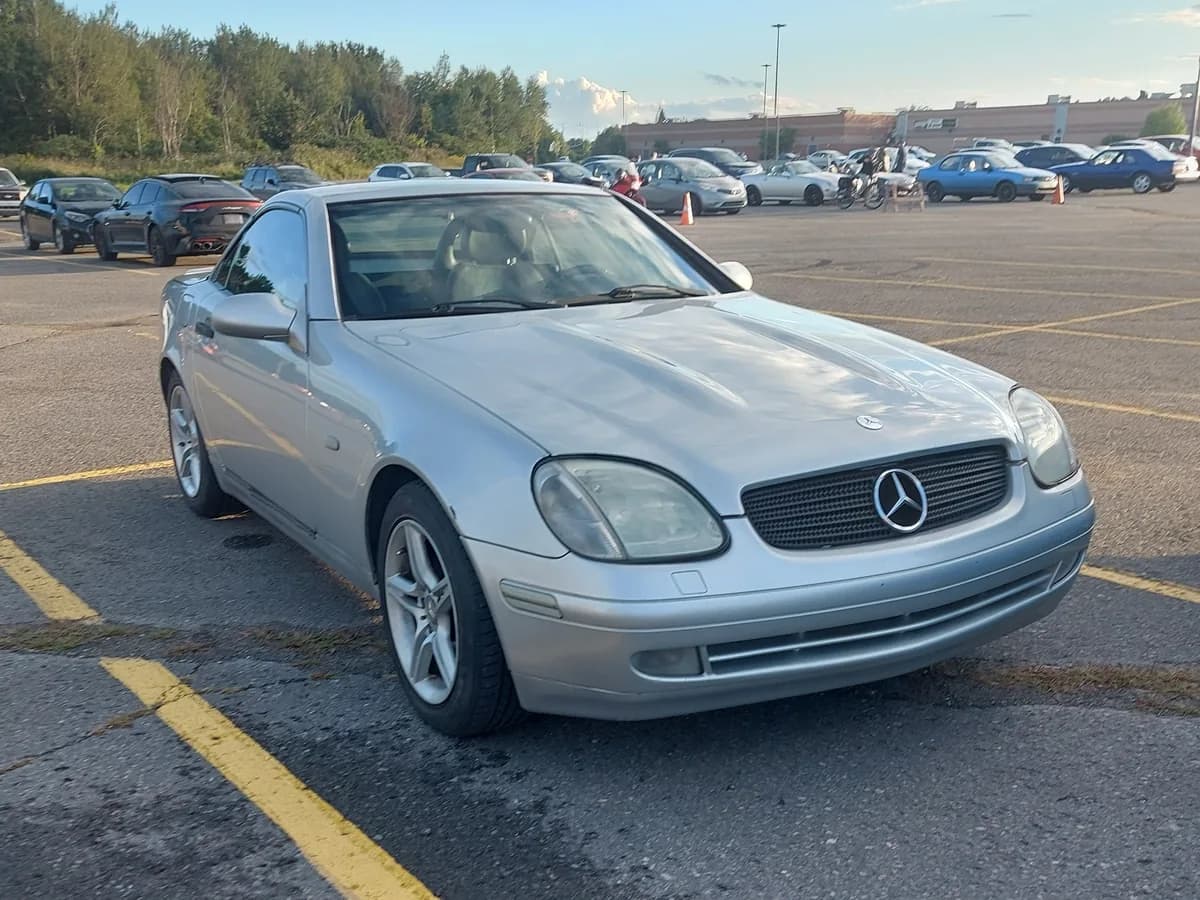
1996
Model summary
Data from the ScanRacer library, organized to compare versions quickly.
Model introduction
Unveiled at the 1996 Turin Motor Show, the Mercedes-Benz SLK helped establish the compact roadster with a retractable metal roof. Its Vario roof could transform the two-seat convertible into a coupé-like car, while the model retained a front-engine, rear-wheel-drive layout. The first generation, known internally as the R 170, was replaced by the R 171 in 2004 and the R 172 in 2011. The range recorded here covers model years from 1996 through 2011, following the SLK from its original launch to the arrival of its third generation. Beyond its appearance, the car’s defining idea was consistent across the series: combine open-air driving with everyday usability, greater weather protection than a conventional soft-top roadster, and the comfort and equipment expected from Mercedes-Benz.
History
The SLK began as a compact roadster study shown in 1994 before its world premiere at the 1996 Turin Motor Show. Mercedes-Benz positioned it below the larger SL, but gave it a distinctive technical feature: a retractable metal roof known as the Vario roof. It combined the weather protection of a coupé with the ability to drive as an open roadster. Mercedes-Benz states that more than 311,000 examples of the first-generation R 170 were sold. A substantial update arrived in 2000, bringing revised styling and engine changes. In January 2004, the second-generation R 171 retained the folding hardtop concept but introduced a sharper body design, including a front end with visual links to the SLR McLaren and McLaren-Mercedes Formula One cars. The R 171 received its own facelift in 2008. The R 172 appeared in 2011 with updated styling, aerodynamics, engines, and equipment while preserving the retractable roof that defined the series. After a major facelift in 2016, Mercedes-Benz renamed it the SLC to emphasize its relationship with the C-Class family. Production of the overall SLK/SLC line ended in 2020.
Generations
The first generation, the R 170, ran from 1996 to 2004. It is identified by compact proportions, rounded bodywork, and the original metal Vario roof. The 2000 facelift revised the bumpers, side skirts, and several mechanical elements. The range also expanded to include supercharged models and AMG derivatives, including the SLK 32 AMG with a supercharged V6 engine. The R 171 was launched in 2004 and remained in production until the arrival of the R 172 in 2011. Its styling became sharper, with a pointed front end and details influenced by Mercedes-Benz racing design. This generation introduced AIRSCARF, a neck-level heating system for open-top driving in cooler weather, and received a facelift in 2008. Depending on market and model year, engines included supercharged four-cylinders, V6 units, and a V8-powered AMG flagship. The R 172 is the third generation. Introduced in 2011, it brought more contemporary styling, improved aerodynamics, and equipment such as the optional panoramic MAGIC SKY CONTROL roof. After its 2016 facelift, the R 172 continued under the SLC name rather than SLK.
Key differences
The main differences between generations concern body design, equipment, and engine availability. The R 170 has the most compact and rounded appearance, with a relatively simple front end and smaller headlamps. The R 171 looks wider and more aggressive, using a sloping grille and sculpted bonnet associated by Mercedes-Benz with the SLR McLaren design theme. It can also be identified by its more modern cabin and the availability of AIRSCARF neck-level heating. The R 172 introduced a more upright grille, longer-looking headlamps, and a cleaner side profile. It could be fitted with the panoramic MAGIC SKY CONTROL roof, whose glass panel could change from light to dark. Engine badges alone are not a dependable way to identify a generation because availability varied by market and model year. The most reliable approach is to compare the front fascia, lighting design, wheels, dashboard, roof equipment, and vehicle identification number.
Photo recognition
The R 170 is the shortest-looking and roundest member of the family. Typical clues include compact headlamps, a relatively simple rear end, and the original retractable metal roof. Early cars commonly have darker lower side sections, while the 2000 facelift brought more body-coloured exterior detailing. The roof mechanism is the most obvious feature shared by the entire series. The R 171 has a more dramatic front end, with a sloping grille, pointed bonnet, and tighter side surfacing. Its side vents and dashboard design can help confirm the identification. AIRSCARF neck-level heating is a useful equipment clue, but it should not be treated as definitive because options and markets varied. The R 172 is usually recognizable by its more upright grille, elongated headlamps, horizontal rear lamps, and newer-looking cabin. A panoramic MAGIC SKY CONTROL roof identifies a particular R 172 specification. AMG badges and wheels can be changed, so they should be checked against the body details, interior, and vehicle identification number.
Important versions
Important versions varied by market, but several model names are central to the SLK story. The R 170 included models such as the SLK 200, SLK 230 Kompressor, and SLK 320, with the supercharged SLK 32 AMG at the top of the range. The R 171 offered the SLK 200, 280, and 350, plus the V8-powered SLK 55 AMG. The R 172 continued with names including SLK 200 and SLK 350 and also offered an SLK 55 AMG with a naturally aspirated V8. These badges did not always represent identical engines or outputs in every country. Any comparison should therefore consider model year, original market, transmission, and engine code rather than relying on the badge alone.
The name “SLK-Klasse” follows Mercedes-Benz naming, with its rules and its exceptions. Decode a Mercedes-Benz name
Frequently asked questions
- What years was the Mercedes-Benz SLK-Klasse produced?
- ScanRacer's referenced versions cover 1996 - 2011.
- How many Mercedes-Benz SLK-Klasse examples are documented on ScanRacer?
- 8 published scans from 7 members, with the latest photo added in August 2026.