
B-Klasse
Introduced in Europe in 2005, the Mercedes-Benz B-Klasse was developed as a compact model focused on interior space, easy access and everyday versatility rather than conventional sedan proportions. Mercedes-Benz initially described it as a “Compact Sports Tourer”, using a raised-floor layout that placed part of the powertrain beneath the passenger cell. The arrangement helped create a relatively tall cabin and a practical interior within compact exterior dimensions. Across successive generations, the B-Klasse gained a more dynamic shape, newer front-wheel-drive platforms and increasingly sophisticated driver-assistance and infotainment systems. The 2005–2019 period covers the first generation, the full second generation and the opening model years of the third generation, which made its public debut at the 2018 Paris Motor Show. (media.mercedes-benz.be)
What about the car you photographed?
Upload a photo to get a suggested make, model and likely year.
No account needed for the result · Publish only if you choose
Variants by year
Make: Mercedes-Benz · Model: B-Klasse
4 / 4 versions shown
2019
2014
2011
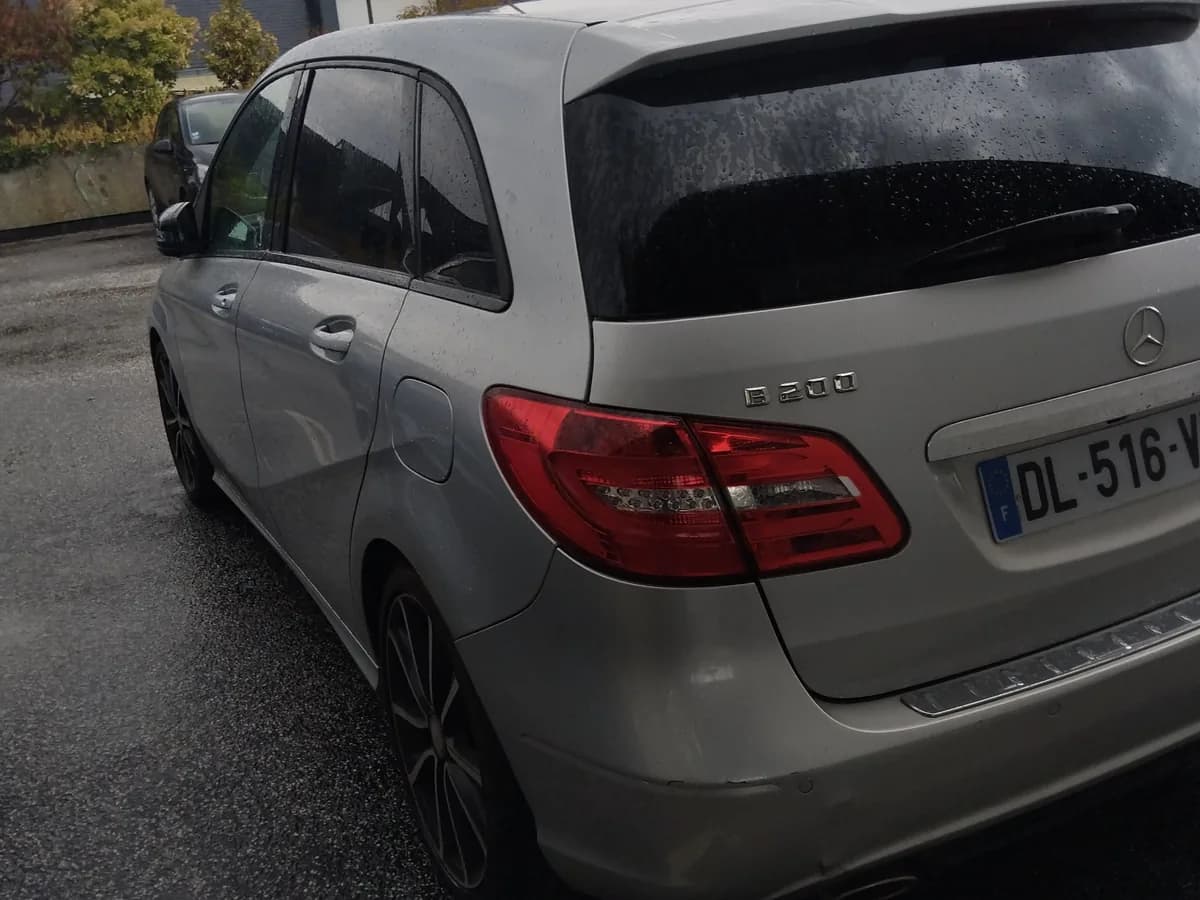
2005

Mercedes-Benz B-Klasse photos
Model summary
Data from the ScanRacer library, organized to compare versions quickly.
Model introduction
Introduced in Europe in 2005, the Mercedes-Benz B-Klasse was developed as a compact model focused on interior space, easy access and everyday versatility rather than conventional sedan proportions. Mercedes-Benz initially described it as a “Compact Sports Tourer”, using a raised-floor layout that placed part of the powertrain beneath the passenger cell. The arrangement helped create a relatively tall cabin and a practical interior within compact exterior dimensions. Across successive generations, the B-Klasse gained a more dynamic shape, newer front-wheel-drive platforms and increasingly sophisticated driver-assistance and infotainment systems. The 2005–2019 period covers the first generation, the full second generation and the opening model years of the third generation, which made its public debut at the 2018 Paris Motor Show. (media.mercedes-benz.be)
History
The first B-Klasse was presented at the 2005 Geneva Motor Show and reached European dealerships during the summer of that year. Its purpose was different from that of a conventional MPV: Mercedes-Benz aimed to combine compact exterior dimensions with the passenger room of a larger vehicle. The company’s “sandwich” architecture helped achieve this by placing some mechanical components beneath the passenger compartment. The model also shared design principles with the smaller A-Class while providing a longer body and a more spacious cabin. (media.mercedes-benz.be) A second generation arrived in 2011. Mercedes-Benz included it in a broader compact-car offensive and introduced it at the Frankfurt Motor Show. Compared with its predecessor, it used a lower and more streamlined body, moving the B-Klasse closer in appearance to a conventional compact hatchback. It also introduced the company’s modular front-wheel-drive architecture for compact models, which was later used across several related Mercedes-Benz products. (group.mercedes-benz.com) The third generation was unveiled in Paris on October 2, 2018, entering the market for the 2019 model year. It retained the model’s family-oriented role but added a more dynamic design, the MBUX infotainment system and driver-assistance technology derived from higher-ranking Mercedes-Benz models. Electrified versions, including the B 250 e plug-in hybrid, were subsequently introduced within this generation. (media.mercedes-benz.com)
Generations
The first generation, commonly identified by the T 245 or W 245 designation, covers the models launched from 2005 and is recognizable by its tall body, relatively upright windscreen and forward-set cabin. Its raised-floor architecture and generous interior volume are its defining technical characteristics. Petrol and diesel versions formed the core of the range, with equipment and engines varying by market. (media.mercedes-benz.be) The second generation, W 246, appeared in 2011 and adopted a lower profile, more sculpted sides and a more horizontal front end. It introduced the MFA transverse-engine platform and an interior layout more closely related to other Mercedes-Benz compact models of the period. The range also included market-specific derivatives, including an electric version sold in selected countries as the B-Class Electric Drive. (group.mercedes-benz.com) The third generation, W 247, was unveiled in 2018. It brought a smoother silhouette, slimmer headlamps and an interior dominated by Mercedes-Benz’s MBUX display system. The 2018–2019 period therefore represents a model transition, with late W 246 examples and early W 247 cars appearing close together in vehicle catalogues. (media.mercedes-benz.com)
Key differences
The easiest differences to spot involve body height, side-window shape and front-end design. The T 245 looks the most upright and most similar to a small MPV. The W 246 has a longer-looking profile, a pronounced beltline and more angular headlamps. The W 247 uses smoother surfaces and a front end more closely related to Mercedes-Benz’s newer compact models. (media.mercedes-benz.be) Inside, the first generation relies mainly on physical controls and a more conventional dashboard layout. The W 246 introduces a more horizontal dashboard with a separate central display. The W 247 is identified by its paired-screen arrangement, MBUX infotainment and “Hey Mercedes” voice interface. Engine choices, transmissions, trim levels and equipment can differ substantially between countries and model years, so a generation label alone cannot establish the exact specification of an individual car. (media.mercedes-benz.com)
Photo recognition
Start with the overall shape when identifying a B-Klasse. A tall body, short bonnet and large glass area usually point to the first-generation T 245/W 245. The W 246 has a lower, more tightly drawn profile, a visible side crease and horizontally oriented rear lamps. The W 247 looks more contemporary, with slimmer headlamps, a wider grille and, on some versions, flush-fitting door handles. (media.mercedes-benz.be) The cabin provides another useful clue. A conventional dashboard with a separately integrated display is generally associated with the T 245. The W 246 commonly places its central screen above the centre console. The W 247 is marked by a broad digital panel combining the instrument cluster and infotainment functions. To confirm the exact year and specification, check the type designation, manufacturer plate, registration document or VIN. Front-end details, equipment and engines can change with facelifts and may differ between markets.
Important versions
Notable versions include the petrol and diesel models of the first generation, which best represent the B-Klasse’s practical and versatile positioning. The B 200 Turbo was a particularly performance-oriented T 245 derivative. On the W 246, the B-Class Electric Drive introduced a fully electric alternative in selected markets. The third generation later added the B 250 e plug-in hybrid, announced in 2019 with a petrol-electric powertrain and rechargeable high-voltage battery. These names were not offered in every market, and specifications can vary by country and model year. (autocatalogarchive.com)
The name “B-Klasse” follows Mercedes-Benz naming, with its rules and its exceptions. Decode a Mercedes-Benz name
References
- EQ Power erstmals auch für A- und B-KlasseMercedes-Benz Media
- Mercedes-Benz B-Klasse: Alle Infos, Generationen und TestsAUTO BILD
Frequently asked questions
- What years was the Mercedes-Benz B-Klasse produced?
- ScanRacer's referenced versions cover 2005 - 2019.
- How many Mercedes-Benz B-Klasse examples are documented on ScanRacer?
- 4 published scans from 4 members, with the latest photo added in August 2026.
What about the car you photographed?
Upload a photo to get a suggested make, model and likely year.
No account needed for the result · Publish only if you choose