
MP4-12C
The McLaren MP4-12C was the first series-production model developed by McLaren Automotive after the McLaren F1. Introduced from 2011, it used a carbon-fibre MonoCell passenger cell, a mid-mounted 3.8-litre twin-turbocharged V8 and a seven-speed dual-clutch transmission. Its engineering philosophy focused on aerodynamic efficiency, low mass and chassis precision rather than overt visual drama. The range expanded in 2012 with the 12C Spider, which added a retractable hardtop while retaining the same basic carbon-fibre architecture. The available model data distinguishes a 2011 Base version and a 2012 Spider version. According to McLaren specifications, the later upgraded coupé produced up to 625 PS and reached 333 km/h, while the Spider used comparable mechanical hardware with a quoted top speed of 329 km/h.
Variants by year
2012
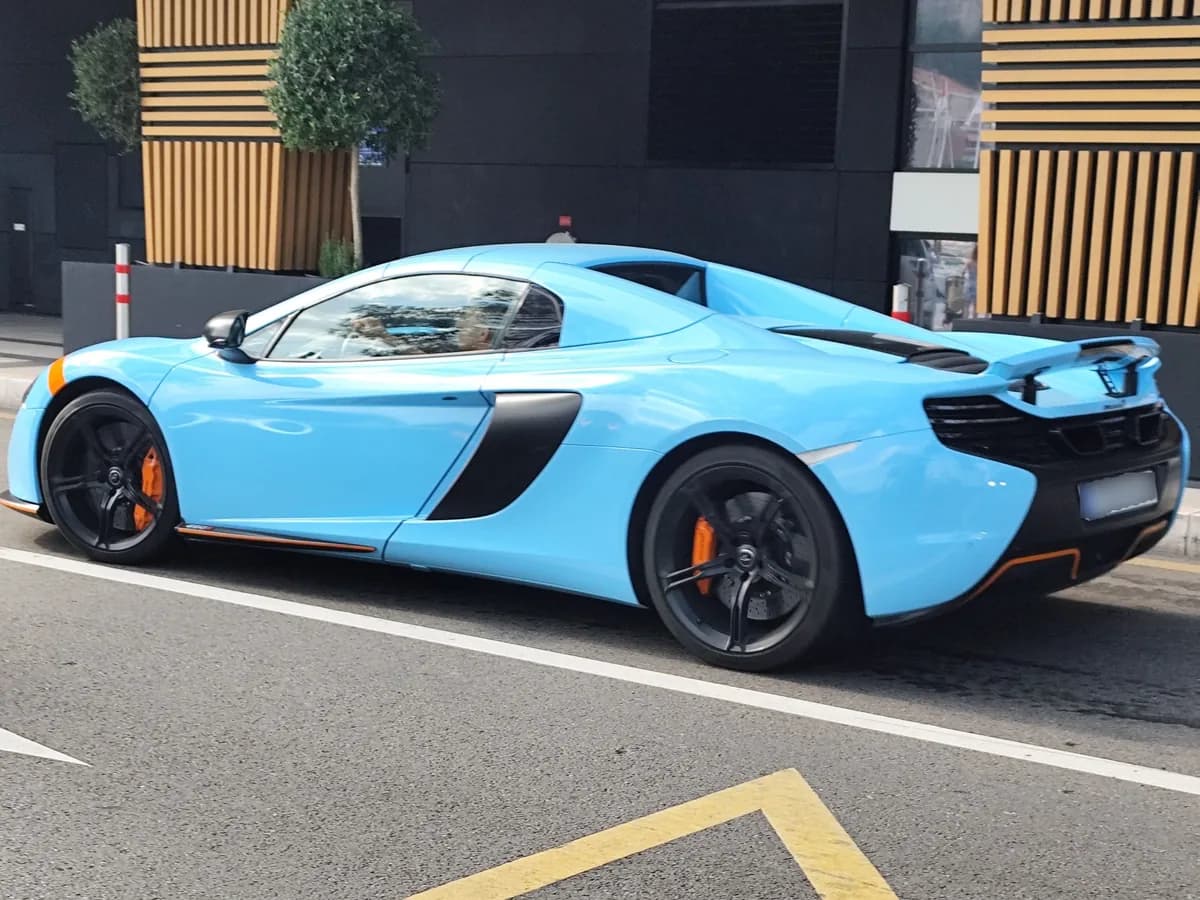
2011

Model summary
Data from the ScanRacer library, organized to compare versions quickly.
Model introduction
The McLaren MP4-12C was the first series-production model developed by McLaren Automotive after the McLaren F1. Introduced from 2011, it used a carbon-fibre MonoCell passenger cell, a mid-mounted 3.8-litre twin-turbocharged V8 and a seven-speed dual-clutch transmission. Its engineering philosophy focused on aerodynamic efficiency, low mass and chassis precision rather than overt visual drama. The range expanded in 2012 with the 12C Spider, which added a retractable hardtop while retaining the same basic carbon-fibre architecture. The available model data distinguishes a 2011 Base version and a 2012 Spider version. According to McLaren specifications, the later upgraded coupé produced up to 625 PS and reached 333 km/h, while the Spider used comparable mechanical hardware with a quoted top speed of 329 km/h.
History
The MP4-12C project accompanied the revival of McLaren Automotive in the early 2010s. After production of the McLaren F1 ended, the British company returned with a car designed for series production and intended to form the foundation of a new model range. Coupé production began in February 2011 at the McLaren Technology Centre, before output increased at the McLaren Production Centre in Woking. Early customer cars were presented as two-seat, mid-engined sports cars built around a carbon-fibre MonoCell and competition-influenced electronic systems. The MP4-12C used a 3,799cc twin-turbocharged V8 paired with McLaren’s seven-speed SSG transmission. Its chassis featured ProActive Chassis Control, using interconnected hydraulic dampers to manage body roll without conventional anti-roll bars. McLaren also highlighted Brake Steer, an electronic function intended to improve traction and cornering behaviour. In June 2012, McLaren announced an updated 12C with output raised to 625 PS, together with transmission, sound and usability improvements. The same year brought the 12C Spider, the second model in the range, fitted with a retractable hardtop. This development explains why both MP4-12C and 12C appear in period documentation and later references. The Spider was not simply a cosmetic conversion: it retained the MonoCell concept while adding the structural and packaging requirements of an open body.
Generations
The MP4-12C was not divided by McLaren into several officially named generations. It is more accurate to describe an initial coupé phase, a technical update and the later addition of a Spider body style. The 2011 coupé established the family’s core formula: a carbon-fibre MonoCell, a 3.8-litre twin-turbocharged V8, rear-wheel drive and a seven-speed SSG transmission. Early published figures differ from those of the later upgraded specification, so the model year and equipment level should be checked before making numerical comparisons. The updated 12C received an increase to 625 PS, along with announced changes to engine mapping, transmission behaviour, the Intake Sound Generator and selected convenience features. These changes did not create a new chassis generation; they were an evolution of the original model. McLaren also stated that existing owners could be offered some of the upgrades. The 12C Spider arrived in 2012 as a body-style derivative. Its retractable hardtop could be operated while moving within the manufacturer’s stated conditions, while the carbon-fibre MonoCell remained central to the design. Correct identification therefore depends on separating three ideas: the early coupé, the updated coupé and the Spider. Treating them as completely separate generations would overstate the differences between them.
Key differences
The clearest distinction is between the Base coupé’s fixed roof and the Spider’s retractable hardtop. The Spider retains the 3.8-litre twin-turbocharged V8 and MonoCell structure, but adds the roof mechanism, related storage components and the adaptations required for open-air driving. McLaren quotes a 329 km/h top speed for the Spider, compared with 333 km/h for the coupé in the later 12C specification. This difference should not be treated as a simple power comparison: published figures can also vary with configuration, tyres and market. The 2011 coupé represents the first commercial phase of the model. Later cars received updates affecting output, transmission behaviour and usability. A 2011 Base and a 2012 Spider may therefore differ in both body style and mechanical specification. The names MP4-12C and 12C alone do not always identify the exact equipment level. A reliable comparison should include the build date, software and hardware updates, wheel and tyre specification, braking options and the original market documentation.
Photo recognition
The MP4-12C is first identified by its mid-engined proportions: a forward-set cabin, short overhangs and heavily sculpted side sections directing air toward the lateral intakes. Its dihedral doors are a visual link to the McLaren F1, although the 12C uses a more compact and restrained overall shape. At the front, the narrow swept headlights and clean surfacing create a signature different from later McLaren models, which often use more complex lighting designs. The side profile usually separates the coupé from the Spider. The coupé has a fixed roof and integrated rear glass, while the Spider uses a retractable hardtop, a distinct rear deck and an open silhouette when the roof is stowed. Both versions retain a mid-mounted engine layout and pronounced side air intakes. To avoid confusing the car with a 650S, examine the headlights, front bumper and air-intake treatment. The 650S evolved from the 12C mechanically but introduced a more aggressive nose and additional aerodynamic detailing. Badging can also read MP4-12C or 12C depending on the production period and documentation. Photos alone may not establish the precise model year, so the VIN plate and original specification sheet remain the safer references.
Important versions
The 2011 Base version represents the launch coupé and serves as the original reference for the MP4-12C family. It combines the carbon-fibre MonoCell, 3.8-litre twin-turbocharged V8, rear-wheel drive and seven-speed SSG transmission. Power figures published for early cars can differ from those quoted for the later upgraded specification. The 2012 Spider is the open-bodied derivative. Its retractable hardtop immediately distinguishes the body style, while its mechanical layout and core architecture remain closely related to the coupé. McLaren quotes 625 PS, 0–100 km/h in 3.3 seconds and a 329 km/h top speed for this version in its specification material. Equipment, brakes, wheels and software may vary between cars, so these figures should be linked to a particular specification rather than treated as universal for every 12C Spider.
References
- Even More Powerful and Usable: The Enhanced McLaren MP4-12CMcLaren Automotive via PR Newswire
- 2012 McLaren MP4-12C First TestMotorTrend
- https://www.autoexpress.co.uk/car-reviews/40144/mclaren-mp4-12cautoexpress.co.uk
- https://www.motortrend.com/reviews/epcp-1110-2012-mclaren-mp4-12cmotortrend.com
- https://www.caranddriver.com/reviews/a15127176/2012-mclaren-mp4-12c-first-drive-review/caranddriver.com
- https://www.autocar.co.uk/car-news/features/steve-cropleys-car-decade-mclaren-mp4-12cautocar.co.uk
- https://autocatalogarchive.com/wp-content/uploads/2017/01/McLaren-MP4-12C-2011.pdfautocatalogarchive.com
Technical specifications
Structured data available for versions linked to this model.
| Version | Power | Torque | Top speed | Drivetrain | Fuel |
|---|---|---|---|---|---|
| — | 592 bhp at 7,000 rpm | — | — | Rear-wheel drive / Seven-speed dual-clutch paddle-shift transmission | — |
Frequently asked questions
- What years was the McLaren MP4-12C produced?
- ScanRacer's referenced versions cover 2011 - 2012.
- How many McLaren MP4-12C examples are documented on ScanRacer?
- 12 published scans from 11 members, with the latest photo added in September 2026.
- What is the power output of the McLaren MP4-12C?
- The sourced technical data lists 592 bhp at 7,000 rpm.