
F1
Introduced as McLaren Automotive’s first road-car project, the McLaren F1 was conceived in 1988 and reached customers in the early 1990s. Its design combines a carbon-fibre monocoque, a naturally aspirated V12 developed by BMW Motorsport, and a central driving position flanked by two passenger seats. Dihedral doors, a gold-lined engine bay, and an uncompromising focus on low weight became some of its most recognisable features. Production remained extremely limited, with McLaren stating that 106 examples were built across the programme. The family includes the standard road-going F1, the F1 GTR competition car, the Le Mans-inspired F1 LM, and the long-tail F1 GT. The model years represented here run from 1993 through 1997, covering the principal road and racing derivatives associated with the name.
Variants by year
1997
1996
1995
1993
Model summary
Data from the ScanRacer library, organized to compare versions quickly.
Model introduction
Introduced as McLaren Automotive’s first road-car project, the McLaren F1 was conceived in 1988 and reached customers in the early 1990s. Its design combines a carbon-fibre monocoque, a naturally aspirated V12 developed by BMW Motorsport, and a central driving position flanked by two passenger seats. Dihedral doors, a gold-lined engine bay, and an uncompromising focus on low weight became some of its most recognisable features. Production remained extremely limited, with McLaren stating that 106 examples were built across the programme. The family includes the standard road-going F1, the F1 GTR competition car, the Le Mans-inspired F1 LM, and the long-tail F1 GT. The model years represented here run from 1993 through 1997, covering the principal road and racing derivatives associated with the name.
History
The F1 project began with a late-1980s McLaren ambition: to create an uncompromised road car using the thinking, materials, and discipline of racing. Gordon Murray championed a central driving position, while the engineering team adopted a carbon-fibre monocoque to reduce weight and increase structural stiffness. After considering several engine solutions, McLaren turned to BMW Motorsport for the 6.1-litre V12 that became the defining powerplant of the road car. The F1 quickly established itself as a performance benchmark among naturally aspirated cars of its era. McLaren describes it as the first road car built around a lightweight carbon-fibre monocoque and says it became the fastest production car when launched. The model’s story changed direction when customers requested a competition version. Developed for GT racing, the F1 GTR won the 1995 24 Hours of Le Mans at its first attempt and also secured that year’s Global GT championship. The LM and GT derivatives extended the programme afterwards: the LM celebrated the Le Mans achievement with a more track-focused road specification, while the GT used an extended body and was created in connection with racing homologation requirements.
Generations
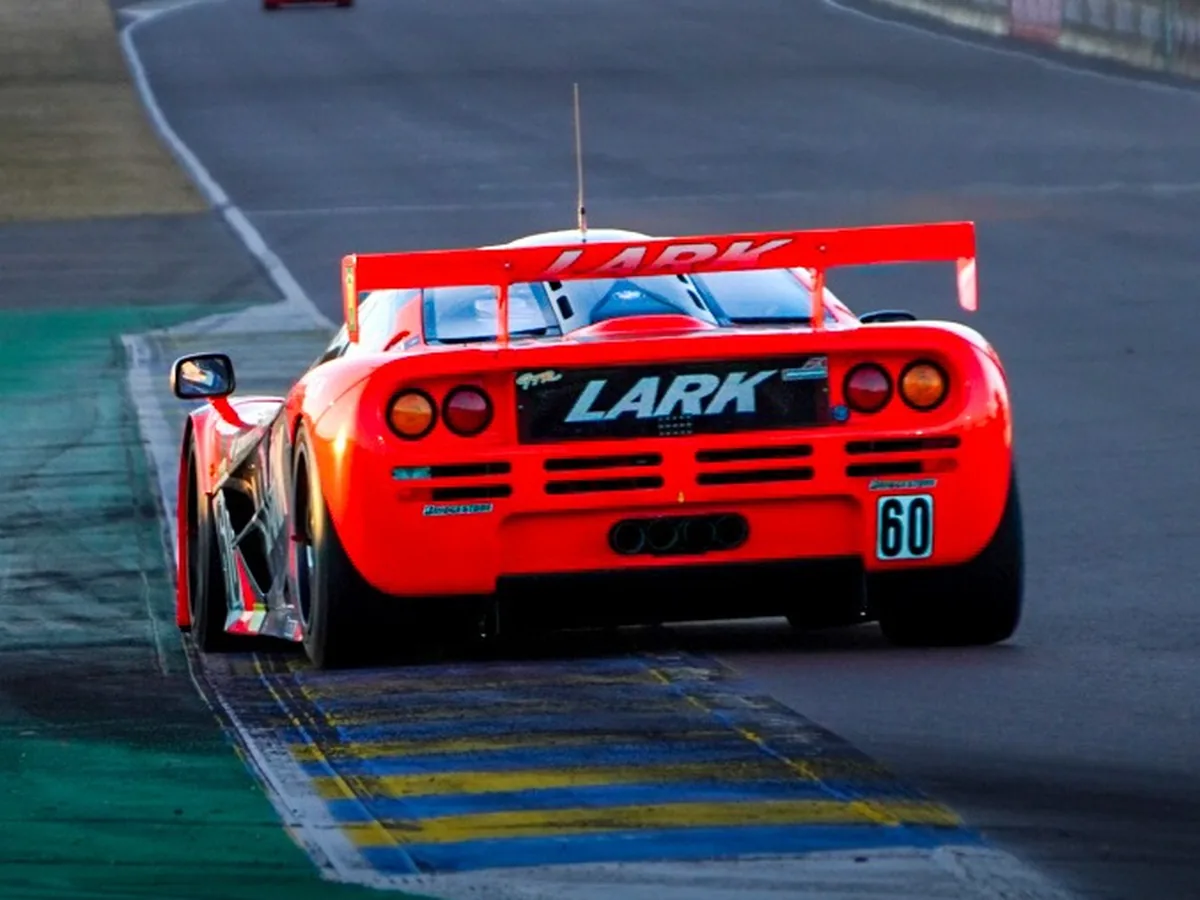
The McLaren F1 does not have conventional generations. Instead, it is best understood as a family of derivatives built around one core engineering concept. The Base version represents the standard road-going F1 and is listed here for the 1993 model year. Its key traits are the three-seat layout, the centrally positioned driver, the naturally aspirated BMW V12, and relatively restrained road-car aerodynamics. The F1 GTR, represented by 1995, is the competition derivative. It adds a roll cage, revised suspension settings, quicker steering, race-focused braking hardware, and dedicated aerodynamic equipment. Despite power restrictions imposed by the regulations, it proved highly competitive in endurance racing. The F1 LM, associated here with 1996, translates the GTR’s spirit into a road-legal form, with lower weight and a stronger focus on circuit performance. The F1 GT, represented by 1997, uses an extended long-tail body developed in connection with the evolution of the racing car and its homologation requirements. These names therefore describe distinct purposes rather than successive generations: road-going grand touring, customer racing, a Le Mans-inspired road special, and a homologation-oriented long-tail model.
Key differences
The main distinction is between the road-going F1 and the GTR. The standard car prioritises road use, refinement, and aerodynamic integration within a relatively clean body. The GTR adds the equipment required for racing and could produce less peak power on paper when air restrictors were required, yet it gained advantages in weight, suspension tuning, braking, and downforce for circuit use. The LM is not simply a road-registered GTR. It translates selected competition features into a highly specialised road car with a stronger track emphasis. The GT is identified more clearly by its extended long-tail body, developed to support the racing programme without copying the LM’s exact appearance. Badges and model years are not always sufficient for identification, however, because some road cars have later received upgrades or conversions inspired by the competition derivatives. Chassis history and factory documentation remain important when originality matters.
Photo recognition
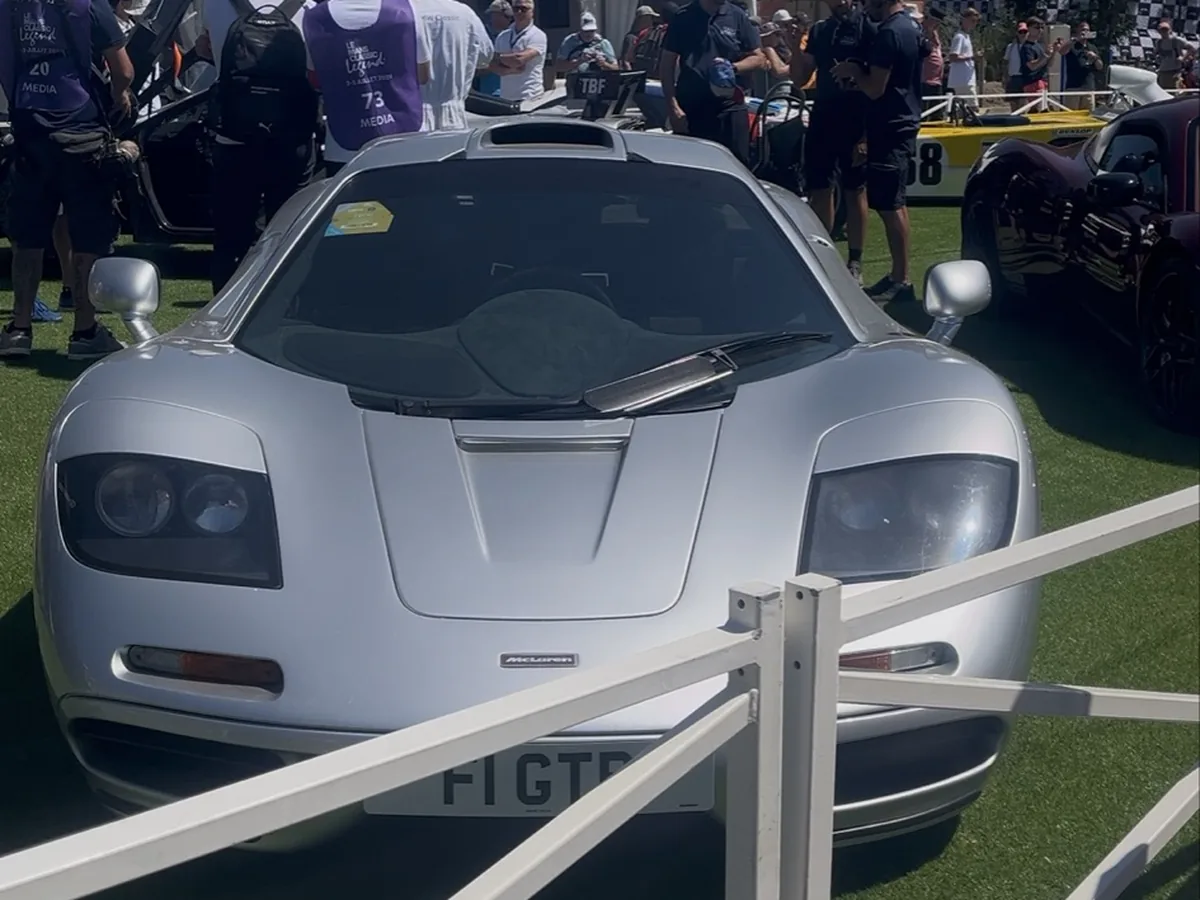
A standard road-going F1 is first identified by its low, compact shape, dihedral doors, and three-seat cabin with the driver positioned in the centre. The two passenger seats sit slightly behind and to either side, giving the roof and glasshouse an unusual profile. The engine bay also features gold-coloured heat shielding, a functional detail that became one of the car’s most famous visual signatures. The GTR adds clearer competition cues, including dedicated aerodynamic parts, racing wheels, a roll cage, and a more stripped-out interior. Long-tail versions have noticeably extended front and rear overhangs compared with the standard road car. An LM may look close to a race car while retaining a road-oriented configuration. Identification should not rely on colour or livery alone: papaya orange paint, a rear wing, or an additional air intake does not by itself confirm the variant. Chassis records, factory specifications, and period documentation are more reliable when originality is being assessed.
Important versions
The F1 Base is the family’s reference point: a three-seat road car that established the central concept. The F1 GTR is the most significant competition derivative, especially because it won the 1995 24 Hours of Le Mans at its first attempt and secured the Global GT title that same year. The F1 LM directly commemorates that achievement with a lighter, more circuit-focused road specification. The F1 GT represents the final long-tail development and McLaren’s response to GT racing homologation needs. Within the model-year context used here, these versions are associated respectively with 1993, 1995, 1996, and 1997. Their names should be treated as distinct factory derivatives rather than simple equipment levels applied to one uniform road-car range.
References
- McLaren F1 - For Many, The Greatest Supercar Ever BuiltMcLaren Automotive
- F1 GTRMcLaren Racing Heritage
- McLaren F1 Supercar: Everything You Need to KnowMotorTrend
- McLaren F1: full test of world's greatest supercarAutocar
- Gordon Murray: I designed the McLaren F1 in my headMotor Sport Magazine
- https://www.mclaren.com/racing/heritage/mclarens-famous-f1-firsts/mclaren.com
Technical specifications
Structured data available for versions linked to this model.
| Version | Power | Torque | Top speed | Drivetrain | Fuel |
|---|---|---|---|---|---|
| Base | 461 KW @ 7500 RPM 627 HP @ 7500 RPM 618 BHP @ 7500 RPM | 480 lb-ft @ 5600 RPM 651 Nm @ 5600 RPM | 240.1 mph (386 km/h) | Rear Wheel Drive / 6-Speed manual | Gasoline |
Frequently asked questions
- What years was the McLaren F1 produced?
- ScanRacer's referenced versions cover 1993 - 1997.
- How many McLaren F1 examples are documented on ScanRacer?
- 16 published scans from 6 members, with the latest photo added in September 2026.
- What is the power output of the McLaren F1?
- The sourced technical data lists 461 KW @ 7500 RPM 627 HP @ 7500 RPM 618 BHP @ 7500 RPM.