
720s
Unveiled at the Geneva Motor Show in March 2017, the McLaren 720S is a mid-engined supercar developed to replace the 650S at the top of McLaren’s Super Series range. Its name refers to the output of its 4.0-liter M840T V8, rated at 720 PS, or 710 bhp, with 770 Nm of torque. The car combines a carbon-fiber MonoCage II passenger cell, electronically controlled hydraulic suspension, and active aerodynamics. The coupe was joined by the 720S Spider, which added a retractable hardtop and a dedicated MonoCage II-S structure. Production of the road-car range ended after the 2023 model year, ahead of the 750S.
Variants by year
2023
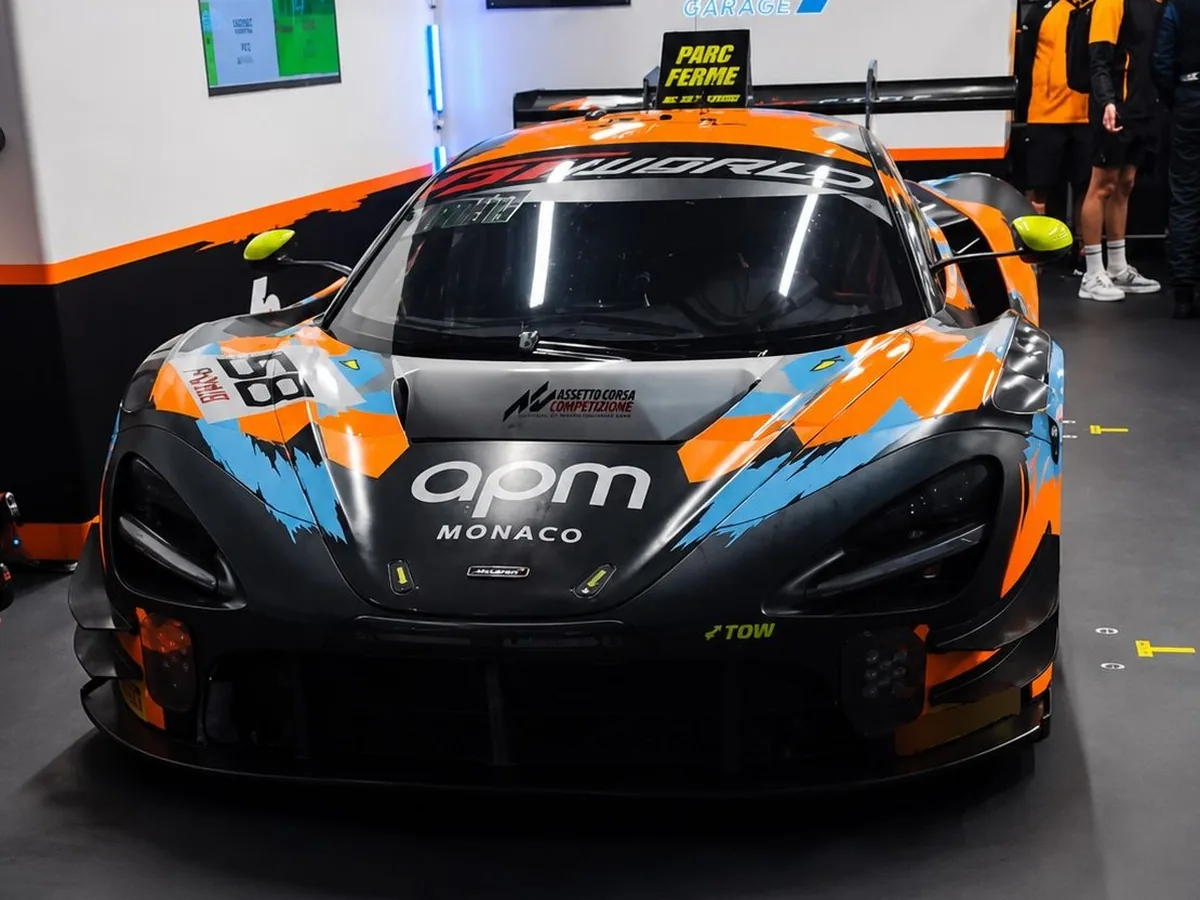
2019
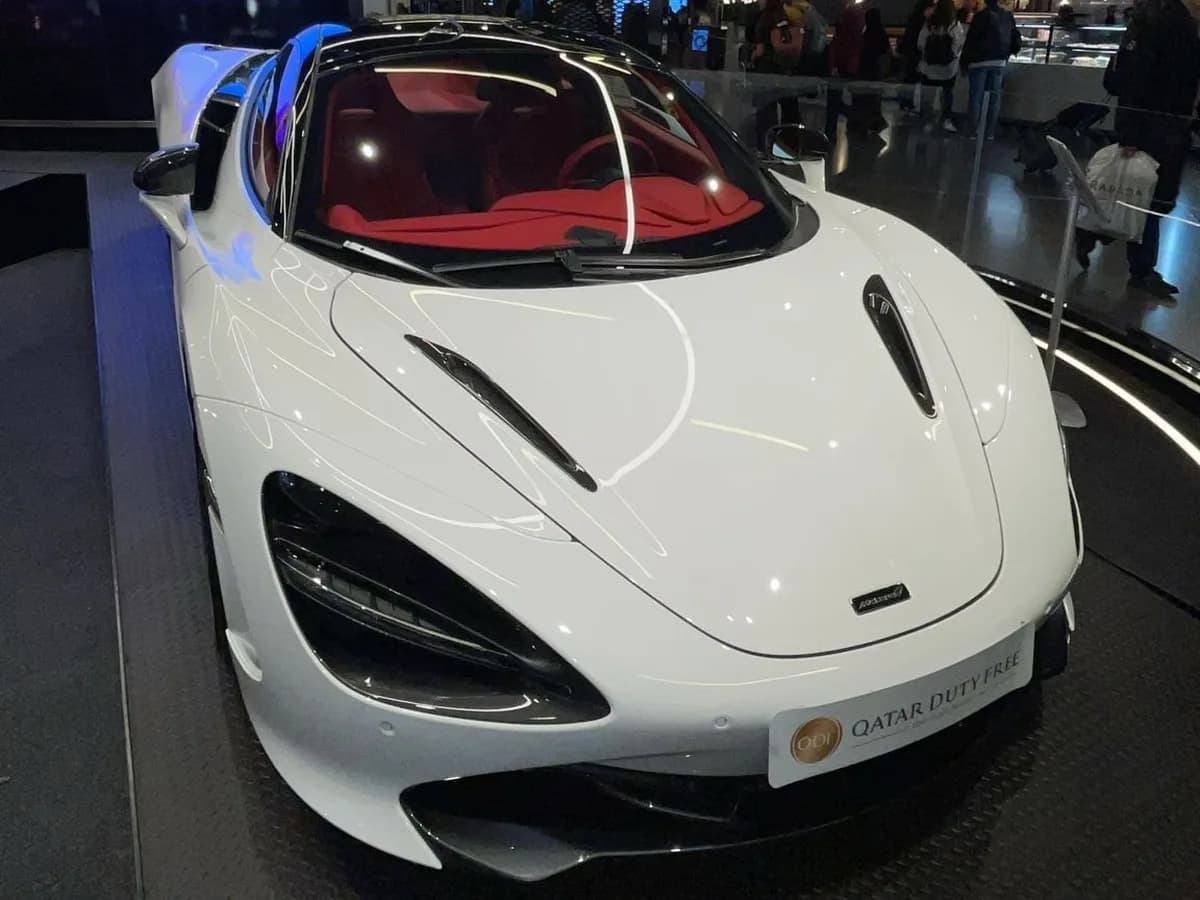
2017

Model summary
Data from the ScanRacer library, organized to compare versions quickly.
Model introduction
Unveiled at the Geneva Motor Show in March 2017, the McLaren 720S is a mid-engined supercar developed to replace the 650S at the top of McLaren’s Super Series range. Its name refers to the output of its 4.0-liter M840T V8, rated at 720 PS, or 710 bhp, with 770 Nm of torque. The car combines a carbon-fiber MonoCage II passenger cell, electronically controlled hydraulic suspension, and active aerodynamics. The coupe was joined by the 720S Spider, which added a retractable hardtop and a dedicated MonoCage II-S structure. Production of the road-car range ended after the 2023 model year, ahead of the 750S.
History
The 720S represented a major step for McLaren when it was introduced in 2017. It replaced the 650S, but was more than a styling update: the bodywork, structure, and powertrain were extensively revised. The 3,994 cc M840T engine replaced the 3.8-liter V8 used by several earlier McLaren models. Its MonoCage II incorporated the upper section of the passenger compartment into a carbon-fiber safety cell, while the headlights and side surfaces helped channel air for cooling and aerodynamic efficiency. The 720S Spider was announced in December 2018 and entered the market for 2019. Its retractable hardtop could be opened without abandoning the model’s distinctive dihedral doors. The 720S name was also adapted for customer-racing cars, most notably the 720S GT3, which began competition with customer teams in 2019. For 2023, the GT3 Evo extended that racing program with revised aerodynamics, suspension adjustability, and serviceability improvements. Road-car production ended in December 2022 for 2023 model-year vehicles, while the 750S subsequently became McLaren’s successor in the Super Series.
Generations
The McLaren 720S is not officially divided into multiple model generations; it represents a single model generation produced from 2017 to 2023. That period nevertheless includes several significant body styles and derivatives. The original coupe, revealed in 2017, is the reference version. It uses the MonoCage II carbon-fiber passenger cell, a 4.0-liter twin-turbocharged V8, and a seven-speed dual-clutch transmission. The 720S Spider arrived for the 2019 model year. It retained the same basic powertrain but used a MonoCage II-S structure adapted to the retractable hardtop mechanism. It should therefore be understood as a body-style derivative rather than a separate technical generation. Detail changes introduced during the production run do not, by themselves, establish a formally distinct generation confirmed by McLaren. The 720S GT3 and GT3 Evo belong to a different category. They are customer-racing cars designed for GT competition, not simply road versions with extra power. Introduced for the 2023 racing season, the GT3 Evo retained a structural and mechanical connection to the 720S while adding competition-specific bodywork, suspension, and aerodynamic development. The single road-car generation should therefore be kept separate from the model’s racing derivatives.
Key differences
The clearest distinction is between the coupe and the Spider. The coupe has a fixed roof integrated into the MonoCage II structure, while the Spider uses a retractable hardtop and a MonoCage II-S passenger cell. Both body styles share the 4.0-liter M840T V8, seven-speed transmission, and the main chassis concept, but the Spider adds the structural and mechanical changes required for open-top motoring. The GT3 Evo is far more distant from the road cars. It has race-specific bodywork, revised aerodynamics intended to increase and better distribute downforce, and suspension with a wider range of adjustment. Its engine is prepared for competition, and its equipment is designed around GT racing requirements rather than road use. The label “Base” should not automatically be treated as a universally defined McLaren trim level. In a model catalogue, it can reasonably identify the standard coupe, but that interpretation is best presented cautiously because McLaren’s global naming conventions varied by market and equipment specification.
Photo recognition
A 720S is first identified by its flowing teardrop-shaped profile, slim cabin pillars, and dihedral doors that sweep upward and forward. At the front, the narrow headlights incorporate air channels that help feed the radiators. This signature separates the 720S from earlier McLaren models such as the 650S, whose headlight and intake treatment is visibly different. The thin roof pillars, deep side glazing, and air passages behind the doors are also useful clues. The coupe has a fixed roof, while the Spider can be identified by its retractable hardtop and the revised rear deck surrounding the roof mechanism. Both retain the model’s characteristic doors and overall body shape. A GT3 Evo is much easier to distinguish because of its competition equipment: wider racing bodywork, a prominent front splitter, diffuser, rear wing, racing windows or vents, and a stripped competition interior. It should not be mistaken for an ordinary 720S fitted with optional aerodynamic parts. The racing car has substantially different proportions and functional components intended for circuit use.
Important versions
The standard coupe is the foundation of the range and corresponds to the “Base” reference used in some catalogues, including the 2017 entry. The 720S Spider, introduced for 2019, retains the coupe’s main performance and structural concept while adding a retractable hardtop. It is the model’s principal road-going body-style derivative. The 720S GT3 Evo, associated with the 2023 racing season, is a customer-competition car. It retains a connection to the 720S and its carbon-fiber architecture, but its priorities are aerodynamic performance, adjustability, and durability under racing conditions. These three names should not be treated as equivalent trim levels: “Base” identifies the standard road coupe, “Spider” identifies the convertible body style, and “GT3 Evo” identifies a dedicated racing derivative.
References
- McLaren 720S — Legacy model informationMcLaren Automotive
- McLaren 720S GT3McLaren Automotive
- McLaren GT3 EvoMcLaren Automotive
- Prepare to Say Goodbye to the McLaren 720SCar and Driver
- McLaren 720S Spider — Legacy model informationMcLaren Automotive
- https://www.caranddriver.com/mclaren/720scaranddriver.com
- https://www.edmunds.com/mclaren/720s-spider/2023/edmunds.com
- https://www.edmunds.com/mclaren/720s/2023/edmunds.com
Technical specifications
Structured data available for versions linked to this model.
| Version | Power | Torque | Top speed | Drivetrain | Fuel |
|---|---|---|---|---|---|
| — | 710 horsepower | — | — | Rear-wheel drive / 7-speed dual-clutch automatic | — |
Frequently asked questions
- What years was the McLaren 720s produced?
- ScanRacer's referenced versions cover 2017 - 2023.
- How many McLaren 720s examples are documented on ScanRacer?
- 37 published scans from 26 members, with the latest photo added in September 2026.
- What is the power output of the McLaren 720s?
- The sourced technical data lists 710 horsepower.